Showing posts with label curse. Show all posts

Friday, October 9, 2026

What does the Bible Say about Mothers Murdering Children?

 (Part Four in a Series on the Fifth Commandment)

by Pastor Paul Wolff


In this article:
What is happening?
How could such things happen?
What does the Bible say about murdering children?
Biblical Examples
What does this mean for the future?
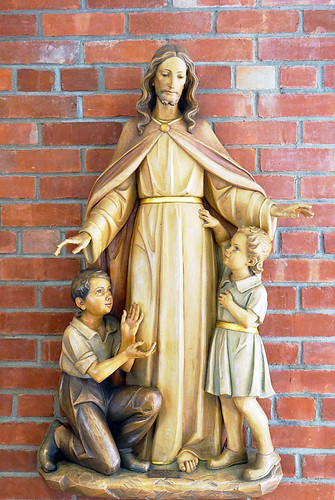
Jesus said, "Let the little children
come to me, and do not hinder them,
for the kingdom of God belongs to
such as these."
Mark 10:14

What is happening?

There is something happening now in our society which has rarely happened in the history of the world. It is certainly not unknown, or unprecedented, but in the history of civilization it is extraordinarily rare. It may be more well known among uncivilized (or under civilized) societies, but that it is happening in what was once a civilized, Christian nation, like the United States of America (and others), is heartbreaking. What is happening is that there seems to be a trend recently of mothers murdering their children in cold blood.

Recently there was a trial of a woman in the U.S. who confessed to strangling her three young children, but which ended in a mistrial. It should have been an easy conviction, as evidence showed that she planned the murder, and conspired to get her husband out of the house while she killed their children. After the trial it was revealed that eleven of the jurors wanted to acquit her of murder (likely by reason of insanity), but only one juror would not be persuaded nor bullied into joining that decision, but held fast that it was not beyond reasonable doubt that the mother was guilty of first degree murder. During the trial, groups of women organized public protests advocating that the mother should be excused for murdering her children. Since the mistrial was declared several more women have also killed their children in the following few weeks.

How could such things happen?

What is more sad than all of this, is that this is not at all surprising to anyone who has been paying attention! Over 20 years ago I observed that the leading cause of death in the United States was abortion – the murder of children. In 2002 (the latest year that information was available when I wrote the 2005 article) there were 1,300,000 abortions. Since 1973, when the Supreme Court illegally made abortion “legal” in all 50 states, there have been over one million abortions each year on average. This has continued, even after the Supreme Court overturned Roe vs. Wade. The problem with the Dobbs vs. Jackson was that the Supreme Court did not ensure that all unborn children of U.S. citizens were protected from murder.

What this means is that every year, for over 53 years, a million mothers have murdered their children. This does not mean that each of these million mothers are different people – many of them are repeat offenders. Also, not all of these murdering mothers are willing participants. It is well documented that a fair number of abortions are coerced by the fathers of the unfortunate children (boyfriends or husbands to the child’s mother). The Abortion Industry (as it is called) has repeatedly shown that it does not care about whether the women who seek their services are raped, abused, enslaved, or are otherwise molested, as long as they get paid. Nevertheless, what this shows is that there are tens of millions of women in the United States alone who have murdered their children. 

I must also recognize that not all of these women advocate for allowing abortion and infanticide. Many women have repented of this wickedness and found forgiveness in Jesus Christ, and others have also recognized that what they did was wrong, and should not be done. Yet, that probably still leaves tens of millions of women (and others) who refuse to repent and think that they have every right to murder their children, either before their birth or after. This happens because murder is such a horrible sin that, when someone commits murder they will go to great lengths to justify it to themselves. Since these people convince themselves that they had good reason for murder, they cannot admit to themselves or others that it was wrong – because to do so would be to admit that they are as wicked as other murderers, but murderous desires lead to murder, unless reversed by repentance and trust in God through Jesus Christ.

What does the Bible say about murdering children?
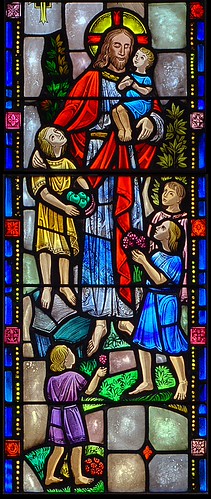
Jesus said, "Let the little children
come to me, and do not hinder them,
for the kingdom of God belongs to
such as these."
Mark 10:14
In Leviticus 18:21 God told the Israelites, “Do not give any of your children to be sacrificed to Molech, for you must not profane the name of your God. I am the Lord.” I am sure that at the time the Israelites thought that this was one of the easiest commandments to keep. After all, what kind of a person would even consider killing their children, much less, offering their dead children to a false god like Molech? Such things are absolutely unthinkable for any godly person. The idol, Molech, was created to give parents a way to get rid of their children which would ease their guilty conscience (and maybe make some money for false priests during hard times). You can read an article I wrote here about how the ancient practice of child sacrifice corresponds to similar practices in our society. Yet, God knows the wickedness in our hearts more than we do, and when the tribe of Judah fell into the practice of child murder (after God had already destroyed the Kingdom of Israel for doing the same thing) God condemned them, saying, “They built high places for Baal in the Valley of Ben Hinnom to sacrifice their sons and daughters to Molech, though I never commanded, nor did it enter my mind, that they should do such a detestable thing and so make Judah sin.” (Jeremiah 32:35) This practice was a large part of the reason why God sent the Babylonians to conquer Judah, destroy Jerusalem, and take the survivors as slaves in exile to Babylon.

God also demonstrated that He values the lives of even the most humble people, though the world may think they are expendable. In Exodus 22:22-24 God says, “Do not take advantage of a widow or an orphan. If you do and they cry out to me, I will certainly hear their cry. My anger will be aroused, and I will kill you with the sword; your wives will become widows and your children fatherless.” The consequences of taking advantage of the lowest in society (whom some might consider “burdens”) was that God would raise up enemies against them who would kill the men so their wives would be widows, and their children orphans. 

We should be aware that all that is going on does not escape the notice of God. In Deuteronomy 10:17-18 God tells His people, “The Lord your God is God of gods and Lord of lords, the great God, mighty and awesome, who shows no partiality and accepts no bribes. He defends the cause of the fatherless and the widow, and loves the alien, giving him food and clothing.” This was both a blessing and a curse (as these are frequently joined together in Holy Scripture). It was a blessing because God would protect His people if they fell on hard times or experienced disaster. It was a curse if the people disobeyed God and took advantage of the weak in society – then God would punish the wrongdoers. 

Biblical Examples

God tested Abraham,
but did not let him kill his son.
Yet, God did not spare His Son,
but let Him be sacrificed 
to save us from sin and death.
Abraham and Isaac
There are some examples in the Bible of the murder of children which can give us instruction. The first one is in Genesis 22 where God uncharacteristically tells Abraham to kill his son, Isaac, as a sacrifice to God. Abraham does not openly question God, but prepares to do as God commanded him to do. The New Testament book of Hebrews explains to us that, because God had already promised that Isaac would be the ancestor of a great nation and many kings, Abraham trusted that if he did as God commanded, God would raise his son from the dead so that Isaac could fulfill what God promised. Here we should note that God did not allow Abraham to kill Isaac, but called to him to stop when the knife was in his hand ready to do what God told him to do. 

This story is in contrast to its fulfillment in Jesus Christ. God would not allow Abraham to sacrifice his son, Isaac, but God offered His son, Jesus, as the atoning sacrifice for the sins of the whole world, and did not stop it from reaching its fulfillment. Isaac was likely an unwilling sacrifice (though he apparently did not fight Abraham, nor seem to hold any hard feelings against his father later in his life), but Jesus was the perfectly willing sacrifice. God did not force Jesus to sacrifice His life against His will, but made it clear in the Holy Scriptures that He wanted Jesus to freely offer His life in payment for the sins of the world, so that we may be forgiven and rescued from sin and death. Because Jesus loved God perfectly, He was willing to do what God wanted, and let sinful men put Him to death. In doing this, Jesus offered His innocent life to pay for the sins of the whole world, and God accepted His sacrifice, so that all who believe in Jesus have full forgiveness of all their sins, and full salvation through Him.

Pharaoh’s Command to Kill Baby Boys Before the Exodus
In Exodus 1, we are told that a Pharaoh in Egypt came to power who forgot about Joseph and why all the Israelites were living in Egypt, and saw them as a potential threat. He feared this, even though the descendants of Israel had been living in Egypt for 400 years, they had done nothing against their Egyptian hosts. The King first commanded the Egyptian midwives to kill the male Israelite babies they delivered, so that they would not grow up to be a military threat to Egypt. The midwives did not obey this command because they were in the business of delivering babies, not killing them. Only in the past 50 years or so have doctors and nurses become active agents of murder instead of healing. 

The oppression and murderous commands of the Pharaoh led the Israelites to cry out to God to send them a deliverer. God heard their prayers, and sent them Moses. When the Egyptian midwives failed to do as the Pharaoh decreed, he commanded all Israelite baby boys to be thrown into the Nile River to be drowned. Moses’ mother complied with the letter of the law by putting her baby in the river, but she placed him in an “ark” made of woven reeds, and waterproofed with tar or asphalt so it would float, and he would not be drowned. Pharaoh’s daughter found the “ark” and took pity on the child, and adopted him as her son, though she knew that he was from an Israelite family. Moses was the deliverer whom God sent to lead the Israelites out of Egypt toward the Promised land of Canaan, though he would not accomplish this until he was 80 years old.

The Tenth Plague in Egypt
God called Moses
to lead the children of Israel
out of slavery
to the land He promised to
give to Abraham
As a counterpoint to the Pharaoh’s command to kill the Israelite baby boys, when God sends the plagues on Egypt in Exodus 7-12, the tenth and final plague was that God killed all the firstborn of men and livestock in Egypt. However, God spared the firstborn of the Israelites by having them sacrifice a male lamb or goat without blemish and put the blood of the sacrifice on their doorposts so that God would pass over their homes when He came to kill the firstborn of Egypt. There was death in every household in Egypt that night, but none of the Israelites died because God accepted the lambs as substitutes for the firstborn of the people. This caused Pharaoh to send the Israelites out of Egypt, and was God’s main salvation event of the Old Testament. 

The tenth plague and Passover showed how God would save all people by the coming of the Messiah, or Christ. Jesus would be the substitute who would die for the sins of the whole world, so that everyone who believes in Him would be rescued from sin and death, just as the Israelites in Moses’ day believed in God and did as He directed. Here we see God’s justice. As Egypt’s Pharaoh tried to subdue God’s people by killing their children, God came to rescue His people. The Pharaoh of 80 years later, suffered defeat and the loss of his firstborn son in the plague, along with every household in Egypt. God showed that He has mercy on His people, and, although He is patient (wanting all sinners to come to repentance and be saved), He is not unwilling to bring vengeance on those who persist in evil. When God does act in this way He is always just and right in His actions. When it seems He is slow to act, it is not because He is uncaring, or unable to do anything, but it is because He is patient and merciful.

Prayer for Vengeance in Psalm 137
The Psalmist’s lament in Psalm 137 is a difficult one for many people, because in this Psalm, the writer is praying that God would bring retribution on the Babylonians for their conquest of Judah, the destruction of Jerusalem, and the many thousands of people killed in that war. Though God had enabled the Babylonians to do this, they did not acknowledge God, nor do it for God’s glory, but did it for their own glory. The Psalm ends with the writer praying that God would bless those who take the Babylonian children and “dashes them against a rock.” (Psalm 137:9) It sounds cruel, but those taken into captivity likely had witnessed the Babylonians doing just that to their children, and the Psalmist is only asking for similar justice to be done – no worse than what was done to them. God answered their prayer later when the Persians conquered Babylon, and God moved the Persian king to let the people of Judah return and rebuild Jerusalem. God did this so that His promises to Abraham, Jacob (Israel), and David would be fulfilled, and the Messiah would come from their descendants in the land that God had set aside for it to happen there. 

Jesus loves the little children
Herod’s murder of infants in Bethlehem
We see another tragic mass murder of infants in Matthew 2 when King Herod heard about a sign proclaiming the birth of a future king in Judah. Though the child was less than two years old, Herod was so paranoid that he ordered soldiers to kill all the children in the Bethlehem area under two years old. This story parallels closely the story of Moses and the Exodus from 1,500 years earlier. Also, as the person of Jesus is a greater savior than Moses, so also is the salvation won by Jesus greater than the freedom to which Moses led the people of Israel. Christ’s salvation is for all people who trust in the true God for salvation, not just one small nation on earth. 

What does this mean for the future?

In Biblical history, when there is a mass casualty event involving children, it is often associated with God’s judgment against idolatry, wickedness, and violence. Such things only happen in times of great apostasy and rebellion against God, because a godly society would treasure and protect their children, and such things would not happen. Such tragedies as: abortion, infanticide, mutilation and abuse of children for the sake of sexual fantasies, and more, all show us that we live in an era of great apostasy and wickedness. This calls for likewise great repentance and a swift punishment of all who carry out and support such evil. 

If Christians are unable to address and correct the evil, then God will find someone else to do it. However, as Judah was apostate in the times of the prophets Isaiah and Jeremiah, and God empowered the pagan Babylonians to carry out His justice, we see that the cure may be worse than the disease – though God does work everything out for good for those who love and trust in Him above all things. If Western Christian nations cannot turn back to Christ, and bring to justice those who murder and mutilate children, then God could very well empower Islamic Jihadists to conquer and enslave Western nations and bring a temporal order. The “cure worse than the disease” in this is that Islamic Jihadists in the past two centuries have adopted a Marxist Gnosticism which is much more radical than many eras of past Islamic conquests.

There have been times in history when Christians have lived with a fair bit of autonomy under Islamic rule. However, much of radicalized Islam these days is much more extreme. Although a conquering Islam would bring a semblance of order in what is now a chaotic world, and would forbid societal evils such as sexual perversion, general infanticide, abortion, and several other plagues endemic to Western Marxist Liberal Progressivism, such a government would harshly persecute Christianity and all other religions. It would also enslave all women and girls under strict Sharia submissive rules, and mandate universal general conversion to the false religion of Islam, with severe penalties for all who refuse to submit. 

The Holy Family is an image
of God’s relationship with His people.
Such a future is not necessarily imminent. No one knows except God, alone. Such things are likely to happen in the very last days before Christ’s return, however. These days may not be those days. It could be that a general repentance and return to Christ may mean that several generations may still live under God’s grace, and many more will be added to the number of blessed Christians who find salvation in Jesus Christ. Either way, now is the time for repentance and prayer, trusting in Jesus alone for our forgiveness and salvation. 

The world seems hell-bent on destruction, and Christians should not get caught up in the chaos – neither in going along with the world’s apostasy, nor in reaction against it. Jesus Christ is Lord of all, and He has already won the victory. We dare not panic, lest we lose sight of Jesus Christ and His salvation. All that is left is for history to play out as it must. As for Christian believers, we should continue steadfast in the True Faith, no matter what else is going on in the world, as we await our salvation in confident, patient trust that Jesus will rescue us from all harm and evil, and that all things will work out to the glory of God – our savior and redeemer.


Articles in this series:

Thursday, August 25, 2022

You Shall Not Murder

(Part One in a Series)

by Pastor Paul Wolff


God first wrote the commandments
in our hearts.
But after the fall into sin
God wrote them on stone tablets
which He gave to Moses and the Israelites
at Mount Sinai.
The sin of murder is considered to be the worst sin that a person can commit against another. Though you have to wonder, since murder is so bad, then why is it so popular? And why is murder seemingly gaining in popularity (at least in America and several other places around the world)? As I was researching this topic I saw a news story which said that murders in the United States were up 30% in 2020 over the previous year. Though 2020 was a chaotic year with all kinds of government leaders at many levels all around the world acting like tyrannical dictators. That kind of high profile lawlessness always leads to lawlessness at every level, and murder is the epitome of lawlessness.

All sin is equally evil in God’s eyes. God is holy and sinless, and He first made people holy and sinless as He is. All mankind was condemned to live in sin because of what was essentially Eve’s sin of thievery which was combined with coveting and idolatry (the underlying sin which leads to all other sins). However, that theft was full rebellion and rejection of God, and the equivalent of murder since it has so far led to the death of everyone born before 1903 (and hundreds of millions of people since then), though one man has risen from the dead and still lives.

God gave us the Fifth Commandment (as Lutherans and most other Christians count the Commandments), “You shall not murder,” because God is the “Living God.” God is called the “Living God” not just because He is alive, but because He is the source of all life, and the only one who can give life to the dead. God gave us the Fifth Commandment because He doesn’t want anyone killing the people whom He loves (including you, your neighbors, and your enemies). So we see that this commandment is good, as all of God’s commandments are good. You don’t want your neighbor murdering you, and neither does God – so God commanded “You shall not murder.”

The sin of thievery seems to be of lesser degree
than the irreversable sin of murder.
But both sins need Jesus to forgive them,
so we may be saved.
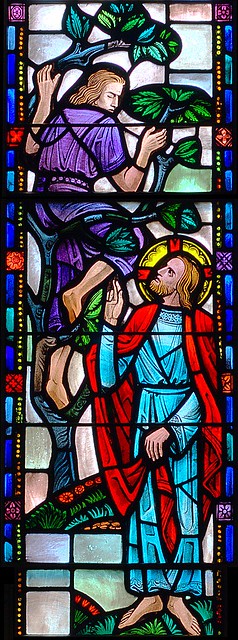
Although all sin is equally condemned in God’s eyes, there is something unique about the sin of murder. By contrast, we see in Luke 19 the tax collector, Zacchaeus, repented of his thievery (forbidden by the Seventh Commandment: “You shall not steal.”) and promised, “Lord! Here and now I give half of my possessions to the poor, and if I have cheated anybody out of anything, I will pay back four times the amount.” (Luke 19:8) Zacchaeus was certainly a wicked sinner (though as I have written elsewhere simply being a tax collector was not one of his sins – see also Luke 3:12-13), but since his wickedness primarily consisted of thievery, he was able to pay back what he had stolen, with a little extra as penance to show the sincerity of his repentance, and compensate those he sinned against for their inconvenience. Such “penance” does not even begin to undo nor remove the guilt of the sin, but it shows the sincerity of the repentance, and it can help assuage the anger of the person you sinned against so that they may be less likely to murder you for your thievery. However, when one’s sin involves murder, then what is stolen cannot be returned for love, nor money. Once you take a person’s life, it is gone permanently, and can never be given back. This is somewhat unique in the second table of the Ten Commandments, and makes murder seem worse than other sins committed against other people.

You will sometimes hear people say, “… at least I am not a murderer.” You know that someone is trying too hard to justify their pet sins when they say this. Murder is a pretty low standard for anyone to measure up against. That person is actually saying, “I may be a dreadfully wicked person, but at least I am not the worst person (for now).” Of course, once you get to this point, the sin of murder (in one form or another) is likely to follow soon thereafter.

Despite the horrific nature of murder, there is no lack of examples of murder in the Bible. This shows the corrupting nature of sin. The first person born on the earth (after God created Adam and Eve) ended up murdering his younger brother. When I have taught the Ten Commandments I have noticed that sins against all the Commandments in the Second Table (and likely all of the Commandments in the First Table, also) can lead to murder. From this I have concluded that there are many different causes of the sin of murder, such as dishonoring parents and authorities, adultery, theft, lying, and covetousness. However, as I have studied the Holy Scripture further, I believe there is a single underlying foundational cause of murder which leads to all the other superficial immediate causes of this terrible sin.

Any sin against the Second Table of the Commandments can lead to murder because these sins are committed against our neighbor. Taken to the extreme, every sin can lead to murder because murder is the ultimate expression of the sins against your neighbor, including dishonoring parents and authorities, adultery, theft, lying, and covetousness. There are also the so-called “seven deadly sins” which are pride, greed, wrath, envy, lust, gluttony, and sloth. Although not all of these are always sinful (there can be righteous anger, and possibly pride – though righteous pride is much more rare than you might like to believe), these all could be considered deadly because they can lead someone to murder, and they lead people to lose faith in Jesus or lead us to reject Christ’s forgiveness and salvation.


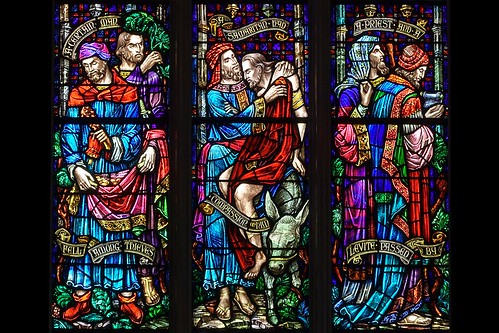
In the Parable of the Good Samaritan
The Priest and the Levite did not hurt the injured man,
but neither did they help him.
As we consider the Fifth Commandment we should recall Martin Luther’s teaching on the meaning of the Fifth Commandment. “We should fear and love God so that we do not hurt or harm our neighbor in his body, but help and support him in every physical need.” Note that there are two parts: a negative and a positive part. We should first not hurt nor harm our neighbor in his body. This is the negative part. This is the wrong thing that we should not do. You should also note that what is forbidden is not only the extreme of murder, but God also forbids you from hurting or harming your neighbor in any way! However, as with all the commandments, there is also a positive good that we should do to keep this commandment. We should help and support our neighbor in every bodily need. It is not enough to avoid killing our neighbor with our own actions, but we must also help and protect our neighbor’s body and life. An example of this in Scripture is Christ’s Parable of the Good Samaritan (Luke 10:25-37). The priest and the Levite did not lay a finger on the man laying on the road to Jericho to hurt him, but neither did they lift a finger to help him after the robbers left him for dead. So, in God’s eyes, they were just as guilty of murder as the robbers who beat the man and took his possessions. In another article I will show how Jesus kept the Fifth Commandment by not only abstaining from murder, but by helping and healing those who were sick, injured, and dead.

Murder may have many immediate causes such as coveting, lust, greed, envy, hatred, and others. Yet underlying all of these immediate causes there is a fundamental sin which leads all these different causes to end up with the same result of murder. That fundamental murderous sin is an idolatrous selfishness which leads people to take into their own hands the power over life and death, which rightly belongs only to God. When someone begins to justify his pet sins in his own mind he is likely to forget God’s commandments and it is sometimes a short step to think that one’s own sinful desires are good and right. Once that happens, even the lives of others become secondary to what the sinful person desires. This is what we call “hatred”. I have shown elsewhere that no racist person begins by hating others. It can begin with something as seemingly innocent (though still wickedly sinful) as wanting what is best for a group that I identify with – over and against one or more groups that I don’t identify with. Sinful desires can grow into the same murderous hatred even though they have one of several different starting points. This is why we must repent of our sins early and often. Martin Luther suggests that we use our Baptism correctly if we remember our sinfulness daily and “drown” the old sinful nature through contrition (sorrow over sin) and repentance, trusting in Jesus to forgive our sins and give us what we need, even if it is not what we necessarily desire. If we delay repenting then those sinful desires grow into actual sins of word and deed, and can lead to murder long before we realize it.

In the days of Noah, God saw that
“the wickedness of man was great in the earth,
and that every intention of the thoughts of his heart
was only evil continually.” (Genesis 6:5)

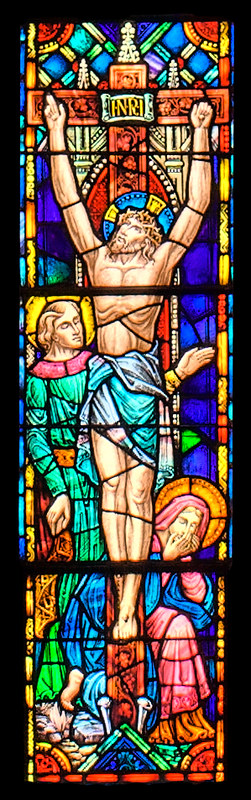
Because God created us He knows full well how our hearts are set on evil, including murder. God didn’t create people to murder, but to appreciate His gift of life and also for husband and wife to create new life through their expression of love for one another. Though sin has corrupted all of this, life is still a gift from God for which we can rejoice and be thankful. Also, in history, God has used our murderous desires to accomplish our salvation. Because sinful people desire to be gods ourselves, we believe we have to get rid of the real God because to our eyes He “gets in the way”. In our sinful delusions, we think we are holy, but the ugly truth is immediately apparent when we are in the presence of true holiness. What God did was to become incarnate as a man, Jesus of Nazareth, and when the time was right He let sinful men do to Him what sinful men always wanted to do to God, which is: to murder Him. This accomplished our salvation because Jesus is truly an innocent man, but He allowed Himself to be killed as a substitute for us. Jesus took the guilt of our sin upon himself, and suffered death innocently in our place so that God’s wrath over our sin could be poured out upon Jesus, and we could be forgiven and (eventually) remade as the holy, eternal, people whom God intended for us to be in the first place. The poetic irony of using our murderous tendencies to accomplish our forgiveness and salvation and eternal life is amazing, and the love of God, which caused Him to live and die for us sinners, is so amazing and wonderful that we, who appreciate what He has done to save us, will literally love Him forever in return.

Despite the terrible finality of murder, God still forgives repentant murderers. Murder is a sin in God’s eyes, like any other sin. The number of murderers in hell is not an indication that God does not forgive murderers, but that the murderers feel so guilty that they despair and think their sin cannot be forgiven, and so they do not repent and seek God’s mercy and forgiveness. In this life we think we have to pay for our own mistakes, but the sin of murder is too big. This leads to despair, and an unrepentant attitude which leads to damnation. Murder is not unforgivable, but the guilty murderer must repent and trust in Jesus to forgive him or her.

Jesus is the Good Samaritan
who saved us sinners from death
at the great cost of His own suffering
and death on the cross.
Jesus taught in the Sermon on the Mount, “
You have heard that it was said to the people long ago, ‘Do not murder, and anyone who murders will be subject to judgment.’ But I tell you that anyone who is angry with his brother will be subject to judgment. Again, anyone who says to his brother, ‘Raca,’ (a curse) is answerable to the Sanhedrin. But anyone who says, ‘You fool!’ will be in danger of the fire of hell.” (Matthew 5:21-22) This shows us that the sin of murder is more than just the extreme action of taking someone’s life. God gave us all life, and cares for our well being in every aspect of our life. This is why Martin Luther explained the Fifth Commandment as he did (see above).

Jesus did not murder, in any way, but helped His neighbors by healing them from all kinds of sickness, disease, injury, and even death. Then Jesus allowed wicked men to conspire against Him to have Him murdered. Jesus allowed them to murder Him as a sacrificial lamb so that He could take our place and suffer the wrath of God the Father for the sins of the world. Jesus did this so that you could be redeemed and rescued from sin and death.

Murder is a dreadful sin, and a terrible evil, but it is not unforgivable. Jesus died to pay the price to redeem murderers, as well as all sinners. If you are guilty of murder, or hatred, or neglect, or any other sin which breaks God’s commandment against murder, then repent and trust in Jesus to forgive these, and all your sins. It is a great comfort to know that the almighty and Holy God forgives even the sins of the worst sinners, that God may be praised and glorified forever for His great love and mercy.

Other Articles in this series:
The True God Cannot Murder 

The Opposite of Murder

 
Related Articles:
Why Does God Condemn Unbelievers to Hell?
A Biblical Argument for Self Defense
Anger
Why Christians Condemn Abortion but Support the Death Penalty
The Good Samaritan
Is it Easier to Heal, or to Forgive?
Christ Has Done All Things Well
The Promise of Christ in Water And Light
Modern Molechianism
“Let His Blood be on Us and on Our Children”
The Passion of Christ
The Slaughter of the Innocents
Friends and Murderers
The Promise of the Rainbow
The True Story of a Terrorist Turned Christian
The Morality of War
Rejecting the Survival Instinct
The Leading Cause of Death in America


Monday, September 4, 2017

The Good Samaritan

by Pastor Paul Wolff

A certain man fell among thieves
A Samaritan had compassion on him
A Priest and a Levite passed by

 
Luke 10:33-35

Jesus said, “A Samaritan, as he journeyed, came to where (the injured man) was, and when he saw him, he had compassion. He went to him and bound up his wounds, pouring on oil and wine. Then he set him on his own animal and brought him to an inn and took care of him. And the next day he took out two denarii and gave them to the innkeeper, saying, ‘Take care of him, and whatever more you spend, I will repay you when I come back.’”


People are afraid of the Law, and think the Law is evil because the Law condemns us as sinners. However, the Law of God is not the problem. God’s Law is good, as God is good, and the Law shows us what is good for us to do to love God and love our neighbor. Sinners think the Law’s condemnation of sinners is bad because we don’t want to be condemned. Sin blinds us to the reality of just how wicked we really are, and how much we really deserve to be condemned.

Remember what happened in the Garden of Eden with Adam and Eve. God made the whole world good and gave it to Adam and Eve for their benefit and enjoyment. The only thing forbidden to them was the fruit of one tree – one tree in the whole world. In effect, God was saying, “This tree belongs to me. Don’t eat its fruit. If you eat the fruit of this tree you will die. But look, here is another tree. This is the tree of Life. You are free to eat from this tree and anything else in the world that you wish to eat. I am your Father and I love you, and I want you to live and enjoy all the good things that I can give to you forever.” God gives us good things, and forbids us from doing things that will hurt us.

The problem isn’t God’s Law. The problem is that people rebelled against God’s good Law and chose sin and death instead of righteousness and life. Sinners despise what is good, and we twist and distort God’s Word to make the Law seem to say what we want it to say, instead of receiving it as God has given it to us for our good.

It is no coincidence that the man who tested Jesus was a teacher in the law. He knew the law, but he asks the wrong questions. If you ask the wrong questions you will get the wrong answers. However, in telling the Parable of the Good Samaritan, Jesus gives us both the right question and the right answer.

Inheritance is a matter of Law,
but you can only receive it as a gift.

The first question the lawyer asks Jesus is, “What must I do to inherit eternal life?” The question isn’t all wrong: It recognizes that eternal life is a matter of inheritance. It is a gift, not a right. However, the question is ridiculous. Can you imagine someone going up to Donald Trump (for example) and saying, “What must I do to inherit the wealth of your estate?” Most of the time the inheritance of an estate is given to the children. If you are not born or adopted into the family then it is unlikely you will inherit anything.

Since inheritance is a matter of law, and the man asking about it was a teacher of the law, Jesus asks him what the law says about inheriting eternal life. The man answered by quoting from Deuteronomy where God summarized the two tables of the Commandments. “You shall love the Lord your God with all your heart and with all your soul and with all your strength and with all your mind, and your neighbor as yourself.” This was a good summary of the Law, as Jesus points out, but the man forgot that the Law cannot save sinners. The law condemns sinners. Since Adam and Eve’s fall into sin, all people (except Jesus) have inherited the corruption of sin. This is our inheritance – according to the law.

Luke writes that the teacher of the law wanted to justify himself. To justify yourself is to make up excuses for your sin which will make you feel like you are doing right when you are doing wrong. It is a wicked thing to try to justify your sin, but sinners are always looking to justify themselves. I do it. You do it. Everyone does it, but that doesn’t make it right. It just means that everyone sins in justifying themselves.

So the teacher of the law asks, “Who is my neighbor?” This doesn’t seem like a bad question, but why would you ask it? Your neighbor is everyone you come in contact with in your various vocations, including those whom you try to avoid, like an injured man lying on the side of the road when you have somewhere else to go. If you have to ask, “Who is my neighbor?” then you may be really asking, “Who isn’t my neighbor?” or “Who can I ignore because they are not my neighbor.” So Jesus tells the Parable of the Good Samaritan.

Jesus is the Good Samaritan

Jesus told a story about a man going from Jerusalem to Jericho who fell among robbers. The robbers should have been neighbors to the traveler, and protected his life and property, but instead they beat him and stole his belongings, and left him for dead on the road.

Then a priest was going down the road and saw the injured man. The priest represents the first table of the Law where we love God with all our heart, soul, strength, and mind. The priest served God in his vocation, but he was under the law. The ceremonial law said much about blood and how to deal with it. It would not do for the priest to show up for work with bloody hands from helping an injured man. He would likely be considered unclean. Now, uncleanliness wasn’t too big of a deal. All people would do things in the normal activities of life which would make them unclean. I think that was the point of the cleanliness laws. They reminded people that our sin makes us unclean and that we need to be cleansed of our sin.

The priest could have helped the man, but then in order to be fit for his priestly service he would have had to wash and make a sacrifice and wait until sundown to be considered clean again. It was an inconvenience, and somewhat costly, but he could have helped the injured man, and should have. The people who would benefit from his priestly service would have understood, but the priest justified his inaction by telling himself that if he helped the injured man he couldn’t carry out his service to God. This was a misuse of the law, but this is what sinners do to justify themselves. So the priest walks by the injured man on the other side of the road.

Likewise, a Levite came and saw the injured man lying in the road. He represents the second table of the Law where we must love our neighbor as ourselves. The Levites were those members of the tribe of Levi who were not priests, but who served as laymen in the church. Levites were the elders, ushers, acolytes, trustees, groundskeepers, altar guild, board members, and similar laymen who serve the church. He could have helped the injured man, but he was under the law also. He could have helped the injured man, but would then be unfit to serve in the congregation for a time, and so he justified his actions in the same way as the priest. He also misused the law to justify his unmerciful actions. So he, too walked by on the other side of the road.

Then a Samaritan came down the road and saw the injured man. The Samaritan was not under the law in the same way that the priest and Levite were. He was not above the Law, certainly, instead he was outside the Law. He was not bound by the Law in the same way that the priest and Levite were, nor could he hide under the Law to justify unmerciful inaction. In a way, the Samaritan was free of the Law’s demands, but because he was free of the Law’s demands, he was also free to help his neighbor without having to worry that the Law might condemn him in some other way (unless he also ignored the injured man and left him to die). So he had compassion on the injured man and treated his wounds and took care of him.

Jesus is the Good Samaritan
who paid the costly price
to give you His inheritance.

You should note that what the Samaritan did was also costly. Besides the time and effort of cleaning and treating the wounds, he also paid the entire burden of the injured man’s health care. It was a sacrifice, but because he was free from the law’s burdens, he willingly paid what was necessary to help his neighbor.

Jesus ends His parable by asking the teacher of the Law, “Which of these was neighbor to the man injured by the robbers?” He answered, “The one who showed him mercy.” Jesus said, “You go, and do likewise.”

Now, if you have a wrong view of the law, you might think that Jesus was just giving the man another law to live by. But that would be a wrong understanding. Jesus was, in fact, doing the exact opposite. Jesus was not even giving a new law that supersedes the old law, as if you could use that to justify breaking any of the Ten Commandments. Instead, Jesus was declaring the man free from the law, just like the Samaritan was free from the law, and used his freedom to have mercy on his neighbor.

Jesus is the Good Samaritan. As the Son of God, Jesus was free from the Law’s demands. Jesus was not just free from the Law, He was above the Law because He created the Law. Though, in a way, Jesus was also bound by the Law in ways that we are not. God created the Law to reflect His very nature, so when Jesus obeyed the Law, He was only acting according to His nature, not against it (as we are when we obey the law). Yet, in His mercy, Jesus submitted Himself to the Law for our sake to redeem us and free us from the Law’s demands and its condemnation.

Jesus was, of course, a Jew, and not a Samaritan, but it is interesting in John 8 some of the Jews said to Jesus, “Are we not right in saying that you are a Samaritan and have a demon?” Jesus answered, “I do not have a demon, but I honor my Father, and you dishonor me.” It is interesting that Jesus confessed that He did not have a demon, but He did not deny the charge of being a Samaritan. Although the Jews thought they were insulting Jesus by calling him a Samaritan, Jesus was not ashamed to be called a Samaritan. Jesus came to save Samaritans and other Gentiles as well as Jews. The Samaritans were His neighbors as much as His own people.

When Jesus says, “Go and do likewise” He is not putting us under the law, as if he were saying, ‘you can’t be saved unless you make up for your sin by doing good and showing mercy.’ Instead, Jesus is setting us free from the law’s curses. You are free to serve your neighbor because you no longer have to worry about fulfilling the law’s demands yourself. Jesus fulfilled the law for you. You are free. Not free to sin (for that would put you under the law’s curse), but free to serve your neighbor instead of trying to serve yourself.

Jesus set Zacchaeus free
because he trusted in Jesus
for the forgiveness of his sins.

Scripture says in Romans 6:22-23 “You have been set free from sin and have become slaves of God, the fruit you get leads to sanctification and its end, eternal life. For the wages of sin is death, but the free gift of God is eternal life in Christ Jesus our Lord.” Jesus fulfilled God’s Law completely in our place so that through Jesus we are freed from the Law’s demands and can serve our neighbor in freedom as the Samaritan had mercy on his injured neighbor. This freedom we have in Christ is given to us as a gift by His mercy.

This gift is our inheritance as Children of God through Baptism and faith. Scripture says in Galatians 4:4-7, “But when the time had fully come, God sent his Son, born of a woman, born under law, to redeem those under law, that we might receive the full rights of sons. Because you are sons, God sent the Spirit of his Son into our hearts, the Spirit who calls out, ‘Abba, Father.’ So you are no longer a slave, but a son; and since you are a son, God has made you also an heir.”

What must you do to inherit eternal life? Of course you can’t do anything, but Christ has already done it all for you. He has redeemed you from your sin, and adopted you as His children, and He gives you the inheritance of His eternal Kingdom as a gift – as all inheritance is given. Like the Samaritan in the parable, Jesus paid the great price to make you His child and heir. St. Peter writes, “It was not with perishable things such as silver or gold that you were redeemed from the empty way of life handed down to you from your forefathers, but with the precious blood of Christ, a (sacrificial) lamb without blemish or defect.” (1 Peter 1:18-19)

Praise be to Christ, who is your Good Samaritan who sacrificed His life to rescue and heal you from the wounds of sin and death, and who gives you life everlasting.

Sunday, August 20, 2017

How Far does God go to Keep His Promises?

(and promises made in His name)
by Pastor Paul Wolff
 
David playing the harp

There is an odd little story in 2 Samuel 21 about God sending a famine against the Kingdom of Israel in the days of King David. What is strange is that by this time the Kingdom is pretty well established, and seemingly out of nowhere, God is punishing His people with an extended famine. When David asked God what was the reason for the famine, God answered that this was in response to something King Saul had done. What Saul had done was to attempt to destroy the Gibeonites, who were an Amorite people living in the land since before the days of Joshua.

The beginning of the story is found in Deuteronomy 7:1-6 in the days of Moses. God tells Moses and the Israelites that when He brings them into the land He had promised to Abraham and his descendants, they are to completely destroy all the peoples living there, including the Amorites and others. The Israelites were not to intermarry with them, nor make any treaty or covenant with them, but they must devote them to complete destruction. The peoples of Canaan were idolaters, and the Israelites were to completely destroy their altars and places of worship lest they fall into idolatry and come under God’s curse themselves (which they did from time to time.) God was very clear in His instructions about how they ought to deal with the people of Canaan.

Joshua made a treaty in God's name
with the Gibeonites

Many years later, in the days of Joshua (see Joshua 9), the inhabitants of Gibeon heard that the Israelites had destroyed Jericho and Ai and they feared that they soon would be next. They devised a plan to trick the Israelites to make a treaty with them and not destroy them. The Gibeonites sent a delegation to Joshua dressed in old worn out clothes and shoes. The bread they had with them was dry and moldy, and their wine-skins were old and patched. They said they were from a very distant country and wanted to make a treaty with the Israelites. They said that when they left their home their bread was fresh out of the oven, and their wine-skins and shoes were new. The Israelites sampled their provisions, but they did not seek the counsel of the Lord. Joshua made a covenant with them and swore in the name of the Lord to let them live.

Three days later, Joshua heard that the Gibeonites were their neighbors. The Israelites did not attack them, because of the oath that they made not to harm them, but they summoned their leaders and said, “Why did you deceive us?” The Gibeonites were very gracious, and humbled themselves before Joshua and the Israelites. They told of how they had heard how God had commanded Moses to destroy all the inhabitants in the land, and they feared for their lives. They said, “We are your servants, do whatever seems good and right.” Joshua cursed the Gibeonites to be the servants of the Israelites, being woodcutters and water bearers, but he honored the treaty he made with them and let them live. For their part, it seems that the Gibeonites were just glad to escape God’s judgment on the Canaanites, and they lived at peace with the Israelites and did not betray their part of the treaty.

The Israelites also kept their part of the treaty until King Saul tried to destroy the Gibeonites. Another strange part of this story is that Saul’s part in this story is not found elsewhere in Scripture. Apparently the chronicler who wrote the Book of Samuel did not think this particular misdeed of Saul’s was an important part of the story in a chronological telling, and he did not mention it until he wrote of God bringing the famine in 2 Samuel 21. David, however, knew the history (or looked it up in Scripture), and called the surviving Gibeonite leaders and said, “What shall I do for you to make atonement that you may bless the Lord’s inheritance?”

The rainbow is God's sign to Noah that He would not
destroy the earth again with a flood even though
the thoughts of man are only evil all the time.
Genesis 6:5 and 8:21

The Gibeonites were still very humble and submissive before King David, as their ancestors had been hundreds of years earlier with Joshua, and hesitated to make demands to the King, but David repeated, “What shall I do for you?” They asked that seven of Saul’s remaining male descendants would be given to them to be put to death for justice for all the Gibeonites that Saul killed. David agreed to their terms, but he spared Mephibosheth, the son of Jonathan, because of the friendship he had with the son of King Saul. God honored this agreement and lifted the famine.

All of this begs the question: Why would God go to such great lengths to punish Israel for Saul’s misdeeds, many years after Saul had died, on behalf of a people whom He had condemned for destruction hundreds of years earlier, for the sake of a treaty Joshua had made against God’s command? The answer is that God keeps His promises. Or, in this case, God honors the promises made by His people in His name and on His behalf. Despite the fact that God had intended for the Gibeonites to be destroyed with all the inhabitants of Canaan, Joshua had sworn an oath in God’s name that the Gibeonites would not be harmed by the Israelites, and when Saul broke that treaty, God allowed the Gibeonites restitution for the sake of justice, and the honor of God’s name.

If God would go to these great lengths to keep this promise made in His name, even though He never wanted it in the first place, then what does this say about how God will regard His other promises? It shows that God can absolutely be trusted to keep all His promises, no matter what happens.

The very day that Adam and Eve sinned
God promised to send a savior
who would rescue them from their sin.

The main promise that God fulfilled was the promise He made to Adam and Eve when He cursed the serpent in Genesis 3:15. God promised to send the seed of the woman to crush the serpent’s head, though the serpent would bruise his heel. God remembered this promise, even though he destroyed the evil people in the days of Noah, but he saved Noah and his three sons, and each man’s wife (eight people). Likewise when Israel had turned against God and refused to listen to the prophets calling for repentance, God destroyed the ten northern tribes, and nearly wiped out the kingdom of Judah, but He saved a remnant among whom were the descendants of King David who would be the ancestors of Jesus. Jesus is the fulfillment of God’s greatest promise. He is a descendant of Adam and Eve through His mother, Mary, and conceived miraculously by the work of the Holy Spirit, Jesus is God incarnate, who paid for the sins of the world with His perfect obedience, and His innocent suffering and death in our place on the cross.

Compared with the Incarnation of God in Jesus, and the redemption He won for our forgiveness and salvation, the incident with the Gibeonites is of little consequence, but it shows that God honors His promises, and He can be trusted to remain faithful in big promises, and small.

We all ought to see ourselves in a similar situation as the Gibeonites. As the Gibeonites were condemned to destruction for their idolatry, so we are condemned to destruction for our idolatry and other sins. As Joshua promised to spare the Gibeonites, so the greater Joshua (the name “Jesus” is the Greek version of the name, Joshua, meaning, “savior”) has promised to spare us from the punishment due us on account of our sin, because He paid the price and satisfied God’s wrath by dying in our place.

Job’s friends were no comfort when they
misrepresented God’s promises.
Worldly wealth is not a sign of God’s favor,
and poverty is not a sign of God’s disfavor.

Christians ought to be careful when their preachers or anyone make claims about the things God has promised. False teachers make claims about God’s promises which are not true. For example, the “prosperity gospel (sic)” heretics will tell you all day long that you will be rich and successful. However, just because God blessed Abraham and Job with great riches, that doesn’t mean that you will be likewise blessed. God could ask you to suffer like Job, or it is possible that you life may be like the beggar, Lazarus, in the Parable of the Rich Man and Lazarus. Our reward is in heaven, not on earth. Always check your pastor’s claims against the Holy Scriptures. Even when your pastor quotes the Scriptures, double check the context of the passages which are being quoted, to make sure they really say what is being claimed. This goes for my parishioners, too. We all ought to be like the Berean Christians in Acts 17:11 who examined the Scriptures daily to see that the things that Saint Paul was preaching were true. (They found that indeed, he was preaching the truth. Jesus is the promised savior that the Old Testament foretold.)

Here is a sampling of a few of God’s promises which we can rely upon:

Hebrews 13:5-6 says, “Keep your life free from love of money, and be content with what you have, for (God) has said, ‘I will never leave you nor forsake you.’ So we can confidently say, ‘The Lord is my helper; I will not fear; what can man do to me?’” God will never leave us, though, in His mercy, He remains hidden from our senses. This is a matter of faith, but since we can trust in God’s promises we can trust that it is true even (and especially) when it seems like we are alone and abandoned. This passage quotes from several places where it is repeated in the Old Testament. Some common sources are Deuteronomy 31, Psalm 37, and a couple phrases in Isaiah 41 also teach this.

Jesus said, “I am with you always,
to the end of the age.”

Jesus also repeats this at His final teaching before His ascension into heaven. In Matthew 28:20 Jesus says, “Behold, I am with you always, to the end of the age.” This is a great comfort especially when it seems like God is far away from us and the world is falling apart around us.

More of Christ’s promises are found in Matthew 10:32-42 where Jesus said, “Everyone who acknowledges me before men, I also will acknowledge before my Father who is in heaven, whoever denies me before men, I also will deny before my Father who is in heaven. Do not think that I have come to bring peace to the earth. I have not come to bring peace, but a sword. For I have come to set a man against his father, and a daughter against her mother, and a daughter-in-law against her mother-in-law. And a person’s enemies will be those of his own household. Whoever loves father or mother more than me is not worthy of me, and whoever loves son or daughter more than me is not worthy of me. And whoever does not take his cross and follow me is not worthy of me. Whoever finds his life will lose it, and whoever loses his life for my sake will find it. Whoever receives you receives me, and whoever receives me receives him who sent me. The one who receives a prophet because he is a prophet will receive a prophet’s reward, and the one who receives a righteous person because he is a righteous person will receive a righteous person’s reward. And whoever gives one of these little ones even a cup of cold water because he is a disciple, truly, I say to you, he will by no means lose his reward.” This is a comforting passage in times of antagonism and persecution, when the world turns against us and tries to get us to deny the forgiveness and salvation we have in Christ, our Lord. The world wants us to consider that they are gods and to worship and honor them, as they worship and honor themselves and others. There is no salvation there, but only in Christ Jesus. Jesus promises us persecution, but when we remember that He is always with us, and that He will honor a faithful confession in His heavenly Kingdom, then we can stand against the world even if we otherwise stand alone. Christ will have the final word on Judgment day, when He will bring His people with Him to live with Him forever in glory.