Showing posts with label Holy Spirit. Show all posts

Sunday, August 20, 2017

How Far does God go to Keep His Promises?

(and promises made in His name)
by Pastor Paul Wolff
 
David playing the harp

There is an odd little story in 2 Samuel 21 about God sending a famine against the Kingdom of Israel in the days of King David. What is strange is that by this time the Kingdom is pretty well established, and seemingly out of nowhere, God is punishing His people with an extended famine. When David asked God what was the reason for the famine, God answered that this was in response to something King Saul had done. What Saul had done was to attempt to destroy the Gibeonites, who were an Amorite people living in the land since before the days of Joshua.

The beginning of the story is found in Deuteronomy 7:1-6 in the days of Moses. God tells Moses and the Israelites that when He brings them into the land He had promised to Abraham and his descendants, they are to completely destroy all the peoples living there, including the Amorites and others. The Israelites were not to intermarry with them, nor make any treaty or covenant with them, but they must devote them to complete destruction. The peoples of Canaan were idolaters, and the Israelites were to completely destroy their altars and places of worship lest they fall into idolatry and come under God’s curse themselves (which they did from time to time.) God was very clear in His instructions about how they ought to deal with the people of Canaan.
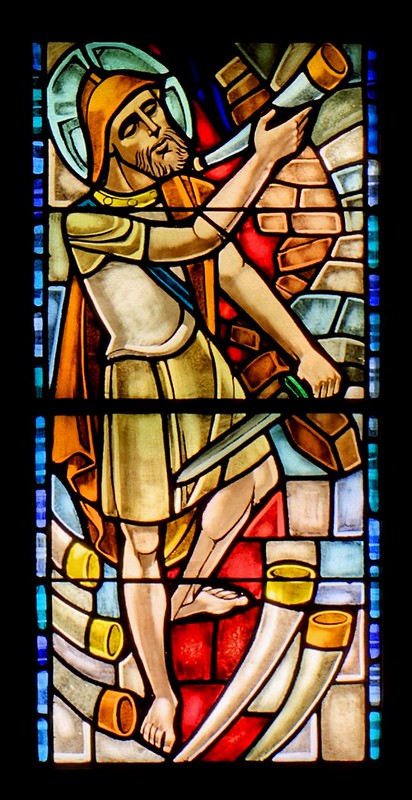
Joshua made a treaty in God's name
with the Gibeonites

Many years later, in the days of Joshua (see Joshua 9), the inhabitants of Gibeon heard that the Israelites had destroyed Jericho and Ai and they feared that they soon would be next. They devised a plan to trick the Israelites to make a treaty with them and not destroy them. The Gibeonites sent a delegation to Joshua dressed in old worn out clothes and shoes. The bread they had with them was dry and moldy, and their wine-skins were old and patched. They said they were from a very distant country and wanted to make a treaty with the Israelites. They said that when they left their home their bread was fresh out of the oven, and their wine-skins and shoes were new. The Israelites sampled their provisions, but they did not seek the counsel of the Lord. Joshua made a covenant with them and swore in the name of the Lord to let them live.

Three days later, Joshua heard that the Gibeonites were their neighbors. The Israelites did not attack them, because of the oath that they made not to harm them, but they summoned their leaders and said, “Why did you deceive us?” The Gibeonites were very gracious, and humbled themselves before Joshua and the Israelites. They told of how they had heard how God had commanded Moses to destroy all the inhabitants in the land, and they feared for their lives. They said, “We are your servants, do whatever seems good and right.” Joshua cursed the Gibeonites to be the servants of the Israelites, being woodcutters and water bearers, but he honored the treaty he made with them and let them live. For their part, it seems that the Gibeonites were just glad to escape God’s judgment on the Canaanites, and they lived at peace with the Israelites and did not betray their part of the treaty.

The Israelites also kept their part of the treaty until King Saul tried to destroy the Gibeonites. Another strange part of this story is that Saul’s part in this story is not found elsewhere in Scripture. Apparently the chronicler who wrote the Book of Samuel did not think this particular misdeed of Saul’s was an important part of the story in a chronological telling, and he did not mention it until he wrote of God bringing the famine in 2 Samuel 21. David, however, knew the history (or looked it up in Scripture), and called the surviving Gibeonite leaders and said, “What shall I do for you to make atonement that you may bless the Lord’s inheritance?”
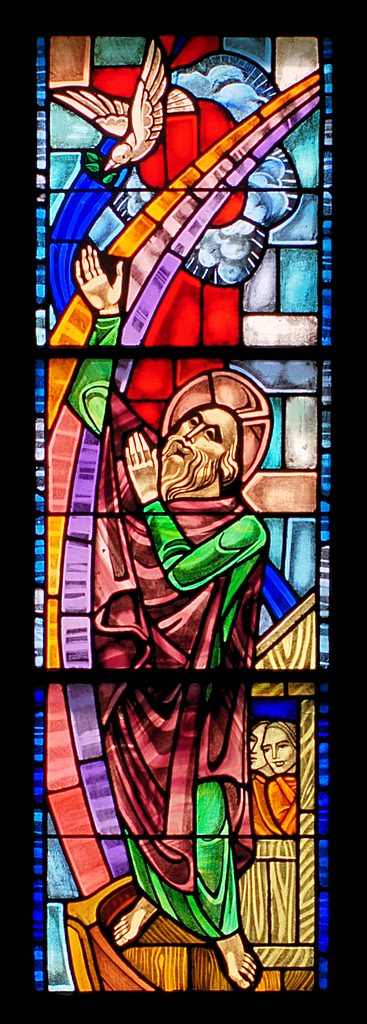
The rainbow is God's sign to Noah that He would not
destroy the earth again with a flood even though
the thoughts of man are only evil all the time.
Genesis 6:5 and 8:21

The Gibeonites were still very humble and submissive before King David, as their ancestors had been hundreds of years earlier with Joshua, and hesitated to make demands to the King, but David repeated, “What shall I do for you?” They asked that seven of Saul’s remaining male descendants would be given to them to be put to death for justice for all the Gibeonites that Saul killed. David agreed to their terms, but he spared Mephibosheth, the son of Jonathan, because of the friendship he had with the son of King Saul. God honored this agreement and lifted the famine.

All of this begs the question: Why would God go to such great lengths to punish Israel for Saul’s misdeeds, many years after Saul had died, on behalf of a people whom He had condemned for destruction hundreds of years earlier, for the sake of a treaty Joshua had made against God’s command? The answer is that God keeps His promises. Or, in this case, God honors the promises made by His people in His name and on His behalf. Despite the fact that God had intended for the Gibeonites to be destroyed with all the inhabitants of Canaan, Joshua had sworn an oath in God’s name that the Gibeonites would not be harmed by the Israelites, and when Saul broke that treaty, God allowed the Gibeonites restitution for the sake of justice, and the honor of God’s name.

If God would go to these great lengths to keep this promise made in His name, even though He never wanted it in the first place, then what does this say about how God will regard His other promises? It shows that God can absolutely be trusted to keep all His promises, no matter what happens.

The very day that Adam and Eve sinned
God promised to send a savior
who would rescue them from their sin.

The main promise that God fulfilled was the promise He made to Adam and Eve when He cursed the serpent in Genesis 3:15. God promised to send the seed of the woman to crush the serpent’s head, though the serpent would bruise his heel. God remembered this promise, even though he destroyed the evil people in the days of Noah, but he saved Noah and his three sons, and each man’s wife (eight people). Likewise when Israel had turned against God and refused to listen to the prophets calling for repentance, God destroyed the ten northern tribes, and nearly wiped out the kingdom of Judah, but He saved a remnant among whom were the descendants of King David who would be the ancestors of Jesus. Jesus is the fulfillment of God’s greatest promise. He is a descendant of Adam and Eve through His mother, Mary, and conceived miraculously by the work of the Holy Spirit, Jesus is God incarnate, who paid for the sins of the world with His perfect obedience, and His innocent suffering and death in our place on the cross.

Compared with the Incarnation of God in Jesus, and the redemption He won for our forgiveness and salvation, the incident with the Gibeonites is of little consequence, but it shows that God honors His promises, and He can be trusted to remain faithful in big promises, and small.

We all ought to see ourselves in a similar situation as the Gibeonites. As the Gibeonites were condemned to destruction for their idolatry, so we are condemned to destruction for our idolatry and other sins. As Joshua promised to spare the Gibeonites, so the greater Joshua (the name “Jesus” is the Greek version of the name, Joshua, meaning, “savior”) has promised to spare us from the punishment due us on account of our sin, because He paid the price and satisfied God’s wrath by dying in our place.
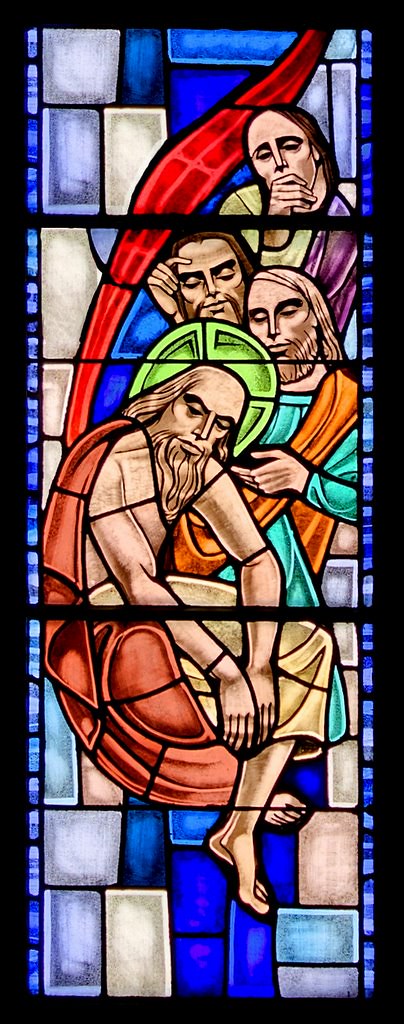
Job’s friends were no comfort when they
misrepresented God’s promises.
Worldly wealth is not a sign of God’s favor,
and poverty is not a sign of God’s disfavor.

Christians ought to be careful when their preachers or anyone make claims about the things God has promised. False teachers make claims about God’s promises which are not true. For example, the “prosperity gospel (sic)” heretics will tell you all day long that you will be rich and successful. However, just because God blessed Abraham and Job with great riches, that doesn’t mean that you will be likewise blessed. God could ask you to suffer like Job, or it is possible that you life may be like the beggar, Lazarus, in the Parable of the Rich Man and Lazarus. Our reward is in heaven, not on earth. Always check your pastor’s claims against the Holy Scriptures. Even when your pastor quotes the Scriptures, double check the context of the passages which are being quoted, to make sure they really say what is being claimed. This goes for my parishioners, too. We all ought to be like the Berean Christians in Acts 17:11 who examined the Scriptures daily to see that the things that Saint Paul was preaching were true. (They found that indeed, he was preaching the truth. Jesus is the promised savior that the Old Testament foretold.)

Here is a sampling of a few of God’s promises which we can rely upon:

Hebrews 13:5-6 says, “Keep your life free from love of money, and be content with what you have, for (God) has said, ‘I will never leave you nor forsake you.’ So we can confidently say, ‘The Lord is my helper; I will not fear; what can man do to me?’” God will never leave us, though, in His mercy, He remains hidden from our senses. This is a matter of faith, but since we can trust in God’s promises we can trust that it is true even (and especially) when it seems like we are alone and abandoned. This passage quotes from several places where it is repeated in the Old Testament. Some common sources are Deuteronomy 31, Psalm 37, and a couple phrases in Isaiah 41 also teach this.
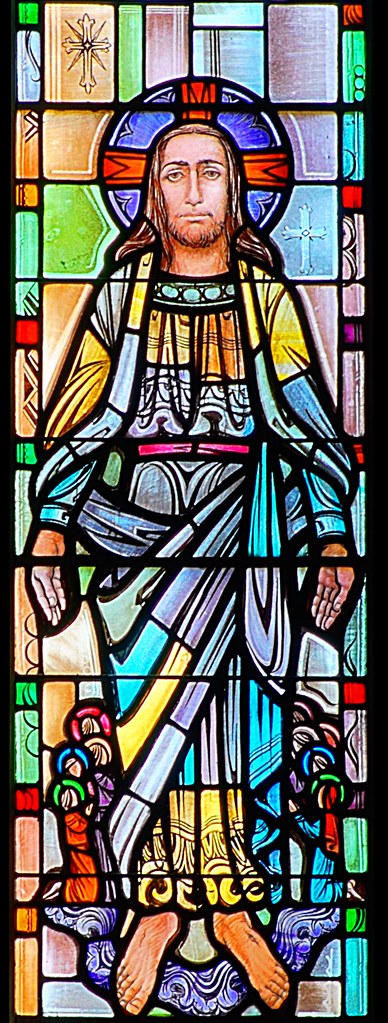
Jesus said, “I am with you always,
to the end of the age.”

Jesus also repeats this at His final teaching before His ascension into heaven. In Matthew 28:20 Jesus says, “Behold, I am with you always, to the end of the age.” This is a great comfort especially when it seems like God is far away from us and the world is falling apart around us.

More of Christ’s promises are found in Matthew 10:32-42 where Jesus said, “Everyone who acknowledges me before men, I also will acknowledge before my Father who is in heaven, whoever denies me before men, I also will deny before my Father who is in heaven. Do not think that I have come to bring peace to the earth. I have not come to bring peace, but a sword. For I have come to set a man against his father, and a daughter against her mother, and a daughter-in-law against her mother-in-law. And a person’s enemies will be those of his own household. Whoever loves father or mother more than me is not worthy of me, and whoever loves son or daughter more than me is not worthy of me. And whoever does not take his cross and follow me is not worthy of me. Whoever finds his life will lose it, and whoever loses his life for my sake will find it. Whoever receives you receives me, and whoever receives me receives him who sent me. The one who receives a prophet because he is a prophet will receive a prophet’s reward, and the one who receives a righteous person because he is a righteous person will receive a righteous person’s reward. And whoever gives one of these little ones even a cup of cold water because he is a disciple, truly, I say to you, he will by no means lose his reward.” This is a comforting passage in times of antagonism and persecution, when the world turns against us and tries to get us to deny the forgiveness and salvation we have in Christ, our Lord. The world wants us to consider that they are gods and to worship and honor them, as they worship and honor themselves and others. There is no salvation there, but only in Christ Jesus. Jesus promises us persecution, but when we remember that He is always with us, and that He will honor a faithful confession in His heavenly Kingdom, then we can stand against the world even if we otherwise stand alone. Christ will have the final word on Judgment day, when He will bring His people with Him to live with Him forever in glory.

Monday, July 27, 2015

The Promise of Christ in Water & Light

by Pastor Paul Wolff


Then God said to Noah and to his sons with him: “I now establish my covenant with you and with your descendants after you and with every living creature that was with you – the birds, the livestock and all the wild animals, all those that came out of the ark with you – every living creature on earth. I establish my covenant with you: Never again will all life be cut off by the waters of a flood; never again will there be a flood to destroy the earth.”

And God said, “This is the sign of the covenant I am making between me and you and every living creature with you, a covenant for all generations to come: I have set my rainbow in the clouds, and it will be the sign of the covenant between me and the earth. Whenever I bring clouds over the earth and the rainbow appears in the clouds, I will remember my covenant between me and you and all living creatures of every kind. Never again will the waters become a flood to destroy all life. Whenever the rainbow appears in the clouds, I will see it and remember the everlasting covenant between God and all living creatures of every kind on the earth.” (Genesis 9:8-16)


Fish graphic supplied by GospelGifs.com.
It is copyrighted and used with permission.
The early Christians had a clever way to describe Jesus. They made an acronym out of the phrase, “Jesus Christ, God’s Son, Savior,” which in Greek spelled the word for “fish.” This is one of the reasons why the fish became a symbol for the Christian faith. The fish is still a popular symbol for the Christian faith. The second century Church father, Tertullian, used this image in an essay on Baptism where he said, “We are born in water as little fish in the way of our fish Jesus Christ.” Tertullian was responding to a false Gnostic–influenced teacher who was trying to abolish the practice of Baptism in the church. Tertullian explained that the little fish can only survive in the water. If the little fish leave the water of Baptism to follow a false teacher, then they will perish.

This is a wonderful image of the life-giving and sustaining power of Holy Baptism, but it doesn’t seem to work well with our Scripture from Genesis 9. Man is not a fish, and in the great flood every person on earth drowned except Noah, Shem, Ham, and Japheth, and each man’s wife – eight people in the whole world survived the flood.

The story of the flood is frightening because in it we see a just God rightly bringing judgment to a world full of sinners. Yet, we are all sinners. We have all sinned against God and deserve His wrath and punishment. What is more, we are born sinners. We are guilty from the moment of our conception – having inherited the sinful condition from our parents. Even if there was something we could do to make up for our actual sins (there isn’t) there is nothing we can do to change our inherited sin.

How do we know that God won’t bring His righteous judgment down on us? Well, that is exactly the question which is answered in Genesis 9.


Noah trusted in God’s promise of a savior.
The first thing we need to remember is that God spared eight people from the flood – along with two of every kind of living creature, and seven of all the ‘clean’ animals. Now, you may ask, “What is eight people among the thousands, perhaps, millions of people on the earth at the time?” In response I will ask a more pertinent question, “Why did God bother to save Noah’s family at all?”


Scripture describes Noah as a righteous man (Genesis 6:9), but the scriptures also show that neither Noah, nor his sons, were sinless. After the flood God said, “I will never again curse the ground for man’s sake, although the imagination of man’s heart is is evil from his youth; nor will I destroy every living thing as I have done.” (Genesis 8:21) This is almost exactly what God said before the flood. (See Genesis 6:5-7) So, if God did not eliminate sinners from the world, then why did He save Noah and his family? It was purely out of His grace for the sake of a promise God had given Adam and Eve that one of their descendants would crush the serpent’s head and bring redemption to all people. Christ had not yet come in the days of Noah, so God saved Noah’s family in order to keep His promise and bring salvation to the world through Christ.

God keeps His promises, so when He says, “Never again will I destroy every living thing as I have done,” we can rest assured that God will keep this promise. Also God designates the rainbow as a sign of this promise. A rainbow is nothing but raindrops and light, and although it is one of the most beautiful things in creation, it is not the colors which make it a symbol of God’s promise, but its shape. It is shaped like a bow – a weapon of war. But instead of shooting arrows, the rain was God’s weapon to destroy all the unbelieving, violent people on earth.


God has set his bow in the clouds,
and has promised never to use it against us again.

Then, after the flood, God said, “I have set my bow in the cloud, and it shall be a sign of the covenant between me and the earth.” (v. 13) Here God is saying that He is hanging up His weapon – out in the open, for all to see. Though you should notice that when God establishes the rainbow as a symbol of His promise that it isn’t primarily a symbol for you and me. It is a reminder for God Himself! He says, “The rainbow shall be in the cloud, and I will look on it to remember the everlasting covenant between God and every living creature of all flesh that is on the earth.” (v. 16) This should be a triple comfort for us. 1) God promises not to destroy us, despite our sin. 2) The sign is not for us to remember, but for Him, and He will never forget, even if we do forget. 3) God is not up in heaven somewhere far away, but that He is right here with us, because rainbows are only visible on the earth.

That third comfort is a little hard to imagine for us who are used to seeing rainbows here on earth. I remember one time I was in an airplane in the middle of the day. We were flying above the clouds, and I looked out the window and saw the shadow of the airplane on the clouds beneath us. Surrounding the shadow of the plane on the clouds was a circular prism of light. It wasn’t shaped like a bow, but a perfect, full ring of light. If we imagine that God is somewhere in the heavens, high above the clouds, then He would not see a rainbow, but a full circle of light. For God to see the rainbow (as He said He would), He must be down here with us, standing on the earth. God is not far away – high above the clouds. He is right here with us at all times. 

If you remember that I said earlier that the image of the fish didn’t seem to work so well with this story, but in St. Peter’s first Epistle he makes the connection between the flood and Baptism. He says,

“God’s patience waited in the days of Noah, while the ark was being prepared, in which a few, that is, eight persons, were brought safely through water. Baptism, which corresponds to this, now saves you, not as a removal of dirt from the body but as an appeal to God for a good conscience, through the resurrection of Jesus Christ, who has gone into heaven and is at the right hand of God, with angels, authorities, and powers having been subjected to him.” (1 Peter 3:19-21)
You should remember that Noah took two of every kind of land animal and bird, but he did not take any fish on the ark, because the flood was not a great danger to the fish. (Though we can see from the fossil record that some fish were caught in the sediment from the flood, but it wasn’t a great extinction threat compared to the land animals.) But God treated Noah and his family as if they were fish. God spared Noah and his family for the sake of our fish – Jesus Christ, God’s Son, our savior.

Noah and his family trusted in God. They built the ark and they went inside with all the animals trusting that God would not only bring the flood, but would protect them and see them safely through it. Their trust in God to save them made them little fishes belonging to our savior Jesus Christ.

It is very sad that there were likely no believers that drowned in the flood. St. Peter also called Noah a “preacher of righteousness,” but no one besides his immediate family joined him on the ark. The way of the world is that sinners do not acknowledge their sin. We do not see the great peril that we are in, nor acknowledge that the judgment of God is just. The way of the world is seductive. The world thinks that its wicked ways are great fun, and tries to lure the little fish away from the protection of the Baptismal waters. But the little fish cannot survive if lured away from the water.


Jesus was baptized into the guilt of your sin
so you could be baptized out of it.
If you have been baptized you have salvation in Christ. Would you live in God’s Baptismal grace as a child of Christ your savior, or would you rather follow the ways of the world? If the whole world decides to abandon Christ, is it wise to follow only for the pleasure of the moment? In the days of Noah the whole world did abandon God as their savior, and they all perished. But Noah and His family were saved on account of Christ, by believing God’s promise to send a savior (Jesus).

The covenant God made to not destroy the world again with a flood was made on account of Christ. God has every right to punish us for our sins, but He poured out His wrath on Jesus instead. Jesus suffered and died on the cross, taking the punishment for the sins of the whole world so that we need never fear the wrath of God. Through Holy Baptism, not only are our sins washed away, but we are given a new birth as God’s Children. Like Noah, we are saved by God’s grace for Christ’s sake. If “Jesus Christ, God’s Son, Savior” is the fish, then through Baptism we are born as little fishes. We need not fear the coming judgment, nor the wrath of God. We are safe in the waters of Holy Baptism. Even if the whole world turn away from Christ, we will remain with Him, both now and for all eternity – little fish under the protection of our one, true fish Jesus Christ, God’s Son, Our Savior.

Thursday, July 2, 2009

Poor in Spirit

Jesus Preaches on a Mountainside

Jesus said, “Blessed are the poor in spirit, for theirs is the kingdom of heaven.” (Matthew 5:3)


John the Baptizer came preaching a message of repentance. All who repented of their sins were washed in the Baptism to prepare them to meet their savior, Jesus Christ. The Pharisees also came to hear John’s message, but only to see what was drawing all the people out into the wilderness. The Pharisees thought that their “good works” were sufficient so they felt no need to repent, and did not. They were not baptized, and were subsequently unprepared to meet their savior when He began His ministry.

When John saw the Pharisees listening to his call for repentance, but refusing to repent of their sins, he proclaimed their wicked unfaithfulness to God, much to their dismay and to the surprise of the people who considered them holy. John said, “Who warned you to flee from the coming wrath?” (Matthew 3:7), and called them poisonous serpents.

The Pharisees wrongly felt that they were so rich in spirit that they did not need to repent, nor did they need to rely on the mercy of Christ to save them from God’s wrath, so they were unprepared to recognize their savior when He came and stood right in front of their eyes.

Lest you think that John was too harsh on the Pharisees, Jesus also came preaching repentance and He called the Pharisees “sons of hell” (Matthew 23:15) and “hypocrites” and “whitewashed corpses” among other things (Matthew 23:27).

In the Sermon on the Mount (Matthew 5) Jesus preached that God gives the kingdom of heaven those who are “poor in spirit.” The “spiritually poor” are those who recognize the poverty of their own spirit to save themselves. They know that they must rely on God’s mercy through Jesus Christ in order to escape God’s wrath over their sin, so they cling to Jesus who brings them to heaven and generously shares with them His eternal heavenly inheritance.

The Pharisees thought themselves “rich in spirit.” They believed that God favored them because they were righteous, holy people who didn’t need to repent of their sins. They rejected Jesus and their salvation because they refused to see how lost they were. This is what Jesus meant when He said, “It is easier for a camel to go through the eye of a needle than for a rich man to enter the kingdom of heaven.” (Matthew 19:24) Beware of those modern Pharisees who would explain away this passage as referring to some small, but passable gate in Jerusalem. It was just as impossible for a camel to go through the eye of a sewing needle in ancient times as it is today. Jesus taught that it is impossible for anyone to be saved if he trusts in his own richness of spirit instead of Christ’s works to save him.

Jesus calls Zacchaeus down from the Sycamore tree
Jesus also teaches this in the Parable of the Pharisee and the Tax Collector. (Luke 18:10-14) In this story the Pharisee brags about himself before God, but his empty prayer falls on deaf ears. The tax collector, however, agonizes over his sin and pleads, “God, have mercy on me, a sinner.” God hears this honest, faithful prayer and forgives his wickedness. Thus, having been forgiven his sins, the kingdom of heaven is opened to him.

You are not likely to hear the popular preachers of our day telling you to proclaim to God and the world your poverty of spirit or your unworthiness for the blessings of God’s kingdom. Most popular preachers are more like the Pharisees. They tell you that God wants you to be rich and successful in this life. They tell you that the few good things you do please God enough to receive His favor, or if you aren’t good enough yet, you could be with just a little effort on your part. This is why these preachers are so popular and why it is so easy to be a Pharisee. We all want to be rich and successful. We want to believe that God favors us because we are so good, or at least that we are better than the next guy in some way. But this is all wickedness and lies which lead us to trust in ourselves and reject Christ.

The faithful preachers of today are the ones who teach us to emulate Saint Paul who called himself the “chief of sinners.” (1 Timothy 1:15-16) Yes, it goes against all sinful human logic to see how God is going to welcome you into Paradise when you stand before Him and proclaim that you are the worst, wicked sinner who only deserves punishment. But Saint Paul isn’t bragging about his wickedness as if that would save him. He is bragging about Christ’s mercy and forgiveness – that Christ would forgive such a wicked person as Paul and give him the riches of His heavenly kingdom.

It also is contrary to common sense how telling people of the poverty of their spirit would be a successful evangelism tool. It’s true that you are not likely to fill your church or get rich by telling people just how wicked they are, but neither will you save their souls by lying to them and telling them that they are (or could be) so good that they don’t need Christ to save them. It is so easy for preachers to tell the people what they want to hear. The parishioners will be glad to hear of their goodness and will reward the wicked preacher with praise and monetary blessings – at least until that day when they must stand before Jesus and explain why they think they are better than He is. Then these people won’t be so happy with their false pastors and will curse them forever. On the other hand, those people who hear the hard message and believe in Jesus will receive eternal salvation in Christ’s heavenly kingdom.

Blessed are the poor in Spirit, for theirs is the kingdom of heaven.
When Jesus began to teach hard things that the people couldn’t accept He didn’t soften his message to keep them in the congregation. Instead He taught harder things which seemed to only drive more people away. Then, when He saw that His disciples were still with Him, He asked them, “What about you? Don’t you want to leave, too?” Peter answered for the disciples, “Lord, to whom shall we go? You have the words of eternal life.” (John 6:67-68)

The blessings of the Beatitudes do not come because of our worthiness. We poor sinners are blessed because Jesus has redeemed us through His perfect life and His innocent suffering and death. We should not necessarily strive to be poor, meek, persecuted, etc., instead we should only recognize that we are those things simply because we are sinners and would be condemned were it not for the salvation we have in Jesus Christ. Christ is our blessing both now and for eternity, no matter what our state or station in life.

Wednesday, April 22, 2009

Conversion by the Holy Spirit

John 11:43-44
Jesus called in a loud voice, “Lazarus, come out!” The dead man came out, his hands and feet wrapped with strips of linen, and a cloth around his face.


There is much misunderstanding about just what exactly the Holy Spirit does when He converts a sinner. It is popular these days to believe that the Holy Spirit simply changes a person’s mind to make him favorably disposed toward God. Some don’t even give God credit for this miraculous work, instead some say that a man must change his own heart and make some sort of a decision that would cause God to come into his wicked heart. Neither of these are taught by Holy Scripture.

Scripture describes conversion to faith in Christ as something like a birth or a resurrection. Remember that because of our inherited sin we are by nature “dead in (our) transgressions and sins” (Ephesians 2:1). Jesus said, “I tell you the truth, no one can enter the kingdom of God unless he is born of water and the Spirit. Flesh gives birth to flesh, but the Spirit gives birth to spirit.” (John 3:5-6) Since we are spiritually dead by nature then the new life that is begun in us through the power of the Holy Spirit in the sacrament of Holy Baptism is like a resurrection. God creates life where before there is only death.

The raising of Lazarus both gives a great example how this works, and it shows that Jesus has the divine power to accomplish this miracle. Lazarus was four days dead when Jesus came to visit his home in Bethany. Lazarus had no power to walk out of the grave on his own to meet Jesus halfway. Lazarus had no will to make a decision that would cause Jesus to act favorably on his behalf. Even Lazarus’ sisters did not presume to encourage Jesus to raise their brother (see John 11:23-26) even when Jesus told them what He was going to do. Lazarus was as dead as dead can be and his body was beginning to decay (John 11:39). Lazarus had no active role in his resurrection, no will, decision, cooperation, nor any help whatsoever.

Jesus didn’t need any help from Lazarus or anyone else. Jesus displayed the same power that He used in the beginning of time when He created all things visible and invisible. He simply spoke the words, “Lazarus, come out” and Lazarus came out of the tomb alive and well.

The same thing happens when a baby (or anyone) is baptized in the name of God, the Father, Son, and Holy Spirit. “We were, by nature, objects of wrath” (Eph. 2:3) but when God’s Word is spoken and the water is applied, then a new child of God is born as Jesus says in John 3. It is a true miracle what God does in Holy Baptism. It is equal to what happened to Lazarus in Bethany four days after he died. It doesn’t seem to us to be a great miracle, especially when the person baptized is still an infant, and many would deny the miracle, but it is a great miracle nonetheless. “The Spirit gives birth to spirit,” is how Jesus describes the miracle of Holy Baptism.

Our sinful nature does not like to give Christ credit for even the miraculous things that He does in our lives, especially when that miracle includes killing our sinful nature. That is why people make up stories about the supposed power of a personal “decision” to follow Jesus. Martin Luther’s Small Catechism says that Baptism “indicates that the Old Adam in us should by daily contrition and repentance be drowned and die with all sins and evil desires…” Luther writes this based on the words of Jesus in Luke 9:23, “If anyone would come after me, he must deny himself and take up his cross daily and follow me,” and the words of St. Paul in Galatians 5:24, “Those who belong to Christ Jesus have crucified the sinful nature with its passions and desires.”

There is great comfort in the miracle of new birth by the Holy Spirit in Holy Baptism. It takes away any question or doubt regarding the sincerity and effectiveness of one’s own decision or self-driven conversion. It gives us the assurance that what Christ says is done, and it is very good, as are all things that God creates by His holy Word. It is also as wonderful as a dead man walking out of his grave alive after Jesus calls him by name. Jesus does that to all of us who believe and are baptized.

Saturday, February 7, 2009

A Peaceful Passing

When the time of their purification according to the Law of Moses had been completed, Joseph and Mary took him to Jerusalem to present him to the Lord (as it is written in the Law of the Lord, “Every firstborn male is to be consecrated to the Lord” ), and to offer a sacrifice in keeping with what is said in the Law of the Lord: “a pair of doves or two young pigeons.”
Now there was a man in Jerusalem called Simeon, who was righteous and devout. He was waiting for the consolation of Israel, and the Holy Spirit was upon him. It had been revealed to him by the Holy Spirit that he would not die before he had seen the Lord’s Christ. Moved by the Spirit, he went into the temple courts. When the parents brought in the child Jesus to do for him what the custom of the Law required, Simeon took him in his arms and praised God, saying:
“Sovereign Lord, as you have promised, you now dismiss your servant in peace. For my eyes have seen your salvation, which you have prepared in the sight of all people, a light for revelation to the Gentiles and for glory to your people Israel.”
The child’s father and mother marveled at what was said about him. Then Simeon blessed them and said to Mary, his mother: “This child is destined to cause the falling and rising of many in Israel, and to be a sign that will be spoken against, so that the thoughts of many hearts will be revealed. And a sword will pierce your own soul too.” (Luke 2:22-35)


You will sometimes hear people say, “I can die happy, now.” This is a great exaggeration. There is nothing “happy” about death, and with all due respect to Simeon, there is little that is “peaceful” about death either. Death is not “natural.” God did not create death. God created life. Death only came into the world as a result of people’s sin (see Genesis 3:19). Because of this, death is always a great tragedy, though in some cases, it is welcomed as a release from suffering (as long as the person has the assurance that the life beyond death is in Paradise, and not a greater suffering.)

Simeon, however, was given a great gift. God the Holy Spirit had revealed to him that he would not see death before he saw the Christ, the long-awaited savior of mankind. Yet what did Simeon see there at the temple in Jerusalem? Simeon saw a helpless newborn baby and a young family far from home who were struggling with cash flow problems. The baby Jesus looked and sounded and felt and smelled like any other baby His age. He couldn’t talk, He couldn’t walk, He couldn’t feed himself despite the fact that He was the almighty creator and ruler over all things visible and invisible.

It wasn’t the appearance of Jesus that made Simeon praise Him. Many other people saw Jesus with their eyes, and did not receive the great blessing that Simeon received. King Herod saw Jesus, but was unimpressed and felt disappointed. Judas saw Jesus nearly every day for about three years, and was a student of Christ’s teachings, yet, Judas did not believe and lost the salvation which was so close, yet so far away for him.

Many people view faith as a matter of feeling. We are sensual creatures and we often rely too much on what we take in with our five senses. It also wasn’t just how Simeon felt about this baby which made him identify Him as the Christ - he could have felt more strongly about someone else, and would have been wrong. Remember that Eve (Genesis 4) felt that her firstborn son was the promised Christ, but she was tragically wrong. What Simeon had, which blessed him so, was the Word of God!

Despite what Simeon saw, felt, heard, and smelled, he believed God’s word to him that this baby was the promised Christ who would redeem the world from sin. It didn’t matter to Simeon that this child had not accomplished any of this yet. All Simeon knew was that God had promised that it would happen and this baby, Jesus, would do what was necessary for our salvation. That was good enough for Simeon.

Simeon sings a prophetic song of praise to God, though he does briefly mention his experiences. He says, “my eyes have seen your salvation, which you have prepared in the sight of all people, a light for revelation to the Gentiles and for glory to your people Israel.” Note that while he mentions what God had revealed to him, Simeon only praises God and not himself. Simeon rejoiced in his salvation, not because he was convinced by what he saw, but because he believed God’s promises to send a savior who would redeem the world from sin.

Simeon also notes that God did not do this in secret, but had “prepared [this] in the sight of all people.” This was the task that God had given the Israelites from the days of Abraham (who was actually, Israel’s Grandfather) until the fulfillment of the promise in Christ and then the spreading of the message of salvation to the Gentiles. Jesus is the “glory of Israel” because all believing Christians praise God for the Israelites who were faithful to Him and remained faithful up to Christ’s birth of the Virgin Mary. We also praise God for all those Christian Jews like St. Paul who also spread the Gospel message to the world during the first century Roman persecution (and subsequent persecutions).

Christ is a “light for revelation to the Gentiles” because before that time God’s promises of salvation were largely forgotten and unknown by the whole world except for the Israelites. Only Israel knew the true God and kept His Word in the Holy Scriptures, though as we read in the Bible even Israel forgot about God from time to time and needed some gentle (and sometimes not so gentle) reminding about who God is and what He has done for us.

I don’t know if Simeon died happy. I do know that he was at peace. He knew that God had kept His promise to send a savior to redeem the world from sin. In this respect we are no different from Simeon. Just as Simeon trusted in God’s Word more than just what his senses told him when he met the baby Jesus, so we, too, can trust in that same Word from God.