(Part 4 of a series of 9 articles on the Beatitudes)
by Pastor Paul Wolff
Jesus said, “Blessed are those who hunger and thirst for righteousness, for they shall be satisfied.” (Matthew 5:6)
Hunger and Thirst
 |
| Jesus said, “Blessed are those who hunger and thirst for righteousness (justice), for they shall be satisfied.” |
We should remember that sin has corrupted our desires so that we sometimes hunger for “junk food” which may provide calories to burn, but little to strengthen and heal. There are other ways that sin can corrupt our innate hunger to cause desires for too much or too little nourishment, but for most people hunger is a good natural bodily function which helps us remain healthy.
There is also a spiritual counterpart to physical hunger. This spiritual hunger causes us to seek that which nourishes us spiritually. A healthy spiritual hunger leads us to take in what is beneficial for our spirit. We should be careful about this because sin has corrupted our spirit so that we do not know what is good for us. People often feel some exuberant emotion, and think that they are having a “spiritual” experience, but it is still only a physical experience. True spirituality only comes from God the Holy Spirit, who gives us life-giving gifts. It is the Holy Spirit who is the most good for our spirit because He brings Jesus Christ to us for our forgiveness and salvation. The Psalmist writes, “As a deer pants for flowing streams, so pants my soul for you, O God. My soul thirsts for God, for the living God.” (Psalm 42:1-2) Here the Psalmist makes a comparison between the body’s need of water, and the soul’s need for “the living God.” Physical thirst and spiritual thirst are not the same thing, but they are similar. The difference is that Spiritual thirst seeks after God, rather than physical satisfaction. Jesus also taught, “Do not work for the food that perishes, but for the food that endures to eternal life, which the Son of Man will give to you. For on him God the Father has set his seal.” (John 6:27) This teaches us that there is something more valuable than food. Even the best food cannot sustain us forever. Because our bodies are corrupted by sin, no food can sustain us forever. This is why we hunger for the eternal blessings which only God can give us.
Jesus says, “Blessed are those who hunger and thirst for righteousness, for they shall be satisfied.” (Matthew 5:6) “Righteousness” includes all things which are right, especially those things which God considers good, right, and proper. God is truly righteous and holy in all things, and the things which He desires are also good for us because He loves us as a loving Father loves His dear children. Yet, we are all rebellious sinners, having inherited the guilt of sin from our parents, going back all the way to Adam and Eve. Because we are sinners, we are not the righteous people which we ought to be. This separates us from God and makes us His enemy, and subject to God’s righteous anger and punishment. This is why we hunger for righteousness. We hunger for the good things which we lack. Scripture says, “God looks down from heaven on the children of man to see if there are any who understand, who seek after God. They have all fallen away; together they have become corrupt; there is none who does good, not even one.” (Psalm 53:2-3) Since we are not righteous, we hunger for righteousness, and the good things which come along with righteousness and goodness.
Biblical Examples of Hunger for Righteousness
 |
| Jesus is the Living Water which springs up within His people to eternal life. (See John 4:7-14) |
Once when Jesus was teaching (see Mark 10:17-27), a man came up to Him and said, “Good teacher, what must I do to inherit eternal life?” Jesus then responded, “Why do you call me good? No one is good except God alone.” Jesus was neither denying that He was good nor that He is God, but he was pointing out the fact that the man wasn’t intending to confess that Jesus was perfectly good and righteous, or that He was God. The man was just trying to flatter Him as people sometimes do. Being truly righteous, Jesus was neither flattered, nor did He think the man sincere, but he used this empty flattery as a way to begin teaching the young man about the proper distinction between Law and Gospel. At the end of this conversation Jesus told him to give away all his possessions which he had turned into idols. The man left sad because he realized that he was not as righteous as he had previously thought, and could not rely on his own righteousness to finally “inherit eternal life.” Jesus then teaches His disciples by giving the famous illustration, “It is easier for a camel to go through the eye of a needle, than for a rich man to enter the kingdom of God.” The disciples are astonished and asked, “Who, then, can be saved?” Jesus said, “With man this is impossible, but not with God. All things are possible with God.” This shows that God is our righteousness and our savior. We can only be saved if God pays for our sins and makes us righteous. We sinners can no more make ourselves righteous than we can make ourselves inherit someone else’s wealth.
This story (which is also found in Matthew 19 and Luke 18) shows a young man who did hunger and thirst after righteousness, but initially believed that he had achieved this in his life, but, when confronted by Jesus, and God’s Law, realized that true righteousness can not be achieved by works of the law, but is only found in God. If we are to become righteous, we can only receive it as a gift from God, and not our own doing. All our works are tainted by sin. Saint Paul wrote in Romans 3:19-20 “Now we know that whatever the law says, it says to those who are under the law, so that every mouth may be silenced and the whole world held accountable to God. Therefore no one will be declared righteous in his sight by observing the law; rather, through the law we become conscious of sin.” Here we see that God’s Law shows us our sinful condition so that we cannot attain true righteousness by anything that we do, but must instead rely on Christ to forgive us and make us truly righteous in His own time (that day being Judgment Day, which is also known as the Day of Resurrection).
Saint Paul also has much to say about man’s unrighteousness and the grace of God in Romans 7, where after an honest self examination, he ends up by saying, “What a wretched man I am! Who will rescue me from this body of death? Thanks be to God – through Jesus Christ our Lord!” (Romans 7:24-25) Read the whole letter to the Romans for more than I can explain here. Saint Paul’s conclusion is that true righteousness must come from God as a gift through faith in Jesus Christ, or else we sinners can never achieve it. We, then, can never be satisfied with our own attempts to attain righteousness because all our works are tainted by sin. Yet, Christ has overcome sin through His life and death, and He will make us righteous as we ought to be in the life to come in His Kingdom.
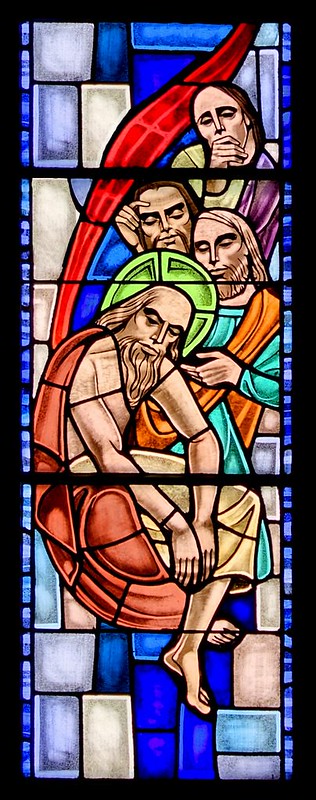 |
| Job hungered for righteousness. Though his friends mistakenly thought God was punishing Him. |
There are many good examples of saints in the Bible who hungered for righteousness. When Job first heard that tragedy had struck and all his flocks and possessions and children had been killed and destroyed, he mourned his loss (see my article on “Blessed are those who mourn”), but then he said, “Naked I came from my mother’s womb, and naked shall I return. The Lord gave, and the Lord has taken away; blessed be the name of the Lord.” (Job 1:21) Likewise, when Job was then afflicted with painful sores his wife told him, “Curse God and die.” (Job 2:9) Yet, Job replied, “You speak as one of the foolish women would speak. Shall we receive good from God, and shall we not receive evil?” Again, Job trusted that God was not evil, even though all these bad things were happening to him. He would not curse God, but trusted in God to save him, even recognizing that God may have sent all the trouble that he was experiencing. In this way Job hungered and thirsted for righteousness because he would rather suffer now at the hands of God than turn away from God and reject God’s righteousness and promise of eternal salvation.
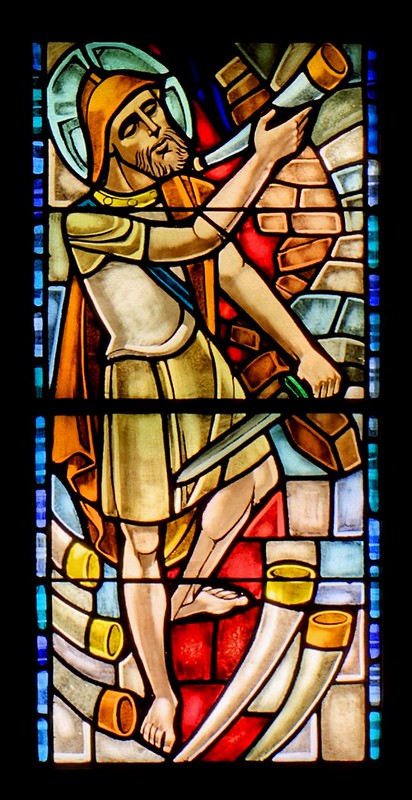
Likewise, there are several times David was also a good example of someone who demonstrated hunger and thirst for righteousness. When Goliath challenged Israel to send their best warrior to fight him in single combat (see 1 Samuel 17), Goliath cursed Israel’s God when all the warriors were too afraid to step up. When David heard the Philistine cursing God he became angry with a righteous anger. Since none of the Israelites (from King Saul to Jonathan to even some of David’s older brothers who were in the army) were going to step up and defend God’s honor, then David was going to do it and show the Philistines that their God is the true God. The proof would be that God would give a teenage boy the courage and strength to defeat and kill the blasphemous giant pagan warrior, Goliath. Now, David was not your ordinary Israelite. God had already sent the prophet Samuel to anoint David as the next king, though it would yet be many years before David was crowned king. Yet God was with David, and David trusted in God so much that He was not afraid to stand against Goliath, even when King Saul and all Israel’s soldiers were afraid to stand up to Goliath. David was also given the courage to fight in God’s name and for God’s honor and glory. David’s hunger and thirst for righteousness was go great that he did not even consider the likelihood of his own defeat and death, but was willing to put his life on the line to show the Philistines (and the Israelites) that God is the true God, and should not be despised, as Goliath despised Him. David’s hunger and thirst for God’s righteousness was satisfied when God gave him the victory over the giant Philistine warrior.
 |
| David hungered for God’s righteousness even when it endangered his own life to do so. |
David also showed similar hunger and thirst for God’s righteousness when King Saul was trying to kill David out of envy for the victories that God had given him (even though those victories also benefited King Saul and all of Israel). There were two instances where Saul was in reach of David’s sword, and all he had to do was to reach out and kill him, (see 1 Samuel 24 and 26) but David refused to lift his hand against God’s anointed king. In the second incident after David again showed Saul that he could have killed him, but did not, David said, “The Lord rewards every man for his righteousness and his faithfulness, for the Lord gave you into my hand today, and I would not put out my hand against the Lord’s anointed.” (1 Samuel 26:23) In the world’s eyes, David could have claimed “self-defense” for killing Saul, since the King was intent on killing David, even though David was not his enemy. Yet, for the sake of righteousness, David refused to strike down God’s chosen king, but trusted in God to deal with Saul as He saw fit. The reason David did not kill Saul was not for Saul’s sake alone, but for the sake of the promised Messiah (Christ). Saul was anointed by God and was a kind of a messiah (anointed one). Saul was anointed as King of Israel, but for the sake of God’s promised anointed savior (Jesus), David would not lift his hand against even an unfaithful King Saul (whom God had rejected because of his unfaithfulness) because he had been anointed by God to be king.
Jesus Hungered for Our Righteousness
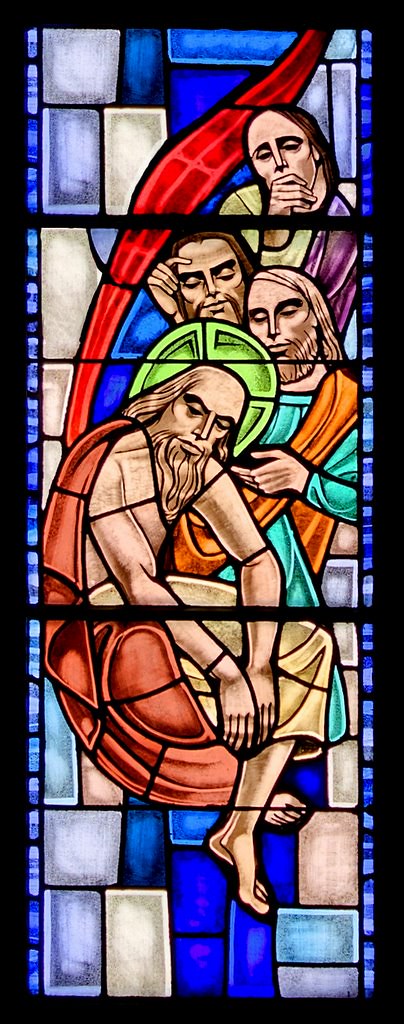
Jesus did not hunger and thirst for righteousness in the same way that we do. Jesus was, and is, righteous in all things, so He didn’t hunger for righteousness as if He was lacking in any way. Yet, Jesus did hunger and thirst for our righteousness. Once, when Jesus was on His way to Jerusalem, some Pharisees warned Him that Herod wanted to kill Him. Jesus already knew that it wasn’t just Herod, but many of the Pharisees also wanted Jesus dead, too. Jesus lamented this, saying, “O Jerusalem, Jerusalem, the city that kills the prophets and stones those who are sent to it! How often would I have gathered your children together as a hen gathers her brood under her wings, and you were not willing!” (Luke 13:34) Jesus still kept on His way toward Jerusalem, trusting that it was God’s will that He should suffer and die to pay for the sins of all people – including those who reject Him. Jesus wanted us all to be cleansed of our sin and made to be righteous as God intended from the start. This is how Jesus hungered and thirsted for our righteousness: He would rather endure suffering and death than to let us all perish in our sins and unrighteousness. Jesus knew that the only way we could be made righteous is if He paid the price (death) for our sins so that we could be washed clean and made righteous through His blood. This is in some ways very different from our experience, but in other ways it is similar. Jesus lived by faith, just as we do. He suffered just as sinners do, even though He remained sinless, yet, He also had to trust in God to save Him from death as we also trust in God to save us because of what Jesus did for all of us.
Misplaced Spiritual Hunger
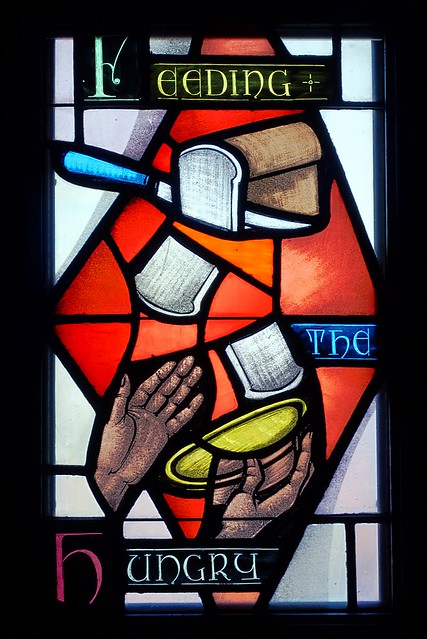 |
| We hunger for that which we lack. This is why we hunger and thirst for righteousness. |
There are also the spiritual equivalent of eating disorders which cause people to hunger for what seems good, but which actually is detrimental to the Spirit. After all, no one ever seeks what they believe is evil. Even the most evil person in the world does what he does because he thinks it is good and profitable in some way. Such people may be tragically wrong, but they still seek what seems good to them. Evil sometimes starts out small and simple, but as a person’s conscience gets more comfortable with sin the wickedness grows. It is important to remember that love desires what is best for your neighbor, while wickedness desires what I feel is best for me. Unrighteous people hunger and thirst for wickedness. They hold parades and celebrate all kinds of wickedness. Prostitutes and whores desire to kill their unborn children, and don’t want to hear how wrong that is, or how their children are a wonderful gift from God instead of someone to be murdered. They celebrate all kinds of sexual perversions from adultery to homosexual relations to all kinds of perverse behavior. There is never any satisfaction for wickedness. There can never be satisfaction for wickedness because God didn’t make us that way. Wickedness and sin always leads to more, and it is never enough. Only true righteousness in Christ can satisfy.
We see this in Genesis 4, God confronts Cain regarding his jealous anger. “The Lord said to Cain, ‘Why are you angry, and why has your face fallen? If you do well, will you not be accepted? And if you do not do well, sin is crouching at the door. Its desire is for you, but you must rule over it.’” (Genesis 4:6-7) Here God is encouraging Cain to seek righteousness, but Cain insists on hungering for envy, hatred, and eventually murder. God tells Cain that righteousness isn’t a “zero-sum game” as if Abel’s righteousness precludes Cain from also being righteous. If Cain was faithful, like Abel, then God would be pleased with them both. Cain had nothing to gain from killing his brother as if they were a rival for something that only one of them could possess (God’s favor) at the expense of the other. If they both were faithful to God, then God would be happy to favor them both. Cain, instead hungered for evil, and held on to his envy and sin, rather than repenting and hungering for righteousness. In the end, Cain found disfavor from both God and man, though God had mercy on him and protected him from those who might seek vengeance.
 |
| Jesus resisted the temptation in His hunger to turn stones into bread, so that He could be the bread of life for all who trust in Him. |
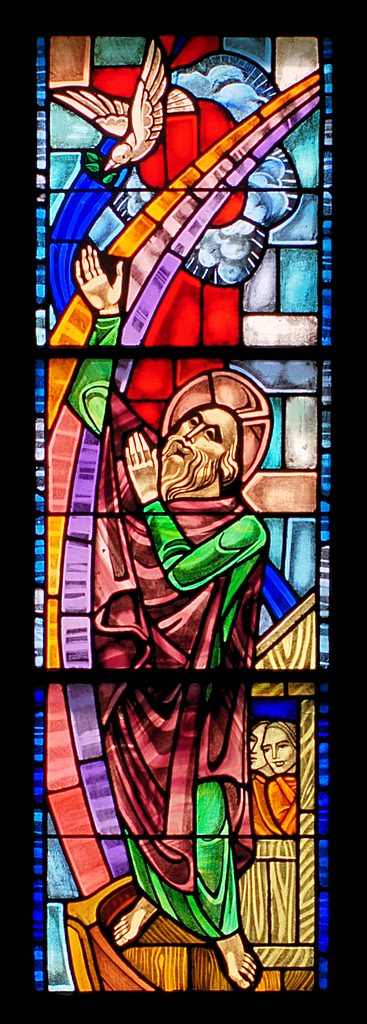
None of this should surprise us because the Bible is very clear that sin corrupts us all. There is no one who is good, not even one. In Genesis 8, after the great flood, this is how God saw the world: “Then Noah built an altar to the Lord and took some of every clean animal and some of every clean bird and offered burnt offerings on the altar. And when the Lord smelled the pleasing aroma, the Lord said in his heart, ‘I will never again curse the ground because of man, for the intention of man’s heart is evil from his youth. Neither will I ever again strike down every living creature as I have done. While the earth remains, seedtime and harvest, cold and heat, summer and winter, day and night, shall not cease.’” (Genesis 8:20-22) Now you might think that God sent the great flood to get rid of evil in the world, so that only the good people survived, but Noah and his family were also sinners, having inherited sin from their parents like everyone else. When Scripture says that “Noah was a righteous man” in Genesis 6:9, it doesn’t mean he was without sin, but that he loved God and trusted God and listened to God’s Word which promised rescue and salvation. God does not condone sin and evil, but He provides for rescue in Jesus Christ. Noah trusted in God and God counted Noah’s faith as righteousness just as He did several generations later with Abraham (see Genesis 15:6).
Christians Hunger for the Lord’s Supper
 |
| Christians hunger and thirst for the body and blood of Jesus given in the sacrament of the Lord’s Supper, so that we can share in the benefits of the sacrifice Jesus made for us all. |
Since, by the time of Jesus, the Israelites had been celebrating the Passover every year for over a thousand years (except for years of apostasy), they should have recognized its fulfillment when Jesus sacrificed His life for the sins of the world. Many did, and they spread the good news of Christ’s salvation throughout the world. Jesus also used the Passover meal as the basis for a new sacrament, since He fulfilled the Passover prophesy. Jesus instituted the Lord’s Supper in which He gives His body and blood in the bread and wine of the sacrament in a miraculous way for the forgiveness of our sins, and the strengthening of our faith. In this way we participate in the sacrifice that was made for our sins (see 1 Corinthians 10:16) in the same way the Old Testament Israelites participated in the sacrifice of the Passover lamb. Christians now hunger for this blessed gift, which is a taste of the eternal life which Jesus promises to all who believe in Him to save them from sin and death.
Jesus says that the blessing which comes to those who hunger and thirst for righteousness is that “they will be filled (or satisfied).” Our hunger for righteousness will be filled when Christ comes back and makes us holy and righteous as he is. Until that happens we hunger and thirst for it because it is unfulfilled, but when Jesus comes we will be satisfied forever in Christ. Until then we live in the assurance of faith in God’s promises. In the Revelation which Jesus gave Saint John, he sees a vision of those redeemed by Jesus, and they are described in this way, “They shall hunger no more, neither thirst anymore; the sun shall not strike them, nor any scorching heat. For the Lamb in the midst of the throne will be their shepherd, and he will guide them to springs of living water, and God will wipe away every tear from their eyes.” (Revelation 7:16) Since the resurrection is a bodily resurrection, God knows our bodily need for food and drink, and will provide us with plenty for all eternity. John also sees this: “Then the angel showed me the river of the water of life, bright as crystal, flowing from the throne of God and of the Lamb through the middle of the street of the city; also, on either side of the river, the tree of life with its twelve kinds of fruit, yielding its fruit each month. The leaves of the tree were for the healing of the nations.” (Revelation 22:1-2) So we see that the new earth that God prepares for us to live forever has plenty of wonderful food and drink which will sustain us forever without death or decay. This is also something that we hunger for, since all we know is decay and death in this sinful life. Yet we are comforted in this life because God promises that we will receive this, so we trust in God’s promises as we await their fulfillment.
Other articles in this series:
Blessed are the Poor in Spirit
Blessed are Those who Mourn, For They Will be Comforted
Blessed are the Meek, for They Shall Inherit the Earth
Blessed are the Merciful, for They Shall Receive Mercy
Blessed are the Pure in Heart, for They Shall See God
Blessed are the Peacemakers, for They Shall be Called Sons of God
Coming soon:
Blessed are those who are persecuted for righteousness’ sake, for theirs is the kingdom of heaven.