Showing posts with label gospel. Show all posts

Thursday, January 6, 2022

What was Jesus Like as a Boy?

by Pastor Paul Wolff


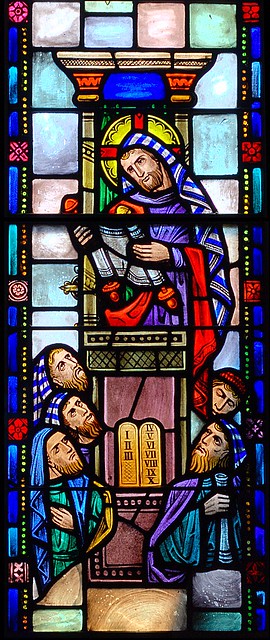
Most images of this event in Luke 2
can be somewhat misleading.
The boy Jesus came to learn, not to teach.

“And the child (Jesus) grew and became strong, filled with wisdom. And the favor of God was upon him. Now his parents went to Jerusalem every year at the Feast of the Passover. And when he was twelve years old, they went up according to custom. And when the feast was ended, as they were returning, the boy Jesus stayed behind in Jerusalem. His parents did not know it, but supposing him to be in the group they went a day’s journey, but then they began to search for him among their relatives and acquaintances, and when they did not find him, they returned to Jerusalem, searching for him. After three days they found him in the temple, sitting among the teachers, listening to them and asking them questions. And all who heard him were amazed at his understanding and his answers. And when his parents saw him, they were astonished. And his mother said to him, “Son, why have you treated us so? Behold, your father and I have been searching for you in great distress.” And he said to them, “Why were you looking for me? Did you not know that I must be in my Father’s house?” And they did not understand the saying that he spoke to them. And he went down with them and came to Nazareth and was submissive to them. And his mother treasured up all these things in her heart. And Jesus increased in wisdom and in stature and in favor with God and man.” (Luke 2:40-52)


God’s Word is the greatest treasure on earth. There is nothing on earth that can give you the blessings that God’s word can give. God had the Holy Bible written to show us what He has done to save us, so that we might trust in Him and be saved through that faith. God Himself works through His Word to bring you forgiveness and salvation. Nothing else in all the world can save you from sin and death and give you eternal life in God’s paradise. That is why God’s Word is such a great treasure.

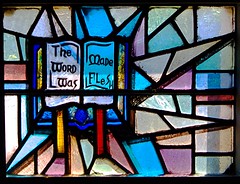
The Word became flesh and dwelt among us,
and we have seen his glory,
glory as of the only Son from the Father,
full of grace and truth. (John 1:14)

God’s Word is such a treasure that God has made sure that from the time that Moses wrote the first five books about 3,500 years ago until now, the Holy Bible has been preserved so that at all times in history God’s people could hear it or read it and learn that God is our loving Father and creator and redeemer. God’s Word first shows us that we are all sinners, descended from Adam and Eve, and we would all be under God’s condemnation, but for God’s mercy. This is likely why more people do not appreciate this great treasure. Sinners don’t like to be reminded of the truth of our sin. We like to think we are better than we are, and more holy. The truth, however, is that we are rebellious sinners, and we all desperately need God to save us from death, which is the condemnation of sin. Every person who ever lived on earth before 1903 has died. That includes the one man who never sinned nor deserved death, but who gave His life to redeem us all from the curse of sin. That man is Jesus. We need to hear the truth of our sin, no matter if we want to or not. If we deny the truth of our sin, then we will deny the blessings God has provided for us in Jesus. But, as Saint John wrote, “If we confess our sins, (God) is faithful and just and will forgive us our sins and purify us from all unrighteousness.” (1 John 1:9)

God became incarnate as a man
to redeem sinners from sin and death.

God’s Word does not only tell us how bad we are, and how much we need a savior, but it also shows us what God has done through Jesus to rescue and redeem us from the consequences of our sin. God, in His essence, is a Spirit, and He is eternal and cannot die. In order for Him to provide for our redemption the Second Person of the Trinity became incarnate as a baby who grew into a man. He is like us in every way, except without sin. Jesus had to be a man so that He could not only keep and fulfill God’s Law, but so that He could offer His life in payment for the lives of all of us sinners. We might not know any of this, except for the fact that God had it written down and preserved for us to hear and read and know, so that we may be saved.

The Bible was not just written for you and me. God also had it written and preserved for Jesus, also. When Jesus read the Bible it was a little different! The Bible Jesus read was not different than what we read today, but Jesus is a little different than us because He is holy and sinless. Also, because the Bible is all about Jesus, it affected Him a little differently. Jesus once told the Pharisees, “You diligently study the Scriptures because you think that by them you possess eternal life. These are the Scriptures that testify about me, yet you refuse to come to me to have life.” (John 5:39-40)

In His state of humiliation, Jesus did not remember being equal with God the Father, and the Holy Spirit. He had to learn about God the same way we do – by reading the Holy Bible. Jesus also had to trust that the Bible is God’s Word, and is completely true. This was especially important when Jesus was dying on the cross. When He was suffering the Father’s wrath for the sins of the world, He only had to rely on God’s promises in the Holy Scriptures that this was God’s will, and that everything He was doing would work out for the glory of God, and the salvation of the human race.

God’s Law is good and righteous
but it condemns sinners.
Jesus had no sin and was not condemned by God’s Law.

God’s Law did not condemn Jesus – because He did not inherit the corruption of sin from His mother, and He committed no sin in His life. Jesus happily obeyed God’s Law because as the Son of God, the Commandments of God completely fit with His holy nature. Where we would naturally rebel against God’s commands, Jesus naturally obeyed God’s commands, and was happy to do so. We, too should be happy to obey God’s commands, because they are good and right and beneficial to each one of us and to our neighbors, but because we are corrupted by sin, we don’t always do so.

Also, Jesus had a slightly different perspective concerning the salvation promised for us. Jesus did not need salvation from sin, since He had no inherited sin. Also, because Jesus was sinless in everything He did, He was not condemned by God’s Law. However, Jesus was the one sent from God to pay the price for the salvation of us sinners. Though, because the price was the sacrifice of His life, the promise of salvation which gives us great hope and comfort was a death sentence for Jesus, if He was willing to endure it. Jesus would need to trust in God the Father to rescue Him from death if He accepted the Father’s will and desire that He would give His life in exchange for our forgiveness and salvation. The Father did not force Jesus to give up His life, and suffer and die for sinners, but because it was the Father’s will that Jesus would redeem us from our sins, then Jesus was willing to please the Father and do what was needed to save us from our sins – including innocently suffering crucifixion and God’s wrath over our sins, and dying to pay the price for sin.

Luke tells us that Joseph and Mary went to Jerusalem every year for the feast of the Passover. He doesn’t tell us if Jesus went with them also, but, whether He did nor not, the year he turned 12 was special. He had attained a certain level of maturity, and was likely allowed a little more freedom and autonomy than before. I’m sure it helped that Jesus was perfectly obedient and sinless, because Joseph and Mary knew they could trust Him to do what He ought to do. Though, on this occasion, what Jesus rightly did, was not particularly what they expected Him to do.

It is likely that Jesus came to learn
about God’s mercy for His people
in the events of the Passover.

Luke doesn’t tell us what Jesus and the teachers talked about, but an obvious topic of conversation would have been the Passover, and its meaning for Israel, and for the Messiah. He might have asked something like, “What was the Passover all about?” They would have told Him, “The Passover was the salvation of the people of Israel. God had decreed that the firstborn in every household of Egypt would die. However, among the Israelites, God would accept a substitute – a lamb – who would be sacrificed instead of the firstborn. The substitute, the lamb, would die, so that the firstborn child would live. This showed God’s mercy and love.” Jesus would have learned that it is good and right to love God with all His heart, soul, mind and strength. God is a just and righteous God, but He is also merciful and forgiving to sinners, and loves them. Because Jesus is one with the Father and the Holy Spirit, He also felt the same way about sinners, even as a boy, and even later as a man.

If people sin against you, you likely would want revenge, or at least just punishment. You are not likely to suffer and die for the people who betrayed you, or hurt you, or murdered you. But Jesus is different.

When the twelve year old Jesus was talking with the teachers in the temple, He might also have asked what the events of the Passover had to do with the Messiah. If they didn’t have a quick answer, Jesus likely would have quoted other Scriptures which would have led them to the correct answer. “Why does Isaiah write, ‘Surely he has borne our griefs and carried our sorrows; yet we esteemed him stricken, smitten by God, and afflicted. But he was pierced for our transgressions; he was crushed for our iniquities; upon him was the chastisement that brought us peace, and with his wounds we are healed. All we like sheep have gone astray; we have turned—every one—to his own way; and the Lord has laid on him the iniquity of us all.’”? Something like this is likely why the teachers were impressed with the questions that Jesus asked. The events of the Passover were a prophetic type of how the Messiah would come and save the world from the condemnation of their sins. The Messiah would offer His life in place of all people – like a substitutionary sacrificial lamb, so that He would take the punishment of death, and so all people would have forgiveness. Not everyone would receive the benefits of this forgiveness, only those who believe, but the forgiveness was there for everyone, if they wanted it.

What this meant for Jesus was that He was the sacrificial lamb of God who was going to have to offer His life to God the Father in place of all sinners in the world, so that He would bear the punishment for our sin, so that we would be forgiven and live. The amazing thing about the love that Jesus had for God the Father, is that when Jesus realized that He would have to endure God’s wrath for all the sins of the world, and die for wicked, rebellious sinners like all the rest of us, Jesus did not reject this plan, but agreed to do it because it was God’s Will. Jesus was willing to suffer and die as an innocent lamb to pay for the sins of every wicked sinner who ever was conceived on earth, and whoever would be conceived until the last day. This is the great love that God has for us – that He would live as a man in a sinful world, and still die to save sinners!

Jesus is the lamb of God
who takes away the sin of the world.

The Word of God brings all this to us, but that is not the only treasure that God gives us. God also combines His holy Word with water in Holy Baptism to wash away our sins and to give us a new birth as God’s beloved children. Jesus also combines His holy Word with bread and wine to give each one of us His body and blood which he sacrificed to pay for our sins. Just as the Israelites in Moses’ day ate the sacrificial lamb who saved the firstborn from the Angel of Death, and thus received the blessings of that sacrifice, Jesus offers us His body and blood in the Lord’s Supper that we may receive the blessings of His sacrifice. These blessings include the forgiveness of sins, and victory over sin and death. Jesus shares these treasures with us to make us His children and keep us in the faith until he comes to take all His children to His heavenly kingdom where we will live forever in holiness with Jesus.

When Joseph and Mary found Jesus in the temple in Jerusalem He told them that He had to be doing His Father’s business, but Jesus also submitted to His earthly parents and obeyed them like a good and holy child. All this Jesus did out of love for you, so that you may know the love of God, and trust in Jesus to save you from your sins. What a great treasure we have here today. May you treasure God’s Word as the most valuable thing on earth, and trust in Jesus to save you from your sins and give you everlasting life.

Jesus is always doing His Father’s Business

Monday, September 4, 2017

The Good Samaritan

by Pastor Paul Wolff

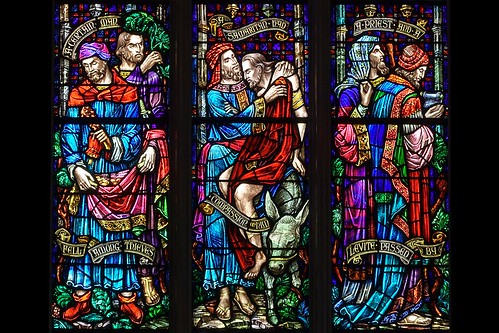
A certain man fell among thieves
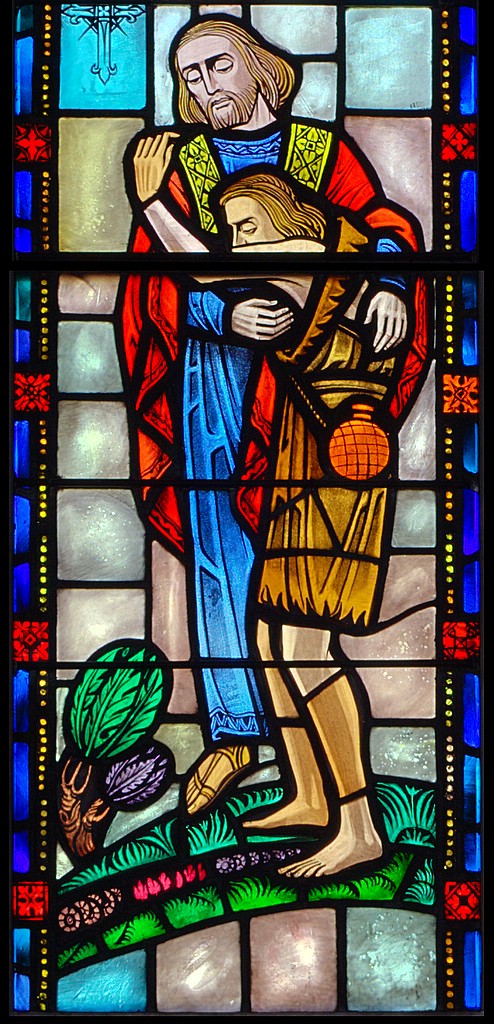
A Samaritan had compassion on him
A Priest and a Levite passed by

 
Luke 10:33-35

Jesus said, “A Samaritan, as he journeyed, came to where (the injured man) was, and when he saw him, he had compassion. He went to him and bound up his wounds, pouring on oil and wine. Then he set him on his own animal and brought him to an inn and took care of him. And the next day he took out two denarii and gave them to the innkeeper, saying, ‘Take care of him, and whatever more you spend, I will repay you when I come back.’”


People are afraid of the Law, and think the Law is evil because the Law condemns us as sinners. However, the Law of God is not the problem. God’s Law is good, as God is good, and the Law shows us what is good for us to do to love God and love our neighbor. Sinners think the Law’s condemnation of sinners is bad because we don’t want to be condemned. Sin blinds us to the reality of just how wicked we really are, and how much we really deserve to be condemned.

Remember what happened in the Garden of Eden with Adam and Eve. God made the whole world good and gave it to Adam and Eve for their benefit and enjoyment. The only thing forbidden to them was the fruit of one tree – one tree in the whole world. In effect, God was saying, “This tree belongs to me. Don’t eat its fruit. If you eat the fruit of this tree you will die. But look, here is another tree. This is the tree of Life. You are free to eat from this tree and anything else in the world that you wish to eat. I am your Father and I love you, and I want you to live and enjoy all the good things that I can give to you forever.” God gives us good things, and forbids us from doing things that will hurt us.

The problem isn’t God’s Law. The problem is that people rebelled against God’s good Law and chose sin and death instead of righteousness and life. Sinners despise what is good, and we twist and distort God’s Word to make the Law seem to say what we want it to say, instead of receiving it as God has given it to us for our good.

It is no coincidence that the man who tested Jesus was a teacher in the law. He knew the law, but he asks the wrong questions. If you ask the wrong questions you will get the wrong answers. However, in telling the Parable of the Good Samaritan, Jesus gives us both the right question and the right answer.

Inheritance is a matter of Law,
but you can only receive it as a gift.

The first question the lawyer asks Jesus is, “What must I do to inherit eternal life?” The question isn’t all wrong: It recognizes that eternal life is a matter of inheritance. It is a gift, not a right. However, the question is ridiculous. Can you imagine someone going up to Donald Trump (for example) and saying, “What must I do to inherit the wealth of your estate?” Most of the time the inheritance of an estate is given to the children. If you are not born or adopted into the family then it is unlikely you will inherit anything.

Since inheritance is a matter of law, and the man asking about it was a teacher of the law, Jesus asks him what the law says about inheriting eternal life. The man answered by quoting from Deuteronomy where God summarized the two tables of the Commandments. “You shall love the Lord your God with all your heart and with all your soul and with all your strength and with all your mind, and your neighbor as yourself.” This was a good summary of the Law, as Jesus points out, but the man forgot that the Law cannot save sinners. The law condemns sinners. Since Adam and Eve’s fall into sin, all people (except Jesus) have inherited the corruption of sin. This is our inheritance – according to the law.

Luke writes that the teacher of the law wanted to justify himself. To justify yourself is to make up excuses for your sin which will make you feel like you are doing right when you are doing wrong. It is a wicked thing to try to justify your sin, but sinners are always looking to justify themselves. I do it. You do it. Everyone does it, but that doesn’t make it right. It just means that everyone sins in justifying themselves.

So the teacher of the law asks, “Who is my neighbor?” This doesn’t seem like a bad question, but why would you ask it? Your neighbor is everyone you come in contact with in your various vocations, including those whom you try to avoid, like an injured man lying on the side of the road when you have somewhere else to go. If you have to ask, “Who is my neighbor?” then you may be really asking, “Who isn’t my neighbor?” or “Who can I ignore because they are not my neighbor.” So Jesus tells the Parable of the Good Samaritan.

Jesus is the Good Samaritan

Jesus told a story about a man going from Jerusalem to Jericho who fell among robbers. The robbers should have been neighbors to the traveler, and protected his life and property, but instead they beat him and stole his belongings, and left him for dead on the road.

Then a priest was going down the road and saw the injured man. The priest represents the first table of the Law where we love God with all our heart, soul, strength, and mind. The priest served God in his vocation, but he was under the law. The ceremonial law said much about blood and how to deal with it. It would not do for the priest to show up for work with bloody hands from helping an injured man. He would likely be considered unclean. Now, uncleanliness wasn’t too big of a deal. All people would do things in the normal activities of life which would make them unclean. I think that was the point of the cleanliness laws. They reminded people that our sin makes us unclean and that we need to be cleansed of our sin.

The priest could have helped the man, but then in order to be fit for his priestly service he would have had to wash and make a sacrifice and wait until sundown to be considered clean again. It was an inconvenience, and somewhat costly, but he could have helped the injured man, and should have. The people who would benefit from his priestly service would have understood, but the priest justified his inaction by telling himself that if he helped the injured man he couldn’t carry out his service to God. This was a misuse of the law, but this is what sinners do to justify themselves. So the priest walks by the injured man on the other side of the road.

Likewise, a Levite came and saw the injured man lying in the road. He represents the second table of the Law where we must love our neighbor as ourselves. The Levites were those members of the tribe of Levi who were not priests, but who served as laymen in the church. Levites were the elders, ushers, acolytes, trustees, groundskeepers, altar guild, board members, and similar laymen who serve the church. He could have helped the injured man, but he was under the law also. He could have helped the injured man, but would then be unfit to serve in the congregation for a time, and so he justified his actions in the same way as the priest. He also misused the law to justify his unmerciful actions. So he, too walked by on the other side of the road.

Then a Samaritan came down the road and saw the injured man. The Samaritan was not under the law in the same way that the priest and Levite were. He was not above the Law, certainly, instead he was outside the Law. He was not bound by the Law in the same way that the priest and Levite were, nor could he hide under the Law to justify unmerciful inaction. In a way, the Samaritan was free of the Law’s demands, but because he was free of the Law’s demands, he was also free to help his neighbor without having to worry that the Law might condemn him in some other way (unless he also ignored the injured man and left him to die). So he had compassion on the injured man and treated his wounds and took care of him.

Jesus is the Good Samaritan
who paid the costly price
to give you His inheritance.

You should note that what the Samaritan did was also costly. Besides the time and effort of cleaning and treating the wounds, he also paid the entire burden of the injured man’s health care. It was a sacrifice, but because he was free from the law’s burdens, he willingly paid what was necessary to help his neighbor.

Jesus ends His parable by asking the teacher of the Law, “Which of these was neighbor to the man injured by the robbers?” He answered, “The one who showed him mercy.” Jesus said, “You go, and do likewise.”

Now, if you have a wrong view of the law, you might think that Jesus was just giving the man another law to live by. But that would be a wrong understanding. Jesus was, in fact, doing the exact opposite. Jesus was not even giving a new law that supersedes the old law, as if you could use that to justify breaking any of the Ten Commandments. Instead, Jesus was declaring the man free from the law, just like the Samaritan was free from the law, and used his freedom to have mercy on his neighbor.

Jesus is the Good Samaritan. As the Son of God, Jesus was free from the Law’s demands. Jesus was not just free from the Law, He was above the Law because He created the Law. Though, in a way, Jesus was also bound by the Law in ways that we are not. God created the Law to reflect His very nature, so when Jesus obeyed the Law, He was only acting according to His nature, not against it (as we are when we obey the law). Yet, in His mercy, Jesus submitted Himself to the Law for our sake to redeem us and free us from the Law’s demands and its condemnation.

Jesus was, of course, a Jew, and not a Samaritan, but it is interesting in John 8 some of the Jews said to Jesus, “Are we not right in saying that you are a Samaritan and have a demon?” Jesus answered, “I do not have a demon, but I honor my Father, and you dishonor me.” It is interesting that Jesus confessed that He did not have a demon, but He did not deny the charge of being a Samaritan. Although the Jews thought they were insulting Jesus by calling him a Samaritan, Jesus was not ashamed to be called a Samaritan. Jesus came to save Samaritans and other Gentiles as well as Jews. The Samaritans were His neighbors as much as His own people.

When Jesus says, “Go and do likewise” He is not putting us under the law, as if he were saying, ‘you can’t be saved unless you make up for your sin by doing good and showing mercy.’ Instead, Jesus is setting us free from the law’s curses. You are free to serve your neighbor because you no longer have to worry about fulfilling the law’s demands yourself. Jesus fulfilled the law for you. You are free. Not free to sin (for that would put you under the law’s curse), but free to serve your neighbor instead of trying to serve yourself.

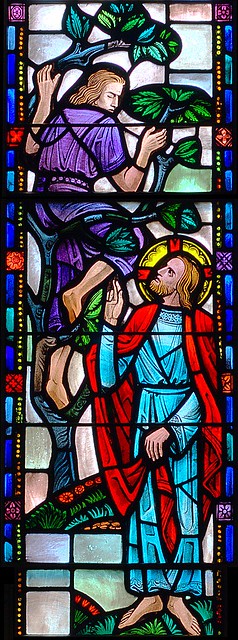
Jesus set Zacchaeus free
because he trusted in Jesus
for the forgiveness of his sins.

Scripture says in Romans 6:22-23 “You have been set free from sin and have become slaves of God, the fruit you get leads to sanctification and its end, eternal life. For the wages of sin is death, but the free gift of God is eternal life in Christ Jesus our Lord.” Jesus fulfilled God’s Law completely in our place so that through Jesus we are freed from the Law’s demands and can serve our neighbor in freedom as the Samaritan had mercy on his injured neighbor. This freedom we have in Christ is given to us as a gift by His mercy.

This gift is our inheritance as Children of God through Baptism and faith. Scripture says in Galatians 4:4-7, “But when the time had fully come, God sent his Son, born of a woman, born under law, to redeem those under law, that we might receive the full rights of sons. Because you are sons, God sent the Spirit of his Son into our hearts, the Spirit who calls out, ‘Abba, Father.’ So you are no longer a slave, but a son; and since you are a son, God has made you also an heir.”

What must you do to inherit eternal life? Of course you can’t do anything, but Christ has already done it all for you. He has redeemed you from your sin, and adopted you as His children, and He gives you the inheritance of His eternal Kingdom as a gift – as all inheritance is given. Like the Samaritan in the parable, Jesus paid the great price to make you His child and heir. St. Peter writes, “It was not with perishable things such as silver or gold that you were redeemed from the empty way of life handed down to you from your forefathers, but with the precious blood of Christ, a (sacrificial) lamb without blemish or defect.” (1 Peter 1:18-19)

Praise be to Christ, who is your Good Samaritan who sacrificed His life to rescue and heal you from the wounds of sin and death, and who gives you life everlasting.

Sunday, August 20, 2017

Why does God Condemn Unbelievers to Hell?

by Pastor Paul Wolff

God is the loving Father
who welcomes back the prodigal son.

I recently ran across a presumptuous atheist question which asked, “What kind of a god would send people to hell for not believing in him?” This sounds like a rational question. Yet, this is another example of the truth that “If you ask the wrong question, you are sure to get the wrong answer.” In this case the answer to the rhetorical question is that God must be unjust and cruel. That is always wrong when you are talking about the one, true, Triune God.

A better question to start with is, “Who ought to be condemned by God?” The answer to this question is everyone who disobeys God’s Law. God’s Law is good and truly righteous, as He is truly good and righteous. We all are sinners, and deserve God’s punishment. There is no one who can rightfully claim the moral high ground over God and honestly make the case that they are more righteous than He is. We all deserve to be condemned. If we start with this question, and properly answer it, then we can easily see that God is not to blame for anyone’s condemnation. We are all rebellious sinners, and we all deserve to be destroyed for our sin. 
 

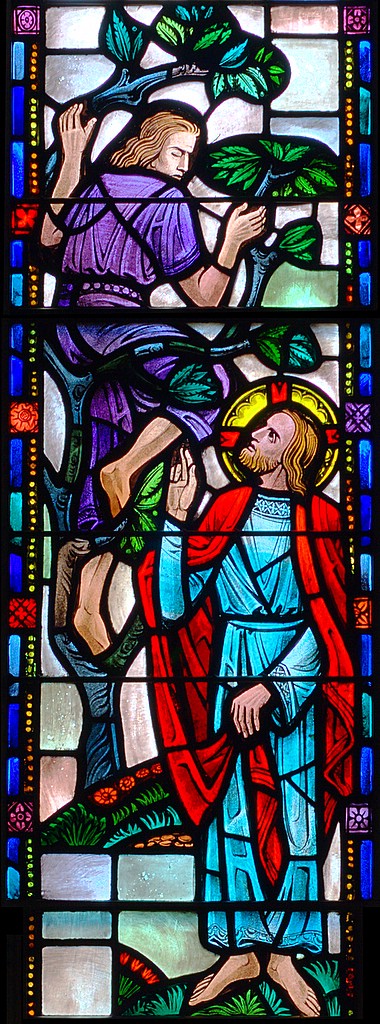
Jesus honored Zacchaeus
though he was despised by everyone.
Read Luke 19:1-10

So why do we even have any hope for salvation? The answer is that, despite our sin, God loves us and He is not only just and righteous, He is merciful. God knew that we could not pay the punishment for our own sins without being destroyed, so He did the job Himself when the second Person of the Trinity became incarnate as Jesus, to fulfill God’s Law (this is called Christ’s active obedience), and to take the punishment which we deserved for our sins, which is death (this is called Christ’s passive obedience). Christ’s victory over death is shown by His resurrection from the dead, because He has destroyed the power of death over all people. Jesus won that victory for all people and gives it as a gift to all who believe.

Where does faith come into this? God accomplished our salvation by working in history with the Israelites, through whom God entered our world and won salvation in the person of Jesus, the promised Son of David. The Israelites kept a record of how God worked in history to bring about our salvation, so that everyone could hear about it and believe. God’s Word is the truth, and God doesn’t ask us to believe a myth or a fable (as some wrongly claim), but He presents us with the truth and asks us to believe the truth. Salvation couldn’t be any easier, because God did it all for us, and only asks us to believe in what He has already done. No person on earth should ever be condemned to hell because Jesus paid for their sins and gives them eternal salvation as a free gift. (see Romans 5:15-17 and 6:23)

Where does hell come into this? Jesus teaches that hell was never intended for people because ever since the very day that Adam and Eve rebelled against God and brought sin to all people, God promised a savior who would make everything right. In Matthew 25:41, in the Parable of the Sheep and the Goats, Jesus describes hell as “the eternal fire prepared for the devil and his angels.” There was never any redemption possible for the fallen angels, but there was always redemption for fallen people through faith in God’s promise of salvation (fulfilled in Jesus Christ). There never was any reason for any person to be condemned to hell. 

Then why are some people condemned to hell? The only reason why some people are condemned to hell is that they reject Christ’s salvation. Jesus teaches in John 3:17-18, “God did not send his Son into the world to condemn the world, but in order that the world might be saved through him. Whoever believes in him is not condemned, but whoever does not believe is condemned already, because he has not believed in the name of the only Son of God.” A person who does not believe God’s Word is essentially calling God a liar, and making themselves their own god. The unbeliever condemns himself because he rejects everything that God has done to save him. Romans 8:33-34 says, “Who will bring any charge against those whom God has chosen? It is God who justifies. Who is he that condemns? Christ Jesus, who died – more than that, who was raised to life – is at the right hand of God and is also interceding for us.” God is all about saving us, not about condemning us. Jesus took the condemnation for our sins so that we would not have to. 
 

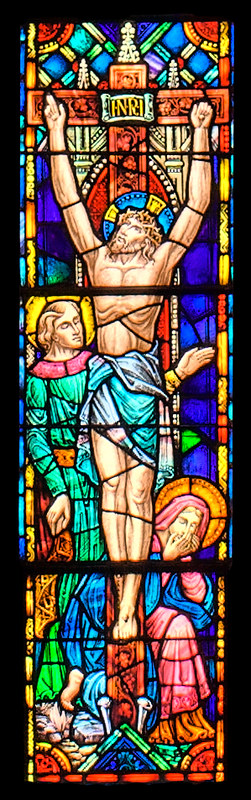
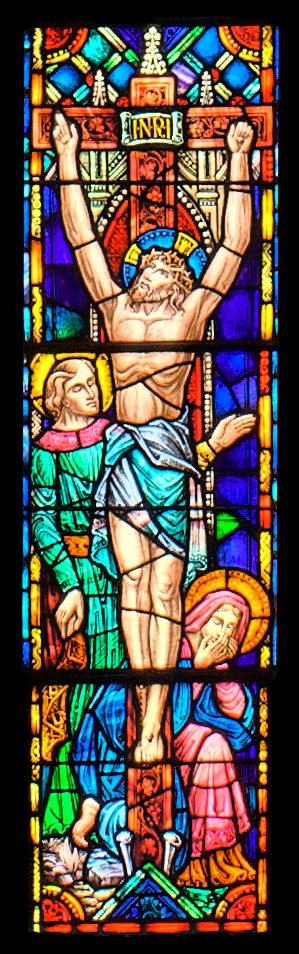
Why would God die on a cross for me as a man?
He did it because He loves you.

The best question to ask is: What kind of a God would suffer and die on a cross to save sinners from death and hell? Only the One, True God who loves His people would dare to become a man and suffer and die to redeem sinners. This shows the fallacy inherent in the original question. God is not about sending people to hell. Jesus suffered hell on the cross so that no one else would have to. This is not a God who is unjust and cruel. God is completely loving and merciful. Those who love their sins more than Jesus are condemning themselves because they reject the salvation that is theirs in Christ. It is not that God takes away their salvation or doesn’t give it to them. All people are given forgiveness and salvation as a free gift, and unbelievers, through their unbelief, say, “I don’t want it.” This is why we say that those people who are in hell are there by their own doing, and those who are in heaven are there completely by what Jesus has done for them. God is the one who loves you, and has redeemed you from your sins, and is not ashamed to be found dead on a cross and in a grave. Jesus did this to save you from hell. Trust in Jesus. He will not let anyone who believes in Him suffer as He did on the cross.


Tuesday, July 25, 2017

The True Power of God’s Word

by Pastor Paul Wolff

The Power of God’s Word is seen
when Jesus raised Lazarus from the dead
by simply saying, “Lazarus, come out.” (John 11)


“For as the rain and the snow come down from heaven and do not return there but water the earth, making it bring forth and sprout, giving seed to the sower and bread to the eater, so shall my word be that goes out from my mouth; it shall not return to me empty, but it shall accomplish that which I purpose, and shall succeed in the thing for which I sent it.” 

(Isaiah 55:10-11)


Words are very often seen as weak, malleable things that can be twisted and turned into unrecognizable things bearing little resemblance to their original meaning. You know it is bad when even in literature words are disparaged. In William Shakespeare’s Hamlet, Polonius sees Hamlet reading a book and asks, “What do you read, my lord?” and Hamlet answers, “Words, words, words.” Which is to say, the content of the words doesn’t matter – they are just words.

The problem isn’t with words themselves. When used properly, words can be used for great things even in this sinful world. The problem is that sinful people misuse words. Sinners use words to lie, cheat, and twist and spin the truth. Even when people speak the truth, people can ignore good words. This all makes words seem weak and ineffective.

All people are descended from Adam and Eve.
God created one race of people and two sexes.
There still remains one race and two sexes.

For example, in the beginning God created one race of people and two genders – male and female. Today people twist words to say that there are many races and many genders. Some people even say that they are a different gender than what God created them to be. Despite what people say, there is still one human race, and only male and female genders. What people say does not change the reality of the world, it just makes people look foolish, and it makes us distrust words.

Sinners go to great lengths to justify their sin to themselves. Thieves say, “I didn’t steal that thing which didn’t belong to me. I just ‘borrowed’ it.” Or adulterers say, “I didn’t cheat or betray my wife (or husband, as the case may be), it was true love.” Well, “love” is a powerful word. Who can be against “love”? But when “love” is used to justify even the worst kind of betrayal or all kinds of sexual perversions, then it is just a “word”.

Jesus taught God’s Word, and many people
heard it and were saved, but some
did not believe and were condemned.

Since words are so weak and untrustworthy, you have to wonder why God uses words as a primary Means of Grace – that is, the means by which God delivers to you the salvation that Jesus won for you in His life and death. If words are so weak, can you really trust God’s Word either? That is the wrong question. It needs to be asked, but it is the wrong question. Of course you can trust God’s Word, as long as it truly comes from God. The Holy Scriptures are the true Word of God. A better question to ask is why do people misuse words so much? It is because God relies so much on His Word that the devil tempts us to lie and otherwise misuse words so that we don’t even trust the Word of God.

God does not misuse words. God does not lie or twist the truth when He speaks. God’s Word can be trusted and relied upon to be true at all times and in all places. More than that, God’s Word has power to do what it says. In Isaiah 55, God tells us, “My Word goes out from my mouth (and) will not return to me empty, but will accomplish what I desire and achieve the purpose for which I sent it.”

God said, “Let there be light,”
and there was light, and the light was good.

We see this very clearly in the creation account in Genesis 1. On Day One God said, “Let there be light,” and there was light, and the light was good. Likewise, on each of the first six days of creation, God created the universe by speaking it into existence, and ordering it according to His will. God’s Word has power, and it is good, as God is good.
When people speak it does not change the reality of the world, but when God speaks, He can change the world.

 
Even when Adam and Eve rebelled against God and ate the forbidden fruit, God came to them that very day and had mercy on them and in cursing the serpent, God promised to send an offspring of the woman to crush the head of the serpent, and bring salvation to people. God kept His promise, and Jesus came as the Son of God to fulfill the law in our place, and to pay the price for our sin, which is death. In doing this, Jesus won our forgiveness and eternal salvation. God’s promises are not like the promises of wicked and devious sinners. God’s promises can be trusted.

God remembered His promise to Adam
and Eve,and saved Noah and his family
from the great flood.

When God determined to destroy the world in the days of Noah, He remembered His promise to Adam and Eve and spared Noah and his three sons, and each man’s wife, along with two of every kind of animal on the surface of the earth. Also, later when the Israelites turned away from God to idols, though God sent the Assyrians to destroy the Northern Kingdom of Israel, and the Babylonians to destroy Judah, He saved a remnant of the Judahites (or Jews, as they came to be known) so that His promise could be fulfilled, and the savior of the world would be born from their descendants.

One day when Jesus had entered the city of Capernaum (Matthew 8:5-13), a centurion came to Him and asked Him to heal his servant who was paralyzed and suffering. Jesus said, “I will go and heal him.” The centurion said to Jesus, “Lord, I do not deserve to have you come under my roof. But just say the word, and my servant will be healed. For I myself am a man under authority, with soldiers under me. I tell this one, ‘Go,’ and he goes; and that one,’Come,’ and he comes. I say to my servant, ‘Do this,’ and he does it.” Jesus was astonished at the faith of the centurion, and said, “Go! It will be done just as you believed it would.” And his servant has healed at that very hour. A centurion’s word can command his soldiers and servants, but the Word of Jesus can command healing and bring life where there is death. Jesus also raised Lazarus from the dead by calling out to his grave, “Lazarus come out.” At the word of Jesus, Lazarus was given life after being dead four days. (John 11)

Jesus is the Word of God made flesh.

This is why John writes that Jesus is the Word of God made flesh. Jesus is not only the fulfillment of God’s promises to send a savior into the world, but Jesus is God, Himself, become incarnate into our flesh to take away the guilt of our sins and give us salvation and eternal life. Because Jesus is the Word of God made flesh, you can trust God’s Word more than anything else in this world. Jesus said, “Heaven and earth will pass away, but my words will not pass away.” (Matthew 24:35)

God’s Word is eternal, and God will never forget or take away his promised forgiveness and salvation. Psalm 105:8 says, “(The Lord our God) remembers His covenant forever, the word He commanded, for a thousand generations.” Isaiah (40:8) prophesies, “The grass withers and the flowers fall, but the word of our God stands forever.” So when God’s Word says, “Believe in the Lord Jesus, and you will be saved.” You can know that Jesus will save you, because he remembers and keeps His promises forever.

God’s Word is freely spread among all people,
like a farmer throwing seed all over his land
so that everyone who believes in Jesus will be saved.

God’s Word is a means of grace. That is to say, God’s Word is a delivery vehicle for our forgiveness and salvation. We can’t get to God to get forgiveness and salvation from God, but God comes to us where we are in His Word and Sacraments. In the words Christ’s Parable of the Sower (Matthew 13:1-9, 18-23), God’s Word is a farmer who brings the seed which gives us salvation. Like the farmer, God spreads His Word freely, to all people, that it may accomplish salvation. As the seed is generously spread on all the different soils on the farm, so God’s Word goes throughout all the world so that it may bring forgiveness and salvation to all who believe.


I wondered above why God would use something as weak as words to bring to us our salvation, but it is by God’s grace that He uses words to bring this great treasure to us here today. Because words are weak they can be rejected. Anyone who doesn’t want Christ’s forgiveness and salvation can reject it. God won’t force anyone to receive His salvation. He gives it as a free gift. So those who are saved are saved completely by the work of Christ without any help or cooperation on our part. Those who are condemned, on the other hand, are condemned by their own doing.

God’s Word was made flesh in Jesus
but He had to live in obedience to the Father,
and suffer and die to save us from our sins.

Our salvation comes to us through God’s Word, but it was won for you by the actions and work of Jesus. God is a just God, and according to His nature, He could not just wipe away sin with a word and pretend it didn’t matter. If he had done so, he would have either had to accept sin – and become evil Himself – or He would have had to destroy us all with our sin. So in order to save us, and still punish sin, Jesus offered to take our place as our substitute. Jesus had to live as a man and live a perfectly obedient life in order to fulfill God’s Law which we broke. Then Jesus had to suffer and die in our place to take away the punishment for our sins, which is death. The Word of God is completed in the life and death and resurrection of Jesus. Because Jesus worked to win our forgiveness and salvation in His life, God’s Word is fulfilled, and salvation comes to us today through the Word, so that whoever believes in Jesus as their savior from sin, is saved.

Isaiah 55:10-11 says, “As the rain and the snow come down from heaven, and do not return to it without watering the earth and making it bud and flourish, so that it yields seed for the sower and bread for the eater, so is [God’s] word that goes out from [His] mouth: It will not return to [Him] empty, but will accomplish what [He] desire(s) and achieve the purpose for which [He] sent it.” God’s purpose and desire is that you believe in Jesus and receive His salvation, and live with Him in Paradise forever. Jesus is your life and your salvation. He is the truth that saves you. We thank and praise Him for His Word that brings to us this precious gift.

Thursday, January 31, 2013

The Seductive Danger of Lies

by Pastor Paul Wolff
Jesus called the devil the “father of lies”
and did not fall for the temptations.


When I first began teaching religion classes at the Lutheran school connected with the church where I was first called to be the pastor, I was really shocked at how freely and easily lies passed over the lips of the beautiful, precious children whom I was called to teach. I don’t know if that was something peculiar to Detroit or if it was just the wickedness of the time. It could have been related to the fact that many of our students were not Lutheran, but were members of neo-Pentecostal churches. I have since come to realize that the so-called “charismatic Christians” are very practiced liars. They all pretend to have special “gifts” like speaking in tongues, or hearing God talk to them, in order to make others think that they are closer to God. They claim this comes from the Holy Spirit, but that is a lie. Many charismatics will not think twice about contradicting the true Word of God found in the Holy Scriptures in favor of what they “feel in their heart”. I don’t recall now if those children who lied to me so frequently were all Pentecostals (I didn’t treat them any differently than anyone else – both Lutherans and charismatics need to hear the same Biblical teachings of Law and Gospel), but it is likely that this may be an explanation. Either way, I seem to recall that when I was in school lying was actively discouraged so that it was fairly infrequent, rather than being the normal thing to do. It still happened, (Lutherans lie, too) but the first use of the law did its work and lying was infrequent.

The temptation to lie comes from a desire to gain advantage over others which we wouldn’t have if the truth were known. We lie to try to evade punishment for a wrong we have done. We lie to flatter someone so they will think we are nicer than we are and so will favor us with their friendship. We lie to otherwise make ourselves seem better than we really are.

It is commonly said that the truth hurts. This is only because as sinners we are far too comfortable with lying and the ill-gotten “benefits” of those lies. Holy Scripture says something much different about the truth. Jesus says, “I am the truth.” (John 14:6) This explains a lot about the prevalence of lies in this world. Sinners, by nature, are inclined to follow the lies of the devil rather than the truth of Jesus. Jesus identifies the devil as “a liar and the father of lies.” (John 8:44)

Our susceptibility to lies goes back to the Garden of Eden when Eve believed the lie of the devil who said, “You shall not surely die.” (Genesis 3:4), when God had said, “The day you eat of (the tree of the knowledge of good and evil) you shall surely die.” (Genesis 2:17) Eve believed the lie because the lie made it seem as if she would then be in control like God. By believing the lie Eve – and soon thereafter, Adam – brought sin and death not only to themselves, but also to all their descendants.

The prophet Jeremiah lamented the prevalence of lies among God’s people when he prophesied this: “‘[My people] make ready their tongue like a bow, to shoot lies; it is not by truth that they triumph in the land. They go from one sin to another; they do not acknowledge me,’ declares the Lord. ‘Beware of your friends; do not trust your brothers. For every brother is a deceiver, and every friend a slanderer. Friend deceives friend, and no one speaks the truth. They have taught their tongues to lie; they weary themselves with sinning. You live in the midst of deception; in their deceit they refuse to acknowledge me,’ declares the Lord.” (Jeremiah 9:3-6) It is very instructive that the lies are portrayed as deadly weapons shot from the mouth as arrows are shot from a bow. God is not being cynical, He is lamenting that the truth seems foreign to His people and the lies are destroying them.

The 20th century German Lutheran theologian, Hermann Sasse, noted the destructive nature of lies in a 1936 Essay titled “Union and Confession”. He wrote, 
“The lie is the death of man, his temporal and his eternal death. The lie kills nations. The most powerful nations of the world have been laid waste because of their lies. … Where man can no longer bear the truth, he cannot live without the lie. … For the power of the lie extends right into the church. … For men in the church are and remain poor sinners until their death. Lies have been told in the church because of cowardice and weakness, vanity and avarice. But beyond all these there is in the church one particularly sweet piece of fruit on the broad canopy of the tree of lies. There is the pious lie. It is the hypocrisy by which a man lies to others and the intellectual self-deception by which he lies to himself about what he actually believes. … What a fearful thought it is indeed that things are taught in the church which are not true, under the guise of the eternal truth entrusted to her. No atheism, no Bolshevism can do as much damage and destruction as the pious lie, the lie in the church.” 
Sasse was focusing on a lie which said that disagreements in doctrine are insignificant for unity in the church, but what he said could apply to any lie in the church. Lies kill.

You would think logically that if lies are so destructive that people would tend to avoid them out of a desire for self-preservation, but that is not the case. Jeremiah 5:30-31 says, “An appalling and horrible thing has happened in the land: the prophets prophesy falsely, and the priests rule at their direction; my people love to have it so.” We are tempted to believe that lies give us some benefit or advantage, and that makes us afraid of the truth, and fear leads to cowardice because of weakness. The lies told in church often are told to make the people think that their sinfulness is not as bad as it is in reality. Since no one takes pleasure in admitting his sinfulness, people love to hear the pious lies. It is much more comfortable to believe a lie which says that I am not such a bad person.

Political commentator Ann Coulter observed this, “People don’t get angry when lies are told about them; they get angry when the truth is told about them.” Coulter writes about politics, but what she observes comes from sinful human nature and has consequences in many aspects of life. Proverbs 29:12 says, “If a ruler listens to lies, all his officials become wicked.” When such political considerations find their way into the church (and they always do find a way in) that is when the church gets into trouble. In a sinful society, such as our own, pastors feel great pressure not to preach the truth of God’s Law about the sinfulness of the people. If the pastors can make the people feel good about themselves then the people will reward the lying pastors and make their lives comfortable and easy. However, if the pastors persist in telling the truth, then the unrepentant people will turn away and go find some slick, lying, charlatan pastor who will tell them what they want to hear. The lie may be more comfortable to hear for the moment, but there is no salvation in the lie. If we think that our sin is not too bad then we will not feel a need for a savior and will only have contempt for Jesus.

Preaching Jesus as the savior for sinners is the very definition of the Gospel that God has revealed in Holy Scripture – the same Gospel which saves those sinners who hear it and believe it. The problem is that the Gospel presumes the Law. If Jesus is only the savior of sinners, then that condemns me if I would rather listen to the lies that tell me that I am really a pretty good person and my sin is not such a big problem. If I prefer the lie to the truth, then I will only hear the Gospel as condemning law. Even the pure, life-giving Gospel of Jesus will be a damning law to me if I believe that I don’t need a savior who had to die to redeem me. That is why the lie is so dangerous.

“Buy the truth and do not sell it; get wisdom, discipline and understanding.” (Proverbs 23:23) Those who sell out the truth harm themselves along with those who pay so well for their own destruction. But the truth of Jesus as our savior from sin is so valuable that we should treasure it and “buy” it no matter the cost. Jesus said, “The kingdom of heaven is like a merchant in search of fine pearls, who, on finding one pearl of great value, went and sold all that he had and bought it.” (Matt 13:45-46) In one way, Jesus is “The Truth” which is the precious treasure more valuable than all the riches of the world. However, in another way, Jesus is the merchant who considered us to be such a great treasure that He gave up all He had to redeem us from our sin, so that we may be His own.

Jesus said, “If you abide in my word, you are truly my disciples, and you will know the truth, and the truth will set you free. … So if the Son sets you free, you will be free indeed.” (John 8:31-32, 36) Jesus is the Truth who sets us free from our slavery to sin and lies.


* * *
Herman Sasse quote from The Lonely Way, p. 266-267, “Union and Confession” (1936), Concordia Publishing House, 2001.
Ann Coulter quote from How to talk to a Liberal (if you must) P. 10, Crown Forum, 2004.