Showing posts with label redeem. Show all posts

Thursday, May 30, 2024

Blessed are the Merciful, for They Shall Receive Mercy

(Part 5 of a series of 9 articles on the Beatitudes)
by Pastor Paul Wolff​


Jesus said, “Blessed are the merciful, for they shall receive mercy.” (Matthew 5:7)


Blessed are the merciful,
for they shall receive mercy.
Matthew 5:7

Mercy and grace are related because they are both expressions of love. Because all of us children of Adam and Eve are corrupted by sin, our love is imperfect – and so is our practice of mercy and grace. God’s love is perfect, and His mercy and grace are perfect. An easy way to distinguish mercy from grace is to think of mercy as God not punishing us as our sins deserve, and grace is God giving us good things which we do not deserve because of our sinfulness. However, in the Holy Bible, the meaning and use of the word “mercy” is much broader than this simple definition, and in practice both mercy and grace can often describe the same thing, which is nearly always God expressing His love in how He deals with us.

Jesus proclaims in His Sermon on the Mount, “Blessed are the merciful, for they shall receive mercy.” (Matthew 5:7) Here Jesus encourages all God-fearing people (and everyone else, if they will listen) to have mercy on their neighbor, and God will have mercy on them, too. God certainly has had mercy on us all by sending Jesus to pay the price of death to redeem us all from our sin and death. Since God has already done this great merciful thing for us to rescue us from the punishment we deserve, we ought to also have mercy on others, even (and especially) when they sin against us. The blessing received by the merciful is that they will also receive mercy from God. God is certainly merciful to all people, though not all receive it because some reject God’s forgiveness in Jesus Christ, and so they miss out on what God freely gives them.

God is the loving father
who has mercy on his disobedient children
and forgives our rebellion and sins.

The concept of mercy is common in the Holy Scriptures. There are between ten and twenty dozen occurrences of the word “mercy” in the Bible. This depends on which translation you read because in the Old Testament there are several different Hebrew words translated as “mercy”, and different translations sometimes translate these words as “love” (especially “steadfast love”) or “grace” or “kindness” (especially “loving kindness”) or “loyalty” (?) or “pity” or “compassion” instead of mercy. Most times it is not immediately defined, and assumes that the reader knows what mercy refers to, as in Psalm 23:6 which says, “Surely goodness and mercy shall follow me all the days of my life, and I shall dwell in the house of the Lord forever.” Though mercy is connected with “goodness” here, it is not otherwise defined. The concept of “mercy” is common in the Psalms, which served as the hymns (and prayers) of the Old Testament times, and still serve as the basis of our hymns today, too.

Psalm 25:6-7 says, “Remember your mercy, O Lord, and your steadfast love, for they have been from of old. Remember not the sins of my youth or my transgressions; according to your steadfast love remember me, for the sake of your goodness, O Lord!” In this Psalm mercy is connected with God’s “steadfast love” (or “mercy”), and the effect of God’s mercy here is that He would “remember not the sins of my youth or my transgressions.” It is verses like this that show us that mercy means that God is withholding from us the punishment which we deserve on account of our sins.

In King David’s great Psalm of repentance after he was confronted with the guilt of his sin by the prophet, Nathan, David immediately begins by asking God for mercy. “Have mercy on me, O God, according to your steadfast love; according to your abundant mercy blot out my transgressions.” (Psalm 51:1) Again, here God’s mercy and love are connected, and the expected result is that God would “blot out my transgressions.” The idea here is that God wipes away the stain of our transgressions and sins like a writer wipes away spilled ink on the page (or parchment). Later in the history of God’s people, Isaiah gives God’s people this message which calls to mind King David’s psalm of repentance. “I am he who blots out your transgressions for my own sake, and I will not remember your sins.” (Isaiah 43:25) This is great good news for all God’s people because with sin comes death, and if God does not remember our sins, then we will be spared from sin’s punishment.

Jesus had mercy on the crowd who followed Him,
and miraculously fed 5,000 people to satisfaction
with five loaves of bread and two fish.

The best example in Holy Scripture which describes what God’s mercy (and its opposite) is like is probably Christ’s Parable of the Unmerciful Servant. You can find it in Matthew 18:21-35. In the parable the king forgives his servant a debt so large that he could never repay it. That is how God deals with us in mercy. Our sin condemns us to death, which is a debt that we can not pay without being destroyed. God, Himself, covered our debt by becoming incarnate (Jesus Christ) and taking the punishment of death, Himself, in order to rescue us from the death which would destroy us. In the parable the forgiven servant should have been so appreciative of the king’s mercy that he ought to have had similar mercy on his neighbor who owed him a small debt. However, he was overly harsh with his neighbor, and when the king heard about it he determined that his servant did not appreciate what he had done for him, and withdrew his offer of mercy and put him in prison until he had paid every last penny of the original debt – which was forever, because the debt was so large as to be impossible to repay. This parable shows us that God wants us to be merciful to our neighbors as God has been so much more merciful to us. If we truly understand and appreciate the great cost that our King (Jesus) has paid to cover our debts, then we will find it much easier to also show mercy to our neighbors who owe us much smaller debts. Though our neighbors’ debts may seem large to us, compared to what we are indebted to God, our neighbors’ debts to us are infinitely smaller, and ultimately insignificant in the long run.

In Psalm 103:8-10 David also combines God’s mercy and grace and describes it in this way: “The Lord is merciful and gracious, slow to anger and abounding in steadfast love. He will not always chide, nor will he keep his anger forever. He does not deal with us according to our sins, nor repay us according to our iniquities.” Here David praises God because of His mercy and grace because He does not punish us for our “sins” and “iniquities”. He goes on to emphasize this in verse 12 where he writes: “as far as the east is from the west, so far does he remove our transgressions from us.” This is another way of describing God’s forgiveness. If He removes our transgressions (sins) from us, then He will not punish us for them. Also, since God removes our transgressions “as far as the east is from the west,” then they can’t come back to condemn us. They are gone for good. This is the result of God’s mercy and grace, and it is also how we ought to forgive our neighbor.

Since God’s mercy is so closely connected with His forgiveness, we should also see that this Fifth Beatitude is related to the Fifth Petition of the Lord’s Prayer: “Forgive us our trespasses as we forgive those who trespass against us.” We certainly should remember that God’s forgiveness is not conditional on how well we forgive our neighbor, but that “We love because he first loved us.” (1 John 4:19) It can’t start with us, because in our sin, our mercy and forgiveness is either incomplete or lacking in some lesser or greater way. It must start with God because His mercy, love, and forgiveness is perfect in every case. Likewise, in the beatitudes, we receive mercy from God first, then in response to His mercy and forgiveness and grace, we have mercy on our neighbor.

Jesus has mercy on even the weak and powerless,
as shown by His gentle rebuke of the disciples
who wanted to send the children away.

The Holy Scriptures also give many examples of the mercilessness of sinful men. Solomon observes in Proverbs 12:10 “Whoever is righteous has regard for the life of his beast, but the mercy of the wicked is cruel.” This proverb also shows that if a man is faithful to God, then his mercy also extends to how he treats his livestock. If he is wicked, he also is cruel to his animals. We easily recognize this when we see in the news that some celebrity abuses his animals then he is roundly chastised for his cruelty by everyone. Though sometimes people take this too far when they criticize people more harshly when they abuse their animals than when they abuse their children or spouse. Solomon also observes in Proverbs 21:10 “The soul of the wicked desires evil; his neighbor finds no mercy in his eyes.” Such is the terrible nature of sin that those who love their sin more than they love God actually desire to do evil. They cannot even find it in their heart to have mercy on their neighbors. We can take comfort in Christ’s Fifth Beatitude in this for the opposite case. If the merciful receive mercy from God, then the unmerciful wicked person will not receive God’s mercy (until they repent of their sin and find forgiveness in Jesus). We also see this elsewhere where God condemns the unmerciful, such as Proverbs 3:33, “The Lord’s curse is on the house of the wicked, but he blesses the dwelling of the righteous.” This curse certainly can be removed when sinners repent and ask God for forgiveness. Since God is merciful, He is most eager to forgive and save all who repent and look to Him for salvation. “The Lord is gracious and merciful, slow to anger and abounding in steadfast love.” (Psalm 145:8)

Jesus, Himself, had mercy on His neighbors at all times. Many times those who had desperate desires to be healed of various afflictions pleaded with Jesus to “Have mercy,” and Jesus mercifully granted them healing and forgiveness. In Luke 17:11-19 ten men suffering with leprosy saw Jesus at a distance and called out to Him, “Jesus, Master, have mercy on us.” Jesus had mercy on them by healing them of their leprosy. In the next chapter, Luke 18:35-43, a blind beggar (likely the same man named Bartimaeus, in Mark 10) called out to Jesus, “Jesus, Son of David, have mercy on me!” Although some of the bystanders told him to be quiet, He again asked Jesus for mercy. Jesus asked him, “What do you want me to do for you?” and he said he wanted to recover his sight, and Jesus gave him his sight back. In Mark 5, Jesus cast out many demons possessing a man, and after the man was cleansed and came into his right mind, Jesus told him, “Go home to your friends and tell them how much the Lord has done for you, and how he has had mercy on you.” Here Jesus shows that by rescuing the man from demon possession He had mercy on him. This is also interesting that although Jesus told the demons to go out of the man, He told the man to tell his friends that “the Lord” has had mercy on him. Here Jesus was acknowledging that He is God, or, at the very least, that His healings were done by the power of God, while not denying that He is the one true God with the Father and the Holy Spirit.

Jesus showed mercy to the family of Jairus
by raising his daughter from the dead.
See Mark 5:21-43

This is the first Beatitude in this series which is not quite so clearly a curse in the worldly sense. Few people would say that those who show mercy are inherently cursed by doing so. Though, it is not too difficult to find people who think that merciful people are fools. It is hard to show forgiveness to people who sin against you. Our sinful flesh would more likely want to “assert our rights” and repay sin with vengeful wrath, rather than withhold punishment and forgive. Showing mercy is a great witness to the Christian faith. You show you trust in Christ’s forgiveness when you forgive others.

Indeed, while it is hard for us sinners to have mercy on our neighbors, it was also difficult for God to have mercy on us and cover the great debt of our sin. When it comes to forgiveness, God can’t just “look away” and ignore sin. God is righteous and just, and must punish sin. Yet Jesus took the punishment for our sin Himself when He died on the cross. That was not an easy thing to do, yet, in mercy and love, Jesus did what was necessary to pay the price for our sin so that God could have mercy on us, while still properly punishing sin and pouring out His anger on the man, Jesus Christ, on the cross.

The Old Testament prophet, Isaiah, foretold what it would cost God’s Messiah to have mercy on us and heal us from sin and all sin’s consequences. He prophesied, “Surely he has borne our griefs and carried our sorrows; yet we esteemed him stricken, smitten by God, and afflicted. But he was pierced for our transgressions; he was crushed for our iniquities; upon him was the chastisement that brought us peace, and with his wounds we are healed. All we like sheep have gone astray; we have turned – every one – to his own way; and the Lord has laid on him the iniquity of us all.” (Isaiah 53:4-6) Another time, when Jesus healed a deaf man (Mark 7:31-37), He sighed or groaned upon healing the man. As I explain it in this article Jesus groaned because even in healing the sick and raising the dead, it cost Jesus suffering and pain because all illness and afflictions of the body are consequences of our sin. In healing us from all these, Jesus had to suffer for them in order to remove sin’s effects from us. This is what Isaiah meant by saying, “with his wounds we are healed.” This is another reason why Christians have confidence that on the day of resurrection we will be raised glorious and whole – as God intended us to be. Jesus has had mercy on us – at great personal cost – so that we may be healed from sin in body and soul. This also gives us peace of mind so that we may put aside our pride and, in love, have mercy and forgive those who sin against us. Jesus has done so much more to have mercy on you, that such knowledge makes it easier to have mercy on others. May Christ keep you in His mercy and lead you to be merciful.


Other articles in this series:

Blessed are the Poor in Spirit

Blessed are Those who Mourn, For They Will be Comforted 

Blessed are the Meek, for They Shall Inherit the Earth 

Blessed are those who Hunger and Thirst for Righteousness, for They Shall be Satisfied 

Blessed are the Pure in Heart, for They Shall See God 

Blessed are the Peacemakers, for They Shall be Called Sons of God 

Coming soon:

Blessed are those who are persecuted for righteousness’ sake, for theirs is the kingdom of heaven.

Monday, April 1, 2024

Father, Into Your Hands I Commit My Spirit

by Pastor Paul Wolff

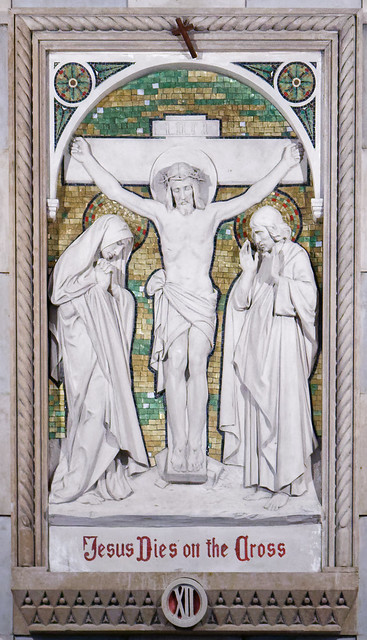
“It was now about the sixth hour, and there was darkness over the whole land until the ninth hour, while the sun’s light failed. And the curtain of the temple was torn in two. Then Jesus, calling out with a loud voice, said, ‘Father, into your hands I commit my spirit!’ And having said this he breathed his last.” (Luke 23:44-46)


Then Jesus, calling out with a loud voice,
said, “Father, into your hands I commit my spirit!”
And having said this he breathed his last.

As Jesus was dying on the cross He had just proclaimed His victory by the word, “It is Finished.” Yet there was one thing yet to do, and without it we could not have been saved. “The wages of sin is death.” (Romans 6:23) And if Jesus had not died to pay for the sins of the world, we would have had to die for our sin without any hope of salvation. It was proper for Jesus to proclaim His victory before it was done, because after He was dead He would not be able to say anything. Plus, He had come this far, He was not going to back out now. He had suffered God’s wrath over our sins and remained the faithful, obedient Son, still loving and trusting in God the Father, even while enduring the fierce wrath of God over all our wickedness and sins.

Is it any wonder that God twice proclaimed publicly, “This is my beloved Son. With Him I am well pleased.” When any of us sinners face some lesser pain or suffering we are easily tempted to wonder if God has abandoned us. Yet, here is Jesus, tormented and tortured on the cross, suffering the wrath of God over the sins of the world, which He had nothing to do with and did not contribute anything to in the least, and He still trusts in God to save Him from the death which follows directly.

We also see here that both His first and last words on the cross were prayers to His beloved Father. “Father, forgive them” and “Father, into Your hands I commit my spirit.” These prayers were prayed by a faithful Son who loved His good and gracious Father, even when it seemed like God was His enemy. Jesus lived His life as a man by faith, just as all of us ought to do, but where we often fail, Jesus was steadfast at all times. Here as Jesus faced death, He was still trusting in God to save Him. Jesus knew that He had to die, but He had faith that God is the one who rescues people from death. Even the sinless Son of God, who carried the sins of the world in His body and suffered the wrath of God like no one ever knew – He trusted that God would not abandon Him to the grave forever, but would rescue Him as He had promised to rescue us sinners for the sake of Christ.

Jesus died on the cross
to rescue you from the condemnation of your sins.
This also is where Jesus faced His last temptation as a mortal man – who was also God Almighty. Many times Jesus had been tempted to use His almighty, Divine power to save Himself, and this is surely one of those times. Jesus was at one of His weakest points as a man, yet, He could have summoned all power in heaven and earth to save Himself. If there had been the slightest flaw in His love for God or for wicked sinners, He could have stumbled here. If He had secretly desired the damnation of any horrible wicked murdering, lying, godless sinner, then He would not have let Himself die, and we all would get exactly what we deserved. Yet, Christ’s love was perfect. Jesus paid the full price for all sinners, even those who despised Him and rejected the price He paid to win their salvation, and all those who loved their sin more than Jesus, and reject His forgiveness and salvation. Jesus still loved them to the end, and gave His life for them.

Jesus had no proof that God would save Him from death, except what was written in the Holy Scriptures. In His humility, Jesus did not use His Omniscience as God to give Him assurance of God’s Will. He had the Word of God in the Bible, but Jesus had to trust that the Bible was true, and that God always kept His word.

It is humbling to think about it, but among all the things that could have gone wrong and cost us our salvation, we had to depend on Jesus not being a Biblical skeptic who doubted that the Bible was an accurate and dependable record of God’s Word. Jesus fully trusted that the Bible was the Word of God, and He always interpreted it correctly, even when those around Him often misinterpreted the Scriptures, and twisted the meaning to say something different – just as we see people doing it today. Even when the devil tried to twist the Scripture to tempt Jesus to sin, Jesus trusted God’s Word in the Bible was right, even when it caused Him suffering and pain.

Here we also see that these very last words out of the mouth of Jesus before He died were straight from the Bible. Jesus was quoting Psalm 31:5 which says, “Into your hand I commit my spirit; you have redeemed me, O Lord, faithful God.” We see that Jesus did not quote the whole verse, but His strength was failing, and He was dying, and we get the idea. Jesus was trusting in God, His Father, to look after His spirit and do with it what was good, right, and proper. Jesus would not try to save Himself, but trusted in God to restore His life, and to accept His sacrifice as the payment for the sins of the world, so that all who believe in Jesus will also be forgiven and rescued from death and given life everlasting in Paradise. Jesus trusted in God to be faithful to His Word, and He was not disappointed.

Jesus died trusting in God to save Him, and He not only saved Jesus from death, but gave Jesus all authority in Heaven and on earth, and rescue from sin and death to all who look to Jesus to save them from their sins. God’s Word is true, and because Jesus trusted in God and gave His life to redeem our sinful lives, we have the full forgiveness of sins and the promise of everlasting life in Paradise. We can live by faith, just as Jesus did His whole life, so that when we find ourselves face to face with death, we can trust in God to rescue us, and say with Jesus: “Into Your hand I commit my spirit; You have redeemed me, O Lord, faithful God.”


Articles in this series from 2023:


Father, forgive them for they know not what they do.
I tell you the truth, today you will be with me in paradise.
Woman behold your son. Son, behold your mother.
My God, My God, why have You forsaken Me?
I thirst.
It is finished.
Father, into your hands I commit my spirit.


Friday, December 15, 2023

God’s Name is Holy

Advent Devotion on the Lord’s Prayer 

by Pastor Paul Wolff 


Jesus said, “Pray then like this, … ‘Hallowed be Thy Name’” (Matthew 6:9)


God is the Father and the Son and the Holy Spirit.
Yet the Father is not the Son or the Holy Spirit.
The Son is not the Father or the Holy Spirit.
The Holy Spirit is not the Father or the Son.
It is a paradox, but this is how God reveals who He is.

You might sometimes hear people talk about the “names of God”. Hopefully you will never hear a Christian saying such things because the Holy Bible never speaks of the “names of God”. The Scriptures frequently speak of God’s “name” in the singular, but never in the plural. This seems peculiar because, although Scripture is clear that there is only one God, yet Jesus revealed that God is Triune: three distinct persons united in one God, the Father, the Son, and the Holy Spirit. Even in the Old Testament, the generic word for the true God is in the plural form, as if it were to say, “gods”, yet when referring to the true God, the pronouns (and accompanying verbs) for this God are all singular – “he”, “him”, and usually “I” (generally not “we”, though Genesis 1:26 does say, “Let us make man in our image…”) which shows that God is singular and masculine.  

In the days of Moses, God told Moses His name by saying, “I am who I am.” (Exodus 3:14) At first glance, we might think this begs the question, “Then, who are you?” Yet, this does tell us a few important things about God. The true God who spoke to Moses is the God who exists (“He is”), as opposed to the false gods, who do not exist except in the perverse imaginations of their followers. This name also shows us that God is eternal and does not change. This is also why we read in Hebrews 13:8, “Jesus Christ is the same yesterday and today and forever.” He is who He is – eternally. This is why the Jews wanted to stone Jesus when He told them, “Before Abraham was, I am!” (John 8:58) They recognized that Jesus was claiming to be the eternal God who was Abraham’s God two thousand years earlier. This would have been blasphemy if it weren’t true, but it is.

The True God is the one who would live and die
to redeem you from your sins
and rescue you from death.
This is why His name is hallowed among us.

When Jesus instituted the Sacrament of Holy Baptism He said, “All authority in heaven and on earth has been given to me. Therefore go and make disciples of all nations, baptizing them in the name of the Father and of the Son and of the Holy Spirit, and teaching them to obey everything I have commanded you.” (Matthew 28:18-20) Notice that the “Name” (singular) of God is “the Father and the Son and the Holy Spirit”. Jesus doesn’t say “names”, but “name”. This isn’t because Jesus did not know grammar. He certainly did, but was teaching us something profound about God. God may be triune, but the Father and the Son and the Holy Spirit are one God, not three, yet three distinct persons. It is a mystery, but this is how God reveals Himself in the Holy Scriptures.  

You will never hear me speak of the “names of God” except when teaching against it, as I am doing here. Those who speak of the “names of God” are either being imprecise in their language or they are trying to give the false impression that “all religions are alike”, or that ‘all roads lead to heaven”, or some such lies that try to diminish the unique character of God. The different worldly religions cannot all be different aspects of the same religion and god because all the world religions contradict each other. Rationally we can see that they may all be false, but they cannot all be true. At most, only one may be true. Christianity is the only religion of grace where God does all the work to save sinners, and then gives forgiveness for free through faith. All the other world religions (and false teaching in Christian churches) make you save yourself or do something to aid in your salvation. Which religion do you think is true? This is why God’s name is holy, and hallowed among true believers within all Christian denominations. 

It is also easy for people to be confused about God’s Name because the Holy Bible describes God in many different ways. Each distinct “name” that the Scriptures use to describe God shows a different aspect of God’s nature or personality. They are all true descriptions of God, but each one only shows a partial picture of God’s Name. In the Old Testament God is called such things as the Lord, the Ancient of Days, the Eternal God, the Living God, the Eternal Father, and many more such things. In the New Testament God is revealed through His only begotten Son, Jesus Christ, who also has several distinct titles. Yet we still do not say that “God has many names.” Why? Each of these names for God describe a certain aspect of His personality as He has revealed it to us. Each “name” shows us a part of who God is, but does not show us the fullness of God. It has been said that the entirety of the Holy Scriptures are an explanation of the Name of God. This is a good way to look at it. The Bible tells us who God is and what He has done to save us from our sin through the incarnation of God as a man, Jesus, and His lifetime of work to win our salvation, especially His innocent suffering and death on the cross as an atoning sacrifice for our sins. 

“You shall call his name Jesus,
for he will save his people from their sins.”

In Matthew 1:20-21 An angel of the Lord appeared to Joseph of Nazareth in a dream, saying, “Joseph, son of David, do not fear to take Mary as your wife, for that which is conceived in her is from the Holy Spirit. She will bear a son, and you shall call his name Jesus, for he will save his people from their sins.” The name, “Jesus” means “savior”, and that is His ultimate work. God’s name is truly hallowed among us because of all that God has done to save us from sin and death. God did not have to come down to earth to save us. He could have punished us as our sins deserve, and would have been justified to do so because we deserved punishment for our sins. Yet God preferred to take the hard road and sent His Son to become incarnate to redeem the world from sin through His life, death, and resurrection. 

God is both perfectly just and unfailingly merciful. These characteristics would seem to oppose each other when it comes to God wanting to save us from our sins. God’s holy desire to punish sin with death seems at conflict with His loving desire to rescue us from sin’s necessary consequence of death. Yet, in Jesus, God found a solution. God accepted Jesus as a substitute who would die for sinners and win our salvation. The Second Person of the Godhead became incarnate as a man, Jesus Christ, to live the perfect life in obedience to God’s Law, which we failed to do in our sinfulness, then Jesus offered His life as the perfect sacrifice to pay for the sins of the world. The life of Jesus is sufficient to pay for sin because His life is God’s life, and His blood is God’s blood, given and shed to redeem us all from our sins. God’s name is truly holy, because He found a way to rescue and redeem you from your sins while being perfectly just in punishing the sin of the world through the death of Jesus. In the life and death of Jesus, God found a way to be perfectly just in punishing sin, and perfectly merciful and loving in redeeming us through the sacrifice of the life of Jesus. This is why we will praise and thank God for all eternity for the Salvation He won for us sinners. 

We call the holy family “holy”
not because Mary and Joseph are holy,
but because Jesus is holy.

There is nothing in all the world more precious than the love of God. He has redeemed us and calls us His children, though we do not deserve it. Yet, because Jesus paid the price for the sins of the world we are happy to receive His forgiveness and salvation as a most wonderful gift, and praise God forever for His unending love. 

This Petition in the Lord’s Prayer in closely related to the Second Commandment, “You shall not misuse the name of the Lord your God.” The commandment and the petition both deal with God’s name. Because God’s Name is holy, we should use it properly and not misuse it. This is not easy to do. As time went by after God gave the Ten Commandments to Moses, the Israelite people of the Old Testament put too much emphasis on God’s Law and, for fear of misusing God’s Name, they stopped using it altogether. Instead of using the Name that God gave them to use, they instead spoke the general term, “lord”, even in their worship and when reading the Bible. If God had not wanted the people to use His name, then he wouldn’t have given it to them, but God gave us His Name so that we might use it. In Psalm 50:15 God says, “Call upon me in the day of trouble; I will deliver you, and you will honor me.” It is for Bible verses like this (and many others) that Martin Luther explains this petition by saying that it is our duty to “Call upon God in every trouble, pray, praise, and give Him thanks.” 

In the Advent season we especially remember God’s name because God sent His Son to be our savior, to rescue us from sin, and to bring us back into the household of God as His beloved children – for the sake of Jesus. God’s name truly is holy, as is everything He has done to give us good gifts in this life, and for the salvation that He has prepared for us through faith in Jesus Christ, our Lord. 

Tuesday, December 5, 2023

God is Our Father

Advent Devotion on the Lord’s Prayer
by Pastor Paul Wolff

Jesus said, “Pray then like this, ‘Our father, who art in heaven …’”

Matthew 6:9


Jesus prayed to His Father
in the Garden of Gethsemane.
He also invites us to pray to God as our Father.

God can be considered our Father because He is the one who created us all. Yet we have orphaned ourselves through our sin. It is not that we have killed our father, but rather, through our sin, we have killed ourselves and rebelled against our good and gracious heavenly Father. Yet, when Jesus teaches His disciples (and us) how to pray, He begins the prayer by teaching us to pray to God as “Our Father, who art in heaven.” This is a gracious invitation that Jesus would consider us His brothers and sisters that we could once again call God our Father. We can only do this due to the redemption that Jesus won for us by His perfect obedient life, and His innocent suffering and death. Since, because of our sin, we all have imperfect examples of what a Father ought to be, we may begin by asking, “What kind of a father is God?”

Several years ago there was a billboard campaign which purported to be some kind of messages from God. These billboards were likely well-intentioned, but were ultimately blasphemous. They showed a black billboard with white lettering ending in the simple tag, “– God” as if to imply that these messages came from God. It was blasphemous because none of the pithy sayings were quotes from Holy Scripture nor otherwise from God. All these messages only contained Law and no Gospel, and many of them contradicted clear teachings of God’s word. Nevertheless, they were sort of amusing in a superficial (though blasphemous) way. One that caught my attention said, “Don’t make me come down there. – God” as if God were a parent warning His disobedient children with vain threats. We should be aware, however, that God is not the kind of father who makes vain threats. When God makes threats they are real, and should be taken seriously, though God also provides rescue from sin and death through faith in Jesus Christ to all who believe – which is why we take the time to celebrate His first Advent, and look forward to His second coming also. 

I don’t know exactly what the billboard writers had in mind because they were a little late with their warning that if we disobey God we might make Him come down here to punish us. The first people God created (Adam and Eve) long ago let that cat out of the bag. Because Adam and Eve rebelled against God and brought sin into the world, God DID come down here. Fortunately, when God came down here He didn’t bring about the punishment the billboard sponsors were insinuating. When God came down here He didn’t come to judge and condemn us. Instead God the Father sent His only begotten Son down to rescue and redeem us from our sinfulness. This is the Gospel message. It is also one reason why the church where I am the assistant Pastor is named Emmanuel – God is here with us always for our forgiveness and salvation. The mere presence of God may not be such a happy occasion, unless God comes to rescue and redeem, and He does. 

We can always turn to God as our beloved Father
just as the prodigal son was happily received
by his forgiving father.

The incarnation of God as a man is the central event in all of human history. That is why we count our years from the date of Christ’s birth (or as close as could be determined at the time, though that is a story for another time). God knew before He made people that we would rebel against Him and we would be lost unless He did something to save us. Yet, He went ahead and created the people who would reject His authority and cause Him immense grief and suffering. Why would anyone do that? Only love could cause someone to go through that kind of suffering rather than avoid it. Saint Paul explained this to the Romans, “Very rarely will anyone die for a righteous man, though for a good man someone might possibly dare to die. But God demonstrates his own love for us in this: While we were still sinners, Christ died for us.” (Romans 5:7-8) Christ’s sacrifice for our benefit is the very definition of God’s perfect love. That is why we celebrate Advent every year. All who believe in Christ as our savior rejoice at God’s coming to us to rescue and redeem us from our sins.

All man-made gods require something from their followers to prove that they are worthy of favor. This makes these false gods seem very demanding, but it also makes them seem able to be manipulated by the actions of people. This is why false gods are so attractive to people. Though the false gods can be harsh taskmasters, those who create false gods also make it seem to the people as if they can control their pretend gods. If you can control God, then you are lord over Him and you are, in effect, your own god. It isn’t real, but is just as pretend as the false gods, but ever since the first temptation where Adam and Eve fell into sin, people have been trying to become like a god and make our own rules. This is part of our continuing rebellion against God, our Father, and why we need to repent of our sins and ask God our Father to forgive our sins for the sake of Jesus.

The true God is not like the false gods. Jesus didn’t come to us to demand anything from us. There is nothing we can give God that doesn’t already belong to Him. We can’t make up for our sinful rebelliousness. Jesus didn’t come to take anything from us. He came to give. Jesus came to live the obedient human life that none of us are capable of doing. Jesus perfectly pleased God the Father with His obedient life, and then He offered His life in place of ours on the cross. Because of what Jesus did on the cross (and throughout His whole life) we are saved from our sins. All who trust in the forgiveness that Jesus won for us will be rescued from death and blessed with eternal life in paradise. This is why we can confidently pray to God as our Father and why we celebrate the Advent (“coming”) of Jesus and look forward with eager expectation to His Second Advent on the last day.

Friday, April 7, 2023

Father Forgive Them

First in a series on the seven last words of Jesus

by Pastor Paul Wolff


“Two others, who were criminals, were led away to be put to death with (Jesus). And when they came to the place that is called The Skull, there they crucified him, and the criminals, one on his right and one on his left. And Jesus said, ‘Father, forgive them, for they know not what they do.’”
(Luke 23:32-34)


Christ’s first words when
He was lifted up on the cross were
“Father forgive them,
for they know not what they do.”

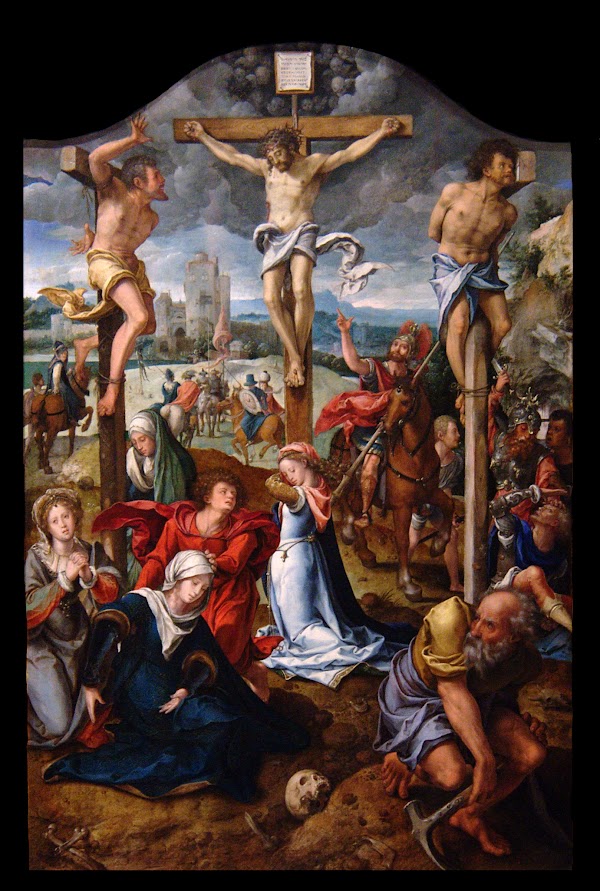
Crucifixion in the Roman Empire was a public spectacle. The victims were meant to serve as a warning to others not to do as they had done, lest you suffer the same fate. It was not only meant as a means of carrying out the death penalty, but it was also meant to shame and torture the victims in the worst possible way. The humane way of execution was beheading – like the execution of John the Baptist. That was quick, with a minimum of suffering, and out of the public eye.

Victims of crucifixion had much to say while they were dying. But you wouldn’t allow your children near a crucifixion unless you were forced. Likely most of what the crucified had to say is not worth repeating in polite company. The statements of those who were crucified consisted almost entirely of curses and foul language. You would certainly never hear a crucified man blessing those who were killing him.

Yet here is Jesus, stripped naked, beaten and bloodied, wearing a crown of thorns on His head, nailed to a cross; and what is the first thing He says when He is lifted up? “Father, forgive them, for they know not what they do.” I can confidently say that no one who was there at Golgotha that day had ever heard anything like it. Who was this man?

The sign over his head read, “Jesus of Nazareth, King of the Jews”. Yet, Herod Antipas was King over Judea, not this man. This man was the son of a carpenter from Nazareth. Neither He, nor His father, was royalty, much less a king. At least one person there at Golgotha knew that Joseph of Nazareth was a descendant of King David, but that didn’t make him royalty. There hadn’t been a Davidic King over Judah in hundreds of years, and even in the days of Jesus, most Jews had likely had an ancestor who was a descendant of King David, so that wasn’t anything special. Yet this man, the son of a carpenter from Nazareth, was the true King of the Jews.

The true King of the Jews, and all Israel, had always been God. It really didn’t matter that Jesus was a descendant of King David, except that God had promised David that his descendant would reign on his throne forever. What really mattered was that this man was the only-begotten Son of God. That is what made Jesus the King of the Jews. This is why we hold to the truth of the miraculous conception of Jesus. His mother, Mary, was, and remained, a virgin until the time when Jesus was born. His Father was God, and Jesus, Himself, though incarnate as a man, was likewise the same God with the Father, and the Holy Spirit – three persons yet one and the same God.

So since Jesus is God in the flesh, what was He doing there hanging naked and nailed to a cross? The answer is in the first words that Jesus says after he was lifted up: “Father, forgive them.” It was as if Jesus could hardly wait to ask God, the Father, to forgive sinners. That is what Jesus was doing there on the cross. It is the same thing that He was working toward His whole life as a man. Jesus was there to forgive. Jesus is still here to forgive, but He is only here today to forgive you because of what He did then and there on the cross.

Remember this when someone says that Christianity isn’t all about the forgiveness of sins, but about loving your neighbor, or some other works-righteousness where you must save yourself. The eternal God did not become incarnate as a man and then suffer and die on the cross so that you would have to try to save yourself. God became incarnate so that He would save you.

Jesus did not have to go to the cross for Himself – He went to the cross for you! For His sake, Jesus should not have been there on the cross. It should have been you, dying for your own sins. Jesus was without sin His entire life. He was completely innocent before God and before man. The charges that men contrived to put Him on a cross were all lies. Governor Pilate knew they were wicked lies, but the wicked leaders of the Jews threatened to start riots which would threaten the livelihood and life of Pilate. Pilate wanted to do what was just and right, but if this man Jesus would not speak up to defend Himself, then Pilate could only go so far. It would do no good for Pilate to die for Jesus at this time, but it would accomplish much good for Jesus to die for Pilate, and the Jews, and the Gentiles, and all who would ever live on the earth.

It is a strange thing that the King of the Jews would die for His people. It is even more strange that the Almighty God incarnate would die for the sins of His people. God is a just God who is holy, and must punish sin, but God is also a merciful God who forgives sin. God could not punish us sinners for our sins without destroying us, so He paid the price Himself.

Jesus didn’t just say, “Father forgive them.” Jesus was there on the cross paying the price for the sins of the whole world so that your sins would be atoned for. What does forgiveness look like? It looks like God as a man beaten and naked nailed to a cross wearing a crown of thorns. There is your forgiveness and your salvation. Behold the man. Behold your forgiveness.

Forgiveness is what Jesus was there for. Forgiveness what Jesus is here for today, too! Jesus is here in His word and sacraments to forgive you and save you from your sins. 

No wonder the Centurion looked on Jesus after He died and said, “Truly, this man was the son of God.” (Mark 15:39)


Articles in this series:


Father, forgive them for they know not what they do.
I tell you the truth, today you will be with me in paradise.
Woman behold your son. Son, behold your mother.
My God, My God, why have You forsaken Me?
I thirst.
It is finished.
Father, into your hands I commit my spirit.


Today You Will be With Me in Paradise

Second in a series on the Seven Last Words of Jesus

by Pastor Paul Wolff


One of the criminals who were hanged railed at (Jesus), saying, “Are you not the Christ? Save yourself and us!” 

But the other rebuked him, saying, “Do you not fear God, since you are under the same sentence of condemnation? And we indeed justly, for we are receiving the due reward of our deeds; but this man has done nothing wrong.” 

And he said, “Jesus, remember me when you come into your kingdom.” 

And he said to him, “Truly, I say to you, today you will be with me in Paradise.”
(Luke 23:39-43)


One of the criminals … said,
“Jesus, remember me
when you come into your kingdom.”
And Jesus said to him,
“Truly, I say to you, today you will
be with me in Paradise.”

There is a sarcastic saying which says, “No one is useless. You can always serve as a bad example.” In the ancient Roman empire crucifixion was the ultimate expression of this adage. “Don’t be like this guy, or else you will suffer the same humiliation and torture as him.”

The two men who were crucified along with Jesus were just such people. They were the dregs of society. Roman society had no more use for them, except to use them as a lesson for others. Jesus did not look at them that way. When Jesus prayed, “Father forgive them …” He wasn’t only talking about those who were crucifying Him, and those who conspired for his death. Jesus was praying for the forgiveness of all sinners, including those two who were crucified along with Him.

One of the criminals next to Jesus mocked Him saying, “Aren’t you the Christ? Save yourself, and us!” This taunt sounds like Satan’s temptations of Jesus. “If you are the Christ … If you are the Son of God …” He said this as if he expected Jesus to do what he thought the Christ should do, instead of what God sent Him to do. “Save us!” he said. For what did he want to be saved? Did he want his sinful life restored so he could continue to lie, cheat, steal, and murder? That is not salvation.

The other criminal saw his situation, and he probably heard Jesus praying for his forgiveness, and he repented. He wanted the peace that would lead a crucified man to pray for his tormentors. Such a thing did not happen often, if ever. First, he called his friend to repentance as he confessed the guilt of his sins. “Don’t you fear God? … Our punishment is just, for we are getting what we deserve for what we have done, but this man has done nothing wrong.” The Second use of God’s Law is to show us our sin. The repentant thief recognized his sin and confessed it. The wages of sin is death. All sinners deserve to die for their sins. All sinners deserve to be there dying on the cross. The one man who did not deserve to die was Jesus. Yet there He was dying for sinners.

Then the repentant thief looked to Jesus to save Him. “Jesus, remember me when you come into Your Kingdom.” Truly this is a great example that faith is a miraculous gift of the Holy Spirit. Jesus was being crucified just as the thieves were. Jesus had the power and authority as the Son of God to avoid death, but He didn’t use that power to save Himself. Jesus would die like a man to rescue mankind from sin and death. “Jesus, King of Israel, remember me when you come into Your kingdom.”

Jesus did not laugh at the condemned criminal. He did not treat him like an irredeemable piece of worthless human trash – as the world considered him. Jesus saw him as a beloved child of God – the likes of which Jesus had come to save. Jesus once taught, “There will be more joy in heaven over one sinner who repents than over ninety-nine righteous persons who need no repentance.” (Luke 15:7) Jesus rejoiced to save this lost sinner. Jesus came to save sinners. Here was one looking to Him for salvation. This man was lost, and now he was found. Jesus was not so preoccupied with his own suffering, but He gave comfort to the repentant thief. “Truly, today you will be with me in paradise.”

“Today!” There is no waiting for salvation. There is no purgatory to add to the suffering of life after death. “Today you will be with me in Paradise!” As a sinner, this thief was an enemy of God by nature, but, through faith, Jesus adopted him as his beloved child, and would share with him the inheritance of his heavenly kingdom that very day. What a joy it is to be rescued from sin and death by Jesus. It is sad that this former thief did not have the comfort of salvation earlier in his life. He was late to the party, but not too late, and better late than never.

The salvation of the repentant thief is another example of how salvation is free through faith in Jesus. This man did nothing to save himself. He was dead to the world in the last hours of his life. Yet, Jesus suffered and died to redeem him of his sin. This man’s sin only brought him trouble and hardship in life and directly led to his early death. Yet, the Holy Spirit gave him faith in Jesus and led him to repent of his sin and receive the forgiveness and salvation that Jesus won for him as He died on the cross next to him.

The world has nearly as little use for Jesus as it did for the two thieves crucified on either side of him, and the world tries to get rid of Jesus, even to this day. They do this to sin more – thinking that to sin freely is freedom. Yet, “everyone who sins is a slave to sin.” (John 8:34) But “if the Son sets you free, you are free indeed.” (John 8:36) Jesus forgave the repentant man condemned by the world. The world had told him how fun it was to lie, cheat, steal, and murder, then condemned him to death for learning his lesson too well. He still had to die for his crimes, but as a forgiven child of God, heaven was opened to him to live forever in paradise.

Jesus was not ashamed to suffer and die for people such as this poor thief. If Jesus could rescue him from sin and death and give him salvation that very day, then Jesus can also take joy in rescuing you from your sin and death. Hebrews 12:2 says, “Look to Jesus, the founder and perfecter of our faith, who, for the joy set before Him endured the cross, scorning its shame, and is seated at the right hand of the throne of God.” The repentant thief looked to Jesus and found salvation. Today salvation is yours through faith in Christ who rescues sinners from death to give them eternal life in Paradise.


Articles in this series:


Father, forgive them for they know not what they do.
I tell you the truth, today you will be with me in paradise.
Woman behold your son. Son, behold your mother.
My God, My God, why have You forsaken Me?
I thirst.
It is finished.
Father, into your hands I commit my spirit.


Woman behold your son…. Son, behold your mother.

Third in a series on the Seven Last Words of Jesus

by Pastor Paul Wolff 


Standing by the cross of Jesus were his mother and his mother’s sister, Mary the wife of Clopas, and Mary Magdalene. When Jesus saw his mother and the disciple whom he loved standing nearby, he said to his mother, “Woman, behold, your son!” Then he said to the disciple, “Behold, your mother!” And from that hour the disciple took her to his own home. (John 19:25-27)


Jesus said, to Mary and John
“Woman, behold your son.”
“Son, behold your mother.”

The work of Jesus to win salvation and pay for the sins of the world wasn’t done in a day. Good Friday was the most important day, but it was the completion of a lifetime of work. Jesus lived about 12,000 days from His birth to His death, and every day was a test. Would He love the Lord God with all His heart, mind, soul, and strength – even when it was the Lord’s will that He endure God’s wrath for sinners? Would He love His neighbor as Himself – even when those people sinned against Him, and hated Him and plotted to kill Him and took great satisfaction in doing so? If Jesus had failed just once in 12,000 days it would be all over, and our hope for salvation would have been lost.


As we consider the work of God for our salvation we ought to think about the work of Jesus in two aspects: active and passive obedience to God. The passive obedience of Christ was that He let sinners falsely accuse Him of sin and hang Him on a cross to die, and He also passively endured God’s wrath over the sins of the world, so that He could take the punishment meant for sinners, and rescue them from the righteous wrath of God. This is what Jesus was doing hanging on the cross, but His work of active obedience was not done.


The active obedience of Christ was that He actively obeyed all the commandments of God. In all of His 12,000 days, Jesus always did the good things that He ought to have done, and He never did any of the evil things that were forbidden by God’s commandments. This had to be done for our salvation so that Jesus could be the perfect obedient man who obeyed all God’s commandments, and the perfect unblemished sacrifice for the sins of all mankind. The Active obedience of Christ is why God said of Him, “This is my beloved son. In Him I am well pleased.” 


In this third word that Jesus gives from the cross we see again that He is still thinking of others, and not himself. Jesus sees His mother, and the disciple who is not named in John’s Gospel, which is John himself. By saying to Mary, “Woman, behold your son” and to John, “Behold, your mother” Jesus is telling Mary to consider John to be her son and He is telling John to consider Mary to be his mother. In doing this, Jesus is keeping the Fourth Commandment, “Honor your father and your mother.”


Jesus was honoring His mother by seeing that she was provided for in her old age. Assuming Mary was in her early to middle twenties when Jesus was born, she would have been in her middle to late fifties when Jesus was crucified, and could have lived many more years before her death. Jesus would not be around bodily to take care of her, and none of her other children were there with her at the cross of Christ, but John was there.
It was the duty of the children to take care of their parents in their old age. As the firstborn son, Jesus was most responsible to take care of His mother. However, that was not His calling. Just as He was not called to take a wife and raise a family, so He would not live to see His mother grow old before He died. Jesus could have left the care of His mother to His brothers, James, Joseph, Simon, and Judas, but where were they? They were not there at the cross with Mary. Likewise, none of Jesus’ disciples were there except John. Jesus had the responsibility to see that Mary not only was provided with material needs, but also Spiritual needs. John could be considered the most faithful of the disciples.


John had run away with all the other disciples when Jesus was arrested, as Jesus had told them beforehand that this would happen, quoting Zechariah 13:7 saying, “You will all fall away because of me this night. For it is written, ‘I will strike the shepherd, and the sheep of the flock will be scattered.’” John did enter into the house of the High Priest with Peter during the trial of Jesus, yet John did not deny Jesus as Peter did. John also was there at Golgotha to witness the death of Jesus. So Jesus knew He could trust John to provide for Mary
’s needs of body and soul as she grew older and moved toward her death. 


Mary’s needs were not only physical, because although she had remained faithful while Jesus was with her, the evil one would surely still try to lure her away from her salvation, and get her to deny that she needed the forgiveness of Jesus to save her from her sins. John would be her pastor to call Mary to repentance when necessary, and to frequently assure her of the redemption and forgiveness of Jesus so that she would remain faithful to her end trusting in Him to save her.


Jesus was also changing His relationship as son with Mary for a couple other reasons. Jesus was the one chosen by the Father to suffer and die for the sins of the world. Jesus had to do this alone. He could not share His suffering with anyone else, especially a sinner. He had to endure the full wrath of God for all the sins of the world, so that we would be rescued from all our sin. Mary surely mourned that the son she bore and gave birth to was the one chosen by God to suffer for the sins of the world, but nothing that Mary suffered had any effect for the salvation of anyone, including herself. Mary could be comforted by the Apostle John, whom Jesus gave to be her adopted son.


These words of Jesus also point out the false teaching of those who pray to Mary in heaven because they reason that Mary’s Son must listen to His mother and obey her. The resurrected Jesus is exalted as King of kings and Lord of lords, and that includes His mother. Jesus is not obligated to obey His mother, or anyone except God the Father and the Holy Spirit, though He is in perfect agreement and unity with God in all things. Mary’s role in our salvation is nothing more than we confess in the creed. She was the faithful virgin who believed God’s Word when the angel spoke it to her, and, by the power of the Holy Spirit, the Son of God was miraculously conceived in her and she gave birth to Him so that He could live and die as a man to redeem all mankind from our sins.

Jesus was honoring His Father by remaining obedient to God, the Father, and offering His life as the atoning sacrifice for the sins of the world, but He does not do this at the expense of His mother. Jesus was again thinking of others while He was suffering and dying on the cross. He did not want to lose His mother, just as He did not want to lose even the thief who was crucified alongside of Him (see the previous word from Jesus on the cross).


Articles in this series:


Father, forgive them for they know not what they do.
I tell you the truth, today you will be with me in paradise.
Woman behold your son. Son, behold your mother.
My God, My God, why have You forsaken Me?
I thirst.
It is finished.
Father, into your hands I commit my spirit.


My God, My God, Why Have You Forsaken Me

Fourth in a series on the Seven Last Words of Jesus

by Pastor Paul Wolff


Now from the sixth hour there was darkness over all the land until the ninth hour. And about the ninth hour Jesus cried out with a loud voice, saying, “Eli, Eli, lema sabachthani?” that is, “My God, my God, why have you forsaken me?” And some of the bystanders, hearing it, said, “This man is calling Elijah.” And one of them at once ran and took a sponge, filled it with sour wine, and put it on a reed and gave it to him to drink. But the others said, “Wait, let us see whether Elijah will come to save him.” (Matthew 27:45-49)


Eve was ashamed of her sin
and afraid of God,
but God did not forsake her
nor her husband.

In Genesis 3, immediately after Adam and Eve sinned against God’s simple command not to eat the fruit of the Tree of the Knowledge of Good and Evil, Moses describes Adam and Eve being frightened by the “sound of the Lord God walking in the garden in the cool of the day.” Of course they were afraid because they had condemned themselves to death for their rebellion against God, but from Moses’ description of God “walking in the garden in the cool of the day” I have long imagined that God’s visits to His beloved children were frequent. Not just in the morning, but several times a day, until the day when everything changed.

God delighted in His children, and they delighted in their Father. That all changed when the man and woman rebelled against God by disobeying His command. Adam and Eve were now afraid of their loving Father and ran away from Him, afraid of the curse of death. They felt like they had to hide from God in order to live. They were wrong, of course. God loved them dearly, and He showed great mercy to them, as He does to you, too, but God also hid a part of Himself from them after they became sinners. Scripture tells us that no sinner can see God’s glory and live. So God hid the greater part of His glory so that He could confront His children with their sin, and also reaffirm His love for them by promising to send a Messiah who would rescue them from their sin and make everything good again.

Before Adam and Eve sinned against God they could see God in His unfiltered glory. God had made them in His image and they were holy and pure and had nothing to be ashamed about. All that changed when they became sinners. God did not forsake them, but their relationship had changed. They were no longer like God, but now they were something quite different. They were dirty, corrupted, and unclean. They were no longer such close friends and family with God, but they were suddenly strangers, alien to God’s holy nature, and in sin they had become enemies of God, as we all are according to our corrupted sinful nature.

Jesus had no corrupted nature because He is God in the flesh. Jesus had nothing to be ashamed of before God or before man. Yet, Jesus also hid His divine glory. This was for our sake, and so He could live a normal life as a man. Sinful people had no fear of Jesus, and treated Him like any other man, both good and bad. Throughout His whole life, sinners sinned against Jesus without thinking that He was the almighty, righteous judge who could send them to everlasting torment as sinners deserve. Even before the Pharisees and Pontius Pilate conspired to crucify, Jesus surely endured much mistreatment at the hands of sinners, as we all do, and, yet, Jesus still willingly went to the cross to suffer and die for all sinners, including those who treated Him the worst.

That is why Jesus was there, nailed to a cross. That is why Jesus was forsaken by God the Father – and He was truly forsaken by the father in a way that you have never been, and I pray that you never will be. The Father turned away from the Son and poured out all His wrath upon Him for all the sins of all people of all time. This had never happened in all eternity. The eternal Son of God had only known the perfect divine love of the Father and the Holy Spirit in eternity, but Jesus had carried in His body the guilt of the sins of the world so that He could suffer and die and take our guilt to the grave where it would remain even after Jesus rose victorious three days later. Christ’s journey to the cross began at His incarnation when He was conceived as the son of the Virgin Mary, but Jesus affirmed that He would fulfill the Father’s will when He was baptized by John in the Jordan River.

Jesus cried out with a loud voice, saying, …
“My God, my God, why have you forsaken me?”

John was baptizing repentant sinners, and was surprised when the Christ, Himself, asked to be baptized, too. Jesus told John, “Let us do this to fulfill all righteousness.” It is right that God would punish sinners for their sin, but God accepted a sinless substitute to redeem sinners. In the Old Testament church, they offered lambs as a substitute to die for their sins, but not even all the lambs in the world would pay for the sins of one person. Jesus is the perfect lamb of God who takes away the sin of the world. The incarnate Son of God could pay the price to redeem the whole world from sin and death. This is why after Jesus was anointed in the Jordan river with the Baptism of sinners, the voice of God the Father was heard proclaiming, “This is my beloved Son, in whom I am well pleased.” The Father was pleased not only because His Son had perfectly obeyed God’s commandments every day for about 30 years, but because the Son was also taking the guilt of sinners into His body so that He could pay the price to redeem sinners so He could restore us and glorify us to be the holy people God intended us to be from the beginning.

Jesus endured God’s wrath over sin as He hung there on the cross. He felt the sting of sin like no one on earth has ever felt. The Father treated Jesus like the worst sinner in the world – like the only sinner in the world. All His wrath was poured out on Jesus, so there would be no anger left for you, and you would be forgiven. Jesus endured God’s wrath, and never lost His love for the Father, or for you. Yet, in the depth of His torment He had to cry out, “My God, why have You forsaken me?” He truly suffered the wrath of God over the sin of the world, yet, God was still His God, and if it was the Father’s will for Him to suffer and die, then He would endure it to the end and die trusting that God’s will is best even if it meant that He would suffer hell all alone on the cross and then die. As a man, Jesus had to live by faith, trusting God’s word in the Scriptures that this pleased the Father, and that God would make everything work out for the best – for Jesus Himself, and for all the rest of us, who benefit from the suffering and death of Jesus. He was forsaken by the Father, so you will never have to go through the hell that Jesus endured.


Articles in this series:


Father, forgive them for they know not what they do.
I tell you the truth, today you will be with me in paradise.
Woman behold your son. Son, behold your mother.
My God, My God, why have You forsaken Me?
I thirst.
It is finished.
Father, into your hands I commit my spirit.