Showing posts with label save. Show all posts

Friday, September 26, 2025

Biblical Vignette of a Peacemaker: Abigail

by Pastor Paul Wolff


Jesus said, “Blessed are the Peacemakers,
for they shall be called sons of God”
Matthew 5:9

In my previous blog article (Blessed are the Peacemakers) I examined the Beatitude where Jesus blesses peacemakers. Jesus taught, “Blessed are the peacemakers, for they shall be called sons of God.” (Matthew 5:9) In this article I want to give a short examination of a Biblical example of a peacemaker in action.

In 1 Samuel 25 we are told the story of Abigail and David. As the story begins, Abigail is the wife of a rich man named Nabal, who belongs to the tribe of Judah (same as David), and owns large flocks of sheep and goats. David is not yet King of Israel because Saul is still alive. David is already a very successful General in Israel’s army, and he has with him a group of 600 soldiers who are experienced in battle, and have been very successful in defeating Israel’s enemies with the help of God. 

Saul had been pursuing David with the intent of killing him out of envy for the success God gave him – though David’s victories in battle benefited Israel as a whole, and Saul ought to have praised God for giving David victory over Saul’s enemies, but King Saul had turned away from God and was jealous of David and wanted to kill him. David had just had the first of their face-to-face encounters where David could have easily killed Saul (and David’s men encouraged him to do so), but David would not murder God’s anointed King, and he showed Saul that he was not his enemy. King Saul was contrite and admitted that he had treated David badly and blessed him, and he and David parted with a truce. King Saul’s truces, however, were typically short-lived, and his attitude could change with the slightest demonic temptation to envy. So David retreated deep into the territory of the tribe of Judah. Saul was king over a united Israel, including Judah, but David still felt safer in the territory of his own tribe, among his people. Abigail had nothing to do with this peacemaking. David did that himself, but it shows the state of mind that David was in when he was provoked by Nabal.

I think it is likely that David did not go to his family home in Bethlehem because if Saul fell into a murderous rage again that would be the first place he might go to look for David. So he went several miles West, and camped out near the area where Nabal’s flocks were grazing. It was in the Spring or early Summer, and the time for sheep shearing was approaching. That is a big event for shepherds because that is when the shepherd earns most of his money for the year. Sheep shearing is to the shepherd what harvest time is for the crop farmer. David knew about such things because his family also owned flocks (see Psalm 23). David sent some of his young men as messengers to Nabal asking if he and his men could join in his feast. David told them to remind Nabal that he suffered no losses while his shepherds and David’s men were out in the fields together, and he told his men to greet Nabal with the message, “Peace be to you, and peace be to your house, and peace be to all that you have.” (1 Samuel 25:6)

When Jesus entered the City of David for
the last time before His death,
He did not come as a conquering hero,
but as a humble servant of God who would
offer His innocent life to rescue sinners.

David’s threefold message of peace to Nabal reminds me of when Jesus sent out the 72 he told them, “Whatever house you enter, first say, ‘Peace be to this house!’ And if a son of peace is there, your peace will rest upon him. But if not, it will return to you.” (Luke 10:5-6) What this means is that when Christ’s disciples came in peace, peaceful people would greet them in the same way. If their peaceful greeting was returned with hostility, then they were to leave and say, “Even the dust of your town that clings to our feet we wipe off against you. Nevertheless know this, that the kingdom of God has come near.” (Luke 10:11) 

David expected a gracious welcome from Nabal because David was the great hero of the tribe of Judah. David has slain the giant Philistine warrior, Goliath, several years earlier. He was one of Israel’s top warriors, at least equal or possibly greater than King Saul’s son, Jonathan. Also, David’s army had spent a fair amount of time in the fields with Nabal’s shepherds, and David was confident that his well-disciplined soldiers had unfailingly obeyed his orders not to take any animals from Nabal’s flocks for a midnight barbecued mutton party.

Nabal responded to David’s request by saying, “Who is David? Who is the son of Jesse? There are many servants these days who are breaking away from their masters. Shall I take my bread and my water and my meat that I have killed for my shearers and give it to men who come from I do not know where?” This was a rude response, and not in the spirit of peace which David’s men made their request. Obviously, Nabal knew who David was and where he was from, but he refused to acknowledge the truth. Nabal also made some false accusations against David. He had not broken away from King Saul. It was Saul who turned against his most successful and faithful general (who was also his son-in-law) and tried to kill him out of envy.

Nabal’s response was exceedingly foolish in a couple of ways. First, it was practically suicidal to anger a man with an extremely successful and experienced army at his command. On the other hand, if Nabal had graciously granted David’s request, he would have made friends with the next King of Israel, and could have profited greatly from that friendship. Nabal might not have known that God had already anointed David to be the next King, but the blessing of Abraham was also in play here. God promised Abraham, “I will bless those who bless you, and him who dishonors you I will curse, and in you all the families of the earth shall be blessed.” (Genesis 12:3) This blessing wasn’t just that God liked Abraham, but it regarded the promise of the messiah, and it was passed down to Isaac, Israel, and Judah (out of Israel’s sons). A little while later God would affirm that the promise continued through David’s line (see 2 Samuel 7:8-16). So Nabal had inadvertently cursed himself by being so rude to David.

David’s response was immediate, and also a little over the top. Though David had made his request with a threefold greeting of peace, Nabal’s antagonistic response also antagonized David, so that his peaceful desire was replaced with a murderous one. He made a vow to kill Nabal and all the men associated with his household before the sun rose the next morning. He told his men to strap on their swords, and they all did. He then took 400 men with him to deal with Nabal, and left 200 to guard his camp and supplies. This was an overreaction, though David may have been on edge having been pursued by both the enemies of Israel and Israel’s king, and he likely was not in the mood to be insulted by someone from his own tribe. He had hoped that he was among friends, and he had treated them as such, and made a peaceful request to join in the feast. When he was so rudely rejected he became angry, and having an army at his right hand, he impulsively determined that he did not have to take that from Nabal. In his anger, David did not recognize that his anger and intentions were far out of bounds of the offense, but there was one person who did – Nabal’s wife, Abigail.

Somehow one of Nabal’s men heard about David’s intentions, and told Abigail that David was intent on killing Nabal and all of them, too. He also noted that Nabal “is such a worthless man that one cannot speak to him.” (v. 17) He told Abigail that David’s men “were very good to us, and we suffered no harm, and we did not miss anything when we were in the fields, as long as we went with them. They were a wall to us both by night and by day, all the while we were with them keeping the sheep.” (v. 15-16)

Abigail quickly gathered some food that was prepared and set out to meet David’s army to try to turn away his murderous anger, though she did not tell her husband what she was doing. When she met David she humbled herself and fell at his feet, saying, “On me alone, my lord, be the guilt. Please let your servant speak in your ears, and hear the words of your servant.” (v. 24) She first humbled herself calling herself David’s “servant” and accepting blame for the offense that her husband gave to David. Then she pleaded mercy for Nabal, admitting that he was a fool. Abigail told David that she was not there when his messengers came to Nabal. This was to suggest that the messengers would have received a warmer reception, had she heard David’s request, the proof of which was the supplies that she brought with her to David.

Abigail made peace with David when he intended murder.
Painting of The Meeting of David and Abigail by Peter Paul Rubens
seen at the Detroit Institute of Arts.

Abigail then continued to reason with David, not pleading for the lives and well-being of her household and employees, but pleading for the sake of David himself. She said that the Lord (God) had thus far restrained David from “bloodguilt” (that is, guilt for shedding the blood of innocent people, or murder). She asked that he would accept the food she brought and forgive her tresspass (since she accepted the guilt of her husband). Then she said, “For the Lord will certainly make my lord a sure house, because my lord is fighting the battles of the Lord, and evil shall not be found in you so long as you live.” (v. 28) She calls David her “lord” (since she humbled herself, saying she was David’s “servant”), and she noted that because David is “fighting the battles of the Lord (God)” then he should not be found guilty of murdering innocent people (such as Nabal’s workers, and possibly Nabal, himself). Abigail shows that she recognizes that God is with David in his battles, and he should keep himself pure for what lies ahead for him as the next king of Israel. 

Abigail then said, “If men rise up to pursue you and to seek your life, the life of my lord (meaning: David) shall be bound in the bundle of the living in the care of the Lord your God. And the lives of your enemies he shall sling out as from the hollow of a sling. And when the Lord has done to my lord according to all the good that he has spoken concerning you and has appointed you prince over Israel, my lord shall have no cause of grief or pangs of conscience for having shed blood without cause or for my lord working salvation himself. And when the Lord has dealt well with my lord, then remember your servant.” (v. 29-31) Abigail calls David “my lord”, and recognizes that God has chosen David to be king (or “prince”) of Israel. David would be “prince” of Israel because God, Himself, was always Israel’s king, as long as they remained faithful to God. It is interesting that Abigail says that God will sling out David’s enemies as from the hollow of a sling. This, of course, is a reference to how David slew the Philistine warrior, Goliath (see 1 Samuel 17). She trusts in God to take care of David’s enemies, and reminds him to do the same, but she asks that David remember her household when God has blessed David, as she trusts that He will. In this, she shows great concern for David’s spiritual well-being as God’s chosen king, and that surely was a large reason why David’s heart was softened, and his murderous anger was dissipated. 

David’s first response to Abigail was to first bless God, who sent her to meet him and to turn away his wrath. This is the proper response of all God’s people. Just as Abigail spoke of God’s blessings to David, so he puts God first in his response to her gracious words. Next, David blesses Abigail for her wisdom, kindness and discretion to make amends for Nabal’s self-destructive rudeness. He also tells her his intentions were to kill all the men and boys in Nabal’s household, but he seems pleased that no one had to die by his hand. David then dismisses her in peace, and assures her that he has received the gifts she brought in peace as she intended. David had sent his men in peace, but that peace was returned with strife, and that caused anger and strife in David, and in his men, too. However, in the midst of great danger and strife, Abigail returned that peace to David and his army, and their peace was restored, too. David assures her that he has graciously received her gifts, has forgiven the offense, and will bring no harm to her household.

Though David was a warrior from a young age,
his hands were innocent of murder when he became king of Israel,
with the help of the peacemaking efforts of Abigail.

While all this was going on, Nabal was feasting like a king, and was drunk. If David had come and found him like this he would have had very little resistance when he killed Nabal and all his men. This also shows that Nabal had more than enough to share with his neighbor, David. Nabal was not a king, and it was foolish of him to act as if he were. When Abigail came home she did not immediately tell her husband what she had done to save his life. She waited until the next morning when he was sober. When he heard the full story of what happened the Scripture says his heart “died within him and became like stone” and ten days later God struck him dead. Though God spared David from the “bloodguilt” of murder through the kind, peacemaking actions of Abigail, He avenged the offense Himself and struck Nabal dead. This reminds us that God said “Vengeance is mine” (Deuteronomy 32:35, also quoted by St. Paul in Romans 12:19). We should not seek revenge personally, but leave it to God, and to God’s appointed representatives. The government may use capital punishment for the crime of murder, and in doing so are acting on God’s behalf – as long as the government does so in a lawful way, and does not prosecute innocent people. (See Genesis 9:6)

When David heard that Nabal was dead he first blessed God who avenged the insult, and, through the intervention of Abigail, had kept David from wrongdoing in response. Then he sent for Abigail and asked her to become his wife. She was again very humble as a servant, and she accepted his proposal. David, as a godly man, recognized the value of Abigail as a peacemaker. Though David already had several wives at this time, and that would cause him trouble in the future, though that is a story for another time. Abigail was not the cause of David’s troubles, and she is someone that all God-fearing people can admire for her faith in God and her work to make peace and save her household from being murdered.

Monday, April 1, 2024

Father, Into Your Hands I Commit My Spirit

by Pastor Paul Wolff

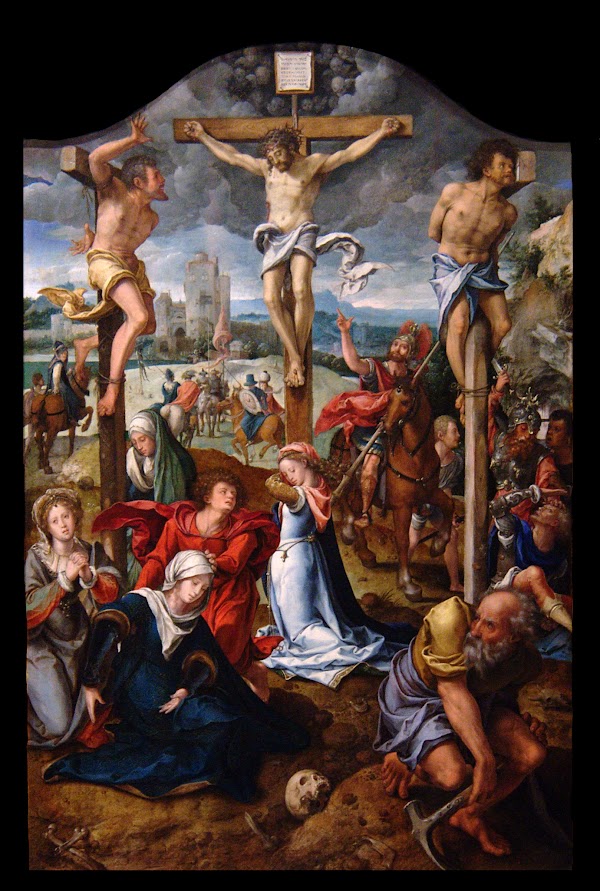
“It was now about the sixth hour, and there was darkness over the whole land until the ninth hour, while the sun’s light failed. And the curtain of the temple was torn in two. Then Jesus, calling out with a loud voice, said, ‘Father, into your hands I commit my spirit!’ And having said this he breathed his last.” (Luke 23:44-46)


Then Jesus, calling out with a loud voice,
said, “Father, into your hands I commit my spirit!”
And having said this he breathed his last.

As Jesus was dying on the cross He had just proclaimed His victory by the word, “It is Finished.” Yet there was one thing yet to do, and without it we could not have been saved. “The wages of sin is death.” (Romans 6:23) And if Jesus had not died to pay for the sins of the world, we would have had to die for our sin without any hope of salvation. It was proper for Jesus to proclaim His victory before it was done, because after He was dead He would not be able to say anything. Plus, He had come this far, He was not going to back out now. He had suffered God’s wrath over our sins and remained the faithful, obedient Son, still loving and trusting in God the Father, even while enduring the fierce wrath of God over all our wickedness and sins.

Is it any wonder that God twice proclaimed publicly, “This is my beloved Son. With Him I am well pleased.” When any of us sinners face some lesser pain or suffering we are easily tempted to wonder if God has abandoned us. Yet, here is Jesus, tormented and tortured on the cross, suffering the wrath of God over the sins of the world, which He had nothing to do with and did not contribute anything to in the least, and He still trusts in God to save Him from the death which follows directly.

We also see here that both His first and last words on the cross were prayers to His beloved Father. “Father, forgive them” and “Father, into Your hands I commit my spirit.” These prayers were prayed by a faithful Son who loved His good and gracious Father, even when it seemed like God was His enemy. Jesus lived His life as a man by faith, just as all of us ought to do, but where we often fail, Jesus was steadfast at all times. Here as Jesus faced death, He was still trusting in God to save Him. Jesus knew that He had to die, but He had faith that God is the one who rescues people from death. Even the sinless Son of God, who carried the sins of the world in His body and suffered the wrath of God like no one ever knew – He trusted that God would not abandon Him to the grave forever, but would rescue Him as He had promised to rescue us sinners for the sake of Christ.

Jesus died on the cross
to rescue you from the condemnation of your sins.
This also is where Jesus faced His last temptation as a mortal man – who was also God Almighty. Many times Jesus had been tempted to use His almighty, Divine power to save Himself, and this is surely one of those times. Jesus was at one of His weakest points as a man, yet, He could have summoned all power in heaven and earth to save Himself. If there had been the slightest flaw in His love for God or for wicked sinners, He could have stumbled here. If He had secretly desired the damnation of any horrible wicked murdering, lying, godless sinner, then He would not have let Himself die, and we all would get exactly what we deserved. Yet, Christ’s love was perfect. Jesus paid the full price for all sinners, even those who despised Him and rejected the price He paid to win their salvation, and all those who loved their sin more than Jesus, and reject His forgiveness and salvation. Jesus still loved them to the end, and gave His life for them.

Jesus had no proof that God would save Him from death, except what was written in the Holy Scriptures. In His humility, Jesus did not use His Omniscience as God to give Him assurance of God’s Will. He had the Word of God in the Bible, but Jesus had to trust that the Bible was true, and that God always kept His word.

It is humbling to think about it, but among all the things that could have gone wrong and cost us our salvation, we had to depend on Jesus not being a Biblical skeptic who doubted that the Bible was an accurate and dependable record of God’s Word. Jesus fully trusted that the Bible was the Word of God, and He always interpreted it correctly, even when those around Him often misinterpreted the Scriptures, and twisted the meaning to say something different – just as we see people doing it today. Even when the devil tried to twist the Scripture to tempt Jesus to sin, Jesus trusted God’s Word in the Bible was right, even when it caused Him suffering and pain.

Here we also see that these very last words out of the mouth of Jesus before He died were straight from the Bible. Jesus was quoting Psalm 31:5 which says, “Into your hand I commit my spirit; you have redeemed me, O Lord, faithful God.” We see that Jesus did not quote the whole verse, but His strength was failing, and He was dying, and we get the idea. Jesus was trusting in God, His Father, to look after His spirit and do with it what was good, right, and proper. Jesus would not try to save Himself, but trusted in God to restore His life, and to accept His sacrifice as the payment for the sins of the world, so that all who believe in Jesus will also be forgiven and rescued from death and given life everlasting in Paradise. Jesus trusted in God to be faithful to His Word, and He was not disappointed.

Jesus died trusting in God to save Him, and He not only saved Jesus from death, but gave Jesus all authority in Heaven and on earth, and rescue from sin and death to all who look to Jesus to save them from their sins. God’s Word is true, and because Jesus trusted in God and gave His life to redeem our sinful lives, we have the full forgiveness of sins and the promise of everlasting life in Paradise. We can live by faith, just as Jesus did His whole life, so that when we find ourselves face to face with death, we can trust in God to rescue us, and say with Jesus: “Into Your hand I commit my spirit; You have redeemed me, O Lord, faithful God.”


Articles in this series from 2023:


Father, forgive them for they know not what they do.
I tell you the truth, today you will be with me in paradise.
Woman behold your son. Son, behold your mother.
My God, My God, why have You forsaken Me?
I thirst.
It is finished.
Father, into your hands I commit my spirit.


Friday, April 7, 2023

Father Forgive Them

First in a series on the seven last words of Jesus

by Pastor Paul Wolff


“Two others, who were criminals, were led away to be put to death with (Jesus). And when they came to the place that is called The Skull, there they crucified him, and the criminals, one on his right and one on his left. And Jesus said, ‘Father, forgive them, for they know not what they do.’”
(Luke 23:32-34)


Christ’s first words when
He was lifted up on the cross were
“Father forgive them,
for they know not what they do.”

Crucifixion in the Roman Empire was a public spectacle. The victims were meant to serve as a warning to others not to do as they had done, lest you suffer the same fate. It was not only meant as a means of carrying out the death penalty, but it was also meant to shame and torture the victims in the worst possible way. The humane way of execution was beheading – like the execution of John the Baptist. That was quick, with a minimum of suffering, and out of the public eye.

Victims of crucifixion had much to say while they were dying. But you wouldn’t allow your children near a crucifixion unless you were forced. Likely most of what the crucified had to say is not worth repeating in polite company. The statements of those who were crucified consisted almost entirely of curses and foul language. You would certainly never hear a crucified man blessing those who were killing him.

Yet here is Jesus, stripped naked, beaten and bloodied, wearing a crown of thorns on His head, nailed to a cross; and what is the first thing He says when He is lifted up? “Father, forgive them, for they know not what they do.” I can confidently say that no one who was there at Golgotha that day had ever heard anything like it. Who was this man?

The sign over his head read, “Jesus of Nazareth, King of the Jews”. Yet, Herod Antipas was King over Judea, not this man. This man was the son of a carpenter from Nazareth. Neither He, nor His father, was royalty, much less a king. At least one person there at Golgotha knew that Joseph of Nazareth was a descendant of King David, but that didn’t make him royalty. There hadn’t been a Davidic King over Judah in hundreds of years, and even in the days of Jesus, most Jews had likely had an ancestor who was a descendant of King David, so that wasn’t anything special. Yet this man, the son of a carpenter from Nazareth, was the true King of the Jews.

The true King of the Jews, and all Israel, had always been God. It really didn’t matter that Jesus was a descendant of King David, except that God had promised David that his descendant would reign on his throne forever. What really mattered was that this man was the only-begotten Son of God. That is what made Jesus the King of the Jews. This is why we hold to the truth of the miraculous conception of Jesus. His mother, Mary, was, and remained, a virgin until the time when Jesus was born. His Father was God, and Jesus, Himself, though incarnate as a man, was likewise the same God with the Father, and the Holy Spirit – three persons yet one and the same God.

So since Jesus is God in the flesh, what was He doing there hanging naked and nailed to a cross? The answer is in the first words that Jesus says after he was lifted up: “Father, forgive them.” It was as if Jesus could hardly wait to ask God, the Father, to forgive sinners. That is what Jesus was doing there on the cross. It is the same thing that He was working toward His whole life as a man. Jesus was there to forgive. Jesus is still here to forgive, but He is only here today to forgive you because of what He did then and there on the cross.

Remember this when someone says that Christianity isn’t all about the forgiveness of sins, but about loving your neighbor, or some other works-righteousness where you must save yourself. The eternal God did not become incarnate as a man and then suffer and die on the cross so that you would have to try to save yourself. God became incarnate so that He would save you.

Jesus did not have to go to the cross for Himself – He went to the cross for you! For His sake, Jesus should not have been there on the cross. It should have been you, dying for your own sins. Jesus was without sin His entire life. He was completely innocent before God and before man. The charges that men contrived to put Him on a cross were all lies. Governor Pilate knew they were wicked lies, but the wicked leaders of the Jews threatened to start riots which would threaten the livelihood and life of Pilate. Pilate wanted to do what was just and right, but if this man Jesus would not speak up to defend Himself, then Pilate could only go so far. It would do no good for Pilate to die for Jesus at this time, but it would accomplish much good for Jesus to die for Pilate, and the Jews, and the Gentiles, and all who would ever live on the earth.

It is a strange thing that the King of the Jews would die for His people. It is even more strange that the Almighty God incarnate would die for the sins of His people. God is a just God who is holy, and must punish sin, but God is also a merciful God who forgives sin. God could not punish us sinners for our sins without destroying us, so He paid the price Himself.

Jesus didn’t just say, “Father forgive them.” Jesus was there on the cross paying the price for the sins of the whole world so that your sins would be atoned for. What does forgiveness look like? It looks like God as a man beaten and naked nailed to a cross wearing a crown of thorns. There is your forgiveness and your salvation. Behold the man. Behold your forgiveness.

Forgiveness is what Jesus was there for. Forgiveness what Jesus is here for today, too! Jesus is here in His word and sacraments to forgive you and save you from your sins. 

No wonder the Centurion looked on Jesus after He died and said, “Truly, this man was the son of God.” (Mark 15:39)


Articles in this series:


Father, forgive them for they know not what they do.
I tell you the truth, today you will be with me in paradise.
Woman behold your son. Son, behold your mother.
My God, My God, why have You forsaken Me?
I thirst.
It is finished.
Father, into your hands I commit my spirit.


Today You Will be With Me in Paradise

Second in a series on the Seven Last Words of Jesus

by Pastor Paul Wolff


One of the criminals who were hanged railed at (Jesus), saying, “Are you not the Christ? Save yourself and us!” 

But the other rebuked him, saying, “Do you not fear God, since you are under the same sentence of condemnation? And we indeed justly, for we are receiving the due reward of our deeds; but this man has done nothing wrong.” 

And he said, “Jesus, remember me when you come into your kingdom.” 

And he said to him, “Truly, I say to you, today you will be with me in Paradise.”
(Luke 23:39-43)


One of the criminals … said,
“Jesus, remember me
when you come into your kingdom.”
And Jesus said to him,
“Truly, I say to you, today you will
be with me in Paradise.”

There is a sarcastic saying which says, “No one is useless. You can always serve as a bad example.” In the ancient Roman empire crucifixion was the ultimate expression of this adage. “Don’t be like this guy, or else you will suffer the same humiliation and torture as him.”

The two men who were crucified along with Jesus were just such people. They were the dregs of society. Roman society had no more use for them, except to use them as a lesson for others. Jesus did not look at them that way. When Jesus prayed, “Father forgive them …” He wasn’t only talking about those who were crucifying Him, and those who conspired for his death. Jesus was praying for the forgiveness of all sinners, including those two who were crucified along with Him.

One of the criminals next to Jesus mocked Him saying, “Aren’t you the Christ? Save yourself, and us!” This taunt sounds like Satan’s temptations of Jesus. “If you are the Christ … If you are the Son of God …” He said this as if he expected Jesus to do what he thought the Christ should do, instead of what God sent Him to do. “Save us!” he said. For what did he want to be saved? Did he want his sinful life restored so he could continue to lie, cheat, steal, and murder? That is not salvation.

The other criminal saw his situation, and he probably heard Jesus praying for his forgiveness, and he repented. He wanted the peace that would lead a crucified man to pray for his tormentors. Such a thing did not happen often, if ever. First, he called his friend to repentance as he confessed the guilt of his sins. “Don’t you fear God? … Our punishment is just, for we are getting what we deserve for what we have done, but this man has done nothing wrong.” The Second use of God’s Law is to show us our sin. The repentant thief recognized his sin and confessed it. The wages of sin is death. All sinners deserve to die for their sins. All sinners deserve to be there dying on the cross. The one man who did not deserve to die was Jesus. Yet there He was dying for sinners.

Then the repentant thief looked to Jesus to save Him. “Jesus, remember me when you come into Your Kingdom.” Truly this is a great example that faith is a miraculous gift of the Holy Spirit. Jesus was being crucified just as the thieves were. Jesus had the power and authority as the Son of God to avoid death, but He didn’t use that power to save Himself. Jesus would die like a man to rescue mankind from sin and death. “Jesus, King of Israel, remember me when you come into Your kingdom.”

Jesus did not laugh at the condemned criminal. He did not treat him like an irredeemable piece of worthless human trash – as the world considered him. Jesus saw him as a beloved child of God – the likes of which Jesus had come to save. Jesus once taught, “There will be more joy in heaven over one sinner who repents than over ninety-nine righteous persons who need no repentance.” (Luke 15:7) Jesus rejoiced to save this lost sinner. Jesus came to save sinners. Here was one looking to Him for salvation. This man was lost, and now he was found. Jesus was not so preoccupied with his own suffering, but He gave comfort to the repentant thief. “Truly, today you will be with me in paradise.”

“Today!” There is no waiting for salvation. There is no purgatory to add to the suffering of life after death. “Today you will be with me in Paradise!” As a sinner, this thief was an enemy of God by nature, but, through faith, Jesus adopted him as his beloved child, and would share with him the inheritance of his heavenly kingdom that very day. What a joy it is to be rescued from sin and death by Jesus. It is sad that this former thief did not have the comfort of salvation earlier in his life. He was late to the party, but not too late, and better late than never.

The salvation of the repentant thief is another example of how salvation is free through faith in Jesus. This man did nothing to save himself. He was dead to the world in the last hours of his life. Yet, Jesus suffered and died to redeem him of his sin. This man’s sin only brought him trouble and hardship in life and directly led to his early death. Yet, the Holy Spirit gave him faith in Jesus and led him to repent of his sin and receive the forgiveness and salvation that Jesus won for him as He died on the cross next to him.

The world has nearly as little use for Jesus as it did for the two thieves crucified on either side of him, and the world tries to get rid of Jesus, even to this day. They do this to sin more – thinking that to sin freely is freedom. Yet, “everyone who sins is a slave to sin.” (John 8:34) But “if the Son sets you free, you are free indeed.” (John 8:36) Jesus forgave the repentant man condemned by the world. The world had told him how fun it was to lie, cheat, steal, and murder, then condemned him to death for learning his lesson too well. He still had to die for his crimes, but as a forgiven child of God, heaven was opened to him to live forever in paradise.

Jesus was not ashamed to suffer and die for people such as this poor thief. If Jesus could rescue him from sin and death and give him salvation that very day, then Jesus can also take joy in rescuing you from your sin and death. Hebrews 12:2 says, “Look to Jesus, the founder and perfecter of our faith, who, for the joy set before Him endured the cross, scorning its shame, and is seated at the right hand of the throne of God.” The repentant thief looked to Jesus and found salvation. Today salvation is yours through faith in Christ who rescues sinners from death to give them eternal life in Paradise.


Articles in this series:


Father, forgive them for they know not what they do.
I tell you the truth, today you will be with me in paradise.
Woman behold your son. Son, behold your mother.
My God, My God, why have You forsaken Me?
I thirst.
It is finished.
Father, into your hands I commit my spirit.


Woman behold your son…. Son, behold your mother.

Third in a series on the Seven Last Words of Jesus

by Pastor Paul Wolff 


Standing by the cross of Jesus were his mother and his mother’s sister, Mary the wife of Clopas, and Mary Magdalene. When Jesus saw his mother and the disciple whom he loved standing nearby, he said to his mother, “Woman, behold, your son!” Then he said to the disciple, “Behold, your mother!” And from that hour the disciple took her to his own home. (John 19:25-27)


Jesus said, to Mary and John
“Woman, behold your son.”
“Son, behold your mother.”

The work of Jesus to win salvation and pay for the sins of the world wasn’t done in a day. Good Friday was the most important day, but it was the completion of a lifetime of work. Jesus lived about 12,000 days from His birth to His death, and every day was a test. Would He love the Lord God with all His heart, mind, soul, and strength – even when it was the Lord’s will that He endure God’s wrath for sinners? Would He love His neighbor as Himself – even when those people sinned against Him, and hated Him and plotted to kill Him and took great satisfaction in doing so? If Jesus had failed just once in 12,000 days it would be all over, and our hope for salvation would have been lost.


As we consider the work of God for our salvation we ought to think about the work of Jesus in two aspects: active and passive obedience to God. The passive obedience of Christ was that He let sinners falsely accuse Him of sin and hang Him on a cross to die, and He also passively endured God’s wrath over the sins of the world, so that He could take the punishment meant for sinners, and rescue them from the righteous wrath of God. This is what Jesus was doing hanging on the cross, but His work of active obedience was not done.


The active obedience of Christ was that He actively obeyed all the commandments of God. In all of His 12,000 days, Jesus always did the good things that He ought to have done, and He never did any of the evil things that were forbidden by God’s commandments. This had to be done for our salvation so that Jesus could be the perfect obedient man who obeyed all God’s commandments, and the perfect unblemished sacrifice for the sins of all mankind. The Active obedience of Christ is why God said of Him, “This is my beloved son. In Him I am well pleased.” 


In this third word that Jesus gives from the cross we see again that He is still thinking of others, and not himself. Jesus sees His mother, and the disciple who is not named in John’s Gospel, which is John himself. By saying to Mary, “Woman, behold your son” and to John, “Behold, your mother” Jesus is telling Mary to consider John to be her son and He is telling John to consider Mary to be his mother. In doing this, Jesus is keeping the Fourth Commandment, “Honor your father and your mother.”


Jesus was honoring His mother by seeing that she was provided for in her old age. Assuming Mary was in her early to middle twenties when Jesus was born, she would have been in her middle to late fifties when Jesus was crucified, and could have lived many more years before her death. Jesus would not be around bodily to take care of her, and none of her other children were there with her at the cross of Christ, but John was there.
It was the duty of the children to take care of their parents in their old age. As the firstborn son, Jesus was most responsible to take care of His mother. However, that was not His calling. Just as He was not called to take a wife and raise a family, so He would not live to see His mother grow old before He died. Jesus could have left the care of His mother to His brothers, James, Joseph, Simon, and Judas, but where were they? They were not there at the cross with Mary. Likewise, none of Jesus’ disciples were there except John. Jesus had the responsibility to see that Mary not only was provided with material needs, but also Spiritual needs. John could be considered the most faithful of the disciples.


John had run away with all the other disciples when Jesus was arrested, as Jesus had told them beforehand that this would happen, quoting Zechariah 13:7 saying, “You will all fall away because of me this night. For it is written, ‘I will strike the shepherd, and the sheep of the flock will be scattered.’” John did enter into the house of the High Priest with Peter during the trial of Jesus, yet John did not deny Jesus as Peter did. John also was there at Golgotha to witness the death of Jesus. So Jesus knew He could trust John to provide for Mary
’s needs of body and soul as she grew older and moved toward her death. 


Mary’s needs were not only physical, because although she had remained faithful while Jesus was with her, the evil one would surely still try to lure her away from her salvation, and get her to deny that she needed the forgiveness of Jesus to save her from her sins. John would be her pastor to call Mary to repentance when necessary, and to frequently assure her of the redemption and forgiveness of Jesus so that she would remain faithful to her end trusting in Him to save her.


Jesus was also changing His relationship as son with Mary for a couple other reasons. Jesus was the one chosen by the Father to suffer and die for the sins of the world. Jesus had to do this alone. He could not share His suffering with anyone else, especially a sinner. He had to endure the full wrath of God for all the sins of the world, so that we would be rescued from all our sin. Mary surely mourned that the son she bore and gave birth to was the one chosen by God to suffer for the sins of the world, but nothing that Mary suffered had any effect for the salvation of anyone, including herself. Mary could be comforted by the Apostle John, whom Jesus gave to be her adopted son.


These words of Jesus also point out the false teaching of those who pray to Mary in heaven because they reason that Mary’s Son must listen to His mother and obey her. The resurrected Jesus is exalted as King of kings and Lord of lords, and that includes His mother. Jesus is not obligated to obey His mother, or anyone except God the Father and the Holy Spirit, though He is in perfect agreement and unity with God in all things. Mary’s role in our salvation is nothing more than we confess in the creed. She was the faithful virgin who believed God’s Word when the angel spoke it to her, and, by the power of the Holy Spirit, the Son of God was miraculously conceived in her and she gave birth to Him so that He could live and die as a man to redeem all mankind from our sins.

Jesus was honoring His Father by remaining obedient to God, the Father, and offering His life as the atoning sacrifice for the sins of the world, but He does not do this at the expense of His mother. Jesus was again thinking of others while He was suffering and dying on the cross. He did not want to lose His mother, just as He did not want to lose even the thief who was crucified alongside of Him (see the previous word from Jesus on the cross).


Articles in this series:


Father, forgive them for they know not what they do.
I tell you the truth, today you will be with me in paradise.
Woman behold your son. Son, behold your mother.
My God, My God, why have You forsaken Me?
I thirst.
It is finished.
Father, into your hands I commit my spirit.


My God, My God, Why Have You Forsaken Me

Fourth in a series on the Seven Last Words of Jesus

by Pastor Paul Wolff


Now from the sixth hour there was darkness over all the land until the ninth hour. And about the ninth hour Jesus cried out with a loud voice, saying, “Eli, Eli, lema sabachthani?” that is, “My God, my God, why have you forsaken me?” And some of the bystanders, hearing it, said, “This man is calling Elijah.” And one of them at once ran and took a sponge, filled it with sour wine, and put it on a reed and gave it to him to drink. But the others said, “Wait, let us see whether Elijah will come to save him.” (Matthew 27:45-49)


Eve was ashamed of her sin
and afraid of God,
but God did not forsake her
nor her husband.

In Genesis 3, immediately after Adam and Eve sinned against God’s simple command not to eat the fruit of the Tree of the Knowledge of Good and Evil, Moses describes Adam and Eve being frightened by the “sound of the Lord God walking in the garden in the cool of the day.” Of course they were afraid because they had condemned themselves to death for their rebellion against God, but from Moses’ description of God “walking in the garden in the cool of the day” I have long imagined that God’s visits to His beloved children were frequent. Not just in the morning, but several times a day, until the day when everything changed.

God delighted in His children, and they delighted in their Father. That all changed when the man and woman rebelled against God by disobeying His command. Adam and Eve were now afraid of their loving Father and ran away from Him, afraid of the curse of death. They felt like they had to hide from God in order to live. They were wrong, of course. God loved them dearly, and He showed great mercy to them, as He does to you, too, but God also hid a part of Himself from them after they became sinners. Scripture tells us that no sinner can see God’s glory and live. So God hid the greater part of His glory so that He could confront His children with their sin, and also reaffirm His love for them by promising to send a Messiah who would rescue them from their sin and make everything good again.

Before Adam and Eve sinned against God they could see God in His unfiltered glory. God had made them in His image and they were holy and pure and had nothing to be ashamed about. All that changed when they became sinners. God did not forsake them, but their relationship had changed. They were no longer like God, but now they were something quite different. They were dirty, corrupted, and unclean. They were no longer such close friends and family with God, but they were suddenly strangers, alien to God’s holy nature, and in sin they had become enemies of God, as we all are according to our corrupted sinful nature.

Jesus had no corrupted nature because He is God in the flesh. Jesus had nothing to be ashamed of before God or before man. Yet, Jesus also hid His divine glory. This was for our sake, and so He could live a normal life as a man. Sinful people had no fear of Jesus, and treated Him like any other man, both good and bad. Throughout His whole life, sinners sinned against Jesus without thinking that He was the almighty, righteous judge who could send them to everlasting torment as sinners deserve. Even before the Pharisees and Pontius Pilate conspired to crucify, Jesus surely endured much mistreatment at the hands of sinners, as we all do, and, yet, Jesus still willingly went to the cross to suffer and die for all sinners, including those who treated Him the worst.

That is why Jesus was there, nailed to a cross. That is why Jesus was forsaken by God the Father – and He was truly forsaken by the father in a way that you have never been, and I pray that you never will be. The Father turned away from the Son and poured out all His wrath upon Him for all the sins of all people of all time. This had never happened in all eternity. The eternal Son of God had only known the perfect divine love of the Father and the Holy Spirit in eternity, but Jesus had carried in His body the guilt of the sins of the world so that He could suffer and die and take our guilt to the grave where it would remain even after Jesus rose victorious three days later. Christ’s journey to the cross began at His incarnation when He was conceived as the son of the Virgin Mary, but Jesus affirmed that He would fulfill the Father’s will when He was baptized by John in the Jordan River.

Jesus cried out with a loud voice, saying, …
“My God, my God, why have you forsaken me?”

John was baptizing repentant sinners, and was surprised when the Christ, Himself, asked to be baptized, too. Jesus told John, “Let us do this to fulfill all righteousness.” It is right that God would punish sinners for their sin, but God accepted a sinless substitute to redeem sinners. In the Old Testament church, they offered lambs as a substitute to die for their sins, but not even all the lambs in the world would pay for the sins of one person. Jesus is the perfect lamb of God who takes away the sin of the world. The incarnate Son of God could pay the price to redeem the whole world from sin and death. This is why after Jesus was anointed in the Jordan river with the Baptism of sinners, the voice of God the Father was heard proclaiming, “This is my beloved Son, in whom I am well pleased.” The Father was pleased not only because His Son had perfectly obeyed God’s commandments every day for about 30 years, but because the Son was also taking the guilt of sinners into His body so that He could pay the price to redeem sinners so He could restore us and glorify us to be the holy people God intended us to be from the beginning.

Jesus endured God’s wrath over sin as He hung there on the cross. He felt the sting of sin like no one on earth has ever felt. The Father treated Jesus like the worst sinner in the world – like the only sinner in the world. All His wrath was poured out on Jesus, so there would be no anger left for you, and you would be forgiven. Jesus endured God’s wrath, and never lost His love for the Father, or for you. Yet, in the depth of His torment He had to cry out, “My God, why have You forsaken me?” He truly suffered the wrath of God over the sin of the world, yet, God was still His God, and if it was the Father’s will for Him to suffer and die, then He would endure it to the end and die trusting that God’s will is best even if it meant that He would suffer hell all alone on the cross and then die. As a man, Jesus had to live by faith, trusting God’s word in the Scriptures that this pleased the Father, and that God would make everything work out for the best – for Jesus Himself, and for all the rest of us, who benefit from the suffering and death of Jesus. He was forsaken by the Father, so you will never have to go through the hell that Jesus endured.


Articles in this series:


Father, forgive them for they know not what they do.
I tell you the truth, today you will be with me in paradise.
Woman behold your son. Son, behold your mother.
My God, My God, why have You forsaken Me?
I thirst.
It is finished.
Father, into your hands I commit my spirit.


I Thirst

Fifth in a series on the Seven Last Words of Jesus

by Pastor Paul Wolff


Jesus, knowing that all was now finished, said (to fulfill the Scripture), “I thirst.” A jar full of sour wine stood there, so they put a sponge full of the sour wine on a hyssop branch and held it to his mouth. (John 19:28-29)


Water is necessary to sustain life. If you do not drink enough water you will die. Even ancient peoples knew this. When the Israelites were on their Exodus from Egypt God tested them by leading them into the wilderness where there was no water. They failed the test. Instead of trusting that God would provide them with water, or even asking God to provide drinking water, they only complained to Moses and accused him of leading them out into the desert to die of thirst. How easy it is to forget God in times of need!

God knows that water is necessary for us because that is how He made us. Food and water are part of the “Daily Bread” which we ask God to provide when we pray the Lord’s Prayer, and which God graciously provides to all people, even unbelievers, without our asking for it, though we pray for it so that we may receive all that we need in thanksgiving and praise to God who freely provides all that we need to sustain body and life.

Solomon wrote in Proverbs 25:21-22, “If your enemy is hungry, give him bread to eat, and if he is thirsty, give him water to drink, for you will heap burning coals on his head, and the Lord will reward you.” The Roman soldiers who were in charge of crucifying Jesus did not know, nor care about, the proverbs of Solomon. When Jesus expressed His thirst they did not give Him water, but gave him vinegar. Jesus had already been beaten and whipped, and if a little vinegar caused pain in an open wound, then the soldiers wouldn’t be sad to add to the suffering of the condemned man. They weren’t seeking rewards from God, only what rewards they could get in the world.

In Psalm 69:21, David prophesied, “They put gall in my food and gave me vinegar for my thirst.” The thirst of Jesus not only fulfilled this prophesy of David, but it also shows that Jesus is a real man. Jesus had real bodily needs like any other man. He hungered when He fasted. He got tired and needed sleep when He worked too long and too hard. He wept when visiting the grave of a friend who had died. He suffered when beaten and crucified, and He was thirsty as He was dying on the cross. It is important for our faith and our salvation that Jesus was (and is now, and will be forever) a man, just like us in every way, except sin.

Scripture says, “The soul that sins must die.” (Ezekiel 18:4 and 20) It was human souls who sinned against God and brought condemnation on the whole human race. Either we must all die for our sins, or we must be redeemed by another human soul. Jesus is the only human soul who has never been corrupted by sin. Yet, Jesus lived a regular life. Jesus was born as a baby. He grew up. He learned the Bible from His parents and teachers. He learned a trade. He was tempted to sin by the devil and by men. He lost friends and family to death. He suffered the indignities of living under the rule of tyrants who overtaxed Him and made themselves rich while stealing from the people. Jesus also suffered and died. When you pray to Jesus and find yourself in need in this world, you can know that Jesus understands what you are going through because He has been through similar things Himself as a man. Trust in Jesus. He will not let the troubles of life overwhelm you and lead you to your destruction. Jesus lived and died to rescue you from sin, death, and the devil. Jesus suffered the wrath of God, and the sorrows of life in a sinful world so that you could be rescued from such sorrows for all eternity. This is especially important when you approach your last hour of life in this sinful world. Jesus has been there, too. When that hour comes you will have to let go of everything in this world and trust in Jesus alone to rescue you from the grave.

The prophet, Jeremiah wrote (17:13-14), “O Lord, the hope of Israel, all who forsake you will be put to shame. Those who turn away from you will be written in the dust because they have forsaken the Lord, the spring of living water. Heal me, O Lord, and I will be healed; save me and I will be saved, for you are the one I praise.” Jesus is the Word of God made flesh. That Word is a living water welling up within God’s people for eternal life. Jesus suffered and died to give you comfort and life. Jesus suffered thirst to give you the living water as an ever flowing stream of eternal life.

When the Israelites were thirsty in the wilderness they failed the test, and lost faith in God. Jesus was not only thirsty, but endured the anger and wrath of God, the Father, over the sins of the world, and He endured it all and never lost His love and faith in God. Even though it was the Father’s will to put Jesus through hell, Jesus continued to love the father and trust that this was all for the best.

The thirst of Jesus shows us that He is a real man. Another aspect of Christ’s humanity, is that when He spoke these words He knew His physical strength was failing, and He did not have long to live. His mouth and throat was dry, and He had a couple short words to speak, and He did not want to be misunderstood. From a human perspective, Jesus was preparing to speak His final words as a mortal man before He died, and He was willing to drink vinegar to moisten His tongue so that He could still speak clearly. Listen carefully to these next two words from Jesus. They are important for your faith and for your salvation.


Articles in this series:


Father, forgive them for they know not what they do.
I tell you the truth, today you will be with me in paradise.
Woman behold your son. Son, behold your mother.
My God, My God, why have You forsaken Me?
I thirst.
It is finished.
Father, into your hands I commit my spirit.


It is finished

Sixth in a series on the Seven Last Words of Jesus

by Pastor Paul Wolff


When Jesus had received the sour wine, he said, “It is finished,” and he bowed his head and gave up his spirit. (John 19:30)


When Jesus had received the sour wine,
he said, “It is finished,”
and he bowed his head and gave up his spirit.

Just before Jesus spoke this word, He was given a sour drink of vinegar. He could feel His life was slipping away, and He would soon die unless He performed some miracle to escape death. Jesus had walked away from those intent on murdering Him several times before throughout His life when it was not His time to die. Those were times when He yet had work to do, but now His work was done, and this was His time to die. He could not miraculously save Himself and still save sinners from the punishment for their sin. So, once again, Jesus submitted Himself to the will of the Father and would soon die. But He still had a couple more words to say before He died, so He drank the vinegar, gathered up what little strength He had left in His body, and spoke His final words.


“It is finished.” was Christ’s second to last word on the cross, and in Greek it literally is just one word. Yet, it is a very important word for your comfort, and for the assurance of your salvation. 


What is finished? Christ’s suffering was nearly at an end, but Jesus was not just notifying us that His suffering was at its end, as if to say, “I’m glad that’s over. I can’t take any more of that.” Neither was this word a word of surrender or defeat. Jesus was not giving up on His work for the salvation of sinners. This was a word of victory. Though it is a strange victory because it only came with His death. Jesus was suffering to pay for the sins of the world. He had to endure it all so that God’s wrath was poured out on Jesus so that He suffered it all, and none was left for you. In this sense, “It is finished,” means your redemption is completed or fulfilled. Jesus paid the full price for your sins and finished it all. The victory that Jesus won with His suffering and death is your victory because He died to save you. There is nothing left for you to do except to receive it thankfully as a gift.


Jesus came to fulfill God’s Law through a perfectly obedient life as a man, and He had done so marvelously. Jesus had also come to offer His perfect life as an atoning sacrifice for the sins of the world. Jesus was to be the perfect substitute, who offered His life in exchange for the lives of all sinful people of all time. As Jesus hung there dying on the cross, His work for the salvation of the world was coming to its completion. When Jesus said, “It is finished” He was proclaiming that His work of salvation was completed, or it would be completed very soon with His imminent death. Jesus would not turn away from God’s will at the last moment, but would see it through to the end, trusting that God’s will is always best. 


How many people have lived in terror of God’s judgment, thinking they had to atone for their own sins, or appease God by their works, or sacrifice, or their own suffering? The comfort we receive from this one word, “It is finished,” is nearly incalculable. I would say it was priceless, but we know the price. It is a price more valuable than all the riches in the whole world. The cost of our redemption is the lifeblood of God’s beloved Son, Jesus Christ. It is finished. You can’t even offer God something to pay for your own salvation. First, because everything you have is already a gift given to you by God, already, so anything you try to give God already belongs to Him. And more importantly, to try to buy your salvation by any other means only shows that you despise what God’s beloved Son has done to save you. Neither the Father, nor Jesus will appreciate that. The only begotten son of God shed His blood for you to pay for your redemption. What could you give God that is worth more than that? The Father is well pleased with what the Son has done, because He paid the price for your sins in full. Jesus gets all the glory and praise forever because He has won for God a people of His creation, perfect and holy, washed clean of their sins by the blood of Jesus. 


Not everything is finished, however. The reign of sin and death is over, but God’s love for you is not finished. In fact, with the death of Jesus, God’s love for you is fulfilled, and it is eternal. Christ’s love for the Father is also not finished. Jesus fulfilled the First Commandment with His steadfast faith and love for God despite the suffering and torment He endured for the sins of the world. It was because Jesus loved God with His whole heart, and soul, and strength that He was willing to suffer and die to rescue sinners from the death that our sins deserved. 


Because Jesus remained faithful to the end, your life is also not finished, either. Your sinful life must come to an end, of course, but through faith in Christ your Sanctified life as God’s child will not end when your corrupted, sinful flesh fails you and you die. As Jesus rose victorious from the grave on the third day after He died and was buried, you, too, will rise from the grave on the last day when Jesus returns in judgment. On that day, Jesus will gather all who belong to Him through faith, and glorify them and take them to live with Him forever in glory in a new heaven and earth – a re-made paradise. 


Whenever you are tempted to self-righteousness, remember that Jesus is your righteousness. He won it all for you through His life and death. It is finished. When you are tempted to despair because of the guilt of your sin, remember that Jesus won complete forgiveness for you. It is finished. When you approach your final hour in this sinful world you can rest in peace knowing that in Jesus Christ you have a savior from sin and death.


When Jesus spoke these words, there was one thing yet to be completed. Jesus could not have come down from the cross without dying. Yet in this word, Jesus proclaimed His victory which would come immediately after His next, and final, word on the cross.


Articles in this series:


Father, forgive them for they know not what they do.
I tell you the truth, today you will be with me in paradise.
Woman behold your son. Son, behold your mother.
My God, My God, why have You forsaken Me?
I thirst.
It is finished.
Father, into your hands I commit my spirit.


Father, into Your Hands I Commit My Spirit.

Seventh in a series on the Seven Last Words of Jesus

by Pastor Paul Wolff 


It was now about the sixth hour, and there was darkness over the whole land until the ninth hour, while the sun’s light failed. And the curtain of the temple was torn in two. Then Jesus, calling out with a loud voice, said, “Father, into your hands I commit my spirit!” And having said this he breathed his last. (Luke 23:44-46)


Christ’s last words before He died were
“Father into Your hands I commit my Spirit”
How much would you trust someone who wanted you dead? I suspect you wouldn’t trust such a person very much. What if it was God who wanted you dead? Would you trust Him? The more you live according to the flesh, the less you trust God. Jesus has flesh like you and me, except without the corruption of sin. Jesus felt sad and hurt when people sinned against Him, and when they betrayed Him, and abandoned Him, and conspired against Him, and when they crucified Him. Even though sinners wanted Jesus dead, He did not curse them, but blessed them. Jesus gave all He had to save sinners, though sinners despise Him.

Sinful people weren’t alone in wanting Jesus dead. God the Father also wanted Jesus dead. It wasn’t for hatred or anger or the punishment for any sin that God wanted Jesus dead. Jesus was without guilt for any sin, because He committed no sin – neither in thought, nor word, nor deed. God had twice proclaimed of Jesus, “This is my beloved Son, in Him I am well pleased.” Yet, Jesus carried in His body the guilt of the sins of the whole world. At His Baptism, Jesus had agreed to be the scapegoat and the sacrificial lamb for the sins of the world, and for this God wanted Him dead. It was not out of anger that God wanted Jesus dead, but out of love – both from the Father and the Son (and the Holy Spirit). Because Jesus was carrying out the Father’s will and bearing the sins of the world to redeem us all from our sins, this was another reason why God the Father was well pleased with His beloved Son.

Yet, God wanted Jesus dead. If you thought God wanted you dead, would you still trust God? Would you still love God? Jesus did, and still does. Remember that both His first and last words on the cross were prayers to His beloved Father. “Father, forgive them” and “Father, into Your hands I commit my spirit.” These prayers were prayed by a faithful Son who loved His good and gracious Father, even when it felt like God was His enemy.

Remember that by the time Jesus spoke these words He had been through hell – literally. He had endured the full wrath and anger of God the Father over the sins of the world. He had suffered God’s wrath, and it was finished. All that remained was for Him to die. Despite all that He endured, Jesus still had not lost His love for the Father, or for you. Jesus was quoting Psalm 31 which says, “In you, O Lord, do I take refuge; let me never be put to shame; in your righteousness deliver me! Incline your ear to me; rescue me speedily! Be a rock of refuge for me, a strong fortress to save me! For you are my rock and my fortress; and for your name’s sake you lead me and guide me; you take me out of the net they have hidden for me, for you are my refuge. Into your hand I commit my spirit; you have redeemed me, O Lord, faithful God.” (Psalm 31:1-5) Jesus was completely trusting in God to rescue Him from death, even after the Father had forsaken Him and poured out His wrath on Him for the world’s sin. Jesus had no assurance as a man that God would restore Him to life, except what was written in the Holy Scriptures. That was more than enough.

Jesus had known that it was the Father’s Will for Him to die at least since He was twelve years old and was learning from the teachers in the temple in Jerusalem. Though the Gospel of Luke does not tell us what they talked about, it was likely they talked about the Passover, since they were in Jerusalem to celebrate the Passover. Jesus likely was interested in the sacrificial lamb of the Passover meal, and what that had to do with God’s salvation and the messiah. He would have learned that the Passover lamb was slain in place of the firstborn. The lamb died, so that the firstborn son would live. If the teachers didn’t mention it, Jesus might have asked if the messiah would be like the Passover lamb. The answer is found in Isaiah 53: “We all, like sheep, have gone astray, each of us has turned to his own way; and the Lord has laid on him the iniquity of us all. He was oppressed and afflicted, yet he did not open his mouth; he was led like a lamb to the slaughter, and as a sheep before her shearers is silent, so he did not open his mouth.” (Isaiah 53:6-7)

Jesus was not afraid to
entrust His life into the hands of God,
even though God was punishing Him for the sins of the world.
He knew from Scripture that God would rescue Him from death.

Jesus knew that as the Christ, His life would be like that sacrificial lamb, to suffer and die to take God’s punishment for the sins of the world. This would rescue and redeem people from their sins. This was God’s Will, so Jesus was willing to do this to please God, His Father. Jesus could also take comfort in other Scripture passages such as 2 Samuel 7:13-14 where God said to King David, “I will establish the throne of His kingdom forever. I will be to Him a Father, and He shall be to me a Son.” If the Christ would reign as King forever, He would have to live, even if He would die. As a man, Jesus did not use His Divine Omniscience to know the mind of God. Jesus had to trust the Word of God in the Holy Bible just as you and I do. And yet, as Job observed when he suffered, “Shall we accept good from God, and not trouble?” (Job 2:10) Jesus accepted and endured the wrath of God because it was His beloved Father’s Will. He trusted that God intended it for good because God is good, and Jesus loved God the Father with all His heart, and with all His soul, and with all His strength, (see Deuteronomy 6:5) and He loved His neighbor as Himself (see Leviticus 19:18).

Psalm 50:15 says, “Call upon me in the day of trouble; I will deliver you, and you shall glorify me.” How do you know God will deliver you? Jesus was there dying on the cross to deliver you from your sins. He will never let you fall. These final words of Jesus on the cross are a prayer that every Christian can – and should – pray as you contemplate your own final hour and death. Your spirit can be in no better place than in the hands of God. It is true, though, that you have no more assurance that God will rescue you from death, than the promises that God has given you in Holy Scripture. These promises were more than enough for Jesus, and they are also more than enough for you. God’s word is eternal, and He keeps His promises. Jesus said, “Heaven and earth will pass away, but my words will never pass away.” (Luke 21:33) God’s word is more sure than the ground you stand on.

Jesus also promised, “For God so loved the world, that He gave His only begotten son, that whoever believes in Him shall have everlasting life.” (John 3:16) Since God gave the One whom He loved so dearly to save you, you can believe that God will never leave you nor forsake you (see Joshua 1:5) and will rescue you from sin and death. “Father, into Your hands I commit my spirit.”


Articles in this series:


Father, forgive them for they know not what they do.
I tell you the truth, today you will be with me in paradise.
Woman behold your son. Son, behold your mother.
My God, My God, why have You forsaken Me?
I thirst.
It is finished.
Father, into your hands I commit my spirit.


Saturday, January 25, 2014

Can You Forgive Yourself?

by Pastor Paul Wolff

Would you? Could you? Should you? Can you forgive yourself ? These are the questions that everyone should be asking when someone says that you have to forgive yourself. Few people, however, ask these important questions. Forgiving yourself sounds like a good idea, so people take it for granted that it actually is a good thing.

It is not uncommon to hear people say that you have to forgive yourself. Christians will even sometimes say this. This kind of sounds like a Christian thing to do, but where in the Bible does it say that we should or could forgive ourselves? The answer is that the Holy Scriptures nowhere tell us that this is something that we ought to do. In fact, it says quite the opposite.

What does the Bible say about Forgiveness?

Jesus and Zacchaeus - Luke 19
There is much that the Holy Scriptures say about forgiveness, but none of it is about the benefits of forgiving oneself. In summary: God forgives me so I ought to forgive others (see 1 John 4:7-12). This is the proper order. In researching this article I found a web site which claimed to show Biblical rationale for forgiving oneself. Instead, what they did was quote several Bible passages which talked about God’s forgiveness of our sins through Christ, and exhortations to us to forgive others, and for each example the article just said, “This also can be applied to forgiving ourselves.” No Biblical reason or example was given for forgiving yourself, it was just asserted as if God’s forgiving you and your forgiving others is the same as you forgiving yourself. But let’s look at some of the Biblical teachings on forgiveness.

In the Gospel accounts of Jesus healing the paralyzed man, before Jesus heals the man He says to him, “Your sins are forgiven.” The people in the house who knew the Scriptures asked, “Who can forgive sins, but God alone?” (Mark 2:7; Luke 5:21) Although these people mistakenly thought that Jesus did not have the authority to forgive sins, they were right to believe that only God can forgive sins.

When King David wrote Psalm 51 after he repented of his many sins in the Bathsheba affair he wrote, “O God … Against you, you only, have I sinned and done what is evil in your sight.” (Psalm 51:1, 4) Though David had sinned greatly against Uriah and Bathsheba and others, he confesses that he has only sinned against God. How can that be right? It is right because it is God who makes the laws, and He determines what is right and what is wrong. The Ten Commandments are God’s commands to us. God commands us to do what is right and forbids us from doing wrong. God declares that the punishment for sin is death, and only God can rightly punish or forgive those who break His laws.

God has also saved you from the punishment for your sin through Jesus Christ. It was Jesus who fulfilled God’s commands in your place, and then went to the cross to also take the punishment that you deserved for your sins. Since Jesus paid the price for your forgiveness, He is the one who has forgiven all your sins. Then, since Christ has won full forgiveness for all your sins, why would you ever need to forgive yourself?

In the Lord’s Prayer Jesus instructs His disciples how to pray for forgiveness. Jesus says, “When you pray, say, ‘Father … forgive us our trespasses as we forgive those who trespass against us.’” Note who is to forgive whom in this prayer. We ask God first to forgive our sins, and then to enable us to forgive others who sin against us. Christ does command us all to forgive the sins that others commit against us, but there is no suggestion that we are to forgive ourselves. Our personal sins are committed to God for His mercy and forgiveness, where we can be sure they are forgiven in Christ.

Are You Qualified to Forgive Yourself?

The Father forgives the Prodigal Son
The trouble with forgiving yourself is that, contrary to what we all believe about ourselves, each one of us is the least qualified to judge our own sin. Here it helps to remember how the devil tempts us to sin. The devil makes sin seem attractive to us by making us believe that sin is more profitable, pleasurable, and beneficial to us than righteousness. These are all lies, but because of this, we find ways to justify our wickedness and evil so that we often are unaware that we are sinning at all. So if we were in charge of our own forgiveness we might overlook some sin we particularly enjoy, and would then be condemned of that sin by God, our final judge.

A good Biblical example of this is the Parable of the Unmerciful Servant (Matthew 18:22-35). The servant owed his lord more debt than he could ever repay, but the lord is merciful and forgives him the whole debt. Then the servant turned around and had a fellow servant thrown into prison for owing him a much smaller debt. When the lord hears about this he has the unmerciful servant imprisoned until he repays every last cent that he owed him. The problem with the unmerciful servant was not that he didn’t forgive himself, but that he did not appreciate the great forgiveness given to him by his lord.

Self-forgiveness is the wrong solution to the problem

Jesus died on the cross to win your forgiveness
Now, someone might say that I might need to forgive myself if I hold on to guilt for some sin after I have already been forgiven by God (and my neighbor – where applicable). This could certainly be a problem, but forgiving myself is the wrong solution to continuing feelings of guilt. There is no doubt that I ought to feel guilty for the sins I commit against God and against others. Some guilty feelings may linger after I have been absolved, but the problem isn’t with God or others who forgive me. The problem is with me.

Even true forgiveness may not necessarily get rid of feelings of guilt. If your conscience is working properly you will feel guilty for doing wrong even after you have been forgiven and the issue has been resolved. This is not necessarily a bad thing, and will help you to resist committing such sin the next time you are tempted.

Christ’s forgiveness is sure, but if you don’t believe it then you are going to worry that you could still face punishment over that sin. (Now, you may still have to face temporal punishment by the civil authorities for a sin that God has already forgiven, but that is different than not trusting in God’s forgiveness.) I think this shows where the idea of forgiving oneself comes from. It comes from unbelievers.

Forgiveness and “feelings”

Jesus rose from the dead
A non-Christian (or an unbelieving “christian”) does not have the assurance of forgiveness in Christ, nor does he have the comfort of knowing that God does not hold his guilt against him. In order for such a person to relieve his feelings of guilt over his sins he may find himself trying to forgive himself or otherwise trying to win God’s favor. This is dangerous for his soul because although he may “feel forgiven” he is still condemned before God for the sins he is trying to deal with himself. The only possible good in this is that the unbeliever can get on with his life and do some temporal good without despairing of life, and he may be able to find true forgiveness in Christ later.

In studying this topic I found much discussion about the role of one’s feelings in self-forgiveness. One source I found said that forgiving oneself is all about feeling forgiven. Do you need to feel forgiven? There may be feelings associated with forgiveness, but they aren’t an integral part of the act of forgiveness. For example, one who is forgiven may feel relieved that he isn’t going to die for his sins. Also one may still feel guilty for the wrong done against God or the neighbor. If forgiveness results in feelings of guilt and relief, then how would you even know that you feel forgiven?

The Dangers of Forgiving Yourself

The quest for feeling forgiven is very dangerous. The danger is that I could do something that could make me feel forgiven, when I am not. A great (though extremely sad) example of this is found in Mitch Albom’s book, Tuesdays with Morrie. Morris Schwartz was a man who felt a great need to deal with his guilt as his death seemed to draw near, but he did not trust in God to forgive him. This lack of trust in God is shown by the fact that “God” is only mentioned three times in the book, and never as a solution to his guilt or impending death. (What kind of a dying man is not concerned about God?) Schwartz’ solution was to hold a mock funeral before his death so he could hear people say all kinds of good things about his life so he wouldn’t feel so guilty for his sins as he approached death. (Note: This is not how Albom interpreted the events, but this is my interpretation of what was going on with the bizarre behavior of his former teacher & friend – but if you read the book you will see that this is what happened.) Although Morris Schwartz died a happy man thinking that he surely must surely have pleased his god enough to be rewarded, he was very likely disappointed after his death because he rejected the true forgiveness that is only found in Jesus Christ’s atonement for his sins on the cross. This is just one tragic example why we cannot trust our feelings where forgiveness is concerned.

Forgiving yourself doesn’t seem to be a dangerous exercise, but that only makes it similar to most of the sins that we all commit every day. The devil would never tell you that the thing that you are enjoying so much will kill you. The danger of forgiving yourself is that when you make yourself feel forgiven without ever needing to repent and then receive that forgiveness from Christ, then you will eventually feel that you don’t need Christ at all and will lose your faith and your salvation. This doesn’t happen all at once, but slowly and without you even noticing what is happening. By the time you might notice that you no longer trust in Christ for forgiveness it will be too late and you will be lost and condemned in your sin, and/or you just won’t care any more.

True Assurance

Jesus raised Lazarus from the dead
Would you? Could you? Should you? Can you forgive yourself? Forgiveness is at the heart of what it means to be saved. You might as well ask, “Can I save myself?” The answer in the Scriptures is clearly: No. Jesus said, “It is easier for a camel to go through the eye of a needle than for a rich man to enter the kingdom of God.” Those who heard it said, “Then who can be saved?” But he said, “What is impossible with men is possible with God.” (Luke 18:25-27) In this passage the problem isn’t wealth, but the rich who put their trust in their wealth to save them. You cannot save yourself. Only God can forgive you and save you because of what Jesus has done to pay for your sins.

Every false religion in the world teaches that it is up to you to save yourself and earn forgiveness. Every false teaching among the Christian denominations introduces the false idea that you have to do something to achieve forgiveness and salvation. If forgiveness is not the free gift of God through Jesus Christ, then it is false, and will not save you.

True forgiveness comes only from God through Christ Jesus. Your sin is such a big problem that only God could save you from the guilt of your sin. Fortunately, Jesus loved you so that He gave His life on the cross to pay the terrible price to free you from your sin. If you want to be forgiven (and you do – whether you acknowledge it or not) then you must trust in Jesus to forgive you and save you from your sins. To rescue you from your sins it took God Himself to become incarnate as one of His created people and live the perfectly obedient life that none of us sinners could accomplish. Then He had to suffer the punishment on the cross to pay the price for your sins. It is amazing that God loved us all so that He did all that was necessary to save us from our sins. Yet, there He was – hanging dead on the cross. That is how you can be sure you are forgiven.

If you want assurance that your sins are forgiven you don’t have to forgive yourself. In fact, you can’t find true assurance by forgiving yourself – there will always be doubt if your forgiveness depends on anything you do. The only sure and certain way to know you are forgiven is to trust that God, Himself, has done everything needed to rescue you from your sins. Look to the cross. There you will see that God has forgiven all your sins and has rescued you from death and all the consequences of sin.


“Praise the Lord, O my soul; all my inmost being, praise his holy name. Praise the Lord, O my soul, and forget not all his benefits – He forgives all your sins and heals all your diseases.” (Psalm 103:1-3)