Showing posts with label anger. Show all posts

Friday, September 26, 2025

Biblical Vignette of a Peacemaker: Abigail

by Pastor Paul Wolff


Jesus said, “Blessed are the Peacemakers,
for they shall be called sons of God”
Matthew 5:9

In my previous blog article (Blessed are the Peacemakers) I examined the Beatitude where Jesus blesses peacemakers. Jesus taught, “Blessed are the peacemakers, for they shall be called sons of God.” (Matthew 5:9) In this article I want to give a short examination of a Biblical example of a peacemaker in action.

In 1 Samuel 25 we are told the story of Abigail and David. As the story begins, Abigail is the wife of a rich man named Nabal, who belongs to the tribe of Judah (same as David), and owns large flocks of sheep and goats. David is not yet King of Israel because Saul is still alive. David is already a very successful General in Israel’s army, and he has with him a group of 600 soldiers who are experienced in battle, and have been very successful in defeating Israel’s enemies with the help of God. 

Saul had been pursuing David with the intent of killing him out of envy for the success God gave him – though David’s victories in battle benefited Israel as a whole, and Saul ought to have praised God for giving David victory over Saul’s enemies, but King Saul had turned away from God and was jealous of David and wanted to kill him. David had just had the first of their face-to-face encounters where David could have easily killed Saul (and David’s men encouraged him to do so), but David would not murder God’s anointed King, and he showed Saul that he was not his enemy. King Saul was contrite and admitted that he had treated David badly and blessed him, and he and David parted with a truce. King Saul’s truces, however, were typically short-lived, and his attitude could change with the slightest demonic temptation to envy. So David retreated deep into the territory of the tribe of Judah. Saul was king over a united Israel, including Judah, but David still felt safer in the territory of his own tribe, among his people. Abigail had nothing to do with this peacemaking. David did that himself, but it shows the state of mind that David was in when he was provoked by Nabal.

I think it is likely that David did not go to his family home in Bethlehem because if Saul fell into a murderous rage again that would be the first place he might go to look for David. So he went several miles West, and camped out near the area where Nabal’s flocks were grazing. It was in the Spring or early Summer, and the time for sheep shearing was approaching. That is a big event for shepherds because that is when the shepherd earns most of his money for the year. Sheep shearing is to the shepherd what harvest time is for the crop farmer. David knew about such things because his family also owned flocks (see Psalm 23). David sent some of his young men as messengers to Nabal asking if he and his men could join in his feast. David told them to remind Nabal that he suffered no losses while his shepherds and David’s men were out in the fields together, and he told his men to greet Nabal with the message, “Peace be to you, and peace be to your house, and peace be to all that you have.” (1 Samuel 25:6)

When Jesus entered the City of David for
the last time before His death,
He did not come as a conquering hero,
but as a humble servant of God who would
offer His innocent life to rescue sinners.

David’s threefold message of peace to Nabal reminds me of when Jesus sent out the 72 he told them, “Whatever house you enter, first say, ‘Peace be to this house!’ And if a son of peace is there, your peace will rest upon him. But if not, it will return to you.” (Luke 10:5-6) What this means is that when Christ’s disciples came in peace, peaceful people would greet them in the same way. If their peaceful greeting was returned with hostility, then they were to leave and say, “Even the dust of your town that clings to our feet we wipe off against you. Nevertheless know this, that the kingdom of God has come near.” (Luke 10:11) 

David expected a gracious welcome from Nabal because David was the great hero of the tribe of Judah. David has slain the giant Philistine warrior, Goliath, several years earlier. He was one of Israel’s top warriors, at least equal or possibly greater than King Saul’s son, Jonathan. Also, David’s army had spent a fair amount of time in the fields with Nabal’s shepherds, and David was confident that his well-disciplined soldiers had unfailingly obeyed his orders not to take any animals from Nabal’s flocks for a midnight barbecued mutton party.

Nabal responded to David’s request by saying, “Who is David? Who is the son of Jesse? There are many servants these days who are breaking away from their masters. Shall I take my bread and my water and my meat that I have killed for my shearers and give it to men who come from I do not know where?” This was a rude response, and not in the spirit of peace which David’s men made their request. Obviously, Nabal knew who David was and where he was from, but he refused to acknowledge the truth. Nabal also made some false accusations against David. He had not broken away from King Saul. It was Saul who turned against his most successful and faithful general (who was also his son-in-law) and tried to kill him out of envy.

Nabal’s response was exceedingly foolish in a couple of ways. First, it was practically suicidal to anger a man with an extremely successful and experienced army at his command. On the other hand, if Nabal had graciously granted David’s request, he would have made friends with the next King of Israel, and could have profited greatly from that friendship. Nabal might not have known that God had already anointed David to be the next King, but the blessing of Abraham was also in play here. God promised Abraham, “I will bless those who bless you, and him who dishonors you I will curse, and in you all the families of the earth shall be blessed.” (Genesis 12:3) This blessing wasn’t just that God liked Abraham, but it regarded the promise of the messiah, and it was passed down to Isaac, Israel, and Judah (out of Israel’s sons). A little while later God would affirm that the promise continued through David’s line (see 2 Samuel 7:8-16). So Nabal had inadvertently cursed himself by being so rude to David.

David’s response was immediate, and also a little over the top. Though David had made his request with a threefold greeting of peace, Nabal’s antagonistic response also antagonized David, so that his peaceful desire was replaced with a murderous one. He made a vow to kill Nabal and all the men associated with his household before the sun rose the next morning. He told his men to strap on their swords, and they all did. He then took 400 men with him to deal with Nabal, and left 200 to guard his camp and supplies. This was an overreaction, though David may have been on edge having been pursued by both the enemies of Israel and Israel’s king, and he likely was not in the mood to be insulted by someone from his own tribe. He had hoped that he was among friends, and he had treated them as such, and made a peaceful request to join in the feast. When he was so rudely rejected he became angry, and having an army at his right hand, he impulsively determined that he did not have to take that from Nabal. In his anger, David did not recognize that his anger and intentions were far out of bounds of the offense, but there was one person who did – Nabal’s wife, Abigail.

Somehow one of Nabal’s men heard about David’s intentions, and told Abigail that David was intent on killing Nabal and all of them, too. He also noted that Nabal “is such a worthless man that one cannot speak to him.” (v. 17) He told Abigail that David’s men “were very good to us, and we suffered no harm, and we did not miss anything when we were in the fields, as long as we went with them. They were a wall to us both by night and by day, all the while we were with them keeping the sheep.” (v. 15-16)

Abigail quickly gathered some food that was prepared and set out to meet David’s army to try to turn away his murderous anger, though she did not tell her husband what she was doing. When she met David she humbled herself and fell at his feet, saying, “On me alone, my lord, be the guilt. Please let your servant speak in your ears, and hear the words of your servant.” (v. 24) She first humbled herself calling herself David’s “servant” and accepting blame for the offense that her husband gave to David. Then she pleaded mercy for Nabal, admitting that he was a fool. Abigail told David that she was not there when his messengers came to Nabal. This was to suggest that the messengers would have received a warmer reception, had she heard David’s request, the proof of which was the supplies that she brought with her to David.

Abigail made peace with David when he intended murder.
Painting of The Meeting of David and Abigail by Peter Paul Rubens
seen at the Detroit Institute of Arts.

Abigail then continued to reason with David, not pleading for the lives and well-being of her household and employees, but pleading for the sake of David himself. She said that the Lord (God) had thus far restrained David from “bloodguilt” (that is, guilt for shedding the blood of innocent people, or murder). She asked that he would accept the food she brought and forgive her tresspass (since she accepted the guilt of her husband). Then she said, “For the Lord will certainly make my lord a sure house, because my lord is fighting the battles of the Lord, and evil shall not be found in you so long as you live.” (v. 28) She calls David her “lord” (since she humbled herself, saying she was David’s “servant”), and she noted that because David is “fighting the battles of the Lord (God)” then he should not be found guilty of murdering innocent people (such as Nabal’s workers, and possibly Nabal, himself). Abigail shows that she recognizes that God is with David in his battles, and he should keep himself pure for what lies ahead for him as the next king of Israel. 

Abigail then said, “If men rise up to pursue you and to seek your life, the life of my lord (meaning: David) shall be bound in the bundle of the living in the care of the Lord your God. And the lives of your enemies he shall sling out as from the hollow of a sling. And when the Lord has done to my lord according to all the good that he has spoken concerning you and has appointed you prince over Israel, my lord shall have no cause of grief or pangs of conscience for having shed blood without cause or for my lord working salvation himself. And when the Lord has dealt well with my lord, then remember your servant.” (v. 29-31) Abigail calls David “my lord”, and recognizes that God has chosen David to be king (or “prince”) of Israel. David would be “prince” of Israel because God, Himself, was always Israel’s king, as long as they remained faithful to God. It is interesting that Abigail says that God will sling out David’s enemies as from the hollow of a sling. This, of course, is a reference to how David slew the Philistine warrior, Goliath (see 1 Samuel 17). She trusts in God to take care of David’s enemies, and reminds him to do the same, but she asks that David remember her household when God has blessed David, as she trusts that He will. In this, she shows great concern for David’s spiritual well-being as God’s chosen king, and that surely was a large reason why David’s heart was softened, and his murderous anger was dissipated. 

David’s first response to Abigail was to first bless God, who sent her to meet him and to turn away his wrath. This is the proper response of all God’s people. Just as Abigail spoke of God’s blessings to David, so he puts God first in his response to her gracious words. Next, David blesses Abigail for her wisdom, kindness and discretion to make amends for Nabal’s self-destructive rudeness. He also tells her his intentions were to kill all the men and boys in Nabal’s household, but he seems pleased that no one had to die by his hand. David then dismisses her in peace, and assures her that he has received the gifts she brought in peace as she intended. David had sent his men in peace, but that peace was returned with strife, and that caused anger and strife in David, and in his men, too. However, in the midst of great danger and strife, Abigail returned that peace to David and his army, and their peace was restored, too. David assures her that he has graciously received her gifts, has forgiven the offense, and will bring no harm to her household.

Though David was a warrior from a young age,
his hands were innocent of murder when he became king of Israel,
with the help of the peacemaking efforts of Abigail.

While all this was going on, Nabal was feasting like a king, and was drunk. If David had come and found him like this he would have had very little resistance when he killed Nabal and all his men. This also shows that Nabal had more than enough to share with his neighbor, David. Nabal was not a king, and it was foolish of him to act as if he were. When Abigail came home she did not immediately tell her husband what she had done to save his life. She waited until the next morning when he was sober. When he heard the full story of what happened the Scripture says his heart “died within him and became like stone” and ten days later God struck him dead. Though God spared David from the “bloodguilt” of murder through the kind, peacemaking actions of Abigail, He avenged the offense Himself and struck Nabal dead. This reminds us that God said “Vengeance is mine” (Deuteronomy 32:35, also quoted by St. Paul in Romans 12:19). We should not seek revenge personally, but leave it to God, and to God’s appointed representatives. The government may use capital punishment for the crime of murder, and in doing so are acting on God’s behalf – as long as the government does so in a lawful way, and does not prosecute innocent people. (See Genesis 9:6)

When David heard that Nabal was dead he first blessed God who avenged the insult, and, through the intervention of Abigail, had kept David from wrongdoing in response. Then he sent for Abigail and asked her to become his wife. She was again very humble as a servant, and she accepted his proposal. David, as a godly man, recognized the value of Abigail as a peacemaker. Though David already had several wives at this time, and that would cause him trouble in the future, though that is a story for another time. Abigail was not the cause of David’s troubles, and she is someone that all God-fearing people can admire for her faith in God and her work to make peace and save her household from being murdered.

Thursday, December 29, 2022

The Opposite of Murder

(Part Three in a Series on the Fifth Commandment)

by Pastor Paul Wolff

Jesus restored life to the daughter of Jairus
after she had died.
(Luke 8:40-56)
Photo of woodcut from Valparaiso University Chapel
The opposite of death is life. What is the opposite of murder? If murder is the taking of life, then the opposite is the giving of life. Can you give life to another? A father and mother do give life to their child, and that is truly a great gift from God in so many ways. This is the opposite of murder, but that is a one-time event. What if that child loses his life or has it taken away? Can anyone give him his life back, or give him new life? Such a thing is impossible in this world. Once your life is gone or taken away, it cannot be returned or restored. This is why the sin of murder is considered so evil, and why the sin of murder is different than most other sins.

Martin Luther’s explanation to the Fifth Commandment in the Small Catechism says, “We should fear and love God that we may not hurt nor harm our neighbor in his body, but help and befriend him in every bodily need.” This shows us that there is more to keeping the Fifth commandment than simply refraining from murdering your neighbor. God also requires that we help preserve and protect our neighbor’s body and life. Luther got this from several places in Scripture, but it is taught most clearly in Christ’s Sermon on the Mount where Jesus taught, “You have heard that it was said to those of old, ‘You shall not murder; and whoever murders will be liable to judgment.’ But I say to you that everyone who is angry with his brother will be liable to judgment; whoever insults his brother will be liable to the council; and whoever says, ‘You fool!’ will be liable to the hell of fire.” (Matthew 5:21-22) Here Jesus shows that God’s concern for life isn’t just a sharp distinction between life and death, but is much more involved. We must help our neighbor whenever we can. When God confronted Adam’s son, Cain, about the whereabouts of his brother, Abel, Cain replied, “Am I my brother’s keeper?” Cain was the elder brother, and should have been watching out for his brother and keeping his life protected, instead he murdered his brother (more on this in an upcoming article in my Biblical Vignettes on Murder series). We all should keep our neighbor’s life safe from harm as we are able (pun intended).

Jesus never committed murder, and He also did even more in the positive sense to obey God’s command against murder. When Jesus began His ministry and revealed Himself as the Christ (Messiah), the Son of God, He also began to miraculously heal many people from all kinds of afflictions. Jesus healed the lame, and those suffering from all kinds of illnesses. He restored hearing and sight to those who were deaf and blind. In doing this, Jesus not only showed His divine power as God in the flesh, but He showed great love and concern for the life and well-being of all kinds of people. Jesus also raised several people back to life who had died. This is definitely the opposite of murder.

Jesus Restored life to Lazarus
after he had been in the grave four days.
(See John 11)
During His earthly ministry Jesus restored life to several people who had lost theirs. Jesus restored life to the daughter of Jairus (Luke 8:40-56), the widow’s son in the town of Nain (Luke 7:11-17), and Lazarus of Bethany, who had been dead four days when Jesus called him out of his grave (John 11). In all these ways Jesus actively obeyed the commandment against murder, and fulfilled God’s Law.

Jesus didn’t stop there, however. It still was not enough for Jesus to restore health and life to a few sinners who had lost theirs. Every one of those people whom Jesus healed and raised from the dead also died later. These miracles were temporary solutions, but that wasn’t all Jesus did for us. He did much more. Jesus wanted to provide a permanent solution and cure for sin, sickness, and death, so He offered His life to God, the Father, in payment for the sins of the world. Because Jesus is the beloved Son of God who is sinless and perfect in every way, God, the Father, accepted the sacrifice of Jesus as full payment for the sins of all people of all time. By giving His life as payment for the sins of the world, Jesus also destroyed the power of death. Death is the ultimate consequence of sin, but Jesus died to pay for the sins of all people. Since the price for our sin has already been paid, we no longer have to die. Yes, there is still temporal death, which is a consequence of sin, and which must come to all sinners (except for those still alive on earth when Jesus returns on the last day), but this temporal death is now only temporary. In Acts 3:15 Saint Peter preached to the Jews after Christ’s resurrection, and told them that Jesus was the “author of life” – referencing His divine nature as God, the creator of all things, including people. The irony of Peter’s post-resurrection sermon wasn’t just that they killed the “author or life”, but that the “author of life” willingly gave up His life to redeem the lives of sinful people such as those who killed Him.

Since Jesus has overcome sin and death, when Jesus returns on the last day He will raise to life all people who have ever died on earth – from the first person to die, Abel (Son of Adam and Eve), to the last person to die before Christ’s return. This resurrection will not be temporary, like the raising of Lazarus (and the others), but it will be an eternal resurrection. For all who believe and trust in Jesus for the forgiveness of their sins the resurrected life will be a glorious life in paradise as God’s beloved children – adopted back into the family by Christ. For all who reject and despise Jesus and His work and gift of forgiveness and salvation for them, their resurrected life will be an endless hell of torment, suffering, and pain. Jesus paid for the sins of all people and provides salvation for all as a free gift, but those who reject the gift through unbelief do not benefit from it at all through their rejection. I believe a large part of the torment of the damned is that Jesus gave them forgiveness and eternal life as a free gift, and they rejected life in favor of death (their remaining torment is that they continue to hold on to their sin and hate God, though He is holy and completely good – so they are stuck with sin and death forever by their own choice).

We cannot give life and healing as Jesus did, but we can do what we are able to help preserve and protect our neighbor’s life. We can start by praying for our neighbor’s good welfare (including our enemies). We can also speak up to defend our neighbor against those who would harm them. Also, if we are able, or have special training, we can give aid and comfort to those whose life and health are endangered.

Another depiction of Jesus raising
Jairus' Daughter from the dead.
See Mark 5:22-24, 35-43
Jesus is the opposite of murder because He is the source of life, the salvation of those who are dying and those who are dead, and the giver of life everlasting. In John 5:19-21 Jesus taught, “I tell you the truth, the Son can do nothing by himself; he can do only what he sees his Father doing, because whatever the Father does the Son also does. For the Father loves the Son and shows him all he does. Yes, to your amazement he will show him even greater things than these. For just as the Father raises the dead and gives them life, even so the Son gives life to whom he is pleased to give it.” Jesus shows the nature of the Triune God as a loving God who desires the forgiveness and salvation of sinners so much that He would become incarnate as a man, and live and die to pay the price of death for sin so that whoever believes in Him would not perish in their sins, but would have eternal life in paradise with Him. This is not just a temporary opposite of murder, but a permanent life – the eternal opposite of murder, and the opposite of all death. Through faith in Jesus we will be restored by Him to be what God intended us to be (i.e. sinless and holy) to live an eternal, life without sin, suffering, and death.

“The Jews gathered around (Jesus), saying, ‘How long will you keep us in suspense? If you are the Christ, tell us plainly.’ Jesus answered, ‘I did tell you, but you do not believe. The miracles I do in my Father’s name speak for me, but you do not believe because you are not my sheep. My sheep listen to my voice; I know them, and they follow me. I give them eternal life, and they shall never perish; no one can snatch them out of my hand. My Father, who has given them to me, is greater than all; no one can snatch them out of my Father’s hand. I and the Father are one.” (John 10:24-30) Jesus gives life because He has paid the price to redeem all sinners. This is the perfect opposite of murder, because through His life and death, Jesus undoes the effects of sin and death. Jesus then freely gives forgiveness of sins through faith, and gives eternal life to all who listen to His voice and trusts in Him for forgiveness and salvation. Jesus does this because Jesus is equally God with the Father and the Holy Spirit, and it is God’s will that we trust in Him and are saved from our sin to live forever with Him.

There is so much more in the Holy Bible about God’s work as the opposite of murder that this article could go on for many pages, but I will deal with some of them in later articles in this series.


Articles in this series:

Thursday, November 24, 2022

The True God Cannot Murder

(Part Two in a Series on the Fifth Commandment)

by Pastor Paul Wolff


God Gave the Ten Commandments
so we would know what is good and right.

You will sometimes hear atheists asking a rhetorical question which goes something like, “If God is so good, then how can he allow so much suffering and death in the world?” They may give some example of a situation where a number of innocent people were killed by evil people, or they will more likely mention a “natural disaster” or an “act of God” where many people die through no fault of their own, or of anyone else. These questions assume that God is unjust in allowing such tragedies to happen, or that God is unwilling or unable to stop evil, or that somehow God is the cause of such evil, and so is evil himself. Atheists love to ask such questions because they assume that God is evil, and they are good and holy. They assume this because they are the ones judging God and imagining that they find Him guilty. This way of thinking also absolves them (though only in the delusion of their own thoughts) of their murderous desires, thoughts and actions. If people think God is guilty of murder then they will feel free to do the same.

In truth, the One, True God cannot commit murder. The only true God is the Triune God – One God in three persons: the Father, the Son (Jesus) and the Holy Spirit. It is important, however, to understand that murder is the unjust taking of life. God may take someone’s life, but He is always just and righteous in doing so. Since God is the creator of everything and everyone He makes the rules which we must follow, and since He is the redeemer who paid for the sins of all mankind we know that God’s rules are good and are for our benefit. God is not the origin or source of sin and evil. Some of God’s good angels fell into sin and became demons first, and one of them lured Adam and Eve into sin through wicked temptation. As our creator and redeemer, God is intimately involved in the life and death of everyone who has ever lived in the history of the world, and all who will ever live to the end of the world. Yet, it is against God’s nature to commit murder. This is why God gave us the Fifth Commandment (as Lutherans, and most other Christians, count the Commandments), “You shall not murder.” God gave us this commandment because He does not murder, and so that we also would not murder. 

Sinful people commit murder because, since the fall into sin, our nature has been corrupted, and it is now in our nature to murder. God did not create people to murder, nor has God ever murdered anyone. God created Adam and Eve in His image, which meant that they were holy and pure and immortal, as God is. However, when they rebelled against God they corrupted their nature with sin, and brought condemnation and death on themselves, and all their descendants. Once people rebelled against God, they were no longer holy, pure, nor immortal. In this way murder (and every other sin) is “natural”, though that doesn’t make it right. The “natural” nature of sin (including murder) actually makes it wrong.

Adam and Eve brought sin into the world,
including murder.

God had warned Adam and Eve that the penalty was death for disobeying God’s simple command. He said, “You must not eat from the tree of the knowledge of good and evil, for when you eat of it you will surely die.” (Genesis 2:17) Once they broke God’s good, simple command, God was justified for putting sinners to death. Yet, God had mercy on Adam and Eve, and out of love He did not put them to death the day they rebelled against Him, as He could rightly have done, but instead, He promised to send them a savior who would rescue them (and their descendants) from their sins and make everything right again. That promise was fulfilled in Jesus Christ. Adam and Eve lived a good, long life (for sinners – though it was infinitely shorter than it would have been had they never sinned against God) and they brought life into the world through their children. Though, Adam and Eve’s first born son also became the first murderer. Cain’s murder of Abel showed clearly that the corruption of sin is something we all inherit from our parents, going all the way back to Adam and Eve.

It is not God who murders ever, it is always people. Even when God does bring about the immediate death of someone it is always justified, since death is the result of sin, and we are all sinners. Life is a gift from God which we don’t deserve, but it is something which He graciously gives to us for a time. The reason there is so much sorrow and tragedy in the world is because of our sin, not because God is cruel and unjust.

God sent Adam and Eve out of Eden
so they would not eat of the
Tree of Life and live forever as sinners.
But He also promised Salvation through
the Messiah, Jesus Christ.

In a strange way , temporal death is a blessing from God, and not a curse, even though it is a result of sin. Living forever in sin is just about as good a definition of hell as anything else, though the true hell is much worse than life in this sinful world, because in hell there is no hope of rescue or relief or salvation. In this life God gives us all good gifts (even to all evil people), and there is always the possibility of salvation, so this life is not hell, even on our worst day. Remember that in the account of the fall into sin in Genesis 3, God put Adam and Eve out of the Garden of Eden after their fall so that they would not eat of the tree of life and live forever as sinners. This was done out of mercy, but God also promised to send a savior as the “seed” of Eve who would redeem them of their sins and “crush the head” of the serpent whose lies led them into sin and death. This promise was fulfilled in the life and death of Jesus Christ. Everyone who repents of their sin and trusts in Jesus to save them has the salvation which He won for them in His life and death. All who believe in Jesus are saved from sin and death, and we do not need to fear death, because we know that even if we die there is life and salvation in Christ when He returns to fulfill all He has promised.

Some may wonder about God’s judgment of the world in the great flood where only eight people in the whole world survived out of a population which could have been as many as one million. Did God murder a million people? The answer is no. God is holy and His judgments are just and right. God is our creator and He sets the rules. If He says, “Obey my commands or die” then we are condemned if we disobey the good rules that He created us to keep. When we die it is our own fault for disobeying the good commands of God. God does not murder. God is slow to anger and merciful (See Exodus 34:6-7). He forgives all who repent, but when stubborn people refuse God’s mercy, His anger is inescapable. When God kills, it is always righteous. We may not like His decisions, but no one can rightly accuse God of murder, especially when God is holy and innocent, and we all are sinful and murderous. We are even less able to accuse God of murder and wrongdoing when God provided for the free salvation (through faith) of all murderers and sinners through the life and death of Jesus Christ. Those who are so bold as to falsely accuse God of murder are selfish idolaters in the highest degree. (For more information on this subject, see my August 2017 article “Why Does God Condemn Unbelievers to Hell?”)

Jesus taught Nicodemus about
who God is and what He has done to save
us all from our sins.

When anyone dies God is there to receive their soul, and to judge the state of that soul. If that person is a believer in Christ who belongs to God and has received forgiveness through faith in Jesus, then that soul rests in heavenly peace until the resurrection of all flesh. If that person is an unbeliever who has rejected Christ, then that soul lives in torment until the resurrection of all flesh. God is not capricious or cruel. God, Himself has provided forgiveness and salvation for all people. There is no reason why anyone should be condemned. If anyone is condemned to eternal death and torment, then it is because of their own choice to reject Christ’s forgiveness. Jesus said in John 3:18 “Whoever believes in [God’s Son] is not condemned, but whoever does not believe stands condemned already because he has not believed in the name of God’s one and only Son.”

This is all a matter of faith. This does not mean that there isn’t plenty of evidence of God’s mercy, forgiveness, and love; but our corrupted sinful nature is often blinded to God’s goodness, professing to think that we are righteous instead of sinful. Thus, we have to deny our fleshly desires which think that God is cruel or evil, and trust in God’s Word that He is merciful and forgiving, and the redeemer and savior of sinners. God’s nature and love are only revealed to us in the Holy Scriptures. Each of us only knows God as we know Him through His Word in the Holy Bible. Those who reject His Word do not know God, and cannot know Him as He truly is. This is why we all ought to treasure the Holy Scriptures as God’s Word, and read and study them daily – so that we can know God’s love and trust that “… in all things God works for the good of those who love him, who have been called according to his purpose.” (Romans 8:28) God is not cruel and cannot murder. God is the living God who gives life and forgiveness to us who are dead in our trespasses and sins.

Jesus teaches that the devil is the
“father of lies” and a “murderer from the beginning.”
John 8:44

I should note here that false gods do commit murder. You may ask, “How can a false god, who doesn’t exist, murder anyone?” The answer here is that it isn’t the false god who murders, but those who invent and perpetuate the mythology of the false god. Some false gods are created weak so that they can be manipulated by the people to do what they want, and so it gives the impression that they have power over “god”. Yet these false gods still murder because they lead people away from their salvation in Jesus, because all who trust in false gods have rejected God’s salvation in Jesus, and they are lost and condemned. Other false gods are created to make them seem impressive and powerful. Sometimes the more frightening and powerful the false god seems, the more control the religious leaders have over their people. Some false religions have the concept of a “holy war” where the religious leaders assemble armies to murder their neighbors and take their possessions. All this is done in the name of their god, but the effect of it is that when it is successful the religious leaders gain wealth through stolen goods, property, and slaves. Wherever false gods allow murder you will find murderers. 

I have found that people always try to be like their God, whether it is the true God or false gods. If people think their god is peaceful and kind, then they try to be peaceful and kind. If their god is a blood-thirsty tyrant, then they become tyrants and murderers. When false gods lead people to murder, this is from the devil. Since the devil hates God and all those whom God loves (i.e. you and me), he uses his lies to turn people into murderers to kill people and cause chaos and bloodshed. This is total wickedness. If one can be objective it is easy to see that false gods are more like the devil than the true God. The trouble is that it is hard to be objective where our belief in God (or even a false god) is concerned. Jesus shows us what the true God is really like. Jesus never murdered anyone, but instead healed people who were sick and injured, and He raised several people from the dead. This is the opposite of murder. (See my article on The Opposite of Murder.)


Articles in this series:
You Shall Not Murder
The Opposite of Murder

 
Related Articles:
Why Does God Condemn Unbelievers to Hell?
A Biblical Argument for Self Defense
Anger
Why Christians Condemn Abortion but Support the Death Penalty
The Good Samaritan
Is it Easier to Heal, or to Forgive?
Christ Has Done All Things Well
The Promise of Christ in Water And Light
Modern Molechianism
“Let His Blood be on Us and on Our Children”
The Passion of Christ
The Slaughter of the Innocents
Friends and Murderers
The Promise of the Rainbow
The True Story of a Terrorist Turned Christian
The Morality of War
Rejecting the Survival Instinct
The Leading Cause of Death in America


Friday, December 29, 2017

Anger

by Pastor Paul Wolff


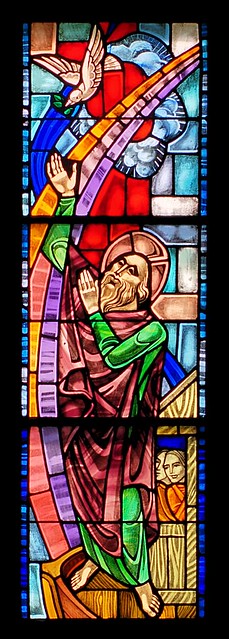
God destroyed the world with a flood
in anger over their sin and violence,
but He spared Noah’s family.

I remember a comic strip from when I was young which for many years I had pinned to a bulletin board in my room. The comic depicted a child in school taking a test with the question: “What was the cause of the U.S. Civil War?” The answer that the child wrote was only one word: “Anger.”

After a murderous gunman killed 26 people in a Texas church in 2017, and wounded all of the survivors in attempting to kill them, he was described as having “a lot of hatred inside him.” Such is the result of holding on to anger so that it is no surprise that the ancient Church listed anger or wrath as one of the seven deadly sins. The consequences of untamed anger are violence, murder, and war. There are clearly terrible things which result from anger, yet if we look at what Holy Scripture says about anger we might be surprised to find that anger is not always sinful.

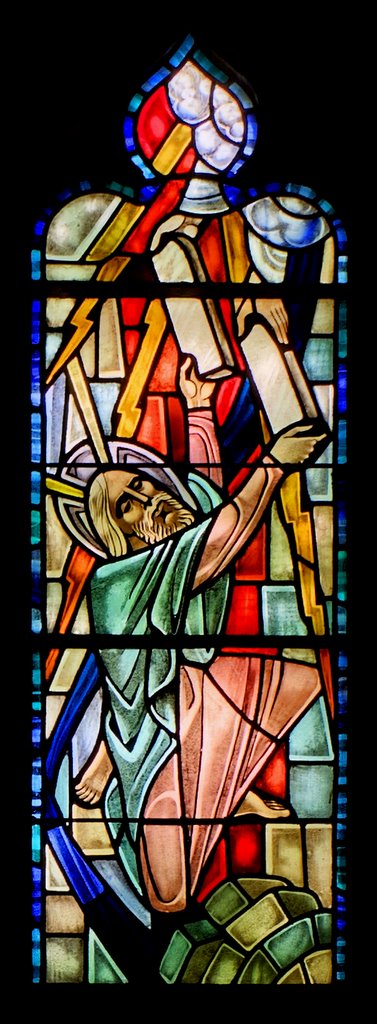
Saint Paul writes in Ephesians 4:26-27, “In your anger do not sin: Do not let the sun go down while you are still angry, and do not give the devil a foothold.” Because the Apostle encourages Christians not to sin in their anger, it follows that there can be anger without sin. We call that righteous anger. Righteous anger is anger over things that are wrong or evil. We should be angry when people sin against our neighbors and treat others in an unrighteous manner. God, Himself gets angry over sin because He didn’t create us to sin, but to be holy. We, however, have corrupted what God made holy, and have turned to sin. In the New International Version of the Bible a quick word search finds 256 occurrences of the word “anger” and 190 occurrences of the word “wrath”. Many of these are describing the anger and wrath of God. Yet God does not sin in His anger and wrath, even when He takes it out on those who sin against Him, or other people. God is righteous in His anger because He is holy, and because He loves us and doesn’t want us to do evil. He may let us see that there are wicked consequences to sin, but He does this to show us that we need His forgiveness and redemption through Jesus Christ.


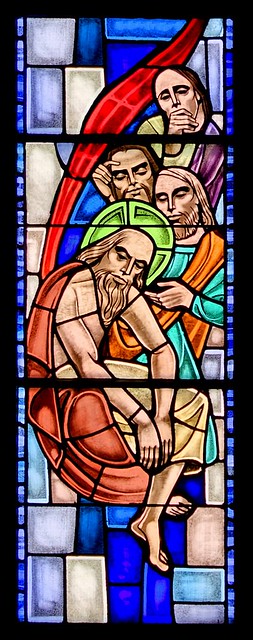
Contrary to what Job’s friends thought
God was not punishing Job
but testing His faith to strengthen it.

When Jesus drove the money changers out of the temple (Matthew 21:12-13; Mark 11:15-17; John 2:13-16) He acted in anger. He even acted violently by overturning tables and driving the thieves out of the holy place. Yet, Jesus did not sin in His anger, and he certainly didn’t hurt anyone. God’s temple was to be a place where God’s people would go to find forgiveness and peace from God, not a place they dreaded to go because they knew they would be cheated by dishonest merchants. Jesus was always in control of His anger, and never hurt people in His righteous anger. Even when wicked people falsely accused Him of wrongdoing and beat Him and nailed Him to the cross to kill Him, He did not respond in anger, but forgave His murderers and let them kill Him so that He could pay for their sins so that they could be saved through faith in Him.

Yet, even though there is such a thing as righteous anger, it doesn’t mean there is no such thing as unrighteous anger. Jesus Himself teaches in Matthew 5:21-22, “You have heard that it was said to the people long ago, ‘Do not murder, and anyone who murders will be subject to judgment.’ But I tell you that anyone who is angry with his brother will be subject to judgment. Again, anyone who says to his brother, ‘Raca,’ is answerable to the Sanhedrin. But anyone who says, ‘You fool!’ will be in danger of the fire of hell.” We sinners are much more likely to sin in our anger than Jesus or His heavenly Father. So we ought to be careful in how we act according to our anger.


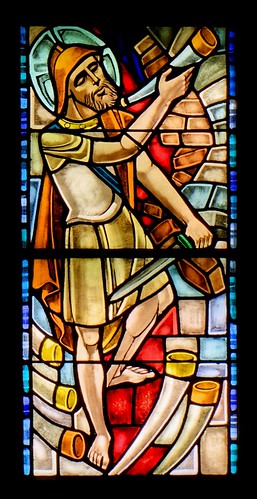
God gives authority to governments
to punish wrongdoers
as Joshua did in Jericho.

Solomon writes in Proverbs 29:11, “A fool gives full vent to his anger, but a wise man quietly holds it back.” Since sinners are more likely to sin in expressing our anger, we need to keep it under control unless we are sure that we are acting properly to work for what is right. In that church massacre in Texas in 2017, the murderer acted out in great evil by shooting all those innocent people, but while that was going on, a neighbor to the church heard what was going on and grabbed his gun and went in and shot the murderer, wounding him, and drove him away before he could kill any more people. In a way, this man was doing the same thing as the murderer, shooting a gun at a person in a church, but he acted righteously to punish a murderer and protect those innocent people who were being attacked, and he saved the lives of many people.

Now, just because there is righteous anger, and even a righteous use of violence to punish wrongdoers, this doesn’t give us the excuse to exercise our anger in all cases, even when we can be justified in acting out in anger. Saint Paul counsels in Romans 12:17-21 “Do not repay anyone evil for evil. Be careful to do what is right in the eyes of everybody. If it is possible, as far as it depends on you, live at peace with everyone. Do not take revenge, my friends, but leave room for God’s wrath, for it is written: ‘It is mine to avenge; I will repay,’ says the Lord. On the contrary: ‘If your enemy is hungry, feed him; if he is thirsty, give him something to drink. In doing this, you will heap burning coals on his head.’ Do not be overcome by evil, but overcome evil with good.” This is what Jesus did at all times, and in doing so He won our salvation. Because God is righteous and holy, He is always right when He acts according to His anger and wrath.


Jesus did not act in anger
when he was wrongly accused and
forgave his murderers on the cross.

If punishment is called for, God will punish. However, if He can resolve the situation without violence, He is right in withholding His punishment in favor of forgiveness. This is why in most circumstances we should not act out in violence. If punishment is called for, God has established worldly authorities to carry out justice. In a just society the guilty are punished and the innocent are rewarded. In most cases citizens ought to let the authorities punish the wrongdoers. The church shooting described above is an exception. The situation was desperate, and there wasn’t time for the police to respond, so the neighbor had to act quickly to save lives, but he was able to stop the massacre without killing the murderer. After he fled from the church, some more neighbors followed him and were on the phone with the police so that they could come and bring the murderer to justice. This was proper also. Though the murderer did not let this happen and murdered himself last of all.

Because Jesus has overcome sin and death through His sinless life, and His innocent suffering and death in payment for our sins, all those who were wrongly murdered will live again, and those who murder will also live again. Jesus has destroyed the power of death. All who trust in Jesus for the forgiveness of their sins have been forgiven and will live in paradise as God’s beloved children. This includes some people who were guilty of murder in life, but who repented of those sins and trusted in Jesus to forgive them. On the other hand, those who reject Christ’s forgiveness will suffer God’s wrath for eternity because although Jesus paid for their sins and gives them life and salvation as a free gift, they reject the gift and place themselves under God’s righteous wrath. This may include both unbelieving murderers, and the otherwise innocent people they kill. In such a case the tragedy is compounded.


When Jesus returns in glory
He will bring salvation to all believers
and judgment for all who hate Him.

This is why we should leave vengeance to God. He knows who is forgiven and who should be damned. One who is a murderer today may repent tomorrow and be saved. Such a person we will greet in heaven as a beloved brother in Christ and will rejoice in his repentance and salvation, even those Christians whom he killed will rejoice in his receiving Christ’s forgiveness. Some people may complain that this is unfair, but do we really want what is fair? If God were simply fair and just, and not merciful, then we all would be condemned to death with no chance of salvation because we are all guilty of sins against God and against His people. What is fair is that we all ought to suffer hell for our sins. However, God is merciful and He took the punishment for our sins in our place when He became incarnate as a man, Jesus Christ. It wasn’t fair that Jesus had to suffer for the sins that you and I are guilty of, but Jesus acted in love to save us. Jesus wasn’t so much concerned with fairness as He was with doing what was necessary to save us from our sins. Although Jesus was innocent of all sins, He suffered death to rescue us all from death, and to win our forgiveness and eternal life with Him in His heavenly paradise. In the end, all praise goes to Jesus, who rescues us all from our sins.


Here is a small selection of Bible verses about anger.


Psalm 6:1  
O Lord, rebuke me not in your anger, nor discipline me in your wrath.

Psalm 7:6  
Arise, O Lord, in your anger; lift yourself up against the fury of my enemies; awake for me; you have appointed a judgment.

Proverbs 29:8
Scoffers set a city aflame, but the wise turn away wrath.

James 1:19-20
Know this, my beloved brothers: let every person be quick to hear, slow to speak, slow to anger; for the anger of man does not produce the righteousness of God.

Colossians 3:5-10  
Put to death, therefore, whatever belongs to your earthly nature: sexual immorality, impurity, lust, evil desires and greed, which is idolatry. Because of these, the wrath of God is coming. You used to walk in these ways, in the life you once lived. But now you must rid yourselves of all such things as these: anger, rage, malice, slander, and filthy language from your lips. Do not lie to each other, since you have taken off your old self with its practices and have put on the new self, which is being renewed in knowledge in the image of its Creator.