Showing posts with label good. Show all posts

Thursday, December 29, 2022

The Opposite of Murder

(Part Three in a Series on the Fifth Commandment)

by Pastor Paul Wolff

Jesus restored life to the daughter of Jairus
after she had died.
(Luke 8:40-56)
Photo of woodcut from Valparaiso University Chapel
The opposite of death is life. What is the opposite of murder? If murder is the taking of life, then the opposite is the giving of life. Can you give life to another? A father and mother do give life to their child, and that is truly a great gift from God in so many ways. This is the opposite of murder, but that is a one-time event. What if that child loses his life or has it taken away? Can anyone give him his life back, or give him new life? Such a thing is impossible in this world. Once your life is gone or taken away, it cannot be returned or restored. This is why the sin of murder is considered so evil, and why the sin of murder is different than most other sins.

Martin Luther’s explanation to the Fifth Commandment in the Small Catechism says, “We should fear and love God that we may not hurt nor harm our neighbor in his body, but help and befriend him in every bodily need.” This shows us that there is more to keeping the Fifth commandment than simply refraining from murdering your neighbor. God also requires that we help preserve and protect our neighbor’s body and life. Luther got this from several places in Scripture, but it is taught most clearly in Christ’s Sermon on the Mount where Jesus taught, “You have heard that it was said to those of old, ‘You shall not murder; and whoever murders will be liable to judgment.’ But I say to you that everyone who is angry with his brother will be liable to judgment; whoever insults his brother will be liable to the council; and whoever says, ‘You fool!’ will be liable to the hell of fire.” (Matthew 5:21-22) Here Jesus shows that God’s concern for life isn’t just a sharp distinction between life and death, but is much more involved. We must help our neighbor whenever we can. When God confronted Adam’s son, Cain, about the whereabouts of his brother, Abel, Cain replied, “Am I my brother’s keeper?” Cain was the elder brother, and should have been watching out for his brother and keeping his life protected, instead he murdered his brother (more on this in an upcoming article in my Biblical Vignettes on Murder series). We all should keep our neighbor’s life safe from harm as we are able (pun intended).

Jesus never committed murder, and He also did even more in the positive sense to obey God’s command against murder. When Jesus began His ministry and revealed Himself as the Christ (Messiah), the Son of God, He also began to miraculously heal many people from all kinds of afflictions. Jesus healed the lame, and those suffering from all kinds of illnesses. He restored hearing and sight to those who were deaf and blind. In doing this, Jesus not only showed His divine power as God in the flesh, but He showed great love and concern for the life and well-being of all kinds of people. Jesus also raised several people back to life who had died. This is definitely the opposite of murder.

Jesus Restored life to Lazarus
after he had been in the grave four days.
(See John 11)
During His earthly ministry Jesus restored life to several people who had lost theirs. Jesus restored life to the daughter of Jairus (Luke 8:40-56), the widow’s son in the town of Nain (Luke 7:11-17), and Lazarus of Bethany, who had been dead four days when Jesus called him out of his grave (John 11). In all these ways Jesus actively obeyed the commandment against murder, and fulfilled God’s Law.

Jesus didn’t stop there, however. It still was not enough for Jesus to restore health and life to a few sinners who had lost theirs. Every one of those people whom Jesus healed and raised from the dead also died later. These miracles were temporary solutions, but that wasn’t all Jesus did for us. He did much more. Jesus wanted to provide a permanent solution and cure for sin, sickness, and death, so He offered His life to God, the Father, in payment for the sins of the world. Because Jesus is the beloved Son of God who is sinless and perfect in every way, God, the Father, accepted the sacrifice of Jesus as full payment for the sins of all people of all time. By giving His life as payment for the sins of the world, Jesus also destroyed the power of death. Death is the ultimate consequence of sin, but Jesus died to pay for the sins of all people. Since the price for our sin has already been paid, we no longer have to die. Yes, there is still temporal death, which is a consequence of sin, and which must come to all sinners (except for those still alive on earth when Jesus returns on the last day), but this temporal death is now only temporary. In Acts 3:15 Saint Peter preached to the Jews after Christ’s resurrection, and told them that Jesus was the “author of life” – referencing His divine nature as God, the creator of all things, including people. The irony of Peter’s post-resurrection sermon wasn’t just that they killed the “author or life”, but that the “author of life” willingly gave up His life to redeem the lives of sinful people such as those who killed Him.

Since Jesus has overcome sin and death, when Jesus returns on the last day He will raise to life all people who have ever died on earth – from the first person to die, Abel (Son of Adam and Eve), to the last person to die before Christ’s return. This resurrection will not be temporary, like the raising of Lazarus (and the others), but it will be an eternal resurrection. For all who believe and trust in Jesus for the forgiveness of their sins the resurrected life will be a glorious life in paradise as God’s beloved children – adopted back into the family by Christ. For all who reject and despise Jesus and His work and gift of forgiveness and salvation for them, their resurrected life will be an endless hell of torment, suffering, and pain. Jesus paid for the sins of all people and provides salvation for all as a free gift, but those who reject the gift through unbelief do not benefit from it at all through their rejection. I believe a large part of the torment of the damned is that Jesus gave them forgiveness and eternal life as a free gift, and they rejected life in favor of death (their remaining torment is that they continue to hold on to their sin and hate God, though He is holy and completely good – so they are stuck with sin and death forever by their own choice).

We cannot give life and healing as Jesus did, but we can do what we are able to help preserve and protect our neighbor’s life. We can start by praying for our neighbor’s good welfare (including our enemies). We can also speak up to defend our neighbor against those who would harm them. Also, if we are able, or have special training, we can give aid and comfort to those whose life and health are endangered.

Another depiction of Jesus raising
Jairus' Daughter from the dead.
See Mark 5:22-24, 35-43
Jesus is the opposite of murder because He is the source of life, the salvation of those who are dying and those who are dead, and the giver of life everlasting. In John 5:19-21 Jesus taught, “I tell you the truth, the Son can do nothing by himself; he can do only what he sees his Father doing, because whatever the Father does the Son also does. For the Father loves the Son and shows him all he does. Yes, to your amazement he will show him even greater things than these. For just as the Father raises the dead and gives them life, even so the Son gives life to whom he is pleased to give it.” Jesus shows the nature of the Triune God as a loving God who desires the forgiveness and salvation of sinners so much that He would become incarnate as a man, and live and die to pay the price of death for sin so that whoever believes in Him would not perish in their sins, but would have eternal life in paradise with Him. This is not just a temporary opposite of murder, but a permanent life – the eternal opposite of murder, and the opposite of all death. Through faith in Jesus we will be restored by Him to be what God intended us to be (i.e. sinless and holy) to live an eternal, life without sin, suffering, and death.

“The Jews gathered around (Jesus), saying, ‘How long will you keep us in suspense? If you are the Christ, tell us plainly.’ Jesus answered, ‘I did tell you, but you do not believe. The miracles I do in my Father’s name speak for me, but you do not believe because you are not my sheep. My sheep listen to my voice; I know them, and they follow me. I give them eternal life, and they shall never perish; no one can snatch them out of my hand. My Father, who has given them to me, is greater than all; no one can snatch them out of my Father’s hand. I and the Father are one.” (John 10:24-30) Jesus gives life because He has paid the price to redeem all sinners. This is the perfect opposite of murder, because through His life and death, Jesus undoes the effects of sin and death. Jesus then freely gives forgiveness of sins through faith, and gives eternal life to all who listen to His voice and trusts in Him for forgiveness and salvation. Jesus does this because Jesus is equally God with the Father and the Holy Spirit, and it is God’s will that we trust in Him and are saved from our sin to live forever with Him.

There is so much more in the Holy Bible about God’s work as the opposite of murder that this article could go on for many pages, but I will deal with some of them in later articles in this series.


Articles in this series:

Thursday, November 24, 2022

The True God Cannot Murder

(Part Two in a Series on the Fifth Commandment)

by Pastor Paul Wolff


God Gave the Ten Commandments
so we would know what is good and right.

You will sometimes hear atheists asking a rhetorical question which goes something like, “If God is so good, then how can he allow so much suffering and death in the world?” They may give some example of a situation where a number of innocent people were killed by evil people, or they will more likely mention a “natural disaster” or an “act of God” where many people die through no fault of their own, or of anyone else. These questions assume that God is unjust in allowing such tragedies to happen, or that God is unwilling or unable to stop evil, or that somehow God is the cause of such evil, and so is evil himself. Atheists love to ask such questions because they assume that God is evil, and they are good and holy. They assume this because they are the ones judging God and imagining that they find Him guilty. This way of thinking also absolves them (though only in the delusion of their own thoughts) of their murderous desires, thoughts and actions. If people think God is guilty of murder then they will feel free to do the same.

In truth, the One, True God cannot commit murder. The only true God is the Triune God – One God in three persons: the Father, the Son (Jesus) and the Holy Spirit. It is important, however, to understand that murder is the unjust taking of life. God may take someone’s life, but He is always just and righteous in doing so. Since God is the creator of everything and everyone He makes the rules which we must follow, and since He is the redeemer who paid for the sins of all mankind we know that God’s rules are good and are for our benefit. God is not the origin or source of sin and evil. Some of God’s good angels fell into sin and became demons first, and one of them lured Adam and Eve into sin through wicked temptation. As our creator and redeemer, God is intimately involved in the life and death of everyone who has ever lived in the history of the world, and all who will ever live to the end of the world. Yet, it is against God’s nature to commit murder. This is why God gave us the Fifth Commandment (as Lutherans, and most other Christians, count the Commandments), “You shall not murder.” God gave us this commandment because He does not murder, and so that we also would not murder. 

Sinful people commit murder because, since the fall into sin, our nature has been corrupted, and it is now in our nature to murder. God did not create people to murder, nor has God ever murdered anyone. God created Adam and Eve in His image, which meant that they were holy and pure and immortal, as God is. However, when they rebelled against God they corrupted their nature with sin, and brought condemnation and death on themselves, and all their descendants. Once people rebelled against God, they were no longer holy, pure, nor immortal. In this way murder (and every other sin) is “natural”, though that doesn’t make it right. The “natural” nature of sin (including murder) actually makes it wrong.

Adam and Eve brought sin into the world,
including murder.

God had warned Adam and Eve that the penalty was death for disobeying God’s simple command. He said, “You must not eat from the tree of the knowledge of good and evil, for when you eat of it you will surely die.” (Genesis 2:17) Once they broke God’s good, simple command, God was justified for putting sinners to death. Yet, God had mercy on Adam and Eve, and out of love He did not put them to death the day they rebelled against Him, as He could rightly have done, but instead, He promised to send them a savior who would rescue them (and their descendants) from their sins and make everything right again. That promise was fulfilled in Jesus Christ. Adam and Eve lived a good, long life (for sinners – though it was infinitely shorter than it would have been had they never sinned against God) and they brought life into the world through their children. Though, Adam and Eve’s first born son also became the first murderer. Cain’s murder of Abel showed clearly that the corruption of sin is something we all inherit from our parents, going all the way back to Adam and Eve.

It is not God who murders ever, it is always people. Even when God does bring about the immediate death of someone it is always justified, since death is the result of sin, and we are all sinners. Life is a gift from God which we don’t deserve, but it is something which He graciously gives to us for a time. The reason there is so much sorrow and tragedy in the world is because of our sin, not because God is cruel and unjust.

God sent Adam and Eve out of Eden
so they would not eat of the
Tree of Life and live forever as sinners.
But He also promised Salvation through
the Messiah, Jesus Christ.

In a strange way , temporal death is a blessing from God, and not a curse, even though it is a result of sin. Living forever in sin is just about as good a definition of hell as anything else, though the true hell is much worse than life in this sinful world, because in hell there is no hope of rescue or relief or salvation. In this life God gives us all good gifts (even to all evil people), and there is always the possibility of salvation, so this life is not hell, even on our worst day. Remember that in the account of the fall into sin in Genesis 3, God put Adam and Eve out of the Garden of Eden after their fall so that they would not eat of the tree of life and live forever as sinners. This was done out of mercy, but God also promised to send a savior as the “seed” of Eve who would redeem them of their sins and “crush the head” of the serpent whose lies led them into sin and death. This promise was fulfilled in the life and death of Jesus Christ. Everyone who repents of their sin and trusts in Jesus to save them has the salvation which He won for them in His life and death. All who believe in Jesus are saved from sin and death, and we do not need to fear death, because we know that even if we die there is life and salvation in Christ when He returns to fulfill all He has promised.

Some may wonder about God’s judgment of the world in the great flood where only eight people in the whole world survived out of a population which could have been as many as one million. Did God murder a million people? The answer is no. God is holy and His judgments are just and right. God is our creator and He sets the rules. If He says, “Obey my commands or die” then we are condemned if we disobey the good rules that He created us to keep. When we die it is our own fault for disobeying the good commands of God. God does not murder. God is slow to anger and merciful (See Exodus 34:6-7). He forgives all who repent, but when stubborn people refuse God’s mercy, His anger is inescapable. When God kills, it is always righteous. We may not like His decisions, but no one can rightly accuse God of murder, especially when God is holy and innocent, and we all are sinful and murderous. We are even less able to accuse God of murder and wrongdoing when God provided for the free salvation (through faith) of all murderers and sinners through the life and death of Jesus Christ. Those who are so bold as to falsely accuse God of murder are selfish idolaters in the highest degree. (For more information on this subject, see my August 2017 article “Why Does God Condemn Unbelievers to Hell?”)

Jesus taught Nicodemus about
who God is and what He has done to save
us all from our sins.

When anyone dies God is there to receive their soul, and to judge the state of that soul. If that person is a believer in Christ who belongs to God and has received forgiveness through faith in Jesus, then that soul rests in heavenly peace until the resurrection of all flesh. If that person is an unbeliever who has rejected Christ, then that soul lives in torment until the resurrection of all flesh. God is not capricious or cruel. God, Himself has provided forgiveness and salvation for all people. There is no reason why anyone should be condemned. If anyone is condemned to eternal death and torment, then it is because of their own choice to reject Christ’s forgiveness. Jesus said in John 3:18 “Whoever believes in [God’s Son] is not condemned, but whoever does not believe stands condemned already because he has not believed in the name of God’s one and only Son.”

This is all a matter of faith. This does not mean that there isn’t plenty of evidence of God’s mercy, forgiveness, and love; but our corrupted sinful nature is often blinded to God’s goodness, professing to think that we are righteous instead of sinful. Thus, we have to deny our fleshly desires which think that God is cruel or evil, and trust in God’s Word that He is merciful and forgiving, and the redeemer and savior of sinners. God’s nature and love are only revealed to us in the Holy Scriptures. Each of us only knows God as we know Him through His Word in the Holy Bible. Those who reject His Word do not know God, and cannot know Him as He truly is. This is why we all ought to treasure the Holy Scriptures as God’s Word, and read and study them daily – so that we can know God’s love and trust that “… in all things God works for the good of those who love him, who have been called according to his purpose.” (Romans 8:28) God is not cruel and cannot murder. God is the living God who gives life and forgiveness to us who are dead in our trespasses and sins.

Jesus teaches that the devil is the
“father of lies” and a “murderer from the beginning.”
John 8:44

I should note here that false gods do commit murder. You may ask, “How can a false god, who doesn’t exist, murder anyone?” The answer here is that it isn’t the false god who murders, but those who invent and perpetuate the mythology of the false god. Some false gods are created weak so that they can be manipulated by the people to do what they want, and so it gives the impression that they have power over “god”. Yet these false gods still murder because they lead people away from their salvation in Jesus, because all who trust in false gods have rejected God’s salvation in Jesus, and they are lost and condemned. Other false gods are created to make them seem impressive and powerful. Sometimes the more frightening and powerful the false god seems, the more control the religious leaders have over their people. Some false religions have the concept of a “holy war” where the religious leaders assemble armies to murder their neighbors and take their possessions. All this is done in the name of their god, but the effect of it is that when it is successful the religious leaders gain wealth through stolen goods, property, and slaves. Wherever false gods allow murder you will find murderers. 

I have found that people always try to be like their God, whether it is the true God or false gods. If people think their god is peaceful and kind, then they try to be peaceful and kind. If their god is a blood-thirsty tyrant, then they become tyrants and murderers. When false gods lead people to murder, this is from the devil. Since the devil hates God and all those whom God loves (i.e. you and me), he uses his lies to turn people into murderers to kill people and cause chaos and bloodshed. This is total wickedness. If one can be objective it is easy to see that false gods are more like the devil than the true God. The trouble is that it is hard to be objective where our belief in God (or even a false god) is concerned. Jesus shows us what the true God is really like. Jesus never murdered anyone, but instead healed people who were sick and injured, and He raised several people from the dead. This is the opposite of murder. (See my article on The Opposite of Murder.)


Articles in this series:
You Shall Not Murder
The Opposite of Murder

 
Related Articles:
Why Does God Condemn Unbelievers to Hell?
A Biblical Argument for Self Defense
Anger
Why Christians Condemn Abortion but Support the Death Penalty
The Good Samaritan
Is it Easier to Heal, or to Forgive?
Christ Has Done All Things Well
The Promise of Christ in Water And Light
Modern Molechianism
“Let His Blood be on Us and on Our Children”
The Passion of Christ
The Slaughter of the Innocents
Friends and Murderers
The Promise of the Rainbow
The True Story of a Terrorist Turned Christian
The Morality of War
Rejecting the Survival Instinct
The Leading Cause of Death in America

 

Monday, September 4, 2017

The Good Samaritan

by Pastor Paul Wolff

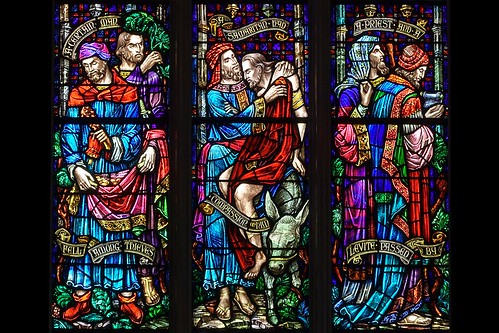
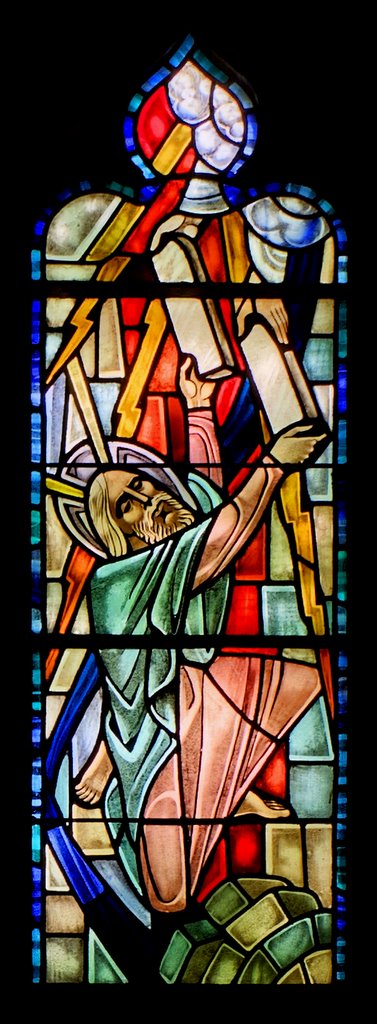
A certain man fell among thieves
A Samaritan had compassion on him
A Priest and a Levite passed by

 
Luke 10:33-35

Jesus said, “A Samaritan, as he journeyed, came to where (the injured man) was, and when he saw him, he had compassion. He went to him and bound up his wounds, pouring on oil and wine. Then he set him on his own animal and brought him to an inn and took care of him. And the next day he took out two denarii and gave them to the innkeeper, saying, ‘Take care of him, and whatever more you spend, I will repay you when I come back.’”


People are afraid of the Law, and think the Law is evil because the Law condemns us as sinners. However, the Law of God is not the problem. God’s Law is good, as God is good, and the Law shows us what is good for us to do to love God and love our neighbor. Sinners think the Law’s condemnation of sinners is bad because we don’t want to be condemned. Sin blinds us to the reality of just how wicked we really are, and how much we really deserve to be condemned.

Remember what happened in the Garden of Eden with Adam and Eve. God made the whole world good and gave it to Adam and Eve for their benefit and enjoyment. The only thing forbidden to them was the fruit of one tree – one tree in the whole world. In effect, God was saying, “This tree belongs to me. Don’t eat its fruit. If you eat the fruit of this tree you will die. But look, here is another tree. This is the tree of Life. You are free to eat from this tree and anything else in the world that you wish to eat. I am your Father and I love you, and I want you to live and enjoy all the good things that I can give to you forever.” God gives us good things, and forbids us from doing things that will hurt us.

The problem isn’t God’s Law. The problem is that people rebelled against God’s good Law and chose sin and death instead of righteousness and life. Sinners despise what is good, and we twist and distort God’s Word to make the Law seem to say what we want it to say, instead of receiving it as God has given it to us for our good.

It is no coincidence that the man who tested Jesus was a teacher in the law. He knew the law, but he asks the wrong questions. If you ask the wrong questions you will get the wrong answers. However, in telling the Parable of the Good Samaritan, Jesus gives us both the right question and the right answer.

Inheritance is a matter of Law,
but you can only receive it as a gift.

The first question the lawyer asks Jesus is, “What must I do to inherit eternal life?” The question isn’t all wrong: It recognizes that eternal life is a matter of inheritance. It is a gift, not a right. However, the question is ridiculous. Can you imagine someone going up to Donald Trump (for example) and saying, “What must I do to inherit the wealth of your estate?” Most of the time the inheritance of an estate is given to the children. If you are not born or adopted into the family then it is unlikely you will inherit anything.

Since inheritance is a matter of law, and the man asking about it was a teacher of the law, Jesus asks him what the law says about inheriting eternal life. The man answered by quoting from Deuteronomy where God summarized the two tables of the Commandments. “You shall love the Lord your God with all your heart and with all your soul and with all your strength and with all your mind, and your neighbor as yourself.” This was a good summary of the Law, as Jesus points out, but the man forgot that the Law cannot save sinners. The law condemns sinners. Since Adam and Eve’s fall into sin, all people (except Jesus) have inherited the corruption of sin. This is our inheritance – according to the law.

Luke writes that the teacher of the law wanted to justify himself. To justify yourself is to make up excuses for your sin which will make you feel like you are doing right when you are doing wrong. It is a wicked thing to try to justify your sin, but sinners are always looking to justify themselves. I do it. You do it. Everyone does it, but that doesn’t make it right. It just means that everyone sins in justifying themselves.

So the teacher of the law asks, “Who is my neighbor?” This doesn’t seem like a bad question, but why would you ask it? Your neighbor is everyone you come in contact with in your various vocations, including those whom you try to avoid, like an injured man lying on the side of the road when you have somewhere else to go. If you have to ask, “Who is my neighbor?” then you may be really asking, “Who isn’t my neighbor?” or “Who can I ignore because they are not my neighbor.” So Jesus tells the Parable of the Good Samaritan.

Jesus is the Good Samaritan

Jesus told a story about a man going from Jerusalem to Jericho who fell among robbers. The robbers should have been neighbors to the traveler, and protected his life and property, but instead they beat him and stole his belongings, and left him for dead on the road.

Then a priest was going down the road and saw the injured man. The priest represents the first table of the Law where we love God with all our heart, soul, strength, and mind. The priest served God in his vocation, but he was under the law. The ceremonial law said much about blood and how to deal with it. It would not do for the priest to show up for work with bloody hands from helping an injured man. He would likely be considered unclean. Now, uncleanliness wasn’t too big of a deal. All people would do things in the normal activities of life which would make them unclean. I think that was the point of the cleanliness laws. They reminded people that our sin makes us unclean and that we need to be cleansed of our sin.

The priest could have helped the man, but then in order to be fit for his priestly service he would have had to wash and make a sacrifice and wait until sundown to be considered clean again. It was an inconvenience, and somewhat costly, but he could have helped the injured man, and should have. The people who would benefit from his priestly service would have understood, but the priest justified his inaction by telling himself that if he helped the injured man he couldn’t carry out his service to God. This was a misuse of the law, but this is what sinners do to justify themselves. So the priest walks by the injured man on the other side of the road.

Likewise, a Levite came and saw the injured man lying in the road. He represents the second table of the Law where we must love our neighbor as ourselves. The Levites were those members of the tribe of Levi who were not priests, but who served as laymen in the church. Levites were the elders, ushers, acolytes, trustees, groundskeepers, altar guild, board members, and similar laymen who serve the church. He could have helped the injured man, but he was under the law also. He could have helped the injured man, but would then be unfit to serve in the congregation for a time, and so he justified his actions in the same way as the priest. He also misused the law to justify his unmerciful actions. So he, too walked by on the other side of the road.

Then a Samaritan came down the road and saw the injured man. The Samaritan was not under the law in the same way that the priest and Levite were. He was not above the Law, certainly, instead he was outside the Law. He was not bound by the Law in the same way that the priest and Levite were, nor could he hide under the Law to justify unmerciful inaction. In a way, the Samaritan was free of the Law’s demands, but because he was free of the Law’s demands, he was also free to help his neighbor without having to worry that the Law might condemn him in some other way (unless he also ignored the injured man and left him to die). So he had compassion on the injured man and treated his wounds and took care of him.

Jesus is the Good Samaritan
who paid the costly price
to give you His inheritance.

You should note that what the Samaritan did was also costly. Besides the time and effort of cleaning and treating the wounds, he also paid the entire burden of the injured man’s health care. It was a sacrifice, but because he was free from the law’s burdens, he willingly paid what was necessary to help his neighbor.

Jesus ends His parable by asking the teacher of the Law, “Which of these was neighbor to the man injured by the robbers?” He answered, “The one who showed him mercy.” Jesus said, “You go, and do likewise.”

Now, if you have a wrong view of the law, you might think that Jesus was just giving the man another law to live by. But that would be a wrong understanding. Jesus was, in fact, doing the exact opposite. Jesus was not even giving a new law that supersedes the old law, as if you could use that to justify breaking any of the Ten Commandments. Instead, Jesus was declaring the man free from the law, just like the Samaritan was free from the law, and used his freedom to have mercy on his neighbor.

Jesus is the Good Samaritan. As the Son of God, Jesus was free from the Law’s demands. Jesus was not just free from the Law, He was above the Law because He created the Law. Though, in a way, Jesus was also bound by the Law in ways that we are not. God created the Law to reflect His very nature, so when Jesus obeyed the Law, He was only acting according to His nature, not against it (as we are when we obey the law). Yet, in His mercy, Jesus submitted Himself to the Law for our sake to redeem us and free us from the Law’s demands and its condemnation.

Jesus was, of course, a Jew, and not a Samaritan, but it is interesting in John 8 some of the Jews said to Jesus, “Are we not right in saying that you are a Samaritan and have a demon?” Jesus answered, “I do not have a demon, but I honor my Father, and you dishonor me.” It is interesting that Jesus confessed that He did not have a demon, but He did not deny the charge of being a Samaritan. Although the Jews thought they were insulting Jesus by calling him a Samaritan, Jesus was not ashamed to be called a Samaritan. Jesus came to save Samaritans and other Gentiles as well as Jews. The Samaritans were His neighbors as much as His own people.

When Jesus says, “Go and do likewise” He is not putting us under the law, as if he were saying, ‘you can’t be saved unless you make up for your sin by doing good and showing mercy.’ Instead, Jesus is setting us free from the law’s curses. You are free to serve your neighbor because you no longer have to worry about fulfilling the law’s demands yourself. Jesus fulfilled the law for you. You are free. Not free to sin (for that would put you under the law’s curse), but free to serve your neighbor instead of trying to serve yourself.

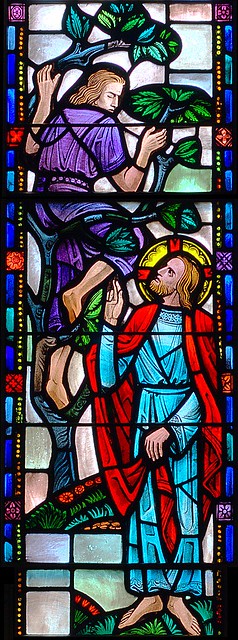
Jesus set Zacchaeus free
because he trusted in Jesus
for the forgiveness of his sins.

Scripture says in Romans 6:22-23 “You have been set free from sin and have become slaves of God, the fruit you get leads to sanctification and its end, eternal life. For the wages of sin is death, but the free gift of God is eternal life in Christ Jesus our Lord.” Jesus fulfilled God’s Law completely in our place so that through Jesus we are freed from the Law’s demands and can serve our neighbor in freedom as the Samaritan had mercy on his injured neighbor. This freedom we have in Christ is given to us as a gift by His mercy.

This gift is our inheritance as Children of God through Baptism and faith. Scripture says in Galatians 4:4-7, “But when the time had fully come, God sent his Son, born of a woman, born under law, to redeem those under law, that we might receive the full rights of sons. Because you are sons, God sent the Spirit of his Son into our hearts, the Spirit who calls out, ‘Abba, Father.’ So you are no longer a slave, but a son; and since you are a son, God has made you also an heir.”

What must you do to inherit eternal life? Of course you can’t do anything, but Christ has already done it all for you. He has redeemed you from your sin, and adopted you as His children, and He gives you the inheritance of His eternal Kingdom as a gift – as all inheritance is given. Like the Samaritan in the parable, Jesus paid the great price to make you His child and heir. St. Peter writes, “It was not with perishable things such as silver or gold that you were redeemed from the empty way of life handed down to you from your forefathers, but with the precious blood of Christ, a (sacrificial) lamb without blemish or defect.” (1 Peter 1:18-19)

Praise be to Christ, who is your Good Samaritan who sacrificed His life to rescue and heal you from the wounds of sin and death, and who gives you life everlasting.