Showing posts with label suffer. Show all posts

Thursday, May 30, 2024

Blessed are the Merciful, for They Shall Receive Mercy

(Part 5 of a series of 9 articles on the Beatitudes)
by Pastor Paul Wolff​


Jesus said, “Blessed are the merciful, for they shall receive mercy.” (Matthew 5:7)


Blessed are the merciful,
for they shall receive mercy.
Matthew 5:7

Mercy and grace are related because they are both expressions of love. Because all of us children of Adam and Eve are corrupted by sin, our love is imperfect – and so is our practice of mercy and grace. God’s love is perfect, and His mercy and grace are perfect. An easy way to distinguish mercy from grace is to think of mercy as God not punishing us as our sins deserve, and grace is God giving us good things which we do not deserve because of our sinfulness. However, in the Holy Bible, the meaning and use of the word “mercy” is much broader than this simple definition, and in practice both mercy and grace can often describe the same thing, which is nearly always God expressing His love in how He deals with us.

Jesus proclaims in His Sermon on the Mount, “Blessed are the merciful, for they shall receive mercy.” (Matthew 5:7) Here Jesus encourages all God-fearing people (and everyone else, if they will listen) to have mercy on their neighbor, and God will have mercy on them, too. God certainly has had mercy on us all by sending Jesus to pay the price of death to redeem us all from our sin and death. Since God has already done this great merciful thing for us to rescue us from the punishment we deserve, we ought to also have mercy on others, even (and especially) when they sin against us. The blessing received by the merciful is that they will also receive mercy from God. God is certainly merciful to all people, though not all receive it because some reject God’s forgiveness in Jesus Christ, and so they miss out on what God freely gives them.

God is the loving father
who has mercy on his disobedient children
and forgives our rebellion and sins.

The concept of mercy is common in the Holy Scriptures. There are between ten and twenty dozen occurrences of the word “mercy” in the Bible. This depends on which translation you read because in the Old Testament there are several different Hebrew words translated as “mercy”, and different translations sometimes translate these words as “love” (especially “steadfast love”) or “grace” or “kindness” (especially “loving kindness”) or “loyalty” (?) or “pity” or “compassion” instead of mercy. Most times it is not immediately defined, and assumes that the reader knows what mercy refers to, as in Psalm 23:6 which says, “Surely goodness and mercy shall follow me all the days of my life, and I shall dwell in the house of the Lord forever.” Though mercy is connected with “goodness” here, it is not otherwise defined. The concept of “mercy” is common in the Psalms, which served as the hymns (and prayers) of the Old Testament times, and still serve as the basis of our hymns today, too.

Psalm 25:6-7 says, “Remember your mercy, O Lord, and your steadfast love, for they have been from of old. Remember not the sins of my youth or my transgressions; according to your steadfast love remember me, for the sake of your goodness, O Lord!” In this Psalm mercy is connected with God’s “steadfast love” (or “mercy”), and the effect of God’s mercy here is that He would “remember not the sins of my youth or my transgressions.” It is verses like this that show us that mercy means that God is withholding from us the punishment which we deserve on account of our sins.

In King David’s great Psalm of repentance after he was confronted with the guilt of his sin by the prophet, Nathan, David immediately begins by asking God for mercy. “Have mercy on me, O God, according to your steadfast love; according to your abundant mercy blot out my transgressions.” (Psalm 51:1) Again, here God’s mercy and love are connected, and the expected result is that God would “blot out my transgressions.” The idea here is that God wipes away the stain of our transgressions and sins like a writer wipes away spilled ink on the page (or parchment). Later in the history of God’s people, Isaiah gives God’s people this message which calls to mind King David’s psalm of repentance. “I am he who blots out your transgressions for my own sake, and I will not remember your sins.” (Isaiah 43:25) This is great good news for all God’s people because with sin comes death, and if God does not remember our sins, then we will be spared from sin’s punishment.

Jesus had mercy on the crowd who followed Him,
and miraculously fed 5,000 people to satisfaction
with five loaves of bread and two fish.

The best example in Holy Scripture which describes what God’s mercy (and its opposite) is like is probably Christ’s Parable of the Unmerciful Servant. You can find it in Matthew 18:21-35. In the parable the king forgives his servant a debt so large that he could never repay it. That is how God deals with us in mercy. Our sin condemns us to death, which is a debt that we can not pay without being destroyed. God, Himself, covered our debt by becoming incarnate (Jesus Christ) and taking the punishment of death, Himself, in order to rescue us from the death which would destroy us. In the parable the forgiven servant should have been so appreciative of the king’s mercy that he ought to have had similar mercy on his neighbor who owed him a small debt. However, he was overly harsh with his neighbor, and when the king heard about it he determined that his servant did not appreciate what he had done for him, and withdrew his offer of mercy and put him in prison until he had paid every last penny of the original debt – which was forever, because the debt was so large as to be impossible to repay. This parable shows us that God wants us to be merciful to our neighbors as God has been so much more merciful to us. If we truly understand and appreciate the great cost that our King (Jesus) has paid to cover our debts, then we will find it much easier to also show mercy to our neighbors who owe us much smaller debts. Though our neighbors’ debts may seem large to us, compared to what we are indebted to God, our neighbors’ debts to us are infinitely smaller, and ultimately insignificant in the long run.

In Psalm 103:8-10 David also combines God’s mercy and grace and describes it in this way: “The Lord is merciful and gracious, slow to anger and abounding in steadfast love. He will not always chide, nor will he keep his anger forever. He does not deal with us according to our sins, nor repay us according to our iniquities.” Here David praises God because of His mercy and grace because He does not punish us for our “sins” and “iniquities”. He goes on to emphasize this in verse 12 where he writes: “as far as the east is from the west, so far does he remove our transgressions from us.” This is another way of describing God’s forgiveness. If He removes our transgressions (sins) from us, then He will not punish us for them. Also, since God removes our transgressions “as far as the east is from the west,” then they can’t come back to condemn us. They are gone for good. This is the result of God’s mercy and grace, and it is also how we ought to forgive our neighbor.

Since God’s mercy is so closely connected with His forgiveness, we should also see that this Fifth Beatitude is related to the Fifth Petition of the Lord’s Prayer: “Forgive us our trespasses as we forgive those who trespass against us.” We certainly should remember that God’s forgiveness is not conditional on how well we forgive our neighbor, but that “We love because he first loved us.” (1 John 4:19) It can’t start with us, because in our sin, our mercy and forgiveness is either incomplete or lacking in some lesser or greater way. It must start with God because His mercy, love, and forgiveness is perfect in every case. Likewise, in the beatitudes, we receive mercy from God first, then in response to His mercy and forgiveness and grace, we have mercy on our neighbor.

Jesus has mercy on even the weak and powerless,
as shown by His gentle rebuke of the disciples
who wanted to send the children away.

The Holy Scriptures also give many examples of the mercilessness of sinful men. Solomon observes in Proverbs 12:10 “Whoever is righteous has regard for the life of his beast, but the mercy of the wicked is cruel.” This proverb also shows that if a man is faithful to God, then his mercy also extends to how he treats his livestock. If he is wicked, he also is cruel to his animals. We easily recognize this when we see in the news that some celebrity abuses his animals then he is roundly chastised for his cruelty by everyone. Though sometimes people take this too far when they criticize people more harshly when they abuse their animals than when they abuse their children or spouse. Solomon also observes in Proverbs 21:10 “The soul of the wicked desires evil; his neighbor finds no mercy in his eyes.” Such is the terrible nature of sin that those who love their sin more than they love God actually desire to do evil. They cannot even find it in their heart to have mercy on their neighbors. We can take comfort in Christ’s Fifth Beatitude in this for the opposite case. If the merciful receive mercy from God, then the unmerciful wicked person will not receive God’s mercy (until they repent of their sin and find forgiveness in Jesus). We also see this elsewhere where God condemns the unmerciful, such as Proverbs 3:33, “The Lord’s curse is on the house of the wicked, but he blesses the dwelling of the righteous.” This curse certainly can be removed when sinners repent and ask God for forgiveness. Since God is merciful, He is most eager to forgive and save all who repent and look to Him for salvation. “The Lord is gracious and merciful, slow to anger and abounding in steadfast love.” (Psalm 145:8)

Jesus, Himself, had mercy on His neighbors at all times. Many times those who had desperate desires to be healed of various afflictions pleaded with Jesus to “Have mercy,” and Jesus mercifully granted them healing and forgiveness. In Luke 17:11-19 ten men suffering with leprosy saw Jesus at a distance and called out to Him, “Jesus, Master, have mercy on us.” Jesus had mercy on them by healing them of their leprosy. In the next chapter, Luke 18:35-43, a blind beggar (likely the same man named Bartimaeus, in Mark 10) called out to Jesus, “Jesus, Son of David, have mercy on me!” Although some of the bystanders told him to be quiet, He again asked Jesus for mercy. Jesus asked him, “What do you want me to do for you?” and he said he wanted to recover his sight, and Jesus gave him his sight back. In Mark 5, Jesus cast out many demons possessing a man, and after the man was cleansed and came into his right mind, Jesus told him, “Go home to your friends and tell them how much the Lord has done for you, and how he has had mercy on you.” Here Jesus shows that by rescuing the man from demon possession He had mercy on him. This is also interesting that although Jesus told the demons to go out of the man, He told the man to tell his friends that “the Lord” has had mercy on him. Here Jesus was acknowledging that He is God, or, at the very least, that His healings were done by the power of God, while not denying that He is the one true God with the Father and the Holy Spirit.

Jesus showed mercy to the family of Jairus
by raising his daughter from the dead.
See Mark 5:21-43

This is the first Beatitude in this series which is not quite so clearly a curse in the worldly sense. Few people would say that those who show mercy are inherently cursed by doing so. Though, it is not too difficult to find people who think that merciful people are fools. It is hard to show forgiveness to people who sin against you. Our sinful flesh would more likely want to “assert our rights” and repay sin with vengeful wrath, rather than withhold punishment and forgive. Showing mercy is a great witness to the Christian faith. You show you trust in Christ’s forgiveness when you forgive others.

Indeed, while it is hard for us sinners to have mercy on our neighbors, it was also difficult for God to have mercy on us and cover the great debt of our sin. When it comes to forgiveness, God can’t just “look away” and ignore sin. God is righteous and just, and must punish sin. Yet Jesus took the punishment for our sin Himself when He died on the cross. That was not an easy thing to do, yet, in mercy and love, Jesus did what was necessary to pay the price for our sin so that God could have mercy on us, while still properly punishing sin and pouring out His anger on the man, Jesus Christ, on the cross.

The Old Testament prophet, Isaiah, foretold what it would cost God’s Messiah to have mercy on us and heal us from sin and all sin’s consequences. He prophesied, “Surely he has borne our griefs and carried our sorrows; yet we esteemed him stricken, smitten by God, and afflicted. But he was pierced for our transgressions; he was crushed for our iniquities; upon him was the chastisement that brought us peace, and with his wounds we are healed. All we like sheep have gone astray; we have turned – every one – to his own way; and the Lord has laid on him the iniquity of us all.” (Isaiah 53:4-6) Another time, when Jesus healed a deaf man (Mark 7:31-37), He sighed or groaned upon healing the man. As I explain it in this article Jesus groaned because even in healing the sick and raising the dead, it cost Jesus suffering and pain because all illness and afflictions of the body are consequences of our sin. In healing us from all these, Jesus had to suffer for them in order to remove sin’s effects from us. This is what Isaiah meant by saying, “with his wounds we are healed.” This is another reason why Christians have confidence that on the day of resurrection we will be raised glorious and whole – as God intended us to be. Jesus has had mercy on us – at great personal cost – so that we may be healed from sin in body and soul. This also gives us peace of mind so that we may put aside our pride and, in love, have mercy and forgive those who sin against us. Jesus has done so much more to have mercy on you, that such knowledge makes it easier to have mercy on others. May Christ keep you in His mercy and lead you to be merciful.


Other articles in this series:

Blessed are the Poor in Spirit

Blessed are Those who Mourn, For They Will be Comforted 

Blessed are the Meek, for They Shall Inherit the Earth 

Blessed are those who Hunger and Thirst for Righteousness, for They Shall be Satisfied 

Blessed are the Pure in Heart, for They Shall See God 

Blessed are the Peacemakers, for They Shall be Called Sons of God 

Coming soon:

Blessed are those who are persecuted for righteousness’ sake, for theirs is the kingdom of heaven.


Friday, April 7, 2023

My God, My God, Why Have You Forsaken Me

Fourth in a series on the Seven Last Words of Jesus

by Pastor Paul Wolff


Now from the sixth hour there was darkness over all the land until the ninth hour. And about the ninth hour Jesus cried out with a loud voice, saying, “Eli, Eli, lema sabachthani?” that is, “My God, my God, why have you forsaken me?” And some of the bystanders, hearing it, said, “This man is calling Elijah.” And one of them at once ran and took a sponge, filled it with sour wine, and put it on a reed and gave it to him to drink. But the others said, “Wait, let us see whether Elijah will come to save him.” (Matthew 27:45-49)


Eve was ashamed of her sin
and afraid of God,
but God did not forsake her
nor her husband.

In Genesis 3, immediately after Adam and Eve sinned against God’s simple command not to eat the fruit of the Tree of the Knowledge of Good and Evil, Moses describes Adam and Eve being frightened by the “sound of the Lord God walking in the garden in the cool of the day.” Of course they were afraid because they had condemned themselves to death for their rebellion against God, but from Moses’ description of God “walking in the garden in the cool of the day” I have long imagined that God’s visits to His beloved children were frequent. Not just in the morning, but several times a day, until the day when everything changed.

God delighted in His children, and they delighted in their Father. That all changed when the man and woman rebelled against God by disobeying His command. Adam and Eve were now afraid of their loving Father and ran away from Him, afraid of the curse of death. They felt like they had to hide from God in order to live. They were wrong, of course. God loved them dearly, and He showed great mercy to them, as He does to you, too, but God also hid a part of Himself from them after they became sinners. Scripture tells us that no sinner can see God’s glory and live. So God hid the greater part of His glory so that He could confront His children with their sin, and also reaffirm His love for them by promising to send a Messiah who would rescue them from their sin and make everything good again.

Before Adam and Eve sinned against God they could see God in His unfiltered glory. God had made them in His image and they were holy and pure and had nothing to be ashamed about. All that changed when they became sinners. God did not forsake them, but their relationship had changed. They were no longer like God, but now they were something quite different. They were dirty, corrupted, and unclean. They were no longer such close friends and family with God, but they were suddenly strangers, alien to God’s holy nature, and in sin they had become enemies of God, as we all are according to our corrupted sinful nature.

Jesus had no corrupted nature because He is God in the flesh. Jesus had nothing to be ashamed of before God or before man. Yet, Jesus also hid His divine glory. This was for our sake, and so He could live a normal life as a man. Sinful people had no fear of Jesus, and treated Him like any other man, both good and bad. Throughout His whole life, sinners sinned against Jesus without thinking that He was the almighty, righteous judge who could send them to everlasting torment as sinners deserve. Even before the Pharisees and Pontius Pilate conspired to crucify, Jesus surely endured much mistreatment at the hands of sinners, as we all do, and, yet, Jesus still willingly went to the cross to suffer and die for all sinners, including those who treated Him the worst.

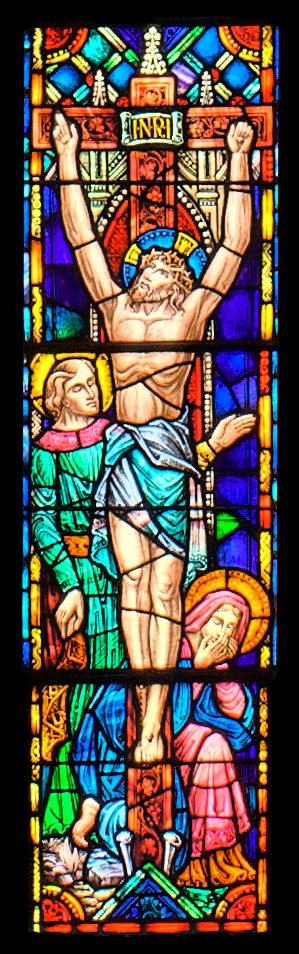
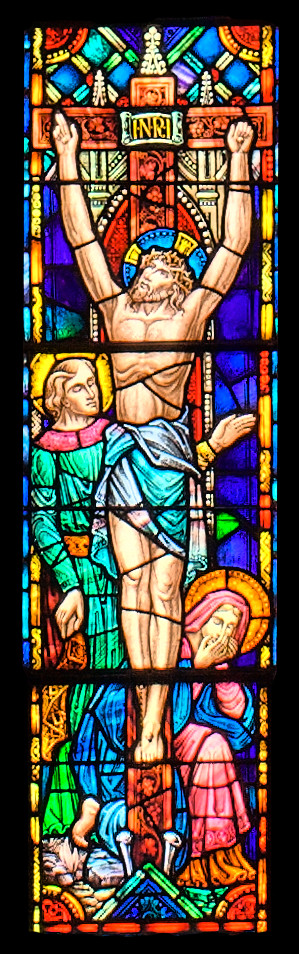
That is why Jesus was there, nailed to a cross. That is why Jesus was forsaken by God the Father – and He was truly forsaken by the father in a way that you have never been, and I pray that you never will be. The Father turned away from the Son and poured out all His wrath upon Him for all the sins of all people of all time. This had never happened in all eternity. The eternal Son of God had only known the perfect divine love of the Father and the Holy Spirit in eternity, but Jesus had carried in His body the guilt of the sins of the world so that He could suffer and die and take our guilt to the grave where it would remain even after Jesus rose victorious three days later. Christ’s journey to the cross began at His incarnation when He was conceived as the son of the Virgin Mary, but Jesus affirmed that He would fulfill the Father’s will when He was baptized by John in the Jordan River.

Jesus cried out with a loud voice, saying, …
“My God, my God, why have you forsaken me?”

John was baptizing repentant sinners, and was surprised when the Christ, Himself, asked to be baptized, too. Jesus told John, “Let us do this to fulfill all righteousness.” It is right that God would punish sinners for their sin, but God accepted a sinless substitute to redeem sinners. In the Old Testament church, they offered lambs as a substitute to die for their sins, but not even all the lambs in the world would pay for the sins of one person. Jesus is the perfect lamb of God who takes away the sin of the world. The incarnate Son of God could pay the price to redeem the whole world from sin and death. This is why after Jesus was anointed in the Jordan river with the Baptism of sinners, the voice of God the Father was heard proclaiming, “This is my beloved Son, in whom I am well pleased.” The Father was pleased not only because His Son had perfectly obeyed God’s commandments every day for about 30 years, but because the Son was also taking the guilt of sinners into His body so that He could pay the price to redeem sinners so He could restore us and glorify us to be the holy people God intended us to be from the beginning.

Jesus endured God’s wrath over sin as He hung there on the cross. He felt the sting of sin like no one on earth has ever felt. The Father treated Jesus like the worst sinner in the world – like the only sinner in the world. All His wrath was poured out on Jesus, so there would be no anger left for you, and you would be forgiven. Jesus endured God’s wrath, and never lost His love for the Father, or for you. Yet, in the depth of His torment He had to cry out, “My God, why have You forsaken me?” He truly suffered the wrath of God over the sin of the world, yet, God was still His God, and if it was the Father’s will for Him to suffer and die, then He would endure it to the end and die trusting that God’s will is best even if it meant that He would suffer hell all alone on the cross and then die. As a man, Jesus had to live by faith, trusting God’s word in the Scriptures that this pleased the Father, and that God would make everything work out for the best – for Jesus Himself, and for all the rest of us, who benefit from the suffering and death of Jesus. He was forsaken by the Father, so you will never have to go through the hell that Jesus endured.


Articles in this series:


Father, forgive them for they know not what they do.
I tell you the truth, today you will be with me in paradise.
Woman behold your son. Son, behold your mother.
My God, My God, why have You forsaken Me?
I thirst.
It is finished.
Father, into your hands I commit my spirit.


I Thirst

Fifth in a series on the Seven Last Words of Jesus

by Pastor Paul Wolff


Jesus, knowing that all was now finished, said (to fulfill the Scripture), “I thirst.” A jar full of sour wine stood there, so they put a sponge full of the sour wine on a hyssop branch and held it to his mouth. (John 19:28-29)


Water is necessary to sustain life. If you do not drink enough water you will die. Even ancient peoples knew this. When the Israelites were on their Exodus from Egypt God tested them by leading them into the wilderness where there was no water. They failed the test. Instead of trusting that God would provide them with water, or even asking God to provide drinking water, they only complained to Moses and accused him of leading them out into the desert to die of thirst. How easy it is to forget God in times of need!

God knows that water is necessary for us because that is how He made us. Food and water are part of the “Daily Bread” which we ask God to provide when we pray the Lord’s Prayer, and which God graciously provides to all people, even unbelievers, without our asking for it, though we pray for it so that we may receive all that we need in thanksgiving and praise to God who freely provides all that we need to sustain body and life.

Solomon wrote in Proverbs 25:21-22, “If your enemy is hungry, give him bread to eat, and if he is thirsty, give him water to drink, for you will heap burning coals on his head, and the Lord will reward you.” The Roman soldiers who were in charge of crucifying Jesus did not know, nor care about, the proverbs of Solomon. When Jesus expressed His thirst they did not give Him water, but gave him vinegar. Jesus had already been beaten and whipped, and if a little vinegar caused pain in an open wound, then the soldiers wouldn’t be sad to add to the suffering of the condemned man. They weren’t seeking rewards from God, only what rewards they could get in the world.

In Psalm 69:21, David prophesied, “They put gall in my food and gave me vinegar for my thirst.” The thirst of Jesus not only fulfilled this prophesy of David, but it also shows that Jesus is a real man. Jesus had real bodily needs like any other man. He hungered when He fasted. He got tired and needed sleep when He worked too long and too hard. He wept when visiting the grave of a friend who had died. He suffered when beaten and crucified, and He was thirsty as He was dying on the cross. It is important for our faith and our salvation that Jesus was (and is now, and will be forever) a man, just like us in every way, except sin.

Scripture says, “The soul that sins must die.” (Ezekiel 18:4 and 20) It was human souls who sinned against God and brought condemnation on the whole human race. Either we must all die for our sins, or we must be redeemed by another human soul. Jesus is the only human soul who has never been corrupted by sin. Yet, Jesus lived a regular life. Jesus was born as a baby. He grew up. He learned the Bible from His parents and teachers. He learned a trade. He was tempted to sin by the devil and by men. He lost friends and family to death. He suffered the indignities of living under the rule of tyrants who overtaxed Him and made themselves rich while stealing from the people. Jesus also suffered and died. When you pray to Jesus and find yourself in need in this world, you can know that Jesus understands what you are going through because He has been through similar things Himself as a man. Trust in Jesus. He will not let the troubles of life overwhelm you and lead you to your destruction. Jesus lived and died to rescue you from sin, death, and the devil. Jesus suffered the wrath of God, and the sorrows of life in a sinful world so that you could be rescued from such sorrows for all eternity. This is especially important when you approach your last hour of life in this sinful world. Jesus has been there, too. When that hour comes you will have to let go of everything in this world and trust in Jesus alone to rescue you from the grave.

The prophet, Jeremiah wrote (17:13-14), “O Lord, the hope of Israel, all who forsake you will be put to shame. Those who turn away from you will be written in the dust because they have forsaken the Lord, the spring of living water. Heal me, O Lord, and I will be healed; save me and I will be saved, for you are the one I praise.” Jesus is the Word of God made flesh. That Word is a living water welling up within God’s people for eternal life. Jesus suffered and died to give you comfort and life. Jesus suffered thirst to give you the living water as an ever flowing stream of eternal life.

When the Israelites were thirsty in the wilderness they failed the test, and lost faith in God. Jesus was not only thirsty, but endured the anger and wrath of God, the Father, over the sins of the world, and He endured it all and never lost His love and faith in God. Even though it was the Father’s will to put Jesus through hell, Jesus continued to love the father and trust that this was all for the best.

The thirst of Jesus shows us that He is a real man. Another aspect of Christ’s humanity, is that when He spoke these words He knew His physical strength was failing, and He did not have long to live. His mouth and throat was dry, and He had a couple short words to speak, and He did not want to be misunderstood. From a human perspective, Jesus was preparing to speak His final words as a mortal man before He died, and He was willing to drink vinegar to moisten His tongue so that He could still speak clearly. Listen carefully to these next two words from Jesus. They are important for your faith and for your salvation.


Articles in this series:


Father, forgive them for they know not what they do.
I tell you the truth, today you will be with me in paradise.
Woman behold your son. Son, behold your mother.
My God, My God, why have You forsaken Me?
I thirst.
It is finished.
Father, into your hands I commit my spirit.


Friday, February 17, 2023

Blessed are the Meek, for They Shall Inherit the Earth

(Part 3 of a series of 9 articles on the Beatitudes)

by Pastor Paul Wolff

Blessed are the meek
for they shall inherit the earth.
Matthew 5:5
Photo from a mosaic in the
Saint Louis Cathedral, St. Louis Missouri
In the third Beatitude, Jesus says, “Blessed are the meek, for they will inherit the earth.” (Matthew 5:5) Meekness is not something Christians would seek for themselves unless it was blessed by Christ. To be meek is to be humble and submissive to authorities, and not asserting one’s rights over others, but viewing others as greater or more important than yourself. Meek people are helpful and kind and are just the sort of people you are grateful to have helping you when you are in trouble or need and have nowhere else to turn. A meek person is a good and faithful friend, and just the sort of person who would “give you the shirt off of his back” if you are in need.

The world says, “might makes right” and “power rules” and other such things. The world despises the meek as weak and powerless people who are to be taken advantage of, and enslaved (if possible). Marxism, especially, is all about the exercise of power, and though we all hoped that Marxism was on its way to oblivion – where it belongs – after the fall of the Berlin Wall in 1987 and the subsequent collapse of the Soviet Union, but it seems to be gaining in popularity by ignorant people who don’t mind becoming tyrants who are cursed by all good, peace-loving people whom they oppress.

Marxism would be a very funny joke if people didn’t take it seriously and murder people on an industrial scale. The idea is that there are two types of people: oppressors and oppressed. You could picture two people where one imagines that he has been wronged (oppressed) by the other in some small way and slaps the other. Now the tables are turned, and the other person is oppressed and he slaps back. Since these are both committed Marxists this continues until one gets tired of being slapped and hits back harder. This necessarily escalates until one murders the other. This is the necessary result of Marxist ideology and it cannot be any other way, unless one or both gives up on this demonic way of thinking.

Meek people are not necessarily oppressed, and need not view themselves as such (even when they are). Meekness is about how individuals act toward others in love. Jesus said later in the Sermon on the Mount that Christians ought to “turn the other cheek” (Matthew 5:39) when someone strikes them in the face, rather than escalating the fight to murderous levels. This is how Christians are meek in love – not asserting their “rights” but forgiving their neighbor in love, and enduring all kinds of indignities for the sake of Christ. This is not cowardice at all (though the world may mistake it for cowardice), but meekness comes from the brave trust in the forgiveness and justice of God, and showing their neighbors the love of Christ in their lives.

Though Christian meekness is a virtue, we should understand that we cannot win salvation by being meek. There is nothing that anyone can do to save themselves. James (2:10) says, “For whoever keeps the whole law and yet stumbles at just one point is guilty of breaking all of it.” We are all conceived and born in sin, and have inherited the corruption and guilt of sin, so none of us can save ourselves. Yet since Christ Jesus has redeemed us and gives us salvation and eternal life as a gift, then we don’t need to “assert our rights” and “take justice into our own hands” but we can leave vengeance to the righteous judgment of God. Scripture says, “Do not take revenge, my friends, but leave room for God’s wrath, for it is written: ‘It is mine to avenge; I will repay,’ says the Lord.” (Romans 12:19 – from Proverbs 20:22 and Deuteronomy 32:35)

The inheritance of the meek
is not this corrupted, sinful world,
but the new earth God prepares for His people.
(See Revelation 21)
The blessing that Christ promises to give the meek is that “they shall inherit the earth”. Obviously this is not something that we should expect to happen in this sinful world. Nor should we seek to take the earth by force. Those who seek to gain control of the earth by force are rightly punished by the authorities which God has established on earth. This “inheritance” is a passive thing, which is a gift from God. Psalm 24:1 says, “The earth is the Lord’s and everything in it, the world and all who live in it.” We can only inherit the earth if God considers us His children and gives it to us as an inheritance. We are God’s children through faith in Jesus Christ, and the new birth which God the Holy Spirit, gives to us in holy Baptism. The “born again” miracle which the Holy Spirit works through Baptism (John 3:5-6) is to adopt us as His children and give us each a new life which is forever. In the same way, the “earth” that we inherit is not this sinful world which is condemned to destruction (Revelation 21:1), but it is the new earth which God is preparing as a paradise for our eternal life with Him.

Jesus was meek
to fulfill God's plan of salvation
to redeem us from our sins.
Jesus was meek in many ways from His conception to His death. Some misguided rationalist heretics have sayings to the effect of “you can’t put god in a box”, or “the finite cannot contain the infinite”. Yet, in the incarnation of the Son of God, that is exactly what the Omnipresent, Almighty God did. At the conception of Jesus, the Second Person of the Trinity was present bodily in a newly conceived, one-celled person who grew up to be Jesus, the Christ, the son of Mary. Jesus is not part-god and part-man. Jesus is fully God and fully man. This is a paradox, to be sure, but it is something that only God can do. Though even in mathematics there is the concept of a structure with infinite surface area contained within a limited, finite volume, so even in the physical (or mathematical?) world the heretical sayings are not true. Even though Jesus, as God, is eternal, omnipotent, omnipresent, omniscient, and more, He lived life as an ordinary man for about thirty years (Luke 3:23) before He began His ministry, and then He didn’t use His divine powers completely, but only for specific purposes.

Though Jesus is the creator (with the Father and the Holy Spirit) of all that exists, He did not come in power and glory, but was born quietly in Bethlehem. Because the census required people to register at their ancestral home, Bethlehem was crowded and no one made room for the birth of the Son of God, He spent His first night after His birth sleeping in a manger. Though after the local shepherds heard what the angels said about Him, surely more comfortable accommodations were found for the holy family after that. When the magi from the East came to worship the King of Judah, they went to Jerusalem first because they expected the newborn king to be in the royal palace in the capital city, yet the Holy Family was still in Bethlehem. This is one way which shows the meekness of Jesus. This was according to God’s plan. God became incarnate in Jesus in order to serve us sinners, not to rule in power. God has all power, but He came meekly to provide forgiveness and salvation for us all.

“He was oppressed, and he was afflicted,
yet he opened not his mouth;
like a lamb that is led to the slaughter,
and like a sheep that before its shearers is silent,
so he opened not his mouth.”
(Isaiah 53:7)

The ultimate expression of the meekness of Jesus was His passion. When His work was done, He allowed His enemies to arrest Him, put Him on trial prejudicially, and crucify Him. Jesus was meek as he was led to his crucifixion. This fulfilled the prophesy from Isaiah, “He was oppressed, and he was afflicted, yet he opened not his mouth; like a lamb that is led to the slaughter, and like a sheep that before its shearers is silent, so he opened not his mouth.” (Isaiah 53:7) Sheep don’t mind going to the shearers, but Jesus knew He was not just going to get a haircut, but would suffer and die a horrible death. Even his judge, Pontius Pilate, was surprised that Jesus didn’t defend himself from outrageous, unsubstantiated accusations. He was mocked, beaten, and nailed to a cross. No false god in the world would be caught dead on a cross, but the true God was there to pay the price for the sins of the world. The result of Christ’s sacrifice is the full forgiveness of sins, and salvation for all who put their trust in Him. Because Jesus faithfully fulfilled God’s plan for salvation the result for Him is described by Saint Paul in this way: “Therefore God exalted him to the highest place and gave him the name that is above every name, that at the name of Jesus every knee should bow, in heaven and on earth and under the earth, and every tongue confess that Jesus Christ is Lord, to the glory of God the Father.” (Philippians 2:9-11) Now, that Jesus has paid for our sins and won our salvation, He is glorified, and uses His divine power fully always. Perhaps the only meekness He displays now is that He remains hidden, and He allows sin on the earth (with limits). When Jesus returns on the Last Day we will see Him in all His glory and power. Then He will judge the world and fulfill His promise to give His beloved children the inheritance of the new earth.


Other articles in this series:

Blessed are the Poor in Spirit

Blessed are Those who Mourn, For They Will be Comforted 

Blessed are Those Who Hunger and Thirst for Righteousness, for They Shall be Satisfied

Blessed are the Merciful, for They Shall Receive Mercy 

Blessed are the Pure in Heart, for They Shall See God 

Blessed are the Peacemakers, for They Shall be Called Sons of God 

Coming soon:

Blessed are those who are persecuted for righteousness’ sake, for theirs is the kingdom of heaven.


Sunday, August 20, 2017

Why does God Condemn Unbelievers to Hell?

by Pastor Paul Wolff

God is the loving Father
who welcomes back the prodigal son.

I recently ran across a presumptuous atheist question which asked, “What kind of a god would send people to hell for not believing in him?” This sounds like a rational question. Yet, this is another example of the truth that “If you ask the wrong question, you are sure to get the wrong answer.” In this case the answer to the rhetorical question is that God must be unjust and cruel. That is always wrong when you are talking about the one, true, Triune God.

A better question to start with is, “Who ought to be condemned by God?” The answer to this question is everyone who disobeys God’s Law. God’s Law is good and truly righteous, as He is truly good and righteous. We all are sinners, and deserve God’s punishment. There is no one who can rightfully claim the moral high ground over God and honestly make the case that they are more righteous than He is. We all deserve to be condemned. If we start with this question, and properly answer it, then we can easily see that God is not to blame for anyone’s condemnation. We are all rebellious sinners, and we all deserve to be destroyed for our sin. 
 

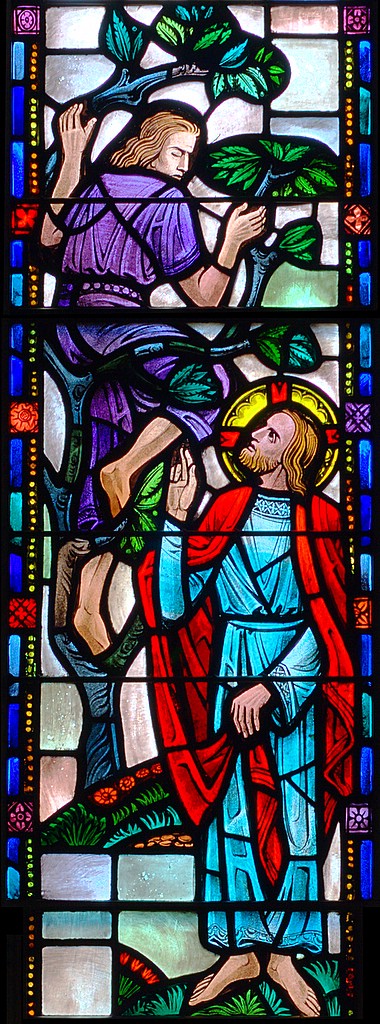
Jesus honored Zacchaeus
though he was despised by everyone.
Read Luke 19:1-10

So why do we even have any hope for salvation? The answer is that, despite our sin, God loves us and He is not only just and righteous, He is merciful. God knew that we could not pay the punishment for our own sins without being destroyed, so He did the job Himself when the second Person of the Trinity became incarnate as Jesus, to fulfill God’s Law (this is called Christ’s active obedience), and to take the punishment which we deserved for our sins, which is death (this is called Christ’s passive obedience). Christ’s victory over death is shown by His resurrection from the dead, because He has destroyed the power of death over all people. Jesus won that victory for all people and gives it as a gift to all who believe.

Where does faith come into this? God accomplished our salvation by working in history with the Israelites, through whom God entered our world and won salvation in the person of Jesus, the promised Son of David. The Israelites kept a record of how God worked in history to bring about our salvation, so that everyone could hear about it and believe. God’s Word is the truth, and God doesn’t ask us to believe a myth or a fable (as some wrongly claim), but He presents us with the truth and asks us to believe the truth. Salvation couldn’t be any easier, because God did it all for us, and only asks us to believe in what He has already done. No person on earth should ever be condemned to hell because Jesus paid for their sins and gives them eternal salvation as a free gift. (see Romans 5:15-17 and 6:23)

Where does hell come into this? Jesus teaches that hell was never intended for people because ever since the very day that Adam and Eve rebelled against God and brought sin to all people, God promised a savior who would make everything right. In Matthew 25:41, in the Parable of the Sheep and the Goats, Jesus describes hell as “the eternal fire prepared for the devil and his angels.” There was never any redemption possible for the fallen angels, but there was always redemption for fallen people through faith in God’s promise of salvation (fulfilled in Jesus Christ). There never was any reason for any person to be condemned to hell. 

Then why are some people condemned to hell? The only reason why some people are condemned to hell is that they reject Christ’s salvation. Jesus teaches in John 3:17-18, “God did not send his Son into the world to condemn the world, but in order that the world might be saved through him. Whoever believes in him is not condemned, but whoever does not believe is condemned already, because he has not believed in the name of the only Son of God.” A person who does not believe God’s Word is essentially calling God a liar, and making themselves their own god. The unbeliever condemns himself because he rejects everything that God has done to save him. Romans 8:33-34 says, “Who will bring any charge against those whom God has chosen? It is God who justifies. Who is he that condemns? Christ Jesus, who died – more than that, who was raised to life – is at the right hand of God and is also interceding for us.” God is all about saving us, not about condemning us. Jesus took the condemnation for our sins so that we would not have to. 
 

Why would God die on a cross for me as a man?
He did it because He loves you.

The best question to ask is: What kind of a God would suffer and die on a cross to save sinners from death and hell? Only the One, True God who loves His people would dare to become a man and suffer and die to redeem sinners. This shows the fallacy inherent in the original question. God is not about sending people to hell. Jesus suffered hell on the cross so that no one else would have to. This is not a God who is unjust and cruel. God is completely loving and merciful. Those who love their sins more than Jesus are condemning themselves because they reject the salvation that is theirs in Christ. It is not that God takes away their salvation or doesn’t give it to them. All people are given forgiveness and salvation as a free gift, and unbelievers, through their unbelief, say, “I don’t want it.” This is why we say that those people who are in hell are there by their own doing, and those who are in heaven are there completely by what Jesus has done for them. God is the one who loves you, and has redeemed you from your sins, and is not ashamed to be found dead on a cross and in a grave. Jesus did this to save you from hell. Trust in Jesus. He will not let anyone who believes in Him suffer as He did on the cross.


Tuesday, October 20, 2015

Christ Has Done All Things Well

by Pastor Paul Wolff


Then Jesus left the vicinity of Tyre and went through Sidon, down to the Sea of Galilee and into the region of the Decapolis. There some people brought to him a man who was deaf and could hardly talk, and they begged him to place his hand on the man.

After he took him aside, away from the crowd, Jesus put his fingers into the man’s ears. Then he spit and touched the man’s tongue. He looked up to heaven and with a deep sigh said to him, “Ephphatha!” (which means, “Be opened!”). At this, the man’s ears were opened, his tongue was loosened and he began to speak plainly.

Jesus commanded them not to tell anyone. But the more he did so, the more they kept talking about it. People were overwhelmed with amazement. “He has done everything well,” they said. “He even makes the deaf hear and the mute speak.” (Mark 7:31-37)


Jesus heals us from sin and its consequences
(Liturgical clip art by Clemens Schmidt)

No sinner does everything well. Everything we do is tainted by sin in some way. There is a saying, “Jack of all trades – master of none.” This means you can’t be good at everything. The most you can hope to do is to be good at one thing, and hope that this is a talent for which someone will pay you handsomely. Many people have made their fortune by specializing in one thing or another. This has its downsides though. God have mercy on you if you see a doctor for an ailment which is outside of his specialty.

Jesus truly has done everything well, but because of our sinful nature we don’t really care if Jesus has done everything well. We each want God to say, “You have done everything well,” just as we truly (though wrongly) believe that we already do everything well enough. Yet, if we are honest with ourselves, and measure ourselves up against God’s Law, we must admit that we don’t even come close to doing everything well.

Though, here we must ask: does God really expect us to do ALL things well? Though we hope that the answer is “no” we read in Leviticus 19 where God tells His people, “Be holy because I, the Lord, Your God, am holy.” This passage shows that God does require us to be perfectly holy as God is holy. We should remember, however, that when God first made people He made them holy as He is holy, but our first parents rebelled against God and lost their holiness. We continue in that rebellion. St. Paul quotes from Psalm 14 in Romans 3:10, “There is no one righteous, not even one.” No sinner can do everything well, because we all rebel against God and His righteous laws. There are no exceptions “for all have sinned and fall short of the glory of God.” (Romans 3:23) If we measure ourselves against God’s Law we must join St. Paul in saying, “Christ Jesus came into the world to save sinners of whom I am the worst.” (1 Timothy 1:15)

Faith comes by hearing and believing the Word of Christ
(Romans 10:17)

So while we haven’t done much good, but have instead sinned greatly, Jesus has done all things well. Jesus even makes the deaf to hear and the mute to speak. Jesus said many times, “He who has ears to hear, let Him hear.” But on this day Jesus met a man who had ears that could not hear. So Jesus not only healed the man of his deafness, but gave him the ability to speak, also. Giving the man speech was no less a miracle than healing his deafness. If you know anyone who has been deaf since birth you know how hard it is for deaf people to talk. Though deaf schools do a great job of teaching the deaf how to speak, it is a difficult process, and it takes time. Even if a deaf person were to receive hearing today, it would still take time to learn how to speak clearly, but Jesus gives the man speech immediately. This reminds me of what God did at the Tower of Babel. In one day God gave the people different languages so that they forgot their old language and spoke new ones and couldn’t understand one another. In this case, however, Jesus gave this man speech so that he could be heard and understood by his friends and family.

Jesus did this out of compassion for the man. He didn’t do this for publicity, and certainly not to be known as a miracle worker. In fact, Jesus took the deaf man away from the crowd and put his fingers in his ears and spat and touched his tongue and healed him. I’m not sure what the spitting was all about, but it is likely that he touched the man’s ears and tongue to show the man what he was doing in healing him.

Then after giving the man hearing and speech, Jesus ironically told the man not to tell anyone what He had done. I think Jesus did this because since the man had only just then received his hearing and speech, he had an incomplete understanding of Jesus. He knew Jesus as a gracious miracle worker, but that is all. He needed to listen more and talk less, but he was a sinner, and it seems as though he preferred to exercise his gift of speech over his gift of hearing, even against Christ’s command to him. It was certainly true what the man said of Jesus, “He has done all things well. He makes both the deaf to hear and the mute to speak.” But this is an incomplete picture of Jesus.

The Law of God kills the sinner,
but Jesus gives Life to all who believe.

It is not necessarily good news for anyone that Jesus does everything well. If Jesus were any less than the merciful and holy God, He might still condemn us, saying, “Look! I lived the holy and obedient life. Why can’t you!” That would be true, and we would be condemned. This is why the Scripture says that the Law of God “Kills” and “brings death.” (2 Corinthians 3:6) It was necessary for our salvation that Jesus obeyed God’s Law and did everything well, however, it wasn’t His obedience to God’s Law that saved us from sin and its consequences. Jesus had to do more than do everything well – and that is exactly what Jesus did.

In order to be worthy to redeem us from our sins Jesus had to obey God’s Law just like any other person, and He had to do it perfectly so that He would not be condemned by His own sin. Romans 5:19 tells us, “Just as through the disobedience of the one man (Adam) the many were made sinners, so also through the obedience of the one man (Jesus) the many will be made righteous.” Jesus actively obeyed all of God the Father’s commandments. But Jesus didn’t do it for His own sake, He did it for us – to make us righteous in God’s sight.

Galatians 4:4-5 also tells us, “When the time had fully come, God sent His Son, born of a woman, born under law, to redeem those under law, that we might receive the full rights of sons.” Jesus lived under God’s law like any other man, but He kept God’s law perfectly so that we might receive His heavenly inheritance as sons. We call this Christ’s Active Obedience. This is what the people were talking about when they said, “Jesus has done all things well.”

But in itself this doesn’t save us. Jesus had to go further to redeem us from the guilt of our sins. Jesus offered his life in exchange for ours. Jesus, in effect, said to the Father, “Don’t punish my brothers and sisters for the sins they committed against You. Punish me instead, and set them free from their sin.” This is what St. Paul described in Colossians 1:22, where he wrote, “(God) has reconciled you by Christ’s physical body through death to present you holy in His sight, without blemish and free from accusation.” Since Jesus has taken the punishment for your sins, there is no longer anything standing between you and your heavenly Father.

Though Jesus is the Almighty God,
it was not without cost that He healed us from our sin.
This was the cost.

Jesus truly treats us as His brothers and sisters, as Hebrews 2:14 says “Since the children have flesh and blood, He too shared in their humanity so that by His death He might destroy him who holds the power of death–that is, the devil.”

Jesus not only shared in our humanity, He shared in our suffering because of our sin. If you notice in Mark 7:34 after Jesus touched the deaf man’s ears and tongue He looked to heaven and sighed. The word for “sigh” here is used elsewhere in the New Testament and is translated as “groan”, as in 2 Corinthians 5:4 which says, “For while we are still in this tent (of our sinful body), we groan, being burdened – not that we would be unclothed, but that we would be further clothed, so that what is mortal may be swallowed up by life.” We groan in our lives because sin causes us great sorrow and pain.


When Jesus healed this deaf man He groaned because He was taking the man’s suffering into Himself and giving him His life and healing. Though Jesus is the almighty God, it was not without cost that He healed people from their infirmities. It caused Him suffering. This is why God says in Isaiah 42:18-19 “Hear, you deaf, and look, you blind that you may see! Who is blind but my servant, or deaf as my messenger whom I send? Who is blind as my dedicated one, or blind as the servant of the Lord?”

Deafness and all our other bodily ailments come to us as a result of sin. When God made Adam and Eve they were perfectly healthy and immortal. Illness and infirmity and death only came after the fall into sin. Jesus rescues us from sin and all its consequences by taking our sin and its consequences into his body. This is why Scripture says in Isaiah 53, “Surely he has borne our griefs and carried our sorrows; yet we esteemed him stricken, smitten by God, and afflicted. But he was wounded for our transgressions, he was bruised for our iniquities; upon him was the chastisement that made us whole, and with his stripes we are healed.”

This is why when Jesus came to be baptized, John objected saying, “I need to be baptized by you.” But Jesus said, “It is fitting for us to fulfill all righteousness.” Jesus fulfilled all righteousness not only by obeying God’s Law perfectly, and doing all things well, but also by taking the pain and guilt and all consequences of our sin into His body. St. Paul describes this in 2 Corinthians 5:21 “God made him who had no sin to be sin for us, so that in him we might become the righteousness of God.”

The miracles Jesus did give us a glimpse into
what heaven is like where all believers
will be healed and glorified by His grace.

It hurt Jesus to heal people from their illnesses and from all the consequences of their sins. Yet, He did not let this stop Him from healing anyone, nor did it stop Him from going to the cross and suffering and dying there for the sins of the world, and for your sins. Jesus did this because He loves You more than He loves Himself. This is the love that our God has for us – that He would take up the pain and suffering of our sin and take it to His grave in order to save us from having to endure that suffering for eternity. This is why we, as God’s children, sorrow in our sins – not just for the suffering that it causes us, but for the suffering that we inflict on Jesus for the sake of our sins. God have mercy on us sinners.

God our heavenly Father does have mercy on us for the sake of His Son, Jesus Christ. This miraculous healing and all of Christ’s miracles are a little taste of His heavenly kingdom where He will rescue us from death and restore us to perfect holiness and life and health forever. Jesus has taken the guilt and the pain of our sins into His body and has taken them to His grave. Yet when Jesus rose from the dead He rose victorious over sin and death, so that He might give us, His beloved children, the gift of eternal life with Him in paradise – without sin – without illness – without sorrow – without death. Jesus truly has done all things well for us and for our salvation that He might share with us the eternal riches of His heavenly Kingdom.