Saturday, October 22, 2016

Is it Easier to Heal, or to Forgive?

by Pastor Paul Wolff


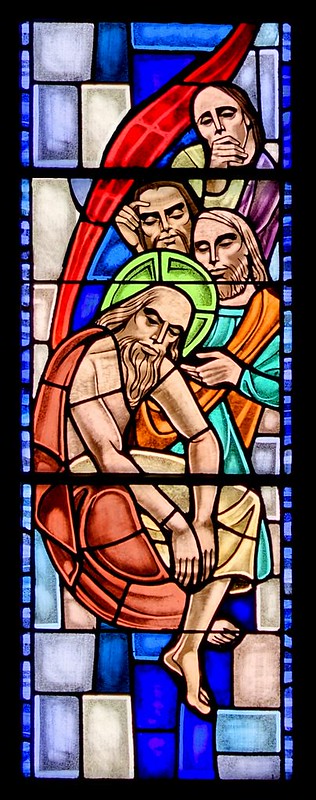
Jesus raised Jairus' Daughter from the dead

(Matthew 9:1-8)
Jesus stepped into a boat, crossed over and came to his own town. Some men brought to him a paralytic, lying on a mat. When Jesus saw their faith, he said to the paralytic, “Take heart, son; your sins are forgiven.”
 
At this, some of the teachers of the law said to themselves, “This fellow is blaspheming!”
Knowing their thoughts, Jesus said, “Why do you entertain evil thoughts in your hearts? Which is easier: to say, ‘Your sins are forgiven,’ or to say, ‘Get up and walk’? But so that you may know that the Son of Man has authority on earth to forgive sins….” Then he said to the paralytic, “Get up, take your mat and go home.” And the man got up and went home. When the crowd saw this, they were filled with awe; and they praised God, who had given such authority to men.


A paralyzed man was brought to Jesus, and when He saw the man, and the first thing He said to him was, “Take heart, son, your sins are forgiven.” This seems like a strange thing to say. I don’t think that this paralyzed man’s friends brought him to have his sins forgiven. He had most likely heard of the miraculous healings Jesus had done wherever He went, and he desired to walk again.
 
The paralyzed man likely thought that it was more important for him that he would be able to walk, than to have his sins forgiven. But Jesus saw this man and his greatest need, and He addressed it right away. The man’s greatest need was not that he could not walk, but his greatest need was that he was a sinner. He needed his sins forgiven. And so Jesus dealt with that immediately, saying “My son, your sins are forgiven.”


Adam and Eve brought sin and condemnation
to themselves and to all people.

We, too, need to recognize that our greatest need is that our sins are forgiven. Sin makes us enemies with God, and as long as we are guilty of sin we are subject to God’s punishment. If our sins are forgiven, then God is no longer our enemy, but our greatest friend and protector. All problems, all trouble, all sorrow in this life are a result of sin. So the greatest thing that we can have is the forgiveness of Jesus.

Some of the people who were there with Jesus heard what He said to the paralyzed man, and they were thinking to themselves, “This man is blaspheming. Who can forgive sins, but God?” Well, this is true indeed! However, they didn’t recognize that Jesus is God. There He was standing there in front of them: God in the flesh! But they couldn’t see it. They thought, “this man is insulting God by saying that he could forgive sins.” Well, Jesus is God, and He can forgive sins. Jesus also knew what they were thinking, by His divine power, and so He asked them, “Which is easier to say, ‘Your sins are forgiven’ or ‘Rise and walk’”?

We can answer Jesus’ question on several levels. On one level, it is easy to say anything. It doesn’t take much effort to say something if you are not too particular about what it is you are saying. But of course, this is trivial. Most of us do take some care about what we say, and this is especially true for Jesus.

On another level, we can look at it and say, it is much easier to say, “Your sins are forgiven” rather than say, “Get up and walk”. You can say, “Your sins are forgiven” but there is no outward indication to show if your sins really are forgiven or if they aren’t. We can’t tell just by looking at a person and say, “This person’s sins are forgiven” or “That person’s sins are not forgiven.” So in that sense it is easier to say “Your sins are forgiven” because you really can’t tell if it has been done. God knows, but we don’t. We can’t see forgiveness. We don’t know. We have to live by faith. In the same way, if you were to say to a person, “Get up and walk” and that person does not get up and walk, then you are exposed as being a charlatan, or speaking nonsense, or giving this person hope that you can’t fulfill. So it is easier to say, “Your sins are forgiven” rather than “Get up and walk” if you don’t have the power to make that person get up and walk. But Jesus did have the power to make that man get up and walk.

Jesus did not, however, tell the man “Your sins are forgiven” because it was easier for Him to say that rather than “Get up and walk.” Jesus had the power both to forgive sins and to heal the man from his paralysis, but Jesus dealt with what was most important first. The man’s greatest problem was his sin, so Jesus first declared that his sins were forgiven. But then to show that He did have the power not only to forgive sins, but also to heal him, He told the man, “Get up and walk” and the man was healed and stood up. By doing this great miracle, Jesus showed those who were there that He did also have the power to forgive sins. If this man, Jesus, could make a paralyzed man get up and walk, which no one else had the power to do, then He certainly also had the power to forgive sins. That was one thing that Jesus was showing by this great miracle. Jesus was also showing that He has compassion for all our needs of body and soul.


Jesus raised Lazarus from the dead.

The paralyzed man had more needs than just having his sins forgiven. He was paralyzed and had the need for healing. Though, it would have been all right for him to go through life as a paralyzed man, and yet have his sins forgiven. He could have lived his life as a paralytic, trusting in God to forgive him, and to provide for his other bodily needs, and he would be saved just like all other believers. You should remember that, at some point in history, that man died, and we should all agree that being dead is a much worse condition than being paralyzed. On the last day when Jesus calls him out of his grave, he will be restored to full health, and full strength, and he will be walking and rejoicing in God with a full, strong body forever and ever. Jesus, however, saw the man’s immediate physical needs as well as his spiritual needs and had compassion on him. He restored to him his ability to walk, in addition to forgiving his sins.

Besides the question that Jesus asks, “Which is easier: to say, ‘Your sins are forgiven,’ or ‘Get up and walk’?” I think we can contemplate another question Jesus did not ask, but is important for us to consider. Which is easier to DO: to heal a man who is paralyzed, or to forgive sins? Now, even today, depending on what is the cause of paralysis, in nearly all cases, healing paralysis is still an impossibility even for the most skilled doctors. If someone has a damaged spine, and cannot walk it is virtually impossible for modern medicine to heal them. Many doctors have tried different treatments, but sometimes it is just impossible. For a severe injury, if you cannot walk, you will never walk. And yet, physical problems often have physical cures. It may be possible sometime in the future to develop some healing that we cannot do now. So we may hold out some small hope for that possibility. It is now impossible, though some time in the future, it may be possible. On the other hand, it is absolutely impossible for sinful man to forgive sins.

We sinners cannot accomplish the forgiveness of sins on our own. We cannot do anything that could appease God of our own doing alone, much less for anyone else’s sins. We are guilty of sins, each of us, as we have inherited that guilt going all the way back to Adam and Eve. Even if we could overcome our own sins, we could not overcome someone else’s, and we can’t even overcome our own sins. People sometimes think that if we do enough good that we can make up for sin, but God has given us His commandments. We ought to be doing good in everything we do. How can we do more than everything to overcome our sins, especially once we are guilty of sin? It is impossible. We cannot overcome sins. God says, “The wages of sin is death.” (Romans 6:23) You might, then, think that death might be enough to overcome our sins, but as sinners, to suffer that death would destroy us. We would be destroyed by death on account of our sin. We cannot overcome sin. It is impossible.


Only God can accomplish the redemption of our sins, and in God, only Jesus can do it. God, in His nature, is an eternal Spirit. He cannot die. But in Jesus, God has become a man in order to be able to die and to pay the price for our sins. Because Jesus is a man, He could die for our sins. He could pay the price to redeem us from our sins. And in His grace, Jesus desired to do all that was needed to win forgiveness for us, and so He became a man. As a man Jesus put himself in a place where he could do what was necessary to pay for our sins. He could live the perfect life that we were unable to do, to keep God’s Ten Commandments that we were unable to keep in our sin, so that He could present Himself before the Father as the perfect atoning sacrifice, and to offer His life in payment for ours. This is what it takes to accomplish our forgiveness. God does not overlook sin. He cannot do that in His nature. He is a just God. Sin must be punished, but Jesus took the punishment in our place, as our substitute.


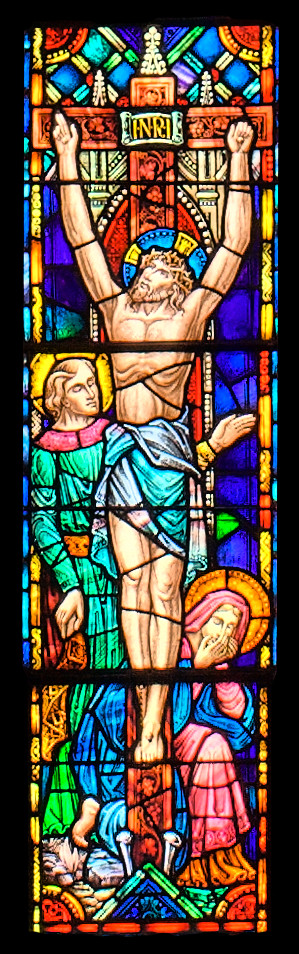
Your Forgiveness was won through
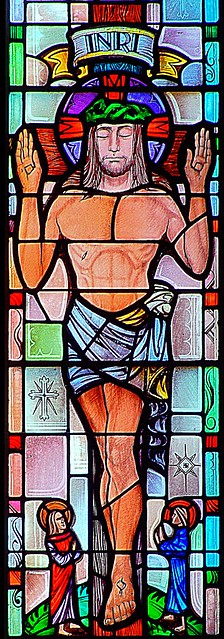
the death of Jesus on the cross.
And the benefits come to you through faith.

This is why it is good for us to ask, “which is easier to do.” What does it take to forgive our sins? It wasn’t just as if Jesus had said, ‘your sins are forgiven, I’ll overlook it this time.’ In order for Jesus to forgive sins, He had to go to the cross. He had to suffer and die to pay for those sins, and for the sins of the world. It was not easy for Jesus to do that. It was more than just saying, “Your sins are forgiven.” It was putting that into action: going to the cross; suffering and dying; having sinners put the crown of thorns on His head; and they beat Him and slapped Him and insulted Him; nailing His hands and feet to the cross; and Jesus remained up on that cross while people were insulting Him and laughing at Him. The worst part of His death was that Jesus felt God, the Father, forsaking Him on account of our sin. He felt God’s wrath over the sins of the world, which He had nothing to do with, but that He was carrying in His body to take away from us. All of this is what it took for Jesus to forgive our sins. Jesus did all these things out of love for us all. He did these so that our sins would be taken away from us, that we might have life forever.

It was not easy for Jesus to do this, but He did it out of love for us. Which is easier? It was not easy for Jesus to do, but He did what was necessary to forgive our sins. So that when we hear the pastor telling us, “Your sins are forgiven, in the name of the Father, and of the Son, and of the Holy Spirit.” It is true. It has been done. Jesus did what was necessary. The pastor speaks words to us, but it is more than words, it is what Jesus has done for us. Those words are God’s Word that comes to us to give us life and salvation, to heal us from our sins. This is what we have in the Word of God. This is what Jesus brings to us through His Word, and through the Sacraments, that we receive the forgiveness of Jesus. That we receive what He paid for us. This is the great gift of God which gives us life.

It was not easy for Jesus to do, but He did it all for you, and for that you should thank and praise God that you have such a savior in Jesus. May Jesus strengthen your faith to know that you are forgiven. That He has done everything necessary to redeem you, to make you His Child. That you might live in that faith, trusting in Jesus to forgive your sins, and on the last day you will be raised in glorious life to live with God forever.
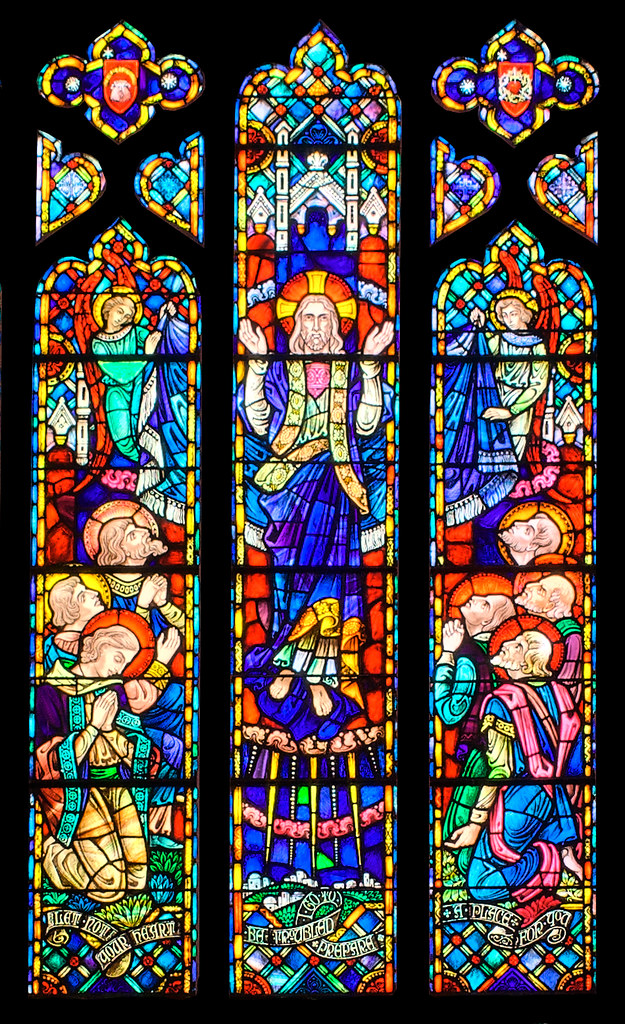
Jesus said,
“Let not your heart be troubled.
I have gone to prepare a place for you.”


Sunday, September 4, 2016

The Economics of Christ’s Salvation

by Pastor Paul Wolff

Money bag for helping your neighbor

Jesus said, “If anyone comes to me and does not hate his own father and mother and wife and children and brothers and sisters, yes, and even his own life, he cannot be my disciple. Whoever does not bear his own cross and come after me cannot be my disciple.” (Luke 14:26-27)


If you listen too much to what the world says about Jesus, and don’t know your Bible very well, then you might be surprised to hear Jesus say that you cannot be His disciple unless you hate your father & mother, wife and children, brothers and sisters, and even your own life!

Even those who are ignorant of the Bible, if they know anything at all about Jesus, they know that He said, “Love your neighbor.” Of course, the world (and even some unbelievers in the church) would then go on to define “love” to mean whatever they want it to mean, including some things which the Scriptures and Jesus clearly forbid and condemn, such as any kind of lust and adultery, including pre-marital intimacy, sexual promiscuity, and homosexual activity.

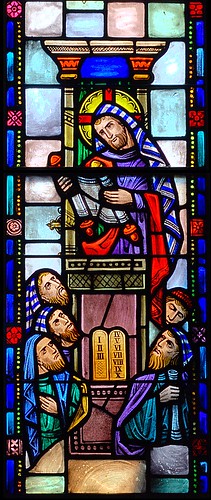
Jesus taught the Scriptures
in a Nazareth Synagogue

Although the world doesn’t have a clue how to properly read the Bible, Christians should be aware that any interpretation which contradicts the Holy Scriptures is false. You can’t play one Scripture passage against another, so as to say, “Well, there Jesus says to love, and here he says to hate, so I guess I get to choose which one I will follow today. Tomorrow I may choose the other, but it’s my choice.” That is false, and you are always going to fall into sin if you do that.

It is also a sin to view this as a contradiction, and without trying to resolve the apparent contradiction, say, “Since the Bible seems to contradict itself, then it is not the infallible word of God and cannot be trusted, so I can go do what I want and you can’t say anything against me.” Now, if the Bible really did contradict itself, then it could not be trusted, but the Holy Scriptures truly are the Word of God and they do not contradict one another at all! What seems like contradictions in the Bible are only apparent contradictions, and they can easily be resolved and you can still maintain both sides as being true in every case.

In this case, the proper question must be, “How can you hate your neighbor (in a godly way), and still love him at the same time?” This isn’t that hard, really. Remember that the Scriptures say that all people are sinners from the time we are conceived (Psalm 51:5) so we can hate the sinfulness both in our neighbor, and in ourselves, and we can still love them as those for whom Christ died to redeem (even if they don’t acknowledge Christ’s saving work.) We can also acknowledge that Jesus is using hyperbole (or exaggeration) to make the point that you should love Him so much that it seems like you hate everyone else. This is not to say that we should hate as if we would wish our neighbor were dead, but that we should love God above all else and despise sin in ourselves and our neighbor.

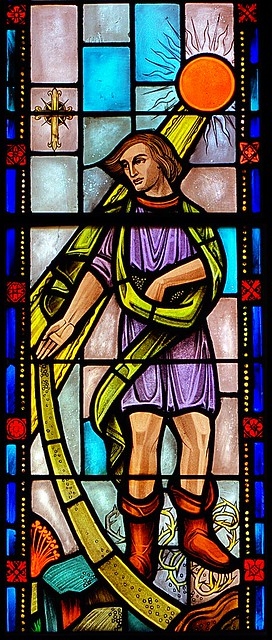
The Sower sowing his seed

This is how it works in practice: I have heard of situations where an elderly person comes to the faith, but then has doubts in regard to a loved one. It could be a beloved husband or wife, a child or a parent, or a sibling. But some people actually lose their faith and say, “If my beloved is not in heaven then I don’t want to go there.” This kind of person is what Jesus was talking about in the Parable of the Sower. He is like the seed which falls on the unfit soil. This person quickly loses the faith that could have saved them. It is tragic arrogance to think that you are more righteous than God Himself. Do people really think that they are a better judge than the all-knowing God? Jesus is the Good Shepherd who knows His sheep, and will never let even one go astray without going out and bringing him or her back into the flock. Also, don’t think that anyone will find any friends in hell. There is no love in hell, and those who may have loved you earth will only hate you and torment you in hell. While our loved ones are still alive we may try to lead them to find their salvation in Jesus, but once they have died we must leave their fate to the mercy of God and trust that Christ’s Judgment is always just and merciful. This is what Jesus is warning us about in Luke 14. Count the cost.

There is a cost to being a Christian. Don’t be fooled by the false teachers of our age who promise that being a Christian is all about unfailing success and prosperity. That doesn’t get you too far when a Jihadist puts a knife to your throat and asks you if you are a Christian. Martyrdom is not part of the prosperity gospel, but it can be part of the Christian life. Martyrdom is an extreme cost, and not all Christians are murdered because of their confession of Christ, but there is a cost to being a Christian.

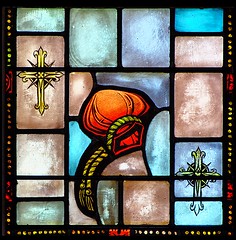
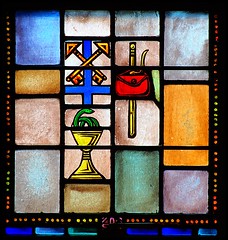
Symbols representing Saints Peter, James & John

Revelation 7:14 calls the Christian life a “great tribulation” which recognizes the Christian life as a battle or a war. The Christian life is a battle because we must fight against sin and temptation. The pagan life is not a battle in the same way because the unbeliever sees no need to resist temptation. In some ways it is easier to be an unbeliever because they don’t have to fight against their own sinful flesh. They may indulge any sinful desire and not worry about any consequences. There are consequences and costs to the pagan life, too, but I will get to that shortly. Proverbs 8:13 says, “The fear of the Lord is hatred of evil.” So Christians also hate evil and fight against temptation, even when our own flesh says, “I want to do wrong. I need to do that sin. I will die if I don’t do that sin.” Yes, the sinful flesh is a drama queen, but temptation can be compelling to our weak flesh. That is why we must fight against temptation. It hurts to deny the flesh its sinful desires, but that is one of the costs of being a Christian.

Think of the Beatitudes. Jesus doesn’t say, “Blessed are the rich and powerful who always get their way and are happy all the time.” It is only the heretics who say that! Jesus says: 

  • Blessed are the poor in Spirit
  • Blessed are those who mourn
  • Blessed are the meek
  • Blessed are those who hunger and thirst for righteousness
  • Blessed are the merciful
  • Blessed are the pure in heart
  • Blessed are the peacemakers
  • Blessed are those who are persecuted for righteousness’ sake
  • Blessed are you when others revile you and persecute you and falsely say all kinds of evil against you because of (Jesus).

Christians aren’t blessed because they mourn or are meek, or do any of the other things. They are blessed because Christ gives them good gifts which rescue them and make up for their sorrow and pain in this sinful life.

Job's suffering
(window from Holy Cross Lutheran Church, Detroit)

So Jesus says, “Whoever does not bear his own cross and come after me cannot be my disciple.” Remember that when Jesus said this, the cross was not a gold or silver-plated piece of jewelry that you proudly wear around your neck to proclaim your forgiveness and salvation in Christ. When Jesus said this the cross was the most shameful method of torture and death used to shame and humiliate the most despised criminals. So to take up your cross and follow Jesus is to recognize that you are a sinner and only deserve death, so you count your life and possessions as forfeited for Christ’s sake and look to Him to save you from sin and death, as He has promised to do.

That leads us to the other part of counting the cost – the benefits! You should also add the benefits when you count the cost. The benefits of being a Christian include: 1) complete forgiveness of all your sins – through the redemption that came by Christ Jesus; 2) reconciliation with God, the Father, and with that – adoption as His beloved child; 3) Sanctification by God the Holy Spirit; 4) resurrection to everlasting life; and 5) an eternity of joy with all the countless brothers and sisters in Christ who are likewise redeemed. These benefits are worth more than the whole world. That is why St. Paul could say in Philippians 3:7-9, “Whatever was to my profit I now consider loss for the sake of Christ. What is more, I consider everything a loss compared to the surpassing greatness of knowing Christ Jesus my Lord, for whose sake I have lost all things. I consider them rubbish, that I may gain Christ and be found in him, not having a righteousness of my own that comes from the law, but that which is through faith in Christ – the righteousness that comes from God and is by faith.”

Jesus paid the price for your sin

You should also know that although your forgiveness and salvation is free to you as a gift from God, it was not won without its own cost. In fact, your salvation was only won at a very high cost: which was the entire life and the innocent suffering and death of Jesus. When God was planning your salvation in eternity before the creation, the Son of God also had to consider the cost. Although God created the first people perfect, and without sin; yet, Adam and Eve soon rebelled against God and brought His condemnation upon themselves and their children. Yet despite their rebelliousness and lack of gratitude for all that God had given them, the Son of God loved them enough to take their punishment on Himself and was willing to endure the indignity and pain of crucifixion and also to endure the Father’s wrath of a world full of sinners.

Yes, there is a cost to being a Christian, but the cost is very small in relation to the benefits. What would you do? Would you rather indulge the pleasures of the sinful flesh for a short time (and suffer all the temporal consequences of that wickedness), and then suffer an eternity of torment with no hope of relief? Or would you rather deny yourself the guilty pleasures of sin and live in the hope and confidence of God’s love for you in Christ Jesus, and then enjoy an eternity of pleasures of God’s gracious gift of life and salvation? St. Paul wrote, “I consider that our present sufferings are not worth comparing with the glory that will be revealed in us.” (Romans 8:18) No one likes to suffer. Even Jesus wasn’t all too thrilled with the prospect of suffering and death (see Matthew 26:36-46), but out of love for God and for you, He willingly suffered and died to save you.

There is a cost to being a Christian, but God did not ask you to pay the price for your sin. Instead, God sent His own Son to pay the terrible price for your sin to redeem you and adopt you as His child to give you an eternity of life with Him in Paradise. It is only because of Jesus that we can live in this wicked world with hope of life and salvation. So we also join with St. Paul and all the saints and say, “For I am convinced that neither death nor life, neither angels nor demons, neither the present nor the future, nor any powers, neither height nor depth, nor anything else in all creation, will be able to separate us from the love of God that is in Christ Jesus our Lord.” (Romans 8:38-39)

Tuesday, December 29, 2015

The Widow’s Mite

by Pastor Paul Wolff


Jesus is the Good Samaritan
who rescued the man considered His "enemy"

Jesus taught, “Watch out for the teachers of the law. They like to walk around in flowing robes and be greeted in the marketplaces, and have the most important seats in the synagogues and the places of honor at banquets. They devour widows’ houses and for a show make lengthy prayers. Such men will be punished most severely.” (Mark 12:38-40)

Jesus warns us to beware of those who love worldly honor. Yet, who doesn’t love worldly honor? We all want people to like us and admire us. But the world doesn’t always treasure what God considers righteousness, and even when it does, those who seek praise make a pretense of righteousness and the public can be fooled.

St. John writes, “Do not love the world or anything in the world. If anyone loves the world, the love of the Father is not in him. For everything in the world – the cravings of sinful man, the lust of his eyes and the boasting of what he has and does – comes not from the Father but from the world. The world and its desires pass away, but the man who does the will of God lives forever.” (1 John 2:15-17) People are sinful and their desires are sinful. Worldly people will seek to corrupt you (if they haven’t already) in order that you will be more willing to go along with their sinful desires. At the very best, if you seek the world’s favor, they will only give it to you as long as they can get something in return. When you have nothing more to give, then the world will abandon you. There is no salvation in seeking the world’s favor and praise.


That is why James (4:4) writes, “Do you not know that friendship with the world is enmity with God? Therefore whoever wishes to be a friend of the world makes himself an enemy of God.” But understand that it is not as if God feels slighted or offended because you prefer someone else to Him. God loves you and wants you to be saved from your sins. If you seek other gods you are rejecting your only hope of salvation and will be lost.


Though the devil offered Jesus
the riches of the world,
He would not be diverted from His saving work

To illustrate this, Jesus watched the people putting money in the offering box. He noticed many rich people put in large sums of money. Jesus does not condemn them for this. It is not a sin to give large amounts of money to support the church – if God has so blessed you with wealth. The church needs money for maintenance, repair, salaries and the like. This is a good work. It is necessary for the spread of the Gospel. “Faith comes by hearing the Gospel.” How can anyone be saved if they don’t hear the message? So it is good to support the church with your tithes.

It is only a sin if you have the wrong attitude when making your offering, such as using your wealth to buy influence and control in the church. You might say, “I paid my dues, now I get to say how things are run around here.” That attitude forgets that neither the church nor your wealth belong to you – they belong to God. It is also a sin if you think your gift gets you closer to God, or makes God see you more favorably. God’s favor cannot be bought by giving to Him what belongs to Him anyway. Do you really think God will be impressed? Repent of this.

On the other hand, it is also a sin if you give all you have to the church and have nothing left for your family. It is a service to God to provide for the needs of your family. Though this, too, can be taken too far if you use your family as an excuse to get out of your obligations to the church. If you spoil your children by giving them every wicked thing they ask for, while the church is in decay and the staff is underpaid. That does no one any good – neither the church, nor your children.

Yet, instead of rebuking others for one reason or another, Jesus notices this one poor widow who put two pennies into the offering. Those who loved worldly honor and praise hardly noticed this poor widow. She could do nothing for them. Others probably didn’t take much notice of her either, but Jesus did.

Neither Mark, nor Jesus, give us her life story except to note that she is a widow, and, as such, she probably had no one to care for except herself. She apparently had no possessions to her name except those two pennies. In a way it would have made little difference to her if she spent those pennies on herself or gave it to the church. She might have been able to buy a meager amount of food for a small meal, but then she would soon have nothing again. Yet, she wanted to give her money to support the church. 


God often provides more than we need
in order that we may share with others in need

Why would she do this? Jesus doesn’t elaborate, but we can assume that this woman had great faith. She may have been almost completely destitute, but she was just grateful to be a child of God so that when she got two pennies she wanted to give them to God in thankfulness for His forgiveness and salvation, and trusting that God would see her need and provide what she needed.

God did see her and I trust that He gave her all she needed. She might never have gotten rich, but God certainly provided for her needs. We all would do well to emulate the faith of this woman.

I’m sure many sermons have been preached on this topic that said, “Be like her or else. Amen.” But if I stopped here I would be doing you a great disservice. If the only thing you get out of this Bible story is that you should strive to be like the poor widow, then you are likely to be condemned by that message.  If the lesson you take away from this is to try to emulate the widow because her actions are somehow more holy – then that would only lead you to become like the scribes who do their good works to receive something in return. 

You are most likely not like the widow in her faithfulness, but take heart – she wasn’t like that either. Well, she was, but not perfectly – not her whole life. It might have taken her losing husband and children and all her possessions for her to learn to trust in God enough to give her last two pennies in faith. She surely had many failures and sins along the way, as have you. But she wasn’t saved by her faith, nor by the large percentage of her meager possessions given to God on this one particular day. She was saved by Jesus.

You are not saved from sin and death by what you do. After you are dead, what can you do to bring yourself back to life? You can only be saved by Jesus. But then, in showing this poor widow’s offering, Jesus is teaching about what He, Himself, has done for you – not about what you should do for Him.

What made the widow special was that she gave everything she had out of love for Christ and His salvation. Now, it could have been made easier by the fact that her entire estate only included two pennies (mites), but most sinners would still put their trust in those two pennies to save them until they were gone, and then they might look to God out of desperation. Though even then, some people still would not look to God to save them even if they had nothing else to put their trust in. Jesus taught that it is easier for a camel to go through the eye of a needle than for a rich man to enter the kingdom of God. Though even poor people can make an idol out of what little they have – even two pennies. Yet, this woman’s offering didn’t save her. It wasn’t even her love and trust that saved her. If that was all she had, then it would surely be a case of: “too little – too late.” What saved her was Jesus. 


Though Christ was rich, for your sake he became poor
so that by His poverty, you may become rich.

In His essence, Jesus was not poor. Jesus is the eternal God. He created all things. Everything that exists belongs to Him. Nothing that you own or treasure so much really belongs to you. It all belongs to God. It is only by God’s gracious kindness that you have use of your possessions for a little while. We come into this world naked, and naked we shall depart. Yet, although Jesus is the creator and owner of all things, He gave up everything to pay for your sins so that you might have everything. Jesus came down from the glory of heaven to be conceived and born of the virgin Mary. He spent His first night out of the womb laying in a manger. He lived a humble life as the son of a carpenter, and in obedience to God and all His laws. Then He offered up His life as an atoning sacrifice for the sins of the world. Jesus let sinful men nail His hands and His feet to the cross, and they shouted all kinds of blasphemous insults and lies at Him while He was suffering, and then he died. Jesus gave up everything – including His life – to pay the price for your sin. “The wages of sin is death.” (Romans 6:23) “The soul that sins shall die.” (Ezekiel 18:4 & 18:20) Yet, God, Himself, in the person of Jesus, died in your place, so that you could have life forever more. Jesus gave up everything so that He could give you a share in the riches of His heavenly Kingdom.

It is because Jesus has done this that you can have the same love for God that the poor widow did in Mark 12. It is also because Jesus has done this for you that whenever you realize you frequently fall short of this ideal of faith and obedience, that you can turn to Christ in repentance and trust that He will forgive you all your sins and provide for all your needs. Since Christ has given all He had to rescue you from your sin and redeem you to be His children, you can be sure He will provide for all your needs – and then some. You may be rich, or you may never be rich, but in Christ you have the inheritance of God’s heavenly kingdom, which is worth far more than all the riches of the world.

Do not put your trust in yourself or in your riches or in your goodness. All these things will pass away, and none of them can save you. Put your trust in Jesus, who, though He was rich, became poor, so that through His poverty you might become rich. (2 Corinthians 8:9) Jesus has done everything necessary to save you from your sins and give you everlasting life. Trust in Jesus to save you. Let everything else go – it is all temporary anyway. Jesus, and His salvation is forever, and it is a sure thing. Jesus has paid for it all and has given it to you as a gift. Rejoice! Christ is your salvation.

Friday, December 25, 2015

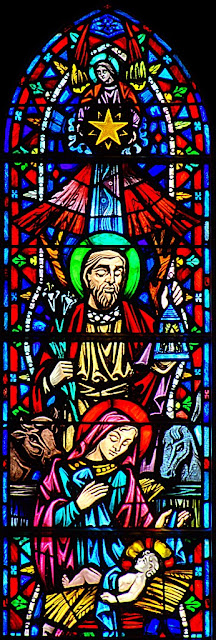
God is With Us

by Pastor Paul Wolff

Emmanuel means “God is with us.”


God is with us in Jesus

God has always been with His people since He created Adam and Eve. Even when they rebelled against Him and became His enemy, He never abandoned them, but has kept all of us in His grace and providing for all our needs, especially the need for a savior from our sin. But, ever since God became incarnate in the person of Jesus Christ God has lived with us in a closer, and more wonderful way. In Jesus, God lives with us as a Man – sharing our flesh and blood, sharing our sorrows and joys, and sharing our pain and pleasures (except when we take pleasure in sin).

The one thing that Jesus does not share with us is the ultimate guilt of our sin. Jesus has taken the guilt of the whole world’s sin into Himself and carried it to the cross where He endured the punishment for all sin of all time and He took our guilt to the grave where it belongs. Then when Jesus arose to life from the dead we were freed from the guilt of our sins and heaven was opened to all who trust in Jesus as our Savior and God.

Jesus said, “God did not send His Son into the world to condemn the world, but in order that the world might be saved through Him.” (John 3:17) Jesus is with us to save us, not to condemn us – even though because of our sin we all only deserve condemnation. Even though Jesus ascended into heaven forty days after His resurrection from the dead, He is still with us. Immediately before He ascended into Heaven, Jesus said, “I am with you always, to the end of the age.” (Matthew 28:20) Heaven is not so far away from you as you may imagine. Jesus is nearby, closer than you may think.

Only one thing is needful.
Mary hath chosen that good part,
which shall not be taken away from her.

Emmanuel: God is with us in His word. When Jesus sent His apostles out on a short mission trip He told them, “The one who hears you hears me, and the one who rejects you rejects me, and the one who rejects me rejects him who sent me.” (Luke 10:16) When we hear faithful pastors preaching and teaching God’s Word we are hearing Jesus because He is there working through His Word to lead us to trust in Him and rely on Him to save us. God’s Word is powerful to work our salvation because God is here working in His Word. God spoke through the prophet Isaiah saying, “For as the rain and the snow come down from heaven, and do not return there but water the earth, making it bring forth and sprout, giving seed to the sower and bread to the eater, so shall my word be that goes forth from my mouth; it shall not return to me empty, but it shall accomplish that which I purpose, and prosper in the thing for which I sent it.” (Isaiah 55:10-11)

Jesus was baptized to take on the
guilt of our sins and wash us clean

Emmanuel: God is with us in Holy Baptism. Jesus commanded His followers to baptize and teach in order to make disciples and spread His kingdom throughout the world. Baptism is not just a symbol of washing, but it is true washing and rebirth by God, the Holy Spirit. St. Peter wrote, “Baptism … now saves you, not as a removal of dirt from the body but as an appeal to God for a clear conscience, through the resurrection of Jesus Christ.” Martin Luther showed that the power of Baptism is God working through His Word which is combined with the water to give us a new birth as children of God. (see John 3:5)

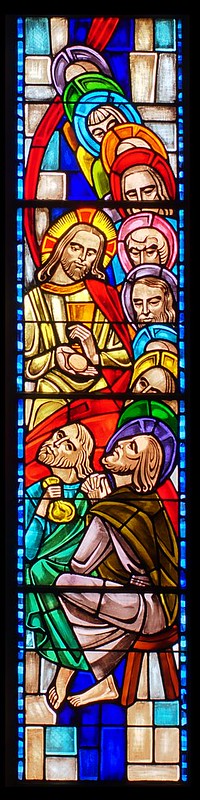
Jesus gives us His body and blood
so he will be with us always.

Emmanuel: God is with us in the Lord’s Supper. Here again, Jesus combines the Word of His promise with the physical elements of bread and wine to bring forgiveness, life, and salvation to those who believe in Him. Regarding the bread and wine, Jesus said, “This is my body. … This is my blood
… for the forgiveness of sins.” (see Matthew 26:26-29) Jesus is the God who is with us and who comes to us in the elements of the Lord’s Supper. This again is not just a symbol or representative of God’s presence. Jesus is truly present in His Body and Blood in the bread and wine of the Sacrament. This is for the benefit of believers – who receive what is graciously given, but because Jesus is bodily present in the Lord’s Supper it is also a curse for unbelievers who receive Christ’s body and blood, but do not believe it and so reject Jesus. This is why St. Paul taught, “Whoever eats the bread or drinks the cup of the Lord in an unworthy manner will be guilty concerning the body and blood of the Lord. Let a person examine himself, then, and so eat of the bread and drink of the cup. For anyone who eats and drinks without discerning the body eats and drinks judgment on himself. That is why many of you are weak and ill, and some have died.” (1 Corinthians 11:27-30)

Jesus was there for Zacchaeus
to absolve him of his sins.

Emmanuel: God is with us through Holy Absolution. When Christians confess their sins to the pastor and the pastor forgives them we trust that forgiveness is the same as if Jesus Himself were standing there proclaiming our forgiveness. Jesus told His Apostles, “Peace be with you. As the Father has sent me, even so I am sending you. … Receive the Holy Spirit. If you forgive the sins of any, they are forgiven them; if you withhold forgiveness from any, it is withheld.’” (John 20:21-23) Once again, Jesus is there working through His Word (and the pastors who properly speak it) to assure us that He has paid the price for our sins and rescued us from punishment.

Emmanuel: God is with us in times of persecution. The Christian life isn’t always wine and roses. Jesus told His disciples that they should expect persecution. He said, “If the world hates you, know that it has hated me before it hated you. If you were of the world, the world would love you as its own; but because you are not of the world, but I chose you out of the world, therefore the world hates you. Remember the word that I said to you: ‘A servant is not greater than his master.’ If they persecuted me, they will also persecute you. If they kept my word, they will also keep yours.” (John 15:18-20)

Jesus is with us in death
to give us everlasting life.

Those who say that the Christian should expect only success and prosperity are false teachers and heretics. Yet because Jesus is with us in so many ways the faithful Christians are given strength to remain in Christ even in the midst of the worst persecution. There are Christian martyrs suffering and dying for the faith even today in several parts of the world. In some ways it is easy to remain faithful in the face of persecution. Though no one wants to suffer and die, why would the Christian abandon their God who is with them and suffered and died for them, and turn to a false god who calls for his followers to become cruel murderers or terrorized slaves? This is how the terrorists will ultimately be defeated. It won’t happen through military strength and tactics – that’s their game. They eventually will see that they are following a false god and will repent and turn to Christ and be saved. Pray for the martyrs this Christmas and throughout the coming generation, that Jesus will strengthen them and protect them, and will work through their witness to convert their enemies that they may know Christ and His salvation and be saved.

Christ be with you this Christmas, and always!

Saturday, October 31, 2015

The Intellectual Brilliance of Martin Luther

by Pastor Paul Wolff

The Reformation

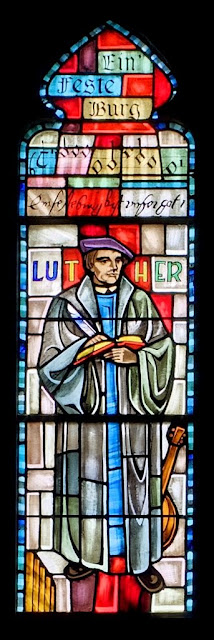
Martin Luther
from Holy Cross, Lutheran Church
Detroit

When Martin Luther posted his 95 Theses against indulgences on October 31, 1517, he didn’t intend to change the world. He intended to reform the Catholic Church’s teaching to bring it back in line with the true teaching of Holy Scripture. Luther wanted to do this so that people could receive the comfort of the Gospel and be led to trust in Christ for their salvation, instead of being driven away from Christ by false teaching. However, it didn’t happen the way Luther intended. Instead of reforming its doctrine to conform to the truth, the Roman church dug in its heels (so to speak) and held fast to its false doctrine (and the ill-gotten riches which they stole from ignorant parish members) to the extent that by the time of the Council of Trent (1545-1563) they enshrined false practices into dogmas which are still taught in the Catholic Church today. Indulgences, for example, are still issued from the Catholic Church even though Martin Luther clearly showed that they were false five centuries ago.

Martin Luther certainly changed the world, and that is the main reason why the world remembers him, but the trouble is that most of the world learned the wrong lesson. The Catholics became entrenched in their false practices which came from bad practices which, over time, had become traditions. The radical reformers, on the other hand, rejected (almost) everything that Rome did, including many good Scriptural Christian teachings and practices. The irony is that both the Roman Catholics and the radical reformers held on to the same semi-Pelagian works righteousness (to a greater or lesser degree) even though that is what prompted Luther to start the Reformation in the first place!

The Intellectual Brilliance of Martin Luther

Martin Luther
from Zion Lutheran Church,
Columbus, Ohio

Martin Luther was a brilliant scholar – probably one of the most brilliant men who ever lived – yet he really taught nothing new. This really ought to be a lesson to those who praise newness above everything else. Luther preferred to be true rather than new. Luthers brilliance was that he used his intellect to determine what was true and what was false. Despite facing opposition from the Pope on the one side, and the radical reformers on the other, Luther taught the Scriptures in their truth and purity and held them to be the true Word of God. The Bible not only tells us of our salvation, but actually delivers Christ’s salvation to those who listen and believe.

Today most schools teach that in order to be considered intellectually brilliant you must discover something new that no one else has ever found. This sounds like a worthy goal, but it is a fallacy. In pursuit of this unreachable goal, scholars are encouraged to make things up that aren’t true, or pursue outrageous ideas which even the ancient peoples rejected because they had already researched and discovered those ideas to be false and/or destructive. Already three thousand years ago, King Solomon studied the world and discovered, “What has been will be again, what has been done will be done again, there is nothing new under the sun.” (Ecclesiastes 1:9) Solomon was right then, and he is still right today. Those who say otherwise are either ignorant of history, or they are trying to deceive people into believing their lies. It is easy to say that something is new, when it has been tried and rejected so thoroughly throughout history that few remember it. Many lazy scholars take this easy way out, instead of doing the hard work of true scholarship. These “new” ideas which simply recycle bad old ideas certainly ought to be rejected.

Martin Luther, in his God-given brilliance, taught the Scriptures against all errors and, in doing so, changed history. This is what the world commends. However, this aspect of Luther’s legacy is trivial. The world is changing all the time, and rarely for the better. What is more important was that Luther’s teaching brought the true comfort of God’s Word to people who were lost in sin and despair. The comfort that they found in Luther’s teaching is the power of God working through His Word, and it has nothing to do with Luther. It was all about Jesus and His saving work to win forgiveness and salvation for all sinners, and how He brings that salvation to us through the Word and Sacraments.


What the world sees as “brilliant” (or at least, exciting)

Luther the Hymnwriter
from Holy Cross Lutheran Church,
Detroit, Michigan

The world is enthralled with what is “new”. It doesn’t matter if the latest “new thing” is true or false, those who promote such things are praised simply because their ideas seem “new”. As it turns out, “newism” is more likely to be false, or immoral, or otherwise destructive. It doesn’t matter to these “newists” if the latest “new thing” is something that will stand the test of time – and will last a thousand years, or if it is just a passing fad that is here today and will be mercifully forgotten tomorrow. In fact, what is praised as “new” is more likely to be only a passing fad, rather than something which has lasting benefit for all people of all times. The “new” fad doesn’t have to have a broad appeal, but can be very narrow. The “new” is most often not healthy, but harmful. It is culturally bound, and does not transcend boundaries. It does not appeal to a broad range of people, but is very specific to only a few people in a severely limited time and space. It does not satisfy a fundamental need within any person, but appeals to base desires and fleeting whims. It does not give honor to people, but degrades them. It does not liberate people, but enslaves them – usually under the pretense of giving “freedom”. It does not build up, but exalts in destruction. It does not unite people, but divides them. Where there is one united people it divides them into subgroups until there is only individuals, and even within an individual it pushes him to war against his own self. It cannot abide true love (selflessness), but promotes a radical selfishness. It does not value life, but always favors death. It cares nothing for the truth, but revels in the boldest lies. It does not give lasting joy, but only fleeting guilty pleasure and lasting pain and suffering. This is the kind of thing that the world exalts as “brilliant”, and is why most people have stubbornly refused to learn the proper lessons from the Reformation.


The True Lesson of the Reformation

It is Christ alone who saves us
from Holy Cross Lutheran Church
Detroit, Michigan

Though we remember Martin Luther as we celebrate the Reformation, the importance of the Reformation is not in Martin Luther. Luther trusted in God’s Word and proclaimed Christ alone as our salvation. Though the world attacks the authority of God’s Word, yet the Holy Scriptures still are true, and have the power to bring you forgiveness and salvation. Remember that when Jesus was tempted in the wilderness He did not use His divine power to resist the devil’s temptations. Instead He simply trusted that the Scriptures are the Word of God, and because Jesus was faithful in all He did, the devil was defeated and has no claim on you. If you are a baptized Christian you belong to Jesus who rescued you from sin and death, and He gives you everlasting life. To God alone belongs all the glory and praise – for He has redeemed us from our sins and brings to us everlasting salvation. Happy Reformation Day!

Tuesday, October 20, 2015

Christ Has Done All Things Well

by Pastor Paul Wolff


Then Jesus left the vicinity of Tyre and went through Sidon, down to the Sea of Galilee and into the region of the Decapolis. There some people brought to him a man who was deaf and could hardly talk, and they begged him to place his hand on the man.

After he took him aside, away from the crowd, Jesus put his fingers into the man’s ears. Then he spit and touched the man’s tongue. He looked up to heaven and with a deep sigh said to him, “Ephphatha!” (which means, “Be opened!”). At this, the man’s ears were opened, his tongue was loosened and he began to speak plainly.

Jesus commanded them not to tell anyone. But the more he did so, the more they kept talking about it. People were overwhelmed with amazement. “He has done everything well,” they said. “He even makes the deaf hear and the mute speak.” (Mark 7:31-37)


Jesus heals us from sin and its consequences
(Liturgical clip art by Clemens Schmidt)

No sinner does everything well. Everything we do is tainted by sin in some way. There is a saying, “Jack of all trades – master of none.” This means you can’t be good at everything. The most you can hope to do is to be good at one thing, and hope that this is a talent for which someone will pay you handsomely. Many people have made their fortune by specializing in one thing or another. This has its downsides though. God have mercy on you if you see a doctor for an ailment which is outside of his specialty.

Jesus truly has done everything well, but because of our sinful nature we don’t really care if Jesus has done everything well. We each want God to say, “You have done everything well,” just as we truly (though wrongly) believe that we already do everything well enough. Yet, if we are honest with ourselves, and measure ourselves up against God’s Law, we must admit that we don’t even come close to doing everything well.

Though, here we must ask: does God really expect us to do ALL things well? Though we hope that the answer is “no” we read in Leviticus 19 where God tells His people, “Be holy because I, the Lord, Your God, am holy.” This passage shows that God does require us to be perfectly holy as God is holy. We should remember, however, that when God first made people He made them holy as He is holy, but our first parents rebelled against God and lost their holiness. We continue in that rebellion. St. Paul quotes from Psalm 14 in Romans 3:10, “There is no one righteous, not even one.” No sinner can do everything well, because we all rebel against God and His righteous laws. There are no exceptions “for all have sinned and fall short of the glory of God.” (Romans 3:23) If we measure ourselves against God’s Law we must join St. Paul in saying, “Christ Jesus came into the world to save sinners of whom I am the worst.” (1 Timothy 1:15)

Faith comes by hearing and believing the Word of Christ
(Romans 10:17)

So while we haven’t done much good, but have instead sinned greatly, Jesus has done all things well. Jesus even makes the deaf to hear and the mute to speak. Jesus said many times, “He who has ears to hear, let Him hear.” But on this day Jesus met a man who had ears that could not hear. So Jesus not only healed the man of his deafness, but gave him the ability to speak, also. Giving the man speech was no less a miracle than healing his deafness. If you know anyone who has been deaf since birth you know how hard it is for deaf people to talk. Though deaf schools do a great job of teaching the deaf how to speak, it is a difficult process, and it takes time. Even if a deaf person were to receive hearing today, it would still take time to learn how to speak clearly, but Jesus gives the man speech immediately. This reminds me of what God did at the Tower of Babel. In one day God gave the people different languages so that they forgot their old language and spoke new ones and couldn’t understand one another. In this case, however, Jesus gave this man speech so that he could be heard and understood by his friends and family.

Jesus did this out of compassion for the man. He didn’t do this for publicity, and certainly not to be known as a miracle worker. In fact, Jesus took the deaf man away from the crowd and put his fingers in his ears and spat and touched his tongue and healed him. I’m not sure what the spitting was all about, but it is likely that he touched the man’s ears and tongue to show the man what he was doing in healing him.

Then after giving the man hearing and speech, Jesus ironically told the man not to tell anyone what He had done. I think Jesus did this because since the man had only just then received his hearing and speech, he had an incomplete understanding of Jesus. He knew Jesus as a gracious miracle worker, but that is all. He needed to listen more and talk less, but he was a sinner, and it seems as though he preferred to exercise his gift of speech over his gift of hearing, even against Christ’s command to him. It was certainly true what the man said of Jesus, “He has done all things well. He makes both the deaf to hear and the mute to speak.” But this is an incomplete picture of Jesus.

The Law of God kills the sinner,
but Jesus gives Life to all who believe.

It is not necessarily good news for anyone that Jesus does everything well. If Jesus were any less than the merciful and holy God, He might still condemn us, saying, “Look! I lived the holy and obedient life. Why can’t you!” That would be true, and we would be condemned. This is why the Scripture says that the Law of God “Kills” and “brings death.” (2 Corinthians 3:6) It was necessary for our salvation that Jesus obeyed God’s Law and did everything well, however, it wasn’t His obedience to God’s Law that saved us from sin and its consequences. Jesus had to do more than do everything well – and that is exactly what Jesus did.

In order to be worthy to redeem us from our sins Jesus had to obey God’s Law just like any other person, and He had to do it perfectly so that He would not be condemned by His own sin. Romans 5:19 tells us, “Just as through the disobedience of the one man (Adam) the many were made sinners, so also through the obedience of the one man (Jesus) the many will be made righteous.” Jesus actively obeyed all of God the Father’s commandments. But Jesus didn’t do it for His own sake, He did it for us – to make us righteous in God’s sight.

Galatians 4:4-5 also tells us, “When the time had fully come, God sent His Son, born of a woman, born under law, to redeem those under law, that we might receive the full rights of sons.” Jesus lived under God’s law like any other man, but He kept God’s law perfectly so that we might receive His heavenly inheritance as sons. We call this Christ’s Active Obedience. This is what the people were talking about when they said, “Jesus has done all things well.”

But in itself this doesn’t save us. Jesus had to go further to redeem us from the guilt of our sins. Jesus offered his life in exchange for ours. Jesus, in effect, said to the Father, “Don’t punish my brothers and sisters for the sins they committed against You. Punish me instead, and set them free from their sin.” This is what St. Paul described in Colossians 1:22, where he wrote, “(God) has reconciled you by Christ’s physical body through death to present you holy in His sight, without blemish and free from accusation.” Since Jesus has taken the punishment for your sins, there is no longer anything standing between you and your heavenly Father.

Though Jesus is the Almighty God,
it was not without cost that He healed us from our sin.
This was the cost.

Jesus truly treats us as His brothers and sisters, as Hebrews 2:14 says “Since the children have flesh and blood, He too shared in their humanity so that by His death He might destroy him who holds the power of death–that is, the devil.”

Jesus not only shared in our humanity, He shared in our suffering because of our sin. If you notice in Mark 7:34 after Jesus touched the deaf man’s ears and tongue He looked to heaven and sighed. The word for “sigh” here is used elsewhere in the New Testament and is translated as “groan”, as in 2 Corinthians 5:4 which says, “For while we are still in this tent (of our sinful body), we groan, being burdened – not that we would be unclothed, but that we would be further clothed, so that what is mortal may be swallowed up by life.” We groan in our lives because sin causes us great sorrow and pain.


When Jesus healed this deaf man He groaned because He was taking the man’s suffering into Himself and giving him His life and healing. Though Jesus is the almighty God, it was not without cost that He healed people from their infirmities. It caused Him suffering. This is why God says in Isaiah 42:18-19 “Hear, you deaf, and look, you blind that you may see! Who is blind but my servant, or deaf as my messenger whom I send? Who is blind as my dedicated one, or blind as the servant of the Lord?”

Deafness and all our other bodily ailments come to us as a result of sin. When God made Adam and Eve they were perfectly healthy and immortal. Illness and infirmity and death only came after the fall into sin. Jesus rescues us from sin and all its consequences by taking our sin and its consequences into his body. This is why Scripture says in Isaiah 53, “Surely he has borne our griefs and carried our sorrows; yet we esteemed him stricken, smitten by God, and afflicted. But he was wounded for our transgressions, he was bruised for our iniquities; upon him was the chastisement that made us whole, and with his stripes we are healed.”

This is why when Jesus came to be baptized, John objected saying, “I need to be baptized by you.” But Jesus said, “It is fitting for us to fulfill all righteousness.” Jesus fulfilled all righteousness not only by obeying God’s Law perfectly, and doing all things well, but also by taking the pain and guilt and all consequences of our sin into His body. St. Paul describes this in 2 Corinthians 5:21 “God made him who had no sin to be sin for us, so that in him we might become the righteousness of God.”

The miracles Jesus did give us a glimpse into
what heaven is like where all believers
will be healed and glorified by His grace.

It hurt Jesus to heal people from their illnesses and from all the consequences of their sins. Yet, He did not let this stop Him from healing anyone, nor did it stop Him from going to the cross and suffering and dying there for the sins of the world, and for your sins. Jesus did this because He loves You more than He loves Himself. This is the love that our God has for us – that He would take up the pain and suffering of our sin and take it to His grave in order to save us from having to endure that suffering for eternity. This is why we, as God’s children, sorrow in our sins – not just for the suffering that it causes us, but for the suffering that we inflict on Jesus for the sake of our sins. God have mercy on us sinners.

God our heavenly Father does have mercy on us for the sake of His Son, Jesus Christ. This miraculous healing and all of Christ’s miracles are a little taste of His heavenly kingdom where He will rescue us from death and restore us to perfect holiness and life and health forever. Jesus has taken the guilt and the pain of our sins into His body and has taken them to His grave. Yet when Jesus rose from the dead He rose victorious over sin and death, so that He might give us, His beloved children, the gift of eternal life with Him in paradise – without sin – without illness – without sorrow – without death. Jesus truly has done all things well for us and for our salvation that He might share with us the eternal riches of His heavenly Kingdom.


Monday, August 17, 2015

Jesus is the True Bread of Life

by Pastor Paul Wolff


Not all who heard Jesus teach believed in Him


From this time many of his disciples turned back and no longer followed him. “You do not want to leave too, do you?” Jesus asked the Twelve. Simon Peter answered him, “Lord, to whom shall we go? You have the words of eternal life. We believe and know that you are the Holy One of God.”
(John 6:66-69)


In our culture it is commonly accepted that in order to win someone to your point of view that you must convince them in some way, and whatever you do – you must not offend them. Offense seems to be the considered the great “sin” in our society, and yet people have such thin skin that they take offense as often as they take a breath. This is because from a young age we have been influenced by the television and its advertisements. The purpose of ads is to motivate you to spend your money on a certain product or service, but the way they do this is often through the use of deception, manipulation, and lies. We are bombarded with these messages from a young age, so that we don’t even question it after a while. Because of this we are familiar with lies, and offended by the truth.

Jesus doesn’t work this way. Jesus gives a hard teaching to His followers, and they take offense, and they start to leave Him. But Jesus doesn’t try to stop them. He doesn’t try to convince them. He doesn’t say, “No, you misunderstand me, this is what I really meant …” Instead, he piles it on. He gives them more reason to take offense so that many who had been following Him turned back and no longer followed Him. Jesus wasn’t being mean in doing this, nor was He naïve or foolish. He was teaching the truth, but the truth can be hard to accept at times, but the truth is always better than a lie. After many people left Him Jesus then turned to His twelve disciples and said to them, “Do you want to go away as well?” Jesus wasn’t going to compromise the truth even for His closest disciples. If they found it too hard to accept then Jesus would drive them away, too.

Peter spoke for the disciples and said, “Lord, to whom shall we go? You have the words of eternal life.” The teaching of God’s Word is difficult, and it offends all of us at one time or another, because we are all sinners, and God’s Law condemns us for our sin – so we are offended. But God’s Word also teaches the Gospel which brings us salvation from our sin through the redemption which Jesus won for us. God’s word gives us eternal life! Are we going to take offense and turn away and run after something else which doesn’t give eternal life, or are we going to repent and trust in Jesus to save us?

What Jesus was teaching about which caused the people to take offense was food. Now you would not normally think that food would be a divisive topic, but you should remember that ever since the days of Moses the Israelites had lived under God’s ceremonial laws, which placed certain limits on the kinds of food that the people ate. For over a thousand years food was very much on the minds of the people, and what Jesus was teaching seemed to contradict that. Jesus was actually not contradicting the Old Testament dietary laws, He was fulfilling them!


Daily bread is a gift from God - even to all evil people

I assume that most of you have experience with food. Even if you were born yesterday you would still have one day’s experience with food. Food sustains life. It doesn’t give life, but food gives us the energy and nourishment to keep on living and to grow. Food is a necessity for us every day – or if you are like me, you may have stored up some extra food so that you can survive a day or two (or ten) without food.  

It is also a bonus that much of the food we eat also gives us pleasure. God has blessed us so that we can enjoy the food which sustains our life. It is a joy to eat a good meal. Though sometimes we can enjoy our food too much, so we must take our pleasure with food in moderation. If we use the pleasure we get from food to try to make up for some pain or sadness, then we can overindulge and then the food which ought to sustain our life can also damage it. Good food is a gracious gift from God, so enjoy your food, and thank God for it, but be careful not to overdo it.

But we need to remember that the food we eat does not give life, it only preserves it. No earthly food can keep you alive forever. There is no “fountain of youth”. If you watch the advertisements on TV without a discerning eye you might be led to believe that there is a certain food or medicine which can prolong your life indefinitely, if not make you live forever. However, it is not true. Even if there was a perfect food which provided all your needs and did not poison you, you would still die. Death comes as a result of sin, and sin is a disease which affects us all. You can have the perfect diet and exercise habits, and you will still die. That is our greatest problem.


Jesus is the True Bread from heaven

But, Jesus is the solution to our problem of sin and death. Jesus said, “I am the living bread that came down from heaven. If anyone eats this bread, he will live forever. This bread is my flesh, which I will give for the life of the world.” (John 6:51) Jesus is the bread of life, and He doesn’t just sustain our life of sin, instead Jesus gives us life without sin and death. Christ’s flesh is the bread of life because He sacrificed His flesh and blood to pay the price for our sin so that He could redeem us and give is eternal life. Jesus also said, “Unless you eat the flesh of the Son of Man and drink His blood, you have no life in you. Whoever eats my flesh and drinks my blood has eternal life, and I will raise him up at the last day.” (John 6:53-54)

Well, maybe you can begin to see why the Jews were upset about Christ’s teaching. Jesus had not yet instituted the Lord’s supper, so they didn’t know what the Sacrament was all about, but then even today when we have the clear teaching of Scripture, many Christians still don’t understand (or don’t believe) what the Lord’s Supper is all about. Eating a man’s body sounds like cannibalism, which God has always forbidden. Jesus was not talking about cannibalism, but He does give us His flesh and blood for eternal life. When a cannibal eats a person he cannot do it without causing great bodily harm to his victim, and he doesn’t receive the whole person, but only a part; and it doesn’t give him life any more than eating an animal, so he treats his neighbor no better than an animal. These are all reasons why God forbids cannibalism, and condemns it as a terrible sin.

However, when Jesus gives us His body and blood to eat and drink in the Lord’s Supper it is not like cannibalism – but not for the reasons you may have heard. Some unbelievers say that the Lord’s Supper is just a symbolic act – that the communicants don’t really receive the Body and Blood of Jesus. That is not true. Jesus said, “This is my body” and “This is my blood”. That is what He gives to us in the Lord’s Supper. But in the Sacrament we don’t just get a part of Jesus – we get all of Him. And though we eat His body and drink His blood, He is not harmed by this at all. Yet we get blessings far greater than any other food we may eat.


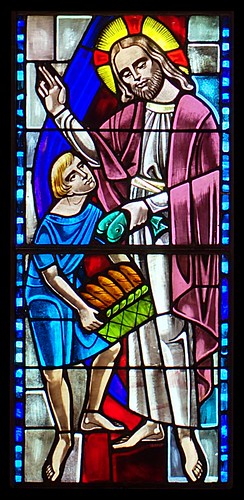
Jesus fed 5,000 people with 5 loaves of bread
and 2 fish with 12 full baskets left over
after everyone had eaten their fill.

The Jews asked themselves, “How can this man give us his flesh to eat?”, but this is the wrong question. Jesus is God incarnate. Jesus fed 5,000 people with 5 loaves of bread and 2 fish, and when everyone had eaten their fill collected 12 baskets of leftovers. If Jesus desires to give His whole body and blood to each of the two billion Christians in the world who each only eat a small morsel of unleavened bread and drink a small sip of wine, then He can do it. Are we going to doubt Jesus – who died and rose to life again? “To whom shall we go? {Jesus} is the Word which gives us eternal life!”

If you find this hard to understand you should take comfort in knowing that no one can really understand this fully. It is a miracle from God – who can understand it? Yet though we do not understand it, we trust the clear words of Jesus that He gives us this great gift for our blessing. For our forgiveness and eternal life.

However, although everyone who eats the Lord’s Supper receives the Body and Blood of Jesus in the bread and wine, not all receive the blessings. Only those who believe the words of Jesus receive the blessings of forgiveness and eternal life. How this works is that those who believe receive the gift of Jesus and hold on to Him by faith, and never let Him go, and so receive the blessings. But when an unbeliever receives the Body and Blood of Jesus he denies the truth of what he has received and he rejects it and throws it away as if it were no more than a small piece of bread and a sip of wine.

This is one reason why the vast majority of Christian churches throughout history and even now throughout the world practice closed communion. In 1 Corinthians 11:27-30 St. Paul instructs the Corinthians saying,
Therefore, whoever eats the bread or drinks the cup of the Lord in an unworthy manner will be guilty of sinning against the body and blood of the Lord. A man ought to examine himself before he eats of the bread and drinks of the cup. For anyone who eats and drinks without recognizing the body of the Lord eats and drinks judgment on himself. That is why many among you are weak and sick, and a number of you have fallen asleep.
Jesus gives us His body and blood
in the bread and wine of the Sacrament
for our forgiveness and eternal life.

We eat and drink unworthily if we do not believe. The Lord’s supper is for sinners, but only for those who believe, and those who share a common confession. We don’t commune with Baptists, or Roman Catholics, or heretical Lutherans, (for example) because we do not agree with their false teachings – even though there may be true Christian believers in all these churches. But we don’t want to give people the impression that we agree with false teaching.

The Reformed churches (Calvinist and Arminian) practice open communion because they do not believe the words of Jesus, and they also ignore Saint Paul’s warnings that “anyone who eats and drinks (the Lord’s Supper) without recognizing the body of the Lord eats and drinks judgment on himself.

These are hard teachings. Perhaps you who are reading this doubt the clear teachings of Scripture because you think they are too hard to believe. Are you considering turning away and going somewhere else? To whom shall you go? These are the teachings of Jesus which bring eternal life. You may find teachers which are easier to hear, but they will not give you eternal life which is the true bread from heaven, Jesus Christ.

If you do not believe the words of Jesus you should refrain from receiving the Sacrament – at least until you can study the Scriptures and see that this is the true teaching of Christ for your salvation.

It is hard to trust the words of Jesus. No one can believe unless the Holy Spirit gives faith, but He works through the Word to give you that faith so that you may believe and that you may find your salvation in Jesus Christ. Only Jesus gave His life as a payment for your sins. Only Jesus comes to you in His sacraments to forgive your sins and give you eternal life. May God, the Holy Spirit, strengthen your faith so that you may say with St. Peter, “Lord, to whom shall we go? You have the words of eternal life.”


For more on a similar topic see: Was Jesus Unloving?