Showing posts with label baptism. Show all posts

Thursday, February 29, 2024

Blessed are those Who Hunger and Thirst for Righteousness, for They Shall be Satisfied

(Part 4 of a series of 9 articles on the Beatitudes)

by Pastor Paul Wolff


Jesus said, “Blessed are those who hunger and thirst for righteousness, for they shall be satisfied.” (Matthew 5:6)


Hunger and Thirst

Jesus said, “Blessed are those who hunger and thirst for
righteousness (justice), for they shall be satisfied.”
Once again in this fourth Beatitude, Jesus blesses those who seem to be cursed in the world. No one enjoys hunger and thirst. We want to be satisfied, but that is the point. We hunger for those things which nourish and sustain our lives, but we only feel the hunger pangs for that which we lack. When our stomachs are empty we feel pain, but when they are filled, then the pain goes away. When we feel hungry, our bodies remind us that we need to feed on that which gives us energy to work and nourishment to grow and to heal injuries. Food is a good gift from God, and hunger reminds us that we need “daily bread” to sustain and grow and heal our bodies, so, in general, we hunger for the good gifts of God which benefit us.

We should remember that sin has corrupted our desires so that we sometimes hunger for “junk food” which may provide calories to burn, but little to strengthen and heal. There are other ways that sin can corrupt our innate hunger to cause desires for too much or too little nourishment, but for most people hunger is a good natural bodily function which helps us remain healthy.

There is also a spiritual counterpart to physical hunger. This spiritual hunger causes us to seek that which nourishes us spiritually. A healthy spiritual hunger leads us to take in what is beneficial for our spirit. We should be careful about this because sin has corrupted our spirit so that we do not know what is good for us. People often feel some exuberant emotion, and think that they are having a “spiritual” experience, but it is still only a physical experience. True spirituality only comes from God the Holy Spirit, who gives us life-giving gifts. It is the Holy Spirit who is the most good for our spirit because He brings Jesus Christ to us for our forgiveness and salvation. The Psalmist writes, “As a deer pants for flowing streams, so pants my soul for you, O God. My soul thirsts for God, for the living God.” (Psalm 42:1-2) Here the Psalmist makes a comparison between the body’s need of water, and the soul’s need for “the living God.” Physical thirst and spiritual thirst are not the same thing, but they are similar. The difference is that Spiritual thirst seeks after God, rather than physical satisfaction. Jesus also taught, “Do not work for the food that perishes, but for the food that endures to eternal life, which the Son of Man will give to you. For on him God the Father has set his seal.” (John 6:27) This teaches us that there is something more valuable than food. Even the best food cannot sustain us forever. Because our bodies are corrupted by sin, no food can sustain us forever. This is why we hunger for the eternal blessings which only God can give us.

Jesus says, “Blessed are those who hunger and thirst for righteousness, for they shall be satisfied.” (Matthew 5:6) “Righteousness” includes all things which are right, especially those things which God considers good, right, and proper. God is truly righteous and holy in all things, and the things which He desires are also good for us because He loves us as a loving Father loves His dear children. Yet, we are all rebellious sinners, having inherited the guilt of sin from our parents, going back all the way to Adam and Eve. Because we are sinners, we are not the righteous people which we ought to be. This separates us from God and makes us His enemy, and subject to God’s righteous anger and punishment. This is why we hunger for righteousness. We hunger for the good things which we lack. Scripture says, “God looks down from heaven on the children of man to see if there are any who understand, who seek after God. They have all fallen away; together they have become corrupt; there is none who does good, not even one.” (Psalm 53:2-3) Since we are not righteous, we hunger for righteousness, and the good things which come along with righteousness and goodness.

Biblical Examples of Hunger for Righteousness

Jesus is the Living Water which springs up
within His people to eternal life.
(See John 4:7-14)

Once when Jesus was teaching (see Mark 10:17-27), a man came up to Him and said, “Good teacher, what must I do to inherit eternal life?” Jesus then responded, “Why do you call me good? No one is good except God alone.” Jesus was neither denying that He was good nor that He is God, but he was pointing out the fact that the man wasn’t intending to confess that Jesus was perfectly good and righteous, or that He was God. The man was just trying to flatter Him as people sometimes do. Being truly righteous, Jesus was neither flattered, nor did He think the man sincere, but he used this empty flattery as a way to begin teaching the young man about the proper distinction between Law and Gospel. At the end of this conversation Jesus told him to give away all his possessions which he had turned into idols. The man left sad because he realized that he was not as righteous as he had previously thought, and could not rely on his own righteousness to finally “inherit eternal life.” Jesus then teaches His disciples by giving the famous illustration, “It is easier for a camel to go through the eye of a needle, than for a rich man to enter the kingdom of God.” The disciples are astonished and asked, “Who, then, can be saved?” Jesus said, “With man this is impossible, but not with God. All things are possible with God.” This shows that God is our righteousness and our savior. We can only be saved if God pays for our sins and makes us righteous. We sinners can no more make ourselves righteous than we can make ourselves inherit someone else’s wealth.

This story (which is also found in Matthew 19 and Luke 18) shows a young man who did hunger and thirst after righteousness, but initially believed that he had achieved this in his life, but, when confronted by Jesus, and God’s Law, realized that true righteousness can not be achieved by works of the law, but is only found in God. If we are to become righteous, we can only receive it as a gift from God, and not our own doing. All our works are tainted by sin. Saint Paul wrote in Romans 3:19-20 “Now we know that whatever the law says, it says to those who are under the law, so that every mouth may be silenced and the whole world held accountable to God. Therefore no one will be declared righteous in his sight by observing the law; rather, through the law we become conscious of sin.” Here we see that God’s Law shows us our sinful condition so that we cannot attain true righteousness by anything that we do, but must instead rely on Christ to forgive us and make us truly righteous in His own time (that day being Judgment Day, which is also known as the Day of Resurrection).

Saint Paul also has much to say about man’s unrighteousness and the grace of God in Romans 7, where after an honest self examination, he ends up by saying, “What a wretched man I am! Who will rescue me from this body of death? Thanks be to God – through Jesus Christ our Lord!” (Romans 7:24-25) Read the whole letter to the Romans for more than I can explain here. Saint Paul’s conclusion is that true righteousness must come from God as a gift through faith in Jesus Christ, or else we sinners can never achieve it. We, then, can never be satisfied with our own attempts to attain righteousness because all our works are tainted by sin. Yet, Christ has overcome sin through His life and death, and He will make us righteous as we ought to be in the life to come in His Kingdom.
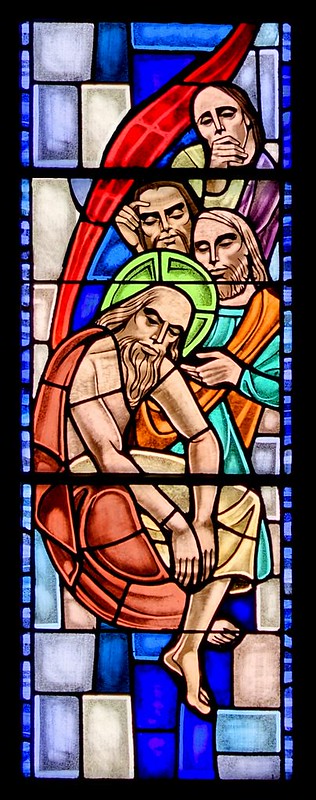
Job hungered for righteousness.
Though his friends mistakenly thought
God was punishing Him.

There are many good examples of saints in the Bible who hungered for righteousness. When Job first heard that tragedy had struck and all his flocks and possessions and children had been killed and destroyed, he mourned his loss (see my article on “Blessed are those who mourn”), but then he said, “Naked I came from my mother’s womb, and naked shall I return. The Lord gave, and the Lord has taken away; blessed be the name of the Lord.” (Job 1:21) Likewise, when Job was then afflicted with painful sores his wife told him, “Curse God and die.” (Job 2:9) Yet, Job replied, “You speak as one of the foolish women would speak. Shall we receive good from God, and shall we not receive evil?” Again, Job trusted that God was not evil, even though all these bad things were happening to him. He would not curse God, but trusted in God to save him, even recognizing that God may have sent all the trouble that he was experiencing. In this way Job hungered and thirsted for righteousness because he would rather suffer now at the hands of God than turn away from God and reject God’s righteousness and promise of eternal salvation.

Likewise, there are several times David was also a good example of someone who demonstrated hunger and thirst for righteousness. When Goliath challenged Israel to send their best warrior to fight him in single combat (see 1 Samuel 17), Goliath cursed Israel’s God when all the warriors were too afraid to step up. When David heard the Philistine cursing God he became angry with a righteous anger. Since none of the Israelites (from King Saul to Jonathan to even some of David’s older brothers who were in the army) were going to step up and defend God’s honor, then David was going to do it and show the Philistines that their God is the true God. The proof would be that God would give a teenage boy the courage and strength to defeat and kill the blasphemous giant pagan warrior, Goliath. Now, David was not your ordinary Israelite. God had already sent the prophet Samuel to anoint David as the next king, though it would yet be many years before David was crowned king. Yet God was with David, and David trusted in God so much that He was not afraid to stand against Goliath, even when King Saul and all Israel’s soldiers were afraid to stand up to Goliath. David was also given the courage to fight in God’s name and for God’s honor and glory. David’s hunger and thirst for righteousness was go great that he did not even consider the likelihood of his own defeat and death, but was willing to put his life on the line to show the Philistines (and the Israelites) that God is the true God, and should not be despised, as Goliath despised Him. David’s hunger and thirst for God’s righteousness was satisfied when God gave him the victory over the giant Philistine warrior.

David hungered for God’s righteousness
even when it endangered his own life to do so.

David also showed similar hunger and thirst for God’s righteousness when King Saul was trying to kill David out of envy for the victories that God had given him (even though those victories also benefited King Saul and all of Israel). There were two instances where Saul was in reach of David’s sword, and all he had to do was to reach out and kill him, (see 1 Samuel 24 and 26) but David refused to lift his hand against God’s anointed king. In the second incident after David again showed Saul that he could have killed him, but did not, David said, “The Lord rewards every man for his righteousness and his faithfulness, for the Lord gave you into my hand today, and I would not put out my hand against the Lords anointed.” (1 Samuel 26:23) In the world’s eyes, David could have claimed “self-defense” for killing Saul, since the King was intent on killing David, even though David was not his enemy. Yet, for the sake of righteousness, David refused to strike down God’s chosen king, but trusted in God to deal with Saul as He saw fit. The reason David did not kill Saul was not for Saul’s sake alone, but for the sake of the promised Messiah (Christ). Saul was anointed by God and was a kind of a messiah (anointed one). Saul was anointed as King of Israel, but for the sake of God’s promised anointed savior (Jesus), David would not lift his hand against even an unfaithful King Saul (whom God had rejected because of his unfaithfulness) because he had been anointed by God to be king.

Jesus Hungered for Our Righteousness

Jesus did not hunger and thirst for righteousness in the same way that we do. Jesus was, and is, righteous in all things, so He didn’t hunger for righteousness as if He was lacking in any way. Yet, Jesus did hunger and thirst for our righteousness. Once, when Jesus was on His way to Jerusalem, some Pharisees warned Him that Herod wanted to kill Him. Jesus already knew that it wasn’t just Herod, but many of the Pharisees also wanted Jesus dead, too. Jesus lamented this, saying, “O Jerusalem, Jerusalem, the city that kills the prophets and stones those who are sent to it! How often would I have gathered your children together as a hen gathers her brood under her wings, and you were not willing!” (Luke 13:34) Jesus still kept on His way toward Jerusalem, trusting that it was God’s will that He should suffer and die to pay for the sins of all people – including those who reject Him. Jesus wanted us all to be cleansed of our sin and made to be righteous as God intended from the start. This is how Jesus hungered and thirsted for our righteousness: He would rather endure suffering and death than to let us all perish in our sins and unrighteousness. Jesus knew that the only way we could be made righteous is if He paid the price (death) for our sins so that we could be washed clean and made righteous through His blood. This is in some ways very different from our experience, but in other ways it is similar. Jesus lived by faith, just as we do. He suffered just as sinners do, even though He remained sinless, yet, He also had to trust in God to save Him from death as we also trust in God to save us because of what Jesus did for all of us.

Misplaced Spiritual Hunger
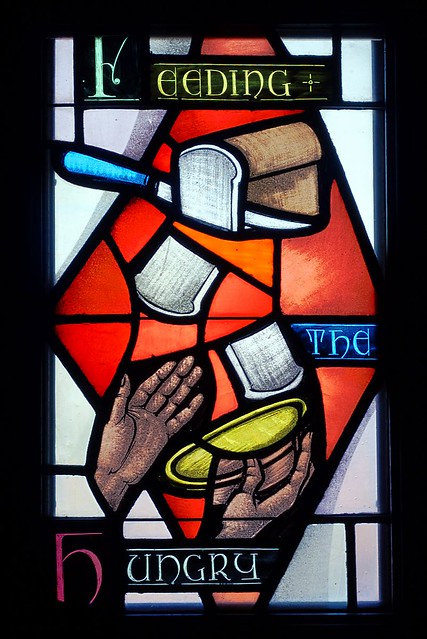
We hunger for that which we lack.
This is why we hunger and thirst for righteousness.

There are also the spiritual equivalent of eating disorders which cause people to hunger for what seems good, but which actually is detrimental to the Spirit. After all, no one ever seeks what they believe is evil. Even the most evil person in the world does what he does because he thinks it is good and profitable in some way. Such people may be tragically wrong, but they still seek what seems good to them. Evil sometimes starts out small and simple, but as a person’s conscience gets more comfortable with sin the wickedness grows. It is important to remember that love desires what is best for your neighbor, while wickedness desires what I feel is best for me. Unrighteous people hunger and thirst for wickedness. They hold parades and celebrate all kinds of wickedness. Prostitutes and whores desire to kill their unborn children, and don’t want to hear how wrong that is, or how their children are a wonderful gift from God instead of someone to be murdered. They celebrate all kinds of sexual perversions from adultery to homosexual relations to all kinds of perverse behavior. There is never any satisfaction for wickedness. There can never be satisfaction for wickedness because God didn’t make us that way. Wickedness and sin always leads to more, and it is never enough. Only true righteousness in Christ can satisfy.

We see this in Genesis 4, God confronts Cain regarding his jealous anger. “The Lord said to Cain, ‘Why are you angry, and why has your face fallen? If you do well, will you not be accepted? And if you do not do well, sin is crouching at the door. Its desire is for you, but you must rule over it.’” (Genesis 4:6-7) Here God is encouraging Cain to seek righteousness, but Cain insists on hungering for envy, hatred, and eventually murder. God tells Cain that righteousness isn’t a “zero-sum game” as if Abel’s righteousness precludes Cain from also being righteous. If Cain was faithful, like Abel, then God would be pleased with them both. Cain had nothing to gain from killing his brother as if they were a rival for something that only one of them could possess (God’s favor) at the expense of the other. If they both were faithful to God, then God would be happy to favor them both. Cain, instead hungered for evil, and held on to his envy and sin, rather than repenting and hungering for righteousness. In the end, Cain found disfavor from both God and man, though God had mercy on him and protected him from those who might seek vengeance.

Jesus resisted the temptation
in His hunger to turn stones into bread,
so that He could be the bread of life for
all who trust in Him.
The wise teacher says in Proverbs 4, “Do not enter the path of the wicked, and do not walk in the way of the evil. Avoid it; do not go on it; turn away from it and pass on. For they cannot sleep unless they have done wrong; they are robbed of sleep unless they have made someone stumble. For they eat the bread of wickedness and drink the wine of violence. But the path of the righteous is like the light of dawn, which shines brighter and brighter until full day. The way of the wicked is like deep darkness; they do not know over what they stumble.” (Proverbs 4:14-19) Because of the devil’s temptations to make sin seem desirable (see Genesis 3:1-7), there are some people who see great profit in wickedness, and they take such pleasure in violence and evil that it becomes almost sacred to them, or, if not sacred, then they idolize what is profane. In this teaching, the “bread and wine” remind us of the Lord’s Supper where Jesus gives us His body and blood with bread and wine to forgive our sins and strengthen our faith. Yet the teacher notes that the wicked people eat the bread of wickedness and drink the wine of violence. This “unholy anti-sacrament” results in wickedness and violence. These people are like those who scream and yell and threaten (and commit) violence against those who seek to save the lives of unborn children. The pro-life people care more for the bastard children of the wicked than they do themselves, yet, the wicked get angry and violent when their licentiousness and murderous desires are exposed for what they truly are. This happens because the devil tempts us to sin by making sin seem desirable and profitable in some way. Godly people may be lured by temptation due to weakness, but when they realize what they have done they feel guilty and repent of the sin. When unrighteous people sin they neither admit guilt, nor repent, but take pleasure and “profit” in wickedness and try to curse anyone who would put an end to wickedness and violence.

None of this should surprise us because the Bible is very clear that sin corrupts us all. There is no one who is good, not even one. In Genesis 8, after the great flood, this is how God saw the world: “Then Noah built an altar to the Lord and took some of every clean animal and some of every clean bird and offered burnt offerings on the altar. And when the Lord smelled the pleasing aroma, the Lord said in his heart, ‘I will never again curse the ground because of man, for the intention of man’s heart is evil from his youth. Neither will I ever again strike down every living creature as I have done. While the earth remains, seedtime and harvest, cold and heat, summer and winter, day and night, shall not cease.’” (Genesis 8:20-22) Now you might think that God sent the great flood to get rid of evil in the world, so that only the good people survived, but Noah and his family were also sinners, having inherited sin from their parents like everyone else. When Scripture says that “Noah was a righteous man” in Genesis 6:9, it doesn’t mean he was without sin, but that he loved God and trusted God and listened to God’s Word which promised rescue and salvation. God does not condone sin and evil, but He provides for rescue in Jesus Christ. Noah trusted in God and God counted Noah’s faith as righteousness just as He did several generations later with Abraham (see Genesis 15:6).

Christians Hunger for the Lord’s Supper

Christians hunger and thirst for the
body and blood of Jesus given in the
sacrament of the Lord’s Supper,
so that we can share in the benefits of the
sacrifice Jesus made for us all.
In the Old Testament times when the prophets spoke about hungering and thirsting for God’s righteousness they were often thinking about eating the roasted lamb of the Passover meal. The Passover was the salvation event of the Old Testament for God’s people Israel. Every year they were to remember it by preparing a male lamb for dinner with unleavened bread. This was to show the Israelites how the Messiah would come and offer His life as the sacrificial lamb to pay for the sins of the whole world. The annual Passover meal reminded the Israelites that God was their savior, and their eating of the sacrificial lamb made them participants in the blessings of the sacrifice. If Moses and the Israelites had refused to eat the lamb then they would have been subjected to the same treatment as the Egyptians. As the remembrance of this event became an annual celebration, the Israelites would have hungered for the meal as the time of celebration approached – hopefully hungering for the Salvation which God promised to provide for them just as He saved their ancestors.

Since, by the time of Jesus, the Israelites had been celebrating the Passover every year for over a thousand years (except for years of apostasy), they should have recognized its fulfillment when Jesus sacrificed His life for the sins of the world. Many did, and they spread the good news of Christ’s salvation throughout the world. Jesus also used the Passover meal as the basis for a new sacrament, since He fulfilled the Passover prophesy. Jesus instituted the Lord’s Supper in which He gives His body and blood in the bread and wine of the sacrament in a miraculous way for the forgiveness of our sins, and the strengthening of our faith. In this way we participate in the sacrifice that was made for our sins (see 1 Corinthians 10:16) in the same way the Old Testament Israelites participated in the sacrifice of the Passover lamb. Christians now hunger for this blessed gift, which is a taste of the eternal life which Jesus promises to all who believe in Him to save them from sin and death.

Jesus says that the blessing which comes to those who hunger and thirst for righteousness is that “they will be filled (or satisfied).” Our hunger for righteousness will be filled when Christ comes back and makes us holy and righteous as he is. Until that happens we hunger and thirst for it because it is unfulfilled, but when Jesus comes we will be satisfied forever in Christ. Until then we live in the assurance of faith in God’s promises. In the Revelation which Jesus gave Saint John, he sees a vision of those redeemed by Jesus, and they are described in this way, “They shall hunger no more, neither thirst anymore; the sun shall not strike them, nor any scorching heat. For the Lamb in the midst of the throne will be their shepherd, and he will guide them to springs of living water, and God will wipe away every tear from their eyes.” (Revelation 7:16) Since the resurrection is a bodily resurrection, God knows our bodily need for food and drink, and will provide us with plenty for all eternity. John also sees this: “Then the angel showed me the river of the water of life, bright as crystal, flowing from the throne of God and of the Lamb through the middle of the street of the city; also, on either side of the river, the tree of life with its twelve kinds of fruit, yielding its fruit each month. The leaves of the tree were for the healing of the nations.” (Revelation 22:1-2) So we see that the new earth that God prepares for us to live forever has plenty of wonderful food and drink which will sustain us forever without death or decay. This is also something that we hunger for, since all we know is decay and death in this sinful life. Yet we are comforted in this life because God promises that we will receive this, so we trust in God’s promises as we await their fulfillment.


Other articles in this series:

Blessed are the Poor in Spirit

Blessed are Those who Mourn, For They Will be Comforted 

Blessed are the Meek, for They Shall Inherit the Earth 

Blessed are the Merciful, for They Shall Receive Mercy 

Blessed are the Pure in Heart, for They Shall See God 

Blessed are the Peacemakers, for They Shall be Called Sons of God 

Coming soon:

Blessed are those who are persecuted for righteousness’ sake, for theirs is the kingdom of heaven.


Friday, December 15, 2023

God’s Name is Holy

Advent Devotion on the Lord’s Prayer 

by Pastor Paul Wolff 


Jesus said, “Pray then like this, … ‘Hallowed be Thy Name’” (Matthew 6:9)


God is the Father and the Son and the Holy Spirit.
Yet the Father is not the Son or the Holy Spirit.
The Son is not the Father or the Holy Spirit.
The Holy Spirit is not the Father or the Son.
It is a paradox, but this is how God reveals who He is.

You might sometimes hear people talk about the “names of God”. Hopefully you will never hear a Christian saying such things because the Holy Bible never speaks of the “names of God”. The Scriptures frequently speak of God’s “name” in the singular, but never in the plural. This seems peculiar because, although Scripture is clear that there is only one God, yet Jesus revealed that God is Triune: three distinct persons united in one God, the Father, the Son, and the Holy Spirit. Even in the Old Testament, the generic word for the true God is in the plural form, as if it were to say, “gods”, yet when referring to the true God, the pronouns (and accompanying verbs) for this God are all singular – “he”, “him”, and usually “I” (generally not “we”, though Genesis 1:26 does say, “Let us make man in our image…”) which shows that God is singular and masculine.  

In the days of Moses, God told Moses His name by saying, “I am who I am.” (Exodus 3:14) At first glance, we might think this begs the question, “Then, who are you?” Yet, this does tell us a few important things about God. The true God who spoke to Moses is the God who exists (“He is”), as opposed to the false gods, who do not exist except in the perverse imaginations of their followers. This name also shows us that God is eternal and does not change. This is also why we read in Hebrews 13:8, “Jesus Christ is the same yesterday and today and forever.” He is who He is – eternally. This is why the Jews wanted to stone Jesus when He told them, “Before Abraham was, I am!” (John 8:58) They recognized that Jesus was claiming to be the eternal God who was Abraham’s God two thousand years earlier. This would have been blasphemy if it weren’t true, but it is.

The True God is the one who would live and die
to redeem you from your sins
and rescue you from death.
This is why His name is hallowed among us.

When Jesus instituted the Sacrament of Holy Baptism He said, All authority in heaven and on earth has been given to me. Therefore go and make disciples of all nations, baptizing them in the name of the Father and of the Son and of the Holy Spirit, and teaching them to obey everything I have commanded you.” (Matthew 28:18-20) Notice that the “Name” (singular) of God is “the Father and the Son and the Holy Spirit”. Jesus doesn’t say “names”, but “name”. This isn’t because Jesus did not know grammar. He certainly did, but was teaching us something profound about God. God may be triune, but the Father and the Son and the Holy Spirit are one God, not three, yet three distinct persons. It is a mystery, but this is how God reveals Himself in the Holy Scriptures.  

You will never hear me speak of the “names of God” except when teaching against it, as I am doing here. Those who speak of the “names of God” are either being imprecise in their language or they are trying to give the false impression that “all religions are alike”, or that ‘all roads lead to heaven”, or some such lies that try to diminish the unique character of God. The different worldly religions cannot all be different aspects of the same religion and god because all the world religions contradict each other. Rationally we can see that they may all be false, but they cannot all be true. At most, only one may be true. Christianity is the only religion of grace where God does all the work to save sinners, and then gives forgiveness for free through faith. All the other world religions (and false teaching in Christian churches) make you save yourself or do something to aid in your salvation. Which religion do you think is true? This is why God’s name is holy, and hallowed among true believers within all Christian denominations. 

It is also easy for people to be confused about God’s Name because the Holy Bible describes God in many different ways. Each distinct “name” that the Scriptures use to describe God shows a different aspect of God’s nature or personality. They are all true descriptions of God, but each one only shows a partial picture of God’s Name. In the Old Testament God is called such things as the Lord, the Ancient of Days, the Eternal God, the Living God, the Eternal Father, and many more such things. In the New Testament God is revealed through His only begotten Son, Jesus Christ, who also has several distinct titles. Yet we still do not say that “God has many names.” Why? Each of these names for God describe a certain aspect of His personality as He has revealed it to us. Each “name” shows us a part of who God is, but does not show us the fullness of God. It has been said that the entirety of the Holy Scriptures are an explanation of the Name of God. This is a good way to look at it. The Bible tells us who God is and what He has done to save us from our sin through the incarnation of God as a man, Jesus, and His lifetime of work to win our salvation, especially His innocent suffering and death on the cross as an atoning sacrifice for our sins. 

“You shall call his name Jesus,
for he will save his people from their sins.”

In Matthew 1:20-21 An angel of the Lord appeared to Joseph of Nazareth in a dream, saying, “Joseph, son of David, do not fear to take Mary as your wife, for that which is conceived in her is from the Holy Spirit. She will bear a son, and you shall call his name Jesus, for he will save his people from their sins.” The name, “Jesus” means “savior”, and that is His ultimate work. God’s name is truly hallowed among us because of all that God has done to save us from sin and death. God did not have to come down to earth to save us. He could have punished us as our sins deserve, and would have been justified to do so because we deserved punishment for our sins. Yet God preferred to take the hard road and sent His Son to become incarnate to redeem the world from sin through His life, death, and resurrection. 

God is both perfectly just and unfailingly merciful. These characteristics would seem to oppose each other when it comes to God wanting to save us from our sins. God’s holy desire to punish sin with death seems at conflict with His loving desire to rescue us from sin’s necessary consequence of death. Yet, in Jesus, God found a solution. God accepted Jesus as a substitute who would die for sinners and win our salvation. The Second Person of the Godhead became incarnate as a man, Jesus Christ, to live the perfect life in obedience to God’s Law, which we failed to do in our sinfulness, then Jesus offered His life as the perfect sacrifice to pay for the sins of the world. The life of Jesus is sufficient to pay for sin because His life is God’s life, and His blood is God’s blood, given and shed to redeem us all from our sins. God’s name is truly holy, because He found a way to rescue and redeem you from your sins while being perfectly just in punishing the sin of the world through the death of Jesus. In the life and death of Jesus, God found a way to be perfectly just in punishing sin, and perfectly merciful and loving in redeeming us through the sacrifice of the life of Jesus. This is why we will praise and thank God for all eternity for the Salvation He won for us sinners. 

We call the holy family “holy”
not because Mary and Joseph are holy,
but because Jesus is holy.

There is nothing in all the world more precious than the love of God. He has redeemed us and calls us His children, though we do not deserve it. Yet, because Jesus paid the price for the sins of the world we are happy to receive His forgiveness and salvation as a most wonderful gift, and praise God forever for His unending love. 

This Petition in the Lord’s Prayer in closely related to the Second Commandment, “You shall not misuse the name of the Lord your God.” The commandment and the petition both deal with God’s name. Because God’s Name is holy, we should use it properly and not misuse it. This is not easy to do. As time went by after God gave the Ten Commandments to Moses, the Israelite people of the Old Testament put too much emphasis on God’s Law and, for fear of misusing God’s Name, they stopped using it altogether. Instead of using the Name that God gave them to use, they instead spoke the general term, “lord”, even in their worship and when reading the Bible. If God had not wanted the people to use His name, then he wouldn’t have given it to them, but God gave us His Name so that we might use it. In Psalm 50:15 God says, “Call upon me in the day of trouble; I will deliver you, and you will honor me.” It is for Bible verses like this (and many others) that Martin Luther explains this petition by saying that it is our duty to “Call upon God in every trouble, pray, praise, and give Him thanks.” 

In the Advent season we especially remember God’s name because God sent His Son to be our savior, to rescue us from sin, and to bring us back into the household of God as His beloved children – for the sake of Jesus. God’s name truly is holy, as is everything He has done to give us good gifts in this life, and for the salvation that He has prepared for us through faith in Jesus Christ, our Lord. 

Monday, September 16, 2019

Why Christians Condemn Abortion but Support the Death Penalty

by Pastor Paul Wolff


Jesus said, “Let the little children come to me,
and do not hinder them, for to such
belongs the kingdom of heaven.”

Christians are sometimes called “hypocrites” when they oppose the killing of babies while at the same time also support the death penalty for convicted murderers. The argument says that if Christians (and like-minded people of other beliefs) were consistent in their “pro-life” belief they would oppose all killing. Those who promote this argument think themselves quite clever that they have uncovered this supposed flaw in the logic and reasoning of people who are pro-life. They might be considered clever, except for overlooking one important thing: Justice.

The argument for the hypocrisy of people who are in favor of pro-life policies can be somewhat convincing to some people who don’t consider all the issues involved. The argument is so appealing that some pro-lifers actually do begin to oppose the death penalty for convicted murderers. This, however is not really what their opponents want. No one cares that murderers are spared the death penalty for a life imprisoned. What the critics of pro-lifers really want is for people to support abortion so that they may live an adulterous lifestyle without having to deal with the consequences.

The single reason why pro-life supporters are in favor of killing murderers, but not babies, is justice. This is not some cruel “social justice” which twists right and wrong to achieve a desired outcome, but real, true, justice where the innocent are spared and the guilty are punished. Unborn babies are innocent of any crime, and are deserving of life, while properly convicted murderers have, by their crimes, forfeited their right to life. It is that simple. This is the consistency of the Christian (and like-minded) arguments. We do not believe it is right to kill the innocent, but it is right to punish lawfully convicted murderers for taking the lives of innocent people.


Daniel was condemned to die in the lions’ den
but God kept him from all harm.

The Biblical basis for the support of a lawful death penalty is found in many places in Holy Scripture. God sanctioned a proper administration of death penalty justice shortly after the great flood when He told Noah and his sons, “Whoever sheds the blood of man, by man shall his blood be shed; for in the image of God has God made man.” This is further confirmation of the authority which God gave Adam before the fall into sin to rule over the administration of the earth. In the creation account in Genesis 1, God said, “Let us make man in our image, in our likeness, and let them rule over the fish of the sea and the birds of the air, over the livestock, over all the earth, and over all the creatures that move along the ground.” As God rules over all creation, man (who was made in God’s image) is given authority to rule over the earth in God’s place. This is done in accord with God’s Law, of course, which is perfectly good and right. Even though the perfect image of God was corrupted in us by the fall into sin, God still gives mankind authority on earth to administer justice to curb man’s murderous sinful tendencies. Man is not given authority to make up his own rules which oppose God’s laws. That is, by definition, injustice, and not justice. “Social justice” is just another example of injustice, not justice, because it not only makes distinctions which God does not make (such as a multiplicity of “races” rather than the one created by God, and a multiplicity of “genders” rather than the two created by God), but because it also picks winners and losers based on arbitrary characteristics rather than on the merit and worthiness of the individual apart from any unrelated characteristic.

The Holy Bible also reinforces God’s allowance of a death penalty in the laws for the Israelites that God gave Moses after the Exodus from Egypt, and in the directions that God gave to Joshua 40 years after the Exodus to take the Promised Land and destroy the pagan peoples living there. Some allowances were made for mercy, however, as in the case of the Gibeonites (see my article on God’s Promises) and a select few others. The merciful nature of God is shown in the fact that God does not say that the authorities of all nations must execute murderers in every instance, but can determine how it is carried out according to their laws. God, Himself, spared the murderers Cain (though he was unrepentant) and King David (who was repentant after confronted by the prophet Nathan).

Here I would also point out the qualifications that I have noted above regarding the capital punishment of convicted murderers. It is important to note that God does not sanction vigilante justice. It is not given to individuals to determine who should die for their (supposed) crimes. The death penalty is only to be carried out by the proper authorities after a proper trial where evidence is given and justly considered. This is good in that the earthly authorities can carry out justice in support and recognition of the sanctity of life, but it is not good when wicked authorities sometimes misuse justice by killing the innocent or by letting the guilty get away with murder. In 1 Kings 21, King Ahab stole Naboth’s vineyard after wicked Queen Jezebel had a couple false witnesses tell lies about Naboth so that he was falsely accused and put to death. God later arranged that Jezebel died a just (and shameful) death, but Ahab was spared the indignity of his evil wife’s death because he humbled himself and repented before the Lord.


God blessed Adam and Eve with children,
and told them to multiply and fill the earth.
From them come all people on earth.

Likewise, God’s desire for the protection of babies both before and after birth is well attested in Holy Scripture. At the creation of man in Genesis 1 Scripture says, “God blessed them and said to them, ‘Be fruitful and increase in number; fill the earth and subdue it. Rule over the fish of the sea and the birds of the air and over every living creature that moves on the ground.’” It is a great blessing that God gives children to parents to care for and to raise. It is only man’s sin which complicates the conception of new life and new people on the earth. Sinful man despises God’s gift of marriage and so engages in illicit intimacy apart from marriage, and despises the miracle of life which results according to God’s blessing. Bastard children who are unwanted by their parents (though not unwanted by God, nor unwanted by childless families looking to adopt) are still a blessing from God and deserve care and protection and love.

Jesus said, “Let the little children come to me, and do not hinder them, for the kingdom of heaven belongs to such as these.” (Matthew 19:14) When Jesus said this His disciples had thought that His time was too valuable to waste on children as if they were worth less than adults. Jesus, however, corrected them. God loves children no less than adults, and there is much about a childlike faith that adults would do well to emulate. In Luke 18:17 Jesus said, “I tell you the truth, anyone who will not receive the kingdom of God like a little child will never enter it.” It is quite telling that while Jesus exalts children and a childlike faith, the world despises children and wishes to kill them in order to satisfy their selfish desires.

In Jeremiah 7:30-31 God tells the prophet, “The people of Judah have done evil in my eyes, declares the Lord. They have set up their detestable idols in the house that bears my Name and have defiled it. They have built the high places of Topheth in the Valley of Ben Hinnom to burn their sons and daughters in the fire – something I did not command, nor did it enter my mind.” Here God is very clear that He detests abortion and infanticide. His people’s idolatry has led them to kill their children, and God strongly rebukes them. Not only did God NOT command nor allow the killing of children, but such wickedness never even entered His mind. It is not that God lacked imagination, but that children are a blessing from God, not a curse. This wickedness of the people of Judah was one of the contributing reasons why God sent the Babylonians to conquer and destroy Judah and take the few remaining survivors into captivity. The only reason why God allowed some to survive was on account of His promise to David that one of his descendants would be the Messiah who would redeem the world from this gross wickedness. Since God does not change forever, may He have mercy on those societies which mercilessly practice abortion and infanticide. God does have mercy, but his patience has its limits, and those wicked societies will face God’s wrath and destruction if they continue in sin without repenting (and that includes the United States of America).
 
John the Baptist worshiped Jesus
before either was born.
Babies deserve protection from conception.

On the other hand, God shows the value of even the smallest people when He told the prophet Jeremiah, “Before I formed you in the womb I knew you, before you were born I set you apart; I appointed you as a prophet to the nations.” (Jeremiah 1:5) Here God not only states that He knew Jeremiah and had a purpose in life for him before he was born, but God states that He is the one who formed Jeremiah in the womb. Children are not “accidents” at any time, but they are formed according to the blessing that God gave Adam and Eve at the beginning. From the moment of conception, children are precious to God and it is not up to us to decide whether they should live or die based on the whims of their parents, or worse, just on the wicked desire of the mother or father apart from the wishes of the other.
 

Now, just because I noted above that babies are innocent of any crime and not deserving of death any more than any other innocent person, that does not mean that they are without sin. King David wrote in Psalm 51:5 “Surely I was sinful at birth, sinful from the time my mother conceived me.” Remember that although at the time he wrote this David had committed terrible sins worthy of temporal punishment, he was still the man who God chose to be the ancestor of the promised Messiah. Jesus was, and is still, known as the “Son of David”. If the great King David, whose descendant is the world’s savior, was sinful from the time of his conception, then we are no better. Babies in the womb need Christ’s salvation just as much as the most revered and respected adult. This is why when Jesus instituted Holy Baptism in Matthew 28 He told His disciples to baptize and teach “all nations” which includes everyone, even infants. This is why the Christian church has baptized infants as well as adult converts from the very beginning. This also carried on a similar practice to the Old Testament Israelite practice of circumcising the baby boys on the eighth day after birth. Even babies need the redeeming power of God to be saved. Christ’s practice of Baptism replaced the practice of circumcision and made it universal for boys and girls, and men and women. 
 
Jesus said, “Whoever welcomes a little child like this
in my name welcomes me. But if anyone causes one of these
little ones who believe in me to sin, it would be better for him
to have a large millstone hung around his neck and to be
drowned in the depths of the sea.” (Matthew 18:5-6)

Jesus once called a little child and had him stand among His disciples and He said, “Whoever welcomes a little child like this in my name welcomes me. But if anyone causes one of these little ones who believe in me to sin, it would be better for him to have a large millstone hung around his neck and to be drowned in the depths of the sea.” (Matthew 18:5-6) We do children no favors by aborting them in the womb. Not all aborted children will go to heaven. Many aborted souls will be in hell to torment their murderers. Some aborted children may be in heaven. Just as the infant John rejoiced in the presence of Jesus in Luke 1:41, though both John and Jesus were still in their mothers’ wombs, so some unborn children may believe. The Holy Spirit calls all people to faith, and some may believe, even though they may not yet be fully formed. We also do them no favors in depriving them the joys (and the struggles) of life as believers in this sinful world. 

 
Christians are not hypocrites for trying to save the lives of innocent babies, while at the same time calling for the just punishment of convicted murderers. Christians are not opposed to giving some time for the guilty murderer to repent (such as the time to conduct a fair trial), because Jesus died to pay for the sin of murder as well as all sins. Because Jesus died for all people, there is no reason why the murderer should not be forgiven and receive eternal life, yet, in order to uphold the value of life in our societies, those who wrongly take life forfeit their own. The repentant murderer may die confident that his sins are forgiven by Christ, but for order and justice here on earth, it is sometimes necessary to put people to death for their crimes.


Friday, December 25, 2015

God is With Us

by Pastor Paul Wolff

Emmanuel means “God is with us.”


God is with us in Jesus

God has always been with His people since He created Adam and Eve. Even when they rebelled against Him and became His enemy, He never abandoned them, but has kept all of us in His grace and providing for all our needs, especially the need for a savior from our sin. But, ever since God became incarnate in the person of Jesus Christ God has lived with us in a closer, and more wonderful way. In Jesus, God lives with us as a Man – sharing our flesh and blood, sharing our sorrows and joys, and sharing our pain and pleasures (except when we take pleasure in sin).

The one thing that Jesus does not share with us is the ultimate guilt of our sin. Jesus has taken the guilt of the whole world’s sin into Himself and carried it to the cross where He endured the punishment for all sin of all time and He took our guilt to the grave where it belongs. Then when Jesus arose to life from the dead we were freed from the guilt of our sins and heaven was opened to all who trust in Jesus as our Savior and God.

Jesus said, “God did not send His Son into the world to condemn the world, but in order that the world might be saved through Him.” (John 3:17) Jesus is with us to save us, not to condemn us – even though because of our sin we all only deserve condemnation. Even though Jesus ascended into heaven forty days after His resurrection from the dead, He is still with us. Immediately before He ascended into Heaven, Jesus said, “I am with you always, to the end of the age.” (Matthew 28:20) Heaven is not so far away from you as you may imagine. Jesus is nearby, closer than you may think.

Only one thing is needful.
Mary hath chosen that good part,
which shall not be taken away from her.

Emmanuel: God is with us in His word. When Jesus sent His apostles out on a short mission trip He told them, “The one who hears you hears me, and the one who rejects you rejects me, and the one who rejects me rejects him who sent me.” (Luke 10:16) When we hear faithful pastors preaching and teaching God’s Word we are hearing Jesus because He is there working through His Word to lead us to trust in Him and rely on Him to save us. God’s Word is powerful to work our salvation because God is here working in His Word. God spoke through the prophet Isaiah saying, “For as the rain and the snow come down from heaven, and do not return there but water the earth, making it bring forth and sprout, giving seed to the sower and bread to the eater, so shall my word be that goes forth from my mouth; it shall not return to me empty, but it shall accomplish that which I purpose, and prosper in the thing for which I sent it.” (Isaiah 55:10-11)

Jesus was baptized to take on the
guilt of our sins and wash us clean

Emmanuel: God is with us in Holy Baptism. Jesus commanded His followers to baptize and teach in order to make disciples and spread His kingdom throughout the world. Baptism is not just a symbol of washing, but it is true washing and rebirth by God, the Holy Spirit. St. Peter wrote, “Baptism … now saves you, not as a removal of dirt from the body but as an appeal to God for a clear conscience, through the resurrection of Jesus Christ.” Martin Luther showed that the power of Baptism is God working through His Word which is combined with the water to give us a new birth as children of God. (see John 3:5)

Jesus gives us His body and blood
so he will be with us always.

Emmanuel: God is with us in the Lord’s Supper. Here again, Jesus combines the Word of His promise with the physical elements of bread and wine to bring forgiveness, life, and salvation to those who believe in Him. Regarding the bread and wine, Jesus said, “This is my body. … This is my blood
… for the forgiveness of sins.” (see Matthew 26:26-29) Jesus is the God who is with us and who comes to us in the elements of the Lord’s Supper. This again is not just a symbol or representative of God’s presence. Jesus is truly present in His Body and Blood in the bread and wine of the Sacrament. This is for the benefit of believers – who receive what is graciously given, but because Jesus is bodily present in the Lord’s Supper it is also a curse for unbelievers who receive Christ’s body and blood, but do not believe it and so reject Jesus. This is why St. Paul taught, “Whoever eats the bread or drinks the cup of the Lord in an unworthy manner will be guilty concerning the body and blood of the Lord. Let a person examine himself, then, and so eat of the bread and drink of the cup. For anyone who eats and drinks without discerning the body eats and drinks judgment on himself. That is why many of you are weak and ill, and some have died.” (1 Corinthians 11:27-30)

Jesus was there for Zacchaeus
to absolve him of his sins.

Emmanuel: God is with us through Holy Absolution. When Christians confess their sins to the pastor and the pastor forgives them we trust that forgiveness is the same as if Jesus Himself were standing there proclaiming our forgiveness. Jesus told His Apostles, “Peace be with you. As the Father has sent me, even so I am sending you. … Receive the Holy Spirit. If you forgive the sins of any, they are forgiven them; if you withhold forgiveness from any, it is withheld.’” (John 20:21-23) Once again, Jesus is there working through His Word (and the pastors who properly speak it) to assure us that He has paid the price for our sins and rescued us from punishment.

Emmanuel: God is with us in times of persecution. The Christian life isn’t always wine and roses. Jesus told His disciples that they should expect persecution. He said, “If the world hates you, know that it has hated me before it hated you. If you were of the world, the world would love you as its own; but because you are not of the world, but I chose you out of the world, therefore the world hates you. Remember the word that I said to you: ‘A servant is not greater than his master.’ If they persecuted me, they will also persecute you. If they kept my word, they will also keep yours.” (John 15:18-20)

Jesus is with us in death
to give us everlasting life.

Those who say that the Christian should expect only success and prosperity are false teachers and heretics. Yet because Jesus is with us in so many ways the faithful Christians are given strength to remain in Christ even in the midst of the worst persecution. There are Christian martyrs suffering and dying for the faith even today in several parts of the world. In some ways it is easy to remain faithful in the face of persecution. Though no one wants to suffer and die, why would the Christian abandon their God who is with them and suffered and died for them, and turn to a false god who calls for his followers to become cruel murderers or terrorized slaves? This is how the terrorists will ultimately be defeated. It won’t happen through military strength and tactics – that’s their game. They eventually will see that they are following a false god and will repent and turn to Christ and be saved. Pray for the martyrs this Christmas and throughout the coming generation, that Jesus will strengthen them and protect them, and will work through their witness to convert their enemies that they may know Christ and His salvation and be saved.

Christ be with you this Christmas, and always!

Monday, July 27, 2015

The Promise of Christ in Water & Light

by Pastor Paul Wolff


Then God said to Noah and to his sons with him: “I now establish my covenant with you and with your descendants after you and with every living creature that was with you – the birds, the livestock and all the wild animals, all those that came out of the ark with you – every living creature on earth. I establish my covenant with you: Never again will all life be cut off by the waters of a flood; never again will there be a flood to destroy the earth.”

And God said, “This is the sign of the covenant I am making between me and you and every living creature with you, a covenant for all generations to come: I have set my rainbow in the clouds, and it will be the sign of the covenant between me and the earth. Whenever I bring clouds over the earth and the rainbow appears in the clouds, I will remember my covenant between me and you and all living creatures of every kind. Never again will the waters become a flood to destroy all life. Whenever the rainbow appears in the clouds, I will see it and remember the everlasting covenant between God and all living creatures of every kind on the earth.” (Genesis 9:8-16)


Fish graphic supplied by GospelGifs.com.
It is copyrighted and used with permission.
The early Christians had a clever way to describe Jesus. They made an acronym out of the phrase, “Jesus Christ, God’s Son, Savior,” which in Greek spelled the word for “fish.” This is one of the reasons why the fish became a symbol for the Christian faith. The fish is still a popular symbol for the Christian faith. The second century Church father, Tertullian, used this image in an essay on Baptism where he said, “We are born in water as little fish in the way of our fish Jesus Christ.” Tertullian was responding to a false Gnostic–influenced teacher who was trying to abolish the practice of Baptism in the church. Tertullian explained that the little fish can only survive in the water. If the little fish leave the water of Baptism to follow a false teacher, then they will perish.

This is a wonderful image of the life-giving and sustaining power of Holy Baptism, but it doesn’t seem to work well with our Scripture from Genesis 9. Man is not a fish, and in the great flood every person on earth drowned except Noah, Shem, Ham, and Japheth, and each man’s wife – eight people in the whole world survived the flood.

The story of the flood is frightening because in it we see a just God rightly bringing judgment to a world full of sinners. Yet, we are all sinners. We have all sinned against God and deserve His wrath and punishment. What is more, we are born sinners. We are guilty from the moment of our conception – having inherited the sinful condition from our parents. Even if there was something we could do to make up for our actual sins (there isn’t) there is nothing we can do to change our inherited sin.

How do we know that God won’t bring His righteous judgment down on us? Well, that is exactly the question which is answered in Genesis 9.


Noah trusted in God’s promise of a savior.
The first thing we need to remember is that God spared eight people from the flood – along with two of every kind of living creature, and seven of all the ‘clean’ animals. Now, you may ask, “What is eight people among the thousands, perhaps, millions of people on the earth at the time?” In response I will ask a more pertinent question, “Why did God bother to save Noah’s family at all?”


Scripture describes Noah as a righteous man (Genesis 6:9), but the scriptures also show that neither Noah, nor his sons, were sinless. After the flood God said, “I will never again curse the ground for man’s sake, although the imagination of man’s heart is is evil from his youth; nor will I destroy every living thing as I have done.” (Genesis 8:21) This is almost exactly what God said before the flood. (See Genesis 6:5-7) So, if God did not eliminate sinners from the world, then why did He save Noah and his family? It was purely out of His grace for the sake of a promise God had given Adam and Eve that one of their descendants would crush the serpent’s head and bring redemption to all people. Christ had not yet come in the days of Noah, so God saved Noah’s family in order to keep His promise and bring salvation to the world through Christ.

God keeps His promises, so when He says, “Never again will I destroy every living thing as I have done,” we can rest assured that God will keep this promise. Also God designates the rainbow as a sign of this promise. A rainbow is nothing but raindrops and light, and although it is one of the most beautiful things in creation, it is not the colors which make it a symbol of God’s promise, but its shape. It is shaped like a bow – a weapon of war. But instead of shooting arrows, the rain was God’s weapon to destroy all the unbelieving, violent people on earth.


God has set his bow in the clouds,
and has promised never to use it against us again.

Then, after the flood, God said, “I have set my bow in the cloud, and it shall be a sign of the covenant between me and the earth.” (v. 13) Here God is saying that He is hanging up His weapon – out in the open, for all to see. Though you should notice that when God establishes the rainbow as a symbol of His promise that it isn’t primarily a symbol for you and me. It is a reminder for God Himself! He says, “The rainbow shall be in the cloud, and I will look on it to remember the everlasting covenant between God and every living creature of all flesh that is on the earth.” (v. 16) This should be a triple comfort for us. 1) God promises not to destroy us, despite our sin. 2) The sign is not for us to remember, but for Him, and He will never forget, even if we do forget. 3) God is not up in heaven somewhere far away, but that He is right here with us, because rainbows are only visible on the earth.

That third comfort is a little hard to imagine for us who are used to seeing rainbows here on earth. I remember one time I was in an airplane in the middle of the day. We were flying above the clouds, and I looked out the window and saw the shadow of the airplane on the clouds beneath us. Surrounding the shadow of the plane on the clouds was a circular prism of light. It wasn’t shaped like a bow, but a perfect, full ring of light. If we imagine that God is somewhere in the heavens, high above the clouds, then He would not see a rainbow, but a full circle of light. For God to see the rainbow (as He said He would), He must be down here with us, standing on the earth. God is not far away – high above the clouds. He is right here with us at all times. 

If you remember that I said earlier that the image of the fish didn’t seem to work so well with this story, but in St. Peter’s first Epistle he makes the connection between the flood and Baptism. He says,

“God’s patience waited in the days of Noah, while the ark was being prepared, in which a few, that is, eight persons, were brought safely through water. Baptism, which corresponds to this, now saves you, not as a removal of dirt from the body but as an appeal to God for a good conscience, through the resurrection of Jesus Christ, who has gone into heaven and is at the right hand of God, with angels, authorities, and powers having been subjected to him.” (1 Peter 3:19-21)
You should remember that Noah took two of every kind of land animal and bird, but he did not take any fish on the ark, because the flood was not a great danger to the fish. (Though we can see from the fossil record that some fish were caught in the sediment from the flood, but it wasn’t a great extinction threat compared to the land animals.) But God treated Noah and his family as if they were fish. God spared Noah and his family for the sake of our fish – Jesus Christ, God’s Son, our savior.

Noah and his family trusted in God. They built the ark and they went inside with all the animals trusting that God would not only bring the flood, but would protect them and see them safely through it. Their trust in God to save them made them little fishes belonging to our savior Jesus Christ.

It is very sad that there were likely no believers that drowned in the flood. St. Peter also called Noah a “preacher of righteousness,” but no one besides his immediate family joined him on the ark. The way of the world is that sinners do not acknowledge their sin. We do not see the great peril that we are in, nor acknowledge that the judgment of God is just. The way of the world is seductive. The world thinks that its wicked ways are great fun, and tries to lure the little fish away from the protection of the Baptismal waters. But the little fish cannot survive if lured away from the water.


Jesus was baptized into the guilt of your sin
so you could be baptized out of it.
If you have been baptized you have salvation in Christ. Would you live in God’s Baptismal grace as a child of Christ your savior, or would you rather follow the ways of the world? If the whole world decides to abandon Christ, is it wise to follow only for the pleasure of the moment? In the days of Noah the whole world did abandon God as their savior, and they all perished. But Noah and His family were saved on account of Christ, by believing God’s promise to send a savior (Jesus).

The covenant God made to not destroy the world again with a flood was made on account of Christ. God has every right to punish us for our sins, but He poured out His wrath on Jesus instead. Jesus suffered and died on the cross, taking the punishment for the sins of the whole world so that we need never fear the wrath of God. Through Holy Baptism, not only are our sins washed away, but we are given a new birth as God’s Children. Like Noah, we are saved by God’s grace for Christ’s sake. If “Jesus Christ, God’s Son, Savior” is the fish, then through Baptism we are born as little fishes. We need not fear the coming judgment, nor the wrath of God. We are safe in the waters of Holy Baptism. Even if the whole world turn away from Christ, we will remain with Him, both now and for all eternity – little fish under the protection of our one, true fish Jesus Christ, God’s Son, Our Savior.