Showing posts with label Holy. Show all posts

Friday, December 15, 2023

God’s Name is Holy

Advent Devotion on the Lord’s Prayer 

by Pastor Paul Wolff 


Jesus said, “Pray then like this, … ‘Hallowed be Thy Name’” (Matthew 6:9)


God is the Father and the Son and the Holy Spirit.
Yet the Father is not the Son or the Holy Spirit.
The Son is not the Father or the Holy Spirit.
The Holy Spirit is not the Father or the Son.
It is a paradox, but this is how God reveals who He is.

You might sometimes hear people talk about the “names of God”. Hopefully you will never hear a Christian saying such things because the Holy Bible never speaks of the “names of God”. The Scriptures frequently speak of God’s “name” in the singular, but never in the plural. This seems peculiar because, although Scripture is clear that there is only one God, yet Jesus revealed that God is Triune: three distinct persons united in one God, the Father, the Son, and the Holy Spirit. Even in the Old Testament, the generic word for the true God is in the plural form, as if it were to say, “gods”, yet when referring to the true God, the pronouns (and accompanying verbs) for this God are all singular – “he”, “him”, and usually “I” (generally not “we”, though Genesis 1:26 does say, “Let us make man in our image…”) which shows that God is singular and masculine.  

In the days of Moses, God told Moses His name by saying, “I am who I am.” (Exodus 3:14) At first glance, we might think this begs the question, “Then, who are you?” Yet, this does tell us a few important things about God. The true God who spoke to Moses is the God who exists (“He is”), as opposed to the false gods, who do not exist except in the perverse imaginations of their followers. This name also shows us that God is eternal and does not change. This is also why we read in Hebrews 13:8, “Jesus Christ is the same yesterday and today and forever.” He is who He is – eternally. This is why the Jews wanted to stone Jesus when He told them, “Before Abraham was, I am!” (John 8:58) They recognized that Jesus was claiming to be the eternal God who was Abraham’s God two thousand years earlier. This would have been blasphemy if it weren’t true, but it is.

The True God is the one who would live and die
to redeem you from your sins
and rescue you from death.
This is why His name is hallowed among us.

When Jesus instituted the Sacrament of Holy Baptism He said, “All authority in heaven and on earth has been given to me. Therefore go and make disciples of all nations, baptizing them in the name of the Father and of the Son and of the Holy Spirit, and teaching them to obey everything I have commanded you.” (Matthew 28:18-20) Notice that the “Name” (singular) of God is “the Father and the Son and the Holy Spirit”. Jesus doesn’t say “names”, but “name”. This isn’t because Jesus did not know grammar. He certainly did, but was teaching us something profound about God. God may be triune, but the Father and the Son and the Holy Spirit are one God, not three, yet three distinct persons. It is a mystery, but this is how God reveals Himself in the Holy Scriptures.  

You will never hear me speak of the “names of God” except when teaching against it, as I am doing here. Those who speak of the “names of God” are either being imprecise in their language or they are trying to give the false impression that “all religions are alike”, or that ‘all roads lead to heaven”, or some such lies that try to diminish the unique character of God. The different worldly religions cannot all be different aspects of the same religion and god because all the world religions contradict each other. Rationally we can see that they may all be false, but they cannot all be true. At most, only one may be true. Christianity is the only religion of grace where God does all the work to save sinners, and then gives forgiveness for free through faith. All the other world religions (and false teaching in Christian churches) make you save yourself or do something to aid in your salvation. Which religion do you think is true? This is why God’s name is holy, and hallowed among true believers within all Christian denominations. 

It is also easy for people to be confused about God’s Name because the Holy Bible describes God in many different ways. Each distinct “name” that the Scriptures use to describe God shows a different aspect of God’s nature or personality. They are all true descriptions of God, but each one only shows a partial picture of God’s Name. In the Old Testament God is called such things as the Lord, the Ancient of Days, the Eternal God, the Living God, the Eternal Father, and many more such things. In the New Testament God is revealed through His only begotten Son, Jesus Christ, who also has several distinct titles. Yet we still do not say that “God has many names.” Why? Each of these names for God describe a certain aspect of His personality as He has revealed it to us. Each “name” shows us a part of who God is, but does not show us the fullness of God. It has been said that the entirety of the Holy Scriptures are an explanation of the Name of God. This is a good way to look at it. The Bible tells us who God is and what He has done to save us from our sin through the incarnation of God as a man, Jesus, and His lifetime of work to win our salvation, especially His innocent suffering and death on the cross as an atoning sacrifice for our sins. 
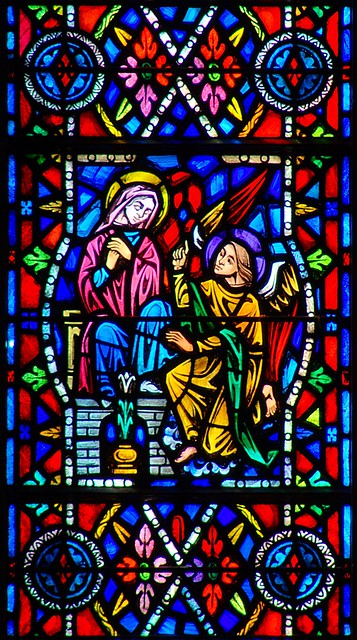
“You shall call his name Jesus,
for he will save his people from their sins.”

In Matthew 1:20-21 An angel of the Lord appeared to Joseph of Nazareth in a dream, saying, “Joseph, son of David, do not fear to take Mary as your wife, for that which is conceived in her is from the Holy Spirit. She will bear a son, and you shall call his name Jesus, for he will save his people from their sins.” The name, “Jesus” means “savior”, and that is His ultimate work. God’s name is truly hallowed among us because of all that God has done to save us from sin and death. God did not have to come down to earth to save us. He could have punished us as our sins deserve, and would have been justified to do so because we deserved punishment for our sins. Yet God preferred to take the hard road and sent His Son to become incarnate to redeem the world from sin through His life, death, and resurrection. 

God is both perfectly just and unfailingly merciful. These characteristics would seem to oppose each other when it comes to God wanting to save us from our sins. God’s holy desire to punish sin with death seems at conflict with His loving desire to rescue us from sin’s necessary consequence of death. Yet, in Jesus, God found a solution. God accepted Jesus as a substitute who would die for sinners and win our salvation. The Second Person of the Godhead became incarnate as a man, Jesus Christ, to live the perfect life in obedience to God’s Law, which we failed to do in our sinfulness, then Jesus offered His life as the perfect sacrifice to pay for the sins of the world. The life of Jesus is sufficient to pay for sin because His life is God’s life, and His blood is God’s blood, given and shed to redeem us all from our sins. God’s name is truly holy, because He found a way to rescue and redeem you from your sins while being perfectly just in punishing the sin of the world through the death of Jesus. In the life and death of Jesus, God found a way to be perfectly just in punishing sin, and perfectly merciful and loving in redeeming us through the sacrifice of the life of Jesus. This is why we will praise and thank God for all eternity for the Salvation He won for us sinners. 

We call the holy family “holy”
not because Mary and Joseph are holy,
but because Jesus is holy.

There is nothing in all the world more precious than the love of God. He has redeemed us and calls us His children, though we do not deserve it. Yet, because Jesus paid the price for the sins of the world we are happy to receive His forgiveness and salvation as a most wonderful gift, and praise God forever for His unending love. 

This Petition in the Lord’s Prayer in closely related to the Second Commandment, “You shall not misuse the name of the Lord your God.” The commandment and the petition both deal with God’s name. Because God’s Name is holy, we should use it properly and not misuse it. This is not easy to do. As time went by after God gave the Ten Commandments to Moses, the Israelite people of the Old Testament put too much emphasis on God’s Law and, for fear of misusing God’s Name, they stopped using it altogether. Instead of using the Name that God gave them to use, they instead spoke the general term, “lord”, even in their worship and when reading the Bible. If God had not wanted the people to use His name, then he wouldn’t have given it to them, but God gave us His Name so that we might use it. In Psalm 50:15 God says, “Call upon me in the day of trouble; I will deliver you, and you will honor me.” It is for Bible verses like this (and many others) that Martin Luther explains this petition by saying that it is our duty to “Call upon God in every trouble, pray, praise, and give Him thanks.” 

In the Advent season we especially remember God’s name because God sent His Son to be our savior, to rescue us from sin, and to bring us back into the household of God as His beloved children – for the sake of Jesus. God’s name truly is holy, as is everything He has done to give us good gifts in this life, and for the salvation that He has prepared for us through faith in Jesus Christ, our Lord. 

Tuesday, December 5, 2023

God is Our Father

Advent Devotion on the Lord’s Prayer
by Pastor Paul Wolff

Jesus said, “Pray then like this, ‘Our father, who art in heaven …’”

Matthew 6:9


Jesus prayed to His Father
in the Garden of Gethsemane.
He also invites us to pray to God as our Father.

God can be considered our Father because He is the one who created us all. Yet we have orphaned ourselves through our sin. It is not that we have killed our father, but rather, through our sin, we have killed ourselves and rebelled against our good and gracious heavenly Father. Yet, when Jesus teaches His disciples (and us) how to pray, He begins the prayer by teaching us to pray to God as “Our Father, who art in heaven.” This is a gracious invitation that Jesus would consider us His brothers and sisters that we could once again call God our Father. We can only do this due to the redemption that Jesus won for us by His perfect obedient life, and His innocent suffering and death. Since, because of our sin, we all have imperfect examples of what a Father ought to be, we may begin by asking, “What kind of a father is God?”

Several years ago there was a billboard campaign which purported to be some kind of messages from God. These billboards were likely well-intentioned, but were ultimately blasphemous. They showed a black billboard with white lettering ending in the simple tag, “– God” as if to imply that these messages came from God. It was blasphemous because none of the pithy sayings were quotes from Holy Scripture nor otherwise from God. All these messages only contained Law and no Gospel, and many of them contradicted clear teachings of God’s word. Nevertheless, they were sort of amusing in a superficial (though blasphemous) way. One that caught my attention said, “Don’t make me come down there. – God” as if God were a parent warning His disobedient children with vain threats. We should be aware, however, that God is not the kind of father who makes vain threats. When God makes threats they are real, and should be taken seriously, though God also provides rescue from sin and death through faith in Jesus Christ to all who believe – which is why we take the time to celebrate His first Advent, and look forward to His second coming also. 

I don’t know exactly what the billboard writers had in mind because they were a little late with their warning that if we disobey God we might make Him come down here to punish us. The first people God created (Adam and Eve) long ago let that cat out of the bag. Because Adam and Eve rebelled against God and brought sin into the world, God DID come down here. Fortunately, when God came down here He didn’t bring about the punishment the billboard sponsors were insinuating. When God came down here He didn’t come to judge and condemn us. Instead God the Father sent His only begotten Son down to rescue and redeem us from our sinfulness. This is the Gospel message. It is also one reason why the church where I am the assistant Pastor is named Emmanuel – God is here with us always for our forgiveness and salvation. The mere presence of God may not be such a happy occasion, unless God comes to rescue and redeem, and He does. 

We can always turn to God as our beloved Father
just as the prodigal son was happily received
by his forgiving father.

The incarnation of God as a man is the central event in all of human history. That is why we count our years from the date of Christ’s birth (or as close as could be determined at the time, though that is a story for another time). God knew before He made people that we would rebel against Him and we would be lost unless He did something to save us. Yet, He went ahead and created the people who would reject His authority and cause Him immense grief and suffering. Why would anyone do that? Only love could cause someone to go through that kind of suffering rather than avoid it. Saint Paul explained this to the Romans, “Very rarely will anyone die for a righteous man, though for a good man someone might possibly dare to die. But God demonstrates his own love for us in this: While we were still sinners, Christ died for us.” (Romans 5:7-8) Christ’s sacrifice for our benefit is the very definition of God’s perfect love. That is why we celebrate Advent every year. All who believe in Christ as our savior rejoice at God’s coming to us to rescue and redeem us from our sins.

All man-made gods require something from their followers to prove that they are worthy of favor. This makes these false gods seem very demanding, but it also makes them seem able to be manipulated by the actions of people. This is why false gods are so attractive to people. Though the false gods can be harsh taskmasters, those who create false gods also make it seem to the people as if they can control their pretend gods. If you can control God, then you are lord over Him and you are, in effect, your own god. It isn’t real, but is just as pretend as the false gods, but ever since the first temptation where Adam and Eve fell into sin, people have been trying to become like a god and make our own rules. This is part of our continuing rebellion against God, our Father, and why we need to repent of our sins and ask God our Father to forgive our sins for the sake of Jesus.

The true God is not like the false gods. Jesus didn’t come to us to demand anything from us. There is nothing we can give God that doesn’t already belong to Him. We can’t make up for our sinful rebelliousness. Jesus didn’t come to take anything from us. He came to give. Jesus came to live the obedient human life that none of us are capable of doing. Jesus perfectly pleased God the Father with His obedient life, and then He offered His life in place of ours on the cross. Because of what Jesus did on the cross (and throughout His whole life) we are saved from our sins. All who trust in the forgiveness that Jesus won for us will be rescued from death and blessed with eternal life in paradise. This is why we can confidently pray to God as our Father and why we celebrate the Advent (“coming”) of Jesus and look forward with eager expectation to His Second Advent on the last day.

Thursday, December 29, 2022

The Opposite of Murder

(Part Three in a Series on the Fifth Commandment)

by Pastor Paul Wolff

Jesus restored life to the daughter of Jairus
after she had died.
(Luke 8:40-56)
Photo of woodcut from Valparaiso University Chapel
The opposite of death is life. What is the opposite of murder? If murder is the taking of life, then the opposite is the giving of life. Can you give life to another? A father and mother do give life to their child, and that is truly a great gift from God in so many ways. This is the opposite of murder, but that is a one-time event. What if that child loses his life or has it taken away? Can anyone give him his life back, or give him new life? Such a thing is impossible in this world. Once your life is gone or taken away, it cannot be returned or restored. This is why the sin of murder is considered so evil, and why the sin of murder is different than most other sins.

Martin Luther’s explanation to the Fifth Commandment in the Small Catechism says, “We should fear and love God that we may not hurt nor harm our neighbor in his body, but help and befriend him in every bodily need.” This shows us that there is more to keeping the Fifth commandment than simply refraining from murdering your neighbor. God also requires that we help preserve and protect our neighbor’s body and life. Luther got this from several places in Scripture, but it is taught most clearly in Christ’s Sermon on the Mount where Jesus taught, “You have heard that it was said to those of old, ‘You shall not murder; and whoever murders will be liable to judgment.’ But I say to you that everyone who is angry with his brother will be liable to judgment; whoever insults his brother will be liable to the council; and whoever says, ‘You fool!’ will be liable to the hell of fire.” (Matthew 5:21-22) Here Jesus shows that God’s concern for life isn’t just a sharp distinction between life and death, but is much more involved. We must help our neighbor whenever we can. When God confronted Adam’s son, Cain, about the whereabouts of his brother, Abel, Cain replied, “Am I my brother’s keeper?” Cain was the elder brother, and should have been watching out for his brother and keeping his life protected, instead he murdered his brother (more on this in an upcoming article in my Biblical Vignettes on Murder series). We all should keep our neighbor’s life safe from harm as we are able (pun intended).

Jesus never committed murder, and He also did even more in the positive sense to obey God’s command against murder. When Jesus began His ministry and revealed Himself as the Christ (Messiah), the Son of God, He also began to miraculously heal many people from all kinds of afflictions. Jesus healed the lame, and those suffering from all kinds of illnesses. He restored hearing and sight to those who were deaf and blind. In doing this, Jesus not only showed His divine power as God in the flesh, but He showed great love and concern for the life and well-being of all kinds of people. Jesus also raised several people back to life who had died. This is definitely the opposite of murder.

Jesus Restored life to Lazarus
after he had been in the grave four days.
(See John 11)
During His earthly ministry Jesus restored life to several people who had lost theirs. Jesus restored life to the daughter of Jairus (Luke 8:40-56), the widow’s son in the town of Nain (Luke 7:11-17), and Lazarus of Bethany, who had been dead four days when Jesus called him out of his grave (John 11). In all these ways Jesus actively obeyed the commandment against murder, and fulfilled God’s Law.

Jesus didn’t stop there, however. It still was not enough for Jesus to restore health and life to a few sinners who had lost theirs. Every one of those people whom Jesus healed and raised from the dead also died later. These miracles were temporary solutions, but that wasn’t all Jesus did for us. He did much more. Jesus wanted to provide a permanent solution and cure for sin, sickness, and death, so He offered His life to God, the Father, in payment for the sins of the world. Because Jesus is the beloved Son of God who is sinless and perfect in every way, God, the Father, accepted the sacrifice of Jesus as full payment for the sins of all people of all time. By giving His life as payment for the sins of the world, Jesus also destroyed the power of death. Death is the ultimate consequence of sin, but Jesus died to pay for the sins of all people. Since the price for our sin has already been paid, we no longer have to die. Yes, there is still temporal death, which is a consequence of sin, and which must come to all sinners (except for those still alive on earth when Jesus returns on the last day), but this temporal death is now only temporary. In Acts 3:15 Saint Peter preached to the Jews after Christ’s resurrection, and told them that Jesus was the “author of life” – referencing His divine nature as God, the creator of all things, including people. The irony of Peter’s post-resurrection sermon wasn’t just that they killed the “author or life”, but that the “author of life” willingly gave up His life to redeem the lives of sinful people such as those who killed Him.

Since Jesus has overcome sin and death, when Jesus returns on the last day He will raise to life all people who have ever died on earth – from the first person to die, Abel (Son of Adam and Eve), to the last person to die before Christ’s return. This resurrection will not be temporary, like the raising of Lazarus (and the others), but it will be an eternal resurrection. For all who believe and trust in Jesus for the forgiveness of their sins the resurrected life will be a glorious life in paradise as God’s beloved children – adopted back into the family by Christ. For all who reject and despise Jesus and His work and gift of forgiveness and salvation for them, their resurrected life will be an endless hell of torment, suffering, and pain. Jesus paid for the sins of all people and provides salvation for all as a free gift, but those who reject the gift through unbelief do not benefit from it at all through their rejection. I believe a large part of the torment of the damned is that Jesus gave them forgiveness and eternal life as a free gift, and they rejected life in favor of death (their remaining torment is that they continue to hold on to their sin and hate God, though He is holy and completely good – so they are stuck with sin and death forever by their own choice).

We cannot give life and healing as Jesus did, but we can do what we are able to help preserve and protect our neighbor’s life. We can start by praying for our neighbor’s good welfare (including our enemies). We can also speak up to defend our neighbor against those who would harm them. Also, if we are able, or have special training, we can give aid and comfort to those whose life and health are endangered.

Another depiction of Jesus raising
Jairus' Daughter from the dead.
See Mark 5:22-24, 35-43
Jesus is the opposite of murder because He is the source of life, the salvation of those who are dying and those who are dead, and the giver of life everlasting. In John 5:19-21 Jesus taught, “I tell you the truth, the Son can do nothing by himself; he can do only what he sees his Father doing, because whatever the Father does the Son also does. For the Father loves the Son and shows him all he does. Yes, to your amazement he will show him even greater things than these. For just as the Father raises the dead and gives them life, even so the Son gives life to whom he is pleased to give it.” Jesus shows the nature of the Triune God as a loving God who desires the forgiveness and salvation of sinners so much that He would become incarnate as a man, and live and die to pay the price of death for sin so that whoever believes in Him would not perish in their sins, but would have eternal life in paradise with Him. This is not just a temporary opposite of murder, but a permanent life – the eternal opposite of murder, and the opposite of all death. Through faith in Jesus we will be restored by Him to be what God intended us to be (i.e. sinless and holy) to live an eternal, life without sin, suffering, and death.

“The Jews gathered around (Jesus), saying, ‘How long will you keep us in suspense? If you are the Christ, tell us plainly.’ Jesus answered, ‘I did tell you, but you do not believe. The miracles I do in my Father’s name speak for me, but you do not believe because you are not my sheep. My sheep listen to my voice; I know them, and they follow me. I give them eternal life, and they shall never perish; no one can snatch them out of my hand. My Father, who has given them to me, is greater than all; no one can snatch them out of my Father’s hand. I and the Father are one.” (John 10:24-30) Jesus gives life because He has paid the price to redeem all sinners. This is the perfect opposite of murder, because through His life and death, Jesus undoes the effects of sin and death. Jesus then freely gives forgiveness of sins through faith, and gives eternal life to all who listen to His voice and trusts in Him for forgiveness and salvation. Jesus does this because Jesus is equally God with the Father and the Holy Spirit, and it is God’s will that we trust in Him and are saved from our sin to live forever with Him.

There is so much more in the Holy Bible about God’s work as the opposite of murder that this article could go on for many pages, but I will deal with some of them in later articles in this series.


Articles in this series:

Sunday, December 25, 2022

The Holy Family

by Pastor Paul Wolff


The Holy Family
Window from Epiphany Lutheran Church,
Detroit, Michigan
(Now closed)

This past year (2022) my wife and I have been blessed to see our extended family grow. On the day of Epiphany we rejoiced at the birth of our fifth granddaughter. Then, not quite eleven months later, we rejoiced again at the birth of her niece, our first great-granddaughter. I don’t know what the deal is with all the girls. Statistically, you would expect out of six children born to the younger generations three would be girls and three would be boys. Children, aren’t born by statistics, however, and our grandchildren are all beautiful women and girls, and we thank God for all of them.

Children are truly a blessing from God, despite what the world may think of them. King Solomon wrote, “Behold, children are a heritage from the Lord, the fruit of the womb a reward. Like arrows in the hand of a warrior are the children of one’s youth. Blessed is the man who fills his quiver with them!” (Psalm 127:3-5) This blessing goes all the way back to the creation of the world where God created mankind as a husband and his wife and blessed them, saying “Be fruitful and multiply and fill the earth and subdue it, and have dominion over the fish of the sea and over the birds of the heavens and over every living thing that moves on the earth.” (Genesis 1:28) This blessing was given before the fall into sin, but God blessed Adam and Eve with children even after they rebelled against Him, but He also promised to send a Savior to rescue them all from their sin. God also repeated His blessing to Noah and his sons after God rescued them from the great flood, saying“Be fruitful and multiply and fill the earth.” (Gen 9:1) Even though every person ever born on earth (except Jesus) has been born a sinner, God still blesses families with children, and has provided salvation for all of us through Jesus. This is the reason why we celebrate with joy the birth of Jesus, and why it is also important to remember the Holy Family at Christmas (and at other times when we celebrate God’s gifts of new members to our family).


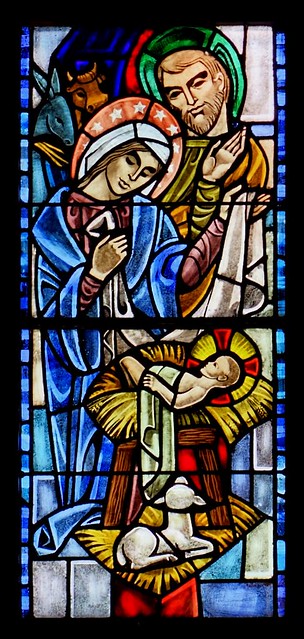
The Holy Family
at the Nativity of Christ
This is not the real Holy Family, but a lifelike representation
(compared to the other images in this article).
It is significant that when God became incarnate He came into a young family. In American culture, we would say today that Mary and Joseph were engaged to be married, because the marriage had not been consummated. In Jewish culture of that time, respectable people (like Joseph and Mary) would be legally married for a year – while living apart – before they consummated the marriage. You should note, too, that this practice was not only for prominent wealthy people, but also for laborers, like carpenters. It didn’t matter if Joseph was a skilled master carpenter or an unskilled laborer. People of all social classes would demonstrate their integrity by waiting a year before consummating the marriage, thus showing that they had not engaged in physical intimacy with each other. This not only gave them time to prove they were chaste and hadn’t been unfaithful, but it also gave them time to solidify their lifelong commitment to one another, and to the new family that they were creating.

God could have chosen an unmarried virgin to bear God’s Son, but that is not how God works. God, in His wisdom, created marriage and family for a purpose and He blesses families. In an intact family, the children know the love of both their father and their mother (see the Fourth Commandment – Exodus 20:12). This is God’s good plan, and though in this sinful world, this is not always possible, it is what we should strive for at all times. Besides, as God planned it, we have the “holy family” to look up to and try to make our own families holy also. We do this through repentance and forgiveness of one another when we sin against one another – as we inevitably will. If God had become incarnate through an unmarried woman, then Christians would idealize unmarried mothers and that would necessarily result in all kinds of chaos, like we see in pagan America today: children growing up in broken families feeling unloved and disobeying authorities and getting involved in drugs and crime. Our prisons are overwhelmingly populated with children of broken families.

The Holy Family
Window from Holy Cross Lutheran Church,
Detroit, Michigan
(Now closed)

As it is, Joseph and Mary belong together, and we ought to try to emulate their purity and faithfulness. Though, I should say here that the “pious” idea of Mary’s lifelong virginity is pure wickedness. That would make her a lousy wife to withhold herself from her husband (see 1 Corinthians 7:1-5). Mary is perpetually a virgin in our memory because we perpetually remember her as “the blessed virgin”, or the “virgin mother”. We do this because Mary was still a virgin until after Jesus was born (see Matthew 1:18-25). This is important because it testifies to the fact that Jesus is the Son of God, not the physical son of Joseph or any other sinful man, though Jesus lived as the son of Joseph, and was named as such (see Luke 2:48; Luke 3:23; Luke 4:22; Matthew 13:55; John 1:45; and John 6:42). There is no confusing the Blessed Virgin Mary with anyone else because never before and never again will a virgin conceive and bear a child. We also see in Matthew 13:55 and Mark 6:3 that the brothers of Jesus are named and the Gospel writers make note that they have sisters, also. The most plain (and best) interpretation of this is that these are the natural children of Joseph and Mary. There is no reason to doubt that – either historically, or exegetically, or theologically.

The “holy family” is considered holy because Jesus is holy. Joseph and Mary were sinners in need of Jesus to save them from their sins. In the Magnificat (Luke 1:46-55) Mary calls God, “my savior” (v. 47). Yet, despite the fact that Joseph and Mary were just like everyone else, they were also faithful, pious believers. As a young married couple, they were chaste and pure. When Joseph learned Mary was pregnant, he knew he was not the father, and though he was not (at first) willing to believe what Mary must have told him about what the angel said, he could have intended to have her stoned for adultery, but instead he planned on divorcing her quietly and not subjecting her to public disgrace. Then, when God told Joseph in a dream that all Mary had told him was true (see Matthew 1:20), he believed and kept the family intact. Joseph later protected Mary and Jesus by taking them to Egypt after Herod sought to kill the child, who was the true King of Judah (see INRI).

The Holy Family
Window from Emmanuel Lutheran Church,
Dearborn, Michigan

The world despises children because it takes sacrificial love to properly raise a child. Selfish pagans idolize themselves and do not care to expend the love and time and money it takes to provide for a child’s needs of body, soul, and mind. Parents must sacrifice to provide for their children’s needs, but that is what people were made for. It is very rewarding to raise a child and give him or her the necessary skills and resources necessary to become a respectable, productive member of society. It is even more rewarding for Christian parents to raise a child who loves God and his neighbors, and trusts in Jesus to save him from his sins. Parents who have done a good job raising children can be justifiably proud that their children are admired and respected by their neighbors and friends, and are valued members of society who care for those whom they deal with every day. This is something that selfish unbelievers who despise and murder their children (see my article on Molechianism) will never fully know because they idolize themselves, and they are unfulfilled because sooner or later their false gods will fail them.

No family is perfect, however, because all members of families are sinners. Even the holy family must have had its struggles and difficulties. The presence of Jesus did not change the sinful nature of Joseph and Mary, nor of His brothers and sisters. The story of the boy Jesus in the temple at age 12 (Luke 2:40-51) shows us that as the years went by, Joseph and Mary seem to have taken for granted that Jesus was the Son of God, and just thought of Him as a normal boy – which He was. There seems nothing out of the ordinary in the way that they deal with Him, as their son. They do show a high level of trust in Him, as they weren’t particularly worried that He wasn’t with them for a time. They assumed that Jesus was with others in their group (v. 44) as they traveled back up north, and they trusted Him not to be disobedient. Jesus always obeyed them perfectly, as an obedient son, but somehow not in a way that drew attention to Himself – so they trusted Him. Though, Mark 3:20-34 describes a situation where Christ’s family (specifically, His mother and brothers) thought Jesus was out of His mind, but Jesus kept teaching what He had been teaching because He was doing what He was supposed to do, and few others understood what it was all about. They thought Jesus suicidal for calling the leaders to repentance, and not heeding the threats against His life. Jesus was not suicidal, and at various times had to walk away from imminent threats to His life before His work was finished (See John 6:15 and Luke 4:24-30), but neither did He try to save Himself when the time came for Him to give His life to pay the price for the sins of the world (see Matthew 27:12-14). Some of the people who heard Christ’s teaching understood after He died and rose to life again, but others never did.

Glory to God in the Highest
Jesus is born in Bethlehem
(I forget where this window is from.
This is a scan of an old film photograph.)

It seems strange to the world that God would become a man simply for the purpose of suffering and dying a shameful death on a cross. It is no wonder that Christ’s family thought Him out of his mind. That kind of love doesn’t make sense to our selfish, sinful flesh, but God’s love is perfect, and we see perfect love in the life and death and resurrection of Jesus. That is why we celebrate Christmas, and why we celebrate more on Good Friday and on Easter Sunday. God is the only one who can save us from the guilt of our sin, and rescue us from sin’s consequences. So God became a man in Jesus to redeem us from sin and death. This is perfect love in action – that God would live and die to save His disobedient people, so that He could make us holy to live with Him forever.


This Christmas may Christ bless your family as you contemplate the Holy Family. May you love one another as Christ has loved you. May you forgive the sins that your family members commit against you, as Christ has forgiven all your sins. May father and mother be strengthened in love and commitment to one another, and may children give thanks to God continually for the blessings of their family.


Psalm 144:9-15 (NIV)

I will sing a new song to you, O God;
on the ten-stringed lyre I will make music to you,
to the One who gives victory to kings,
who delivers his servant David from the deadly sword.
Deliver me and rescue me from the hands of foreigners
whose mouths are full of lies, whose right hands are deceitful.
Then our sons in their youth will be like well-nurtured plants,
and our daughters will be like pillars carved to adorn a palace.
Our barns will be filled with every kind of provision.
Our sheep will increase by thousands,
by tens of thousands in our fields;
our oxen will draw heavy loads.
There will be no breaching of walls,
no going into captivity,
no cry of distress in our streets.
Blessed are the people of whom this is true;
blessed are the people whose God is the Lord.


Here are my other Christmas-themed articles from this blog:

What was Jesus like as a Boy?

Come, Lord Jesus! 

God’s Justice and Mercy at Christmas 

Justice at Christmas 

Christmas Peace is Forever 

Is Christmas Offensive? 

Christ is for You 

God is With Us 

Does Jesus Sing? 

The Incarnation of God

Magi

Shepherd Visitors

Don’t Make Me Come Down There!


Thursday, November 24, 2022

The True God Cannot Murder

(Part Two in a Series on the Fifth Commandment)

by Pastor Paul Wolff


God Gave the Ten Commandments
so we would know what is good and right.

You will sometimes hear atheists asking a rhetorical question which goes something like, “If God is so good, then how can he allow so much suffering and death in the world?” They may give some example of a situation where a number of innocent people were killed by evil people, or they will more likely mention a “natural disaster” or an “act of God” where many people die through no fault of their own, or of anyone else. These questions assume that God is unjust in allowing such tragedies to happen, or that God is unwilling or unable to stop evil, or that somehow God is the cause of such evil, and so is evil himself. Atheists love to ask such questions because they assume that God is evil, and they are good and holy. They assume this because they are the ones judging God and imagining that they find Him guilty. This way of thinking also absolves them (though only in the delusion of their own thoughts) of their murderous desires, thoughts and actions. If people think God is guilty of murder then they will feel free to do the same.

In truth, the One, True God cannot commit murder. The only true God is the Triune God – One God in three persons: the Father, the Son (Jesus) and the Holy Spirit. It is important, however, to understand that murder is the unjust taking of life. God may take someone’s life, but He is always just and righteous in doing so. Since God is the creator of everything and everyone He makes the rules which we must follow, and since He is the redeemer who paid for the sins of all mankind we know that God’s rules are good and are for our benefit. God is not the origin or source of sin and evil. Some of God’s good angels fell into sin and became demons first, and one of them lured Adam and Eve into sin through wicked temptation. As our creator and redeemer, God is intimately involved in the life and death of everyone who has ever lived in the history of the world, and all who will ever live to the end of the world. Yet, it is against God’s nature to commit murder. This is why God gave us the Fifth Commandment (as Lutherans, and most other Christians, count the Commandments), “You shall not murder.” God gave us this commandment because He does not murder, and so that we also would not murder. 

Sinful people commit murder because, since the fall into sin, our nature has been corrupted, and it is now in our nature to murder. God did not create people to murder, nor has God ever murdered anyone. God created Adam and Eve in His image, which meant that they were holy and pure and immortal, as God is. However, when they rebelled against God they corrupted their nature with sin, and brought condemnation and death on themselves, and all their descendants. Once people rebelled against God, they were no longer holy, pure, nor immortal. In this way murder (and every other sin) is “natural”, though that doesn’t make it right. The “natural” nature of sin (including murder) actually makes it wrong.

Adam and Eve brought sin into the world,
including murder.

God had warned Adam and Eve that the penalty was death for disobeying God’s simple command. He said, “You must not eat from the tree of the knowledge of good and evil, for when you eat of it you will surely die.” (Genesis 2:17) Once they broke God’s good, simple command, God was justified for putting sinners to death. Yet, God had mercy on Adam and Eve, and out of love He did not put them to death the day they rebelled against Him, as He could rightly have done, but instead, He promised to send them a savior who would rescue them (and their descendants) from their sins and make everything right again. That promise was fulfilled in Jesus Christ. Adam and Eve lived a good, long life (for sinners – though it was infinitely shorter than it would have been had they never sinned against God) and they brought life into the world through their children. Though, Adam and Eve’s first born son also became the first murderer. Cain’s murder of Abel showed clearly that the corruption of sin is something we all inherit from our parents, going all the way back to Adam and Eve.

It is not God who murders ever, it is always people. Even when God does bring about the immediate death of someone it is always justified, since death is the result of sin, and we are all sinners. Life is a gift from God which we don’t deserve, but it is something which He graciously gives to us for a time. The reason there is so much sorrow and tragedy in the world is because of our sin, not because God is cruel and unjust.

God sent Adam and Eve out of Eden
so they would not eat of the
Tree of Life and live forever as sinners.
But He also promised Salvation through
the Messiah, Jesus Christ.

In a strange way , temporal death is a blessing from God, and not a curse, even though it is a result of sin. Living forever in sin is just about as good a definition of hell as anything else, though the true hell is much worse than life in this sinful world, because in hell there is no hope of rescue or relief or salvation. In this life God gives us all good gifts (even to all evil people), and there is always the possibility of salvation, so this life is not hell, even on our worst day. Remember that in the account of the fall into sin in Genesis 3, God put Adam and Eve out of the Garden of Eden after their fall so that they would not eat of the tree of life and live forever as sinners. This was done out of mercy, but God also promised to send a savior as the “seed” of Eve who would redeem them of their sins and “crush the head” of the serpent whose lies led them into sin and death. This promise was fulfilled in the life and death of Jesus Christ. Everyone who repents of their sin and trusts in Jesus to save them has the salvation which He won for them in His life and death. All who believe in Jesus are saved from sin and death, and we do not need to fear death, because we know that even if we die there is life and salvation in Christ when He returns to fulfill all He has promised.

Some may wonder about God’s judgment of the world in the great flood where only eight people in the whole world survived out of a population which could have been as many as one million. Did God murder a million people? The answer is no. God is holy and His judgments are just and right. God is our creator and He sets the rules. If He says, “Obey my commands or die” then we are condemned if we disobey the good rules that He created us to keep. When we die it is our own fault for disobeying the good commands of God. God does not murder. God is slow to anger and merciful (See Exodus 34:6-7). He forgives all who repent, but when stubborn people refuse God’s mercy, His anger is inescapable. When God kills, it is always righteous. We may not like His decisions, but no one can rightly accuse God of murder, especially when God is holy and innocent, and we all are sinful and murderous. We are even less able to accuse God of murder and wrongdoing when God provided for the free salvation (through faith) of all murderers and sinners through the life and death of Jesus Christ. Those who are so bold as to falsely accuse God of murder are selfish idolaters in the highest degree. (For more information on this subject, see my August 2017 article “Why Does God Condemn Unbelievers to Hell?”)

Jesus taught Nicodemus about
who God is and what He has done to save
us all from our sins.

When anyone dies God is there to receive their soul, and to judge the state of that soul. If that person is a believer in Christ who belongs to God and has received forgiveness through faith in Jesus, then that soul rests in heavenly peace until the resurrection of all flesh. If that person is an unbeliever who has rejected Christ, then that soul lives in torment until the resurrection of all flesh. God is not capricious or cruel. God, Himself has provided forgiveness and salvation for all people. There is no reason why anyone should be condemned. If anyone is condemned to eternal death and torment, then it is because of their own choice to reject Christ’s forgiveness. Jesus said in John 3:18 “Whoever believes in [God’s Son] is not condemned, but whoever does not believe stands condemned already because he has not believed in the name of God’s one and only Son.”

This is all a matter of faith. This does not mean that there isn’t plenty of evidence of God’s mercy, forgiveness, and love; but our corrupted sinful nature is often blinded to God’s goodness, professing to think that we are righteous instead of sinful. Thus, we have to deny our fleshly desires which think that God is cruel or evil, and trust in God’s Word that He is merciful and forgiving, and the redeemer and savior of sinners. God’s nature and love are only revealed to us in the Holy Scriptures. Each of us only knows God as we know Him through His Word in the Holy Bible. Those who reject His Word do not know God, and cannot know Him as He truly is. This is why we all ought to treasure the Holy Scriptures as God’s Word, and read and study them daily – so that we can know God’s love and trust that “… in all things God works for the good of those who love him, who have been called according to his purpose.” (Romans 8:28) God is not cruel and cannot murder. God is the living God who gives life and forgiveness to us who are dead in our trespasses and sins.

Jesus teaches that the devil is the
“father of lies” and a “murderer from the beginning.”
John 8:44

I should note here that false gods do commit murder. You may ask, “How can a false god, who doesn’t exist, murder anyone?” The answer here is that it isn’t the false god who murders, but those who invent and perpetuate the mythology of the false god. Some false gods are created weak so that they can be manipulated by the people to do what they want, and so it gives the impression that they have power over “god”. Yet these false gods still murder because they lead people away from their salvation in Jesus, because all who trust in false gods have rejected God’s salvation in Jesus, and they are lost and condemned. Other false gods are created to make them seem impressive and powerful. Sometimes the more frightening and powerful the false god seems, the more control the religious leaders have over their people. Some false religions have the concept of a “holy war” where the religious leaders assemble armies to murder their neighbors and take their possessions. All this is done in the name of their god, but the effect of it is that when it is successful the religious leaders gain wealth through stolen goods, property, and slaves. Wherever false gods allow murder you will find murderers. 

I have found that people always try to be like their God, whether it is the true God or false gods. If people think their god is peaceful and kind, then they try to be peaceful and kind. If their god is a blood-thirsty tyrant, then they become tyrants and murderers. When false gods lead people to murder, this is from the devil. Since the devil hates God and all those whom God loves (i.e. you and me), he uses his lies to turn people into murderers to kill people and cause chaos and bloodshed. This is total wickedness. If one can be objective it is easy to see that false gods are more like the devil than the true God. The trouble is that it is hard to be objective where our belief in God (or even a false god) is concerned. Jesus shows us what the true God is really like. Jesus never murdered anyone, but instead healed people who were sick and injured, and He raised several people from the dead. This is the opposite of murder. (See my article on The Opposite of Murder.)


Articles in this series:
You Shall Not Murder
The Opposite of Murder

 
Related Articles:
Why Does God Condemn Unbelievers to Hell?
A Biblical Argument for Self Defense
Anger
Why Christians Condemn Abortion but Support the Death Penalty
The Good Samaritan
Is it Easier to Heal, or to Forgive?
Christ Has Done All Things Well
The Promise of Christ in Water And Light
Modern Molechianism
“Let His Blood be on Us and on Our Children”
The Passion of Christ
The Slaughter of the Innocents
Friends and Murderers
The Promise of the Rainbow
The True Story of a Terrorist Turned Christian
The Morality of War
Rejecting the Survival Instinct
The Leading Cause of Death in America


Wednesday, March 7, 2012

Blinded by Sin

by Pastor Paul Wolff

The transfiguration of Jesus is one of the great mysteries of the Bible. However, the mystery is NOT that we don’t really know what happened. On the contrary, three of the Gospels recount the events of the transfiguration so we know well what happened. The mystery is: what does the transfiguration mean?

What happened was that Jesus took Peter, James, and John up a mountain and the appearance of Jesus was transfigured so that he shone with a bright light. The ancient prophets, Moses and Elijah, appeared talking with Jesus about his upcoming “departure” in Jerusalem. Then a voice from a cloud said, “This is my beloved Son, with whom I am well pleased; listen to him.”

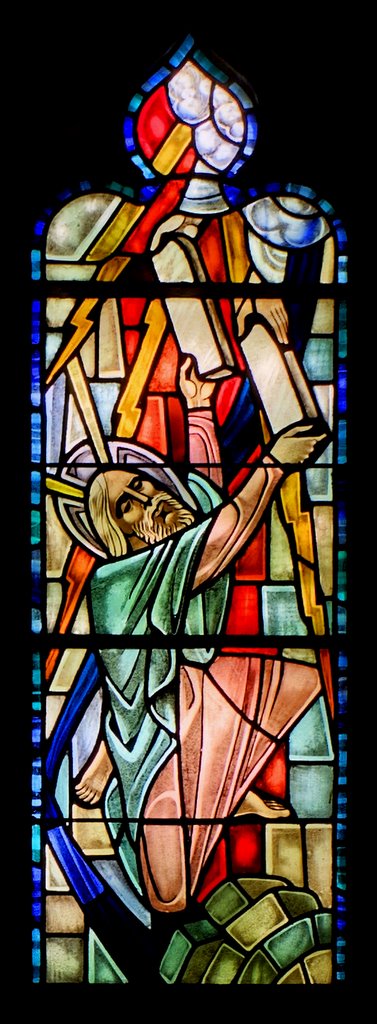
Needless to say, this doesn’t happen every day, and that is part of the mystery, but it was not unprecedented in the history of the world. In the exodus from Egypt, Moses was talking with God on Mt. Sinai, receiving the law for God’s people, and when he came down the mountain his face was shining because he had been in the presence of God. Moses’ presence at the transfiguration of Jesus gives us a clue about the meaning of this mysterious event. The shining light was the glorious holiness of God. The difference is that in the case of Moses the light was residual from God’s glory and it eventually faded away. In Jesus’ case, the light came from within Him. He was the source of the light.

When God created light on the first day of creation he did not create any “natural” sources for the light until day four so we must conclude that God, Himself, was the source of the daylight for the first three days of creation. Also, in the Revelation that Jesus gave to John on Patmos later in his life, John writes of the heavenly paradise, “And night will be no more. They will need no light of lamp or sun, for the Lord God will be their light.” (Revelation 22:5)

The question is, if Jesus was the source of the glorious light on the mount of transfiguration, why didn’t anyone see it in His life before then? Again, we can look back to Moses for a clue. When the Israelites saw Moses reflecting the holiness of God they could not bear to look at him. Sinners cannot bear the holiness of God, even the greatly diminished reflected glory in the face of Moses. Scripture tells us that “no one can see the face of God and live.” (Exodus 33:20) Moses received special grace from God to be in His presence, but even Moses was not permitted to see the full glory of the face of God.

Like everything that Jesus did in His life, it was out of love for us that Jesus hid His glorious holiness except for this brief time on the mountain with Peter, James, John, Moses, and Elijah. Sinners cannot bear holiness because it shows us just how corrupt we are because of our sin. We are all blinded by our sin. We see everything through corrupt, sinful eyes. This is a twisted view of reality. We are so used to sin and comfortable with it that we imagine that we aren’t so bad and that some of the things we do are actually so good that even God Himself must be pleased. This couldn’t be further from the truth. Sin corrupts us totally. Everything that we are and do is tainted by sin so that even our righteous deeds are as filthy rags (Isaiah 64:6) in God’s holy sight. For sinners to stand in the presence of God’s holiness would make us so aware of the corruption of our sin that we would die. Even to get a glimpse of God’s holiness (as the Israelites saw in Moses) would be unbearable. This is a function of the Law of God – to show us our sin. However, as Jesus tells us, “God did not send His Son into the world to condemn the world, but in order that the world might be saved through Him.” (John 3:17) So Jesus hid His holiness and lived an ordinary life no different from any other man, except that He was without sin – but even this He did quietly without drawing attention to Himself.

The glory of God’s holiness revealed in Jesus in the transfiguration is set in sharp contrast to the grotesque horror of the crucifixion, and yet, both events reveal the same glory of God. The holiness of God is not a pure abstraction, and it is not only made tangible by an unbearable light. The holiness of God is, more than anything else, expressed in a love that moved God to become incarnate as Jesus Christ as one of His created people to bear the sins of the world and to suffer and die to pay the price for our sin to redeem us. As Jesus hung dying on the cross He not only continued to hide His glory, but He endured God’s wrath over our sin to spare us from the punishment that we deserve. Jesus did not make us endure the guilt of our sin, but He endured the punishment of the sins of the whole world.

The hiddenness of Christ’s glorious holiness is a mystery that is only partially revealed in the event of the transfiguration. However, this is how God works in the world. Out of love for us, God does not blast us with His glory. God does not force us to love Him, nor does He force us to endure the unbearable reality of our sin. Instead, God is merciful to us and works through the means of His Word and Sacraments to show us our sin and our savior. The “weakness” of these “Means of Grace” is that they can be rejected by people. The strength of these Means of Grace is that God works through them to bring us the salvation won for us by Jesus on the Cross.

All people on earth live under the grace of God, and part of this grace is that we are blind to the full reality of our sinful corruption, just as we are blind to the glorious holiness of God. We should not attempt to perceive the holiness of God because in our sinful condition we are likely to be led astray by the lies of the devil. We may think we see a divine revelation, but it is most likely to be our own sinful desires within us. Yet God has given us His Holy Scriptures to show us our true savior, Jesus Christ, so that all who believe in Jesus are saved from their sins and will share in the glorious holiness of God, of which we see a brief glimpse in the Transfiguration.