Showing posts with label love. Show all posts

Thursday, May 30, 2024

Blessed are the Merciful, for They Shall Receive Mercy

(Part 5 of a series of 9 articles on the Beatitudes)
by Pastor Paul Wolff​


Jesus said, “Blessed are the merciful, for they shall receive mercy.” (Matthew 5:7)


Blessed are the merciful,
for they shall receive mercy.
Matthew 5:7

Mercy and grace are related because they are both expressions of love. Because all of us children of Adam and Eve are corrupted by sin, our love is imperfect – and so is our practice of mercy and grace. God’s love is perfect, and His mercy and grace are perfect. An easy way to distinguish mercy from grace is to think of mercy as God not punishing us as our sins deserve, and grace is God giving us good things which we do not deserve because of our sinfulness. However, in the Holy Bible, the meaning and use of the word “mercy” is much broader than this simple definition, and in practice both mercy and grace can often describe the same thing, which is nearly always God expressing His love in how He deals with us.

Jesus proclaims in His Sermon on the Mount, “Blessed are the merciful, for they shall receive mercy.” (Matthew 5:7) Here Jesus encourages all God-fearing people (and everyone else, if they will listen) to have mercy on their neighbor, and God will have mercy on them, too. God certainly has had mercy on us all by sending Jesus to pay the price of death to redeem us all from our sin and death. Since God has already done this great merciful thing for us to rescue us from the punishment we deserve, we ought to also have mercy on others, even (and especially) when they sin against us. The blessing received by the merciful is that they will also receive mercy from God. God is certainly merciful to all people, though not all receive it because some reject God’s forgiveness in Jesus Christ, and so they miss out on what God freely gives them.

God is the loving father
who has mercy on his disobedient children
and forgives our rebellion and sins.

The concept of mercy is common in the Holy Scriptures. There are between ten and twenty dozen occurrences of the word “mercy” in the Bible. This depends on which translation you read because in the Old Testament there are several different Hebrew words translated as “mercy”, and different translations sometimes translate these words as “love” (especially “steadfast love”) or “grace” or “kindness” (especially “loving kindness”) or “loyalty” (?) or “pity” or “compassion” instead of mercy. Most times it is not immediately defined, and assumes that the reader knows what mercy refers to, as in Psalm 23:6 which says, “Surely goodness and mercy shall follow me all the days of my life, and I shall dwell in the house of the Lord forever.” Though mercy is connected with “goodness” here, it is not otherwise defined. The concept of “mercy” is common in the Psalms, which served as the hymns (and prayers) of the Old Testament times, and still serve as the basis of our hymns today, too.

Psalm 25:6-7 says, “Remember your mercy, O Lord, and your steadfast love, for they have been from of old. Remember not the sins of my youth or my transgressions; according to your steadfast love remember me, for the sake of your goodness, O Lord!” In this Psalm mercy is connected with God’s “steadfast love” (or “mercy”), and the effect of God’s mercy here is that He would “remember not the sins of my youth or my transgressions.” It is verses like this that show us that mercy means that God is withholding from us the punishment which we deserve on account of our sins.

In King David’s great Psalm of repentance after he was confronted with the guilt of his sin by the prophet, Nathan, David immediately begins by asking God for mercy. “Have mercy on me, O God, according to your steadfast love; according to your abundant mercy blot out my transgressions.” (Psalm 51:1) Again, here God’s mercy and love are connected, and the expected result is that God would “blot out my transgressions.” The idea here is that God wipes away the stain of our transgressions and sins like a writer wipes away spilled ink on the page (or parchment). Later in the history of God’s people, Isaiah gives God’s people this message which calls to mind King David’s psalm of repentance. “I am he who blots out your transgressions for my own sake, and I will not remember your sins.” (Isaiah 43:25) This is great good news for all God’s people because with sin comes death, and if God does not remember our sins, then we will be spared from sin’s punishment.

Jesus had mercy on the crowd who followed Him,
and miraculously fed 5,000 people to satisfaction
with five loaves of bread and two fish.

The best example in Holy Scripture which describes what God’s mercy (and its opposite) is like is probably Christ’s Parable of the Unmerciful Servant. You can find it in Matthew 18:21-35. In the parable the king forgives his servant a debt so large that he could never repay it. That is how God deals with us in mercy. Our sin condemns us to death, which is a debt that we can not pay without being destroyed. God, Himself, covered our debt by becoming incarnate (Jesus Christ) and taking the punishment of death, Himself, in order to rescue us from the death which would destroy us. In the parable the forgiven servant should have been so appreciative of the king’s mercy that he ought to have had similar mercy on his neighbor who owed him a small debt. However, he was overly harsh with his neighbor, and when the king heard about it he determined that his servant did not appreciate what he had done for him, and withdrew his offer of mercy and put him in prison until he had paid every last penny of the original debt – which was forever, because the debt was so large as to be impossible to repay. This parable shows us that God wants us to be merciful to our neighbors as God has been so much more merciful to us. If we truly understand and appreciate the great cost that our King (Jesus) has paid to cover our debts, then we will find it much easier to also show mercy to our neighbors who owe us much smaller debts. Though our neighbors’ debts may seem large to us, compared to what we are indebted to God, our neighbors’ debts to us are infinitely smaller, and ultimately insignificant in the long run.

In Psalm 103:8-10 David also combines God’s mercy and grace and describes it in this way: “The Lord is merciful and gracious, slow to anger and abounding in steadfast love. He will not always chide, nor will he keep his anger forever. He does not deal with us according to our sins, nor repay us according to our iniquities.” Here David praises God because of His mercy and grace because He does not punish us for our “sins” and “iniquities”. He goes on to emphasize this in verse 12 where he writes: “as far as the east is from the west, so far does he remove our transgressions from us.” This is another way of describing God’s forgiveness. If He removes our transgressions (sins) from us, then He will not punish us for them. Also, since God removes our transgressions “as far as the east is from the west,” then they can’t come back to condemn us. They are gone for good. This is the result of God’s mercy and grace, and it is also how we ought to forgive our neighbor.

Since God’s mercy is so closely connected with His forgiveness, we should also see that this Fifth Beatitude is related to the Fifth Petition of the Lord’s Prayer: “Forgive us our trespasses as we forgive those who trespass against us.” We certainly should remember that God’s forgiveness is not conditional on how well we forgive our neighbor, but that “We love because he first loved us.” (1 John 4:19) It can’t start with us, because in our sin, our mercy and forgiveness is either incomplete or lacking in some lesser or greater way. It must start with God because His mercy, love, and forgiveness is perfect in every case. Likewise, in the beatitudes, we receive mercy from God first, then in response to His mercy and forgiveness and grace, we have mercy on our neighbor.

Jesus has mercy on even the weak and powerless,
as shown by His gentle rebuke of the disciples
who wanted to send the children away.

The Holy Scriptures also give many examples of the mercilessness of sinful men. Solomon observes in Proverbs 12:10 “Whoever is righteous has regard for the life of his beast, but the mercy of the wicked is cruel.” This proverb also shows that if a man is faithful to God, then his mercy also extends to how he treats his livestock. If he is wicked, he also is cruel to his animals. We easily recognize this when we see in the news that some celebrity abuses his animals then he is roundly chastised for his cruelty by everyone. Though sometimes people take this too far when they criticize people more harshly when they abuse their animals than when they abuse their children or spouse. Solomon also observes in Proverbs 21:10 “The soul of the wicked desires evil; his neighbor finds no mercy in his eyes.” Such is the terrible nature of sin that those who love their sin more than they love God actually desire to do evil. They cannot even find it in their heart to have mercy on their neighbors. We can take comfort in Christ’s Fifth Beatitude in this for the opposite case. If the merciful receive mercy from God, then the unmerciful wicked person will not receive God’s mercy (until they repent of their sin and find forgiveness in Jesus). We also see this elsewhere where God condemns the unmerciful, such as Proverbs 3:33, “The Lord’s curse is on the house of the wicked, but he blesses the dwelling of the righteous.” This curse certainly can be removed when sinners repent and ask God for forgiveness. Since God is merciful, He is most eager to forgive and save all who repent and look to Him for salvation. “The Lord is gracious and merciful, slow to anger and abounding in steadfast love.” (Psalm 145:8)

Jesus, Himself, had mercy on His neighbors at all times. Many times those who had desperate desires to be healed of various afflictions pleaded with Jesus to “Have mercy,” and Jesus mercifully granted them healing and forgiveness. In Luke 17:11-19 ten men suffering with leprosy saw Jesus at a distance and called out to Him, “Jesus, Master, have mercy on us.” Jesus had mercy on them by healing them of their leprosy. In the next chapter, Luke 18:35-43, a blind beggar (likely the same man named Bartimaeus, in Mark 10) called out to Jesus, “Jesus, Son of David, have mercy on me!” Although some of the bystanders told him to be quiet, He again asked Jesus for mercy. Jesus asked him, “What do you want me to do for you?” and he said he wanted to recover his sight, and Jesus gave him his sight back. In Mark 5, Jesus cast out many demons possessing a man, and after the man was cleansed and came into his right mind, Jesus told him, “Go home to your friends and tell them how much the Lord has done for you, and how he has had mercy on you.” Here Jesus shows that by rescuing the man from demon possession He had mercy on him. This is also interesting that although Jesus told the demons to go out of the man, He told the man to tell his friends that “the Lord” has had mercy on him. Here Jesus was acknowledging that He is God, or, at the very least, that His healings were done by the power of God, while not denying that He is the one true God with the Father and the Holy Spirit.

Jesus showed mercy to the family of Jairus
by raising his daughter from the dead.
See Mark 5:21-43

This is the first Beatitude in this series which is not quite so clearly a curse in the worldly sense. Few people would say that those who show mercy are inherently cursed by doing so. Though, it is not too difficult to find people who think that merciful people are fools. It is hard to show forgiveness to people who sin against you. Our sinful flesh would more likely want to “assert our rights” and repay sin with vengeful wrath, rather than withhold punishment and forgive. Showing mercy is a great witness to the Christian faith. You show you trust in Christ’s forgiveness when you forgive others.

Indeed, while it is hard for us sinners to have mercy on our neighbors, it was also difficult for God to have mercy on us and cover the great debt of our sin. When it comes to forgiveness, God can’t just “look away” and ignore sin. God is righteous and just, and must punish sin. Yet Jesus took the punishment for our sin Himself when He died on the cross. That was not an easy thing to do, yet, in mercy and love, Jesus did what was necessary to pay the price for our sin so that God could have mercy on us, while still properly punishing sin and pouring out His anger on the man, Jesus Christ, on the cross.

The Old Testament prophet, Isaiah, foretold what it would cost God’s Messiah to have mercy on us and heal us from sin and all sin’s consequences. He prophesied, “Surely he has borne our griefs and carried our sorrows; yet we esteemed him stricken, smitten by God, and afflicted. But he was pierced for our transgressions; he was crushed for our iniquities; upon him was the chastisement that brought us peace, and with his wounds we are healed. All we like sheep have gone astray; we have turned – every one – to his own way; and the Lord has laid on him the iniquity of us all.” (Isaiah 53:4-6) Another time, when Jesus healed a deaf man (Mark 7:31-37), He sighed or groaned upon healing the man. As I explain it in this article Jesus groaned because even in healing the sick and raising the dead, it cost Jesus suffering and pain because all illness and afflictions of the body are consequences of our sin. In healing us from all these, Jesus had to suffer for them in order to remove sin’s effects from us. This is what Isaiah meant by saying, “with his wounds we are healed.” This is another reason why Christians have confidence that on the day of resurrection we will be raised glorious and whole – as God intended us to be. Jesus has had mercy on us – at great personal cost – so that we may be healed from sin in body and soul. This also gives us peace of mind so that we may put aside our pride and, in love, have mercy and forgive those who sin against us. Jesus has done so much more to have mercy on you, that such knowledge makes it easier to have mercy on others. May Christ keep you in His mercy and lead you to be merciful.


Other articles in this series:

Blessed are the Poor in Spirit

Blessed are Those who Mourn, For They Will be Comforted 

Blessed are the Meek, for They Shall Inherit the Earth 

Blessed are those who Hunger and Thirst for Righteousness, for They Shall be Satisfied 

Blessed are the Pure in Heart, for They Shall See God 

Blessed are the Peacemakers, for They Shall be Called Sons of God 

Coming soon:

Blessed are those who are persecuted for righteousness’ sake, for theirs is the kingdom of heaven.

Monday, April 1, 2024

Father, Into Your Hands I Commit My Spirit

by Pastor Paul Wolff

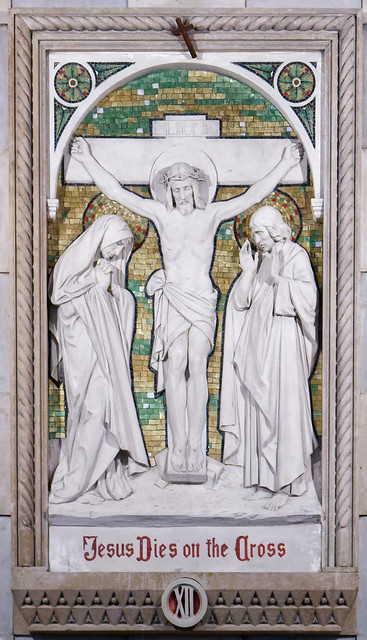
“It was now about the sixth hour, and there was darkness over the whole land until the ninth hour, while the sun’s light failed. And the curtain of the temple was torn in two. Then Jesus, calling out with a loud voice, said, ‘Father, into your hands I commit my spirit!’ And having said this he breathed his last.” (Luke 23:44-46)


Then Jesus, calling out with a loud voice,
said, “Father, into your hands I commit my spirit!”
And having said this he breathed his last.

As Jesus was dying on the cross He had just proclaimed His victory by the word, “It is Finished.” Yet there was one thing yet to do, and without it we could not have been saved. “The wages of sin is death.” (Romans 6:23) And if Jesus had not died to pay for the sins of the world, we would have had to die for our sin without any hope of salvation. It was proper for Jesus to proclaim His victory before it was done, because after He was dead He would not be able to say anything. Plus, He had come this far, He was not going to back out now. He had suffered God’s wrath over our sins and remained the faithful, obedient Son, still loving and trusting in God the Father, even while enduring the fierce wrath of God over all our wickedness and sins.

Is it any wonder that God twice proclaimed publicly, “This is my beloved Son. With Him I am well pleased.” When any of us sinners face some lesser pain or suffering we are easily tempted to wonder if God has abandoned us. Yet, here is Jesus, tormented and tortured on the cross, suffering the wrath of God over the sins of the world, which He had nothing to do with and did not contribute anything to in the least, and He still trusts in God to save Him from the death which follows directly.

We also see here that both His first and last words on the cross were prayers to His beloved Father. “Father, forgive them” and “Father, into Your hands I commit my spirit.” These prayers were prayed by a faithful Son who loved His good and gracious Father, even when it seemed like God was His enemy. Jesus lived His life as a man by faith, just as all of us ought to do, but where we often fail, Jesus was steadfast at all times. Here as Jesus faced death, He was still trusting in God to save Him. Jesus knew that He had to die, but He had faith that God is the one who rescues people from death. Even the sinless Son of God, who carried the sins of the world in His body and suffered the wrath of God like no one ever knew – He trusted that God would not abandon Him to the grave forever, but would rescue Him as He had promised to rescue us sinners for the sake of Christ.

Jesus died on the cross
to rescue you from the condemnation of your sins.
This also is where Jesus faced His last temptation as a mortal man – who was also God Almighty. Many times Jesus had been tempted to use His almighty, Divine power to save Himself, and this is surely one of those times. Jesus was at one of His weakest points as a man, yet, He could have summoned all power in heaven and earth to save Himself. If there had been the slightest flaw in His love for God or for wicked sinners, He could have stumbled here. If He had secretly desired the damnation of any horrible wicked murdering, lying, godless sinner, then He would not have let Himself die, and we all would get exactly what we deserved. Yet, Christ’s love was perfect. Jesus paid the full price for all sinners, even those who despised Him and rejected the price He paid to win their salvation, and all those who loved their sin more than Jesus, and reject His forgiveness and salvation. Jesus still loved them to the end, and gave His life for them.

Jesus had no proof that God would save Him from death, except what was written in the Holy Scriptures. In His humility, Jesus did not use His Omniscience as God to give Him assurance of God’s Will. He had the Word of God in the Bible, but Jesus had to trust that the Bible was true, and that God always kept His word.

It is humbling to think about it, but among all the things that could have gone wrong and cost us our salvation, we had to depend on Jesus not being a Biblical skeptic who doubted that the Bible was an accurate and dependable record of God’s Word. Jesus fully trusted that the Bible was the Word of God, and He always interpreted it correctly, even when those around Him often misinterpreted the Scriptures, and twisted the meaning to say something different – just as we see people doing it today. Even when the devil tried to twist the Scripture to tempt Jesus to sin, Jesus trusted God’s Word in the Bible was right, even when it caused Him suffering and pain.

Here we also see that these very last words out of the mouth of Jesus before He died were straight from the Bible. Jesus was quoting Psalm 31:5 which says, “Into your hand I commit my spirit; you have redeemed me, O Lord, faithful God.” We see that Jesus did not quote the whole verse, but His strength was failing, and He was dying, and we get the idea. Jesus was trusting in God, His Father, to look after His spirit and do with it what was good, right, and proper. Jesus would not try to save Himself, but trusted in God to restore His life, and to accept His sacrifice as the payment for the sins of the world, so that all who believe in Jesus will also be forgiven and rescued from death and given life everlasting in Paradise. Jesus trusted in God to be faithful to His Word, and He was not disappointed.

Jesus died trusting in God to save Him, and He not only saved Jesus from death, but gave Jesus all authority in Heaven and on earth, and rescue from sin and death to all who look to Jesus to save them from their sins. God’s Word is true, and because Jesus trusted in God and gave His life to redeem our sinful lives, we have the full forgiveness of sins and the promise of everlasting life in Paradise. We can live by faith, just as Jesus did His whole life, so that when we find ourselves face to face with death, we can trust in God to rescue us, and say with Jesus: “Into Your hand I commit my spirit; You have redeemed me, O Lord, faithful God.”


Articles in this series from 2023:


Father, forgive them for they know not what they do.
I tell you the truth, today you will be with me in paradise.
Woman behold your son. Son, behold your mother.
My God, My God, why have You forsaken Me?
I thirst.
It is finished.
Father, into your hands I commit my spirit.


Friday, December 15, 2023

God’s Name is Holy

Advent Devotion on the Lord’s Prayer 

by Pastor Paul Wolff 


Jesus said, “Pray then like this, … ‘Hallowed be Thy Name’” (Matthew 6:9)


God is the Father and the Son and the Holy Spirit.
Yet the Father is not the Son or the Holy Spirit.
The Son is not the Father or the Holy Spirit.
The Holy Spirit is not the Father or the Son.
It is a paradox, but this is how God reveals who He is.

You might sometimes hear people talk about the “names of God”. Hopefully you will never hear a Christian saying such things because the Holy Bible never speaks of the “names of God”. The Scriptures frequently speak of God’s “name” in the singular, but never in the plural. This seems peculiar because, although Scripture is clear that there is only one God, yet Jesus revealed that God is Triune: three distinct persons united in one God, the Father, the Son, and the Holy Spirit. Even in the Old Testament, the generic word for the true God is in the plural form, as if it were to say, “gods”, yet when referring to the true God, the pronouns (and accompanying verbs) for this God are all singular – “he”, “him”, and usually “I” (generally not “we”, though Genesis 1:26 does say, “Let us make man in our image…”) which shows that God is singular and masculine.  

In the days of Moses, God told Moses His name by saying, “I am who I am.” (Exodus 3:14) At first glance, we might think this begs the question, “Then, who are you?” Yet, this does tell us a few important things about God. The true God who spoke to Moses is the God who exists (“He is”), as opposed to the false gods, who do not exist except in the perverse imaginations of their followers. This name also shows us that God is eternal and does not change. This is also why we read in Hebrews 13:8, “Jesus Christ is the same yesterday and today and forever.” He is who He is – eternally. This is why the Jews wanted to stone Jesus when He told them, “Before Abraham was, I am!” (John 8:58) They recognized that Jesus was claiming to be the eternal God who was Abraham’s God two thousand years earlier. This would have been blasphemy if it weren’t true, but it is.

The True God is the one who would live and die
to redeem you from your sins
and rescue you from death.
This is why His name is hallowed among us.

When Jesus instituted the Sacrament of Holy Baptism He said, “All authority in heaven and on earth has been given to me. Therefore go and make disciples of all nations, baptizing them in the name of the Father and of the Son and of the Holy Spirit, and teaching them to obey everything I have commanded you.” (Matthew 28:18-20) Notice that the “Name” (singular) of God is “the Father and the Son and the Holy Spirit”. Jesus doesn’t say “names”, but “name”. This isn’t because Jesus did not know grammar. He certainly did, but was teaching us something profound about God. God may be triune, but the Father and the Son and the Holy Spirit are one God, not three, yet three distinct persons. It is a mystery, but this is how God reveals Himself in the Holy Scriptures.  

You will never hear me speak of the “names of God” except when teaching against it, as I am doing here. Those who speak of the “names of God” are either being imprecise in their language or they are trying to give the false impression that “all religions are alike”, or that ‘all roads lead to heaven”, or some such lies that try to diminish the unique character of God. The different worldly religions cannot all be different aspects of the same religion and god because all the world religions contradict each other. Rationally we can see that they may all be false, but they cannot all be true. At most, only one may be true. Christianity is the only religion of grace where God does all the work to save sinners, and then gives forgiveness for free through faith. All the other world religions (and false teaching in Christian churches) make you save yourself or do something to aid in your salvation. Which religion do you think is true? This is why God’s name is holy, and hallowed among true believers within all Christian denominations. 

It is also easy for people to be confused about God’s Name because the Holy Bible describes God in many different ways. Each distinct “name” that the Scriptures use to describe God shows a different aspect of God’s nature or personality. They are all true descriptions of God, but each one only shows a partial picture of God’s Name. In the Old Testament God is called such things as the Lord, the Ancient of Days, the Eternal God, the Living God, the Eternal Father, and many more such things. In the New Testament God is revealed through His only begotten Son, Jesus Christ, who also has several distinct titles. Yet we still do not say that “God has many names.” Why? Each of these names for God describe a certain aspect of His personality as He has revealed it to us. Each “name” shows us a part of who God is, but does not show us the fullness of God. It has been said that the entirety of the Holy Scriptures are an explanation of the Name of God. This is a good way to look at it. The Bible tells us who God is and what He has done to save us from our sin through the incarnation of God as a man, Jesus, and His lifetime of work to win our salvation, especially His innocent suffering and death on the cross as an atoning sacrifice for our sins. 

“You shall call his name Jesus,
for he will save his people from their sins.”

In Matthew 1:20-21 An angel of the Lord appeared to Joseph of Nazareth in a dream, saying, “Joseph, son of David, do not fear to take Mary as your wife, for that which is conceived in her is from the Holy Spirit. She will bear a son, and you shall call his name Jesus, for he will save his people from their sins.” The name, “Jesus” means “savior”, and that is His ultimate work. God’s name is truly hallowed among us because of all that God has done to save us from sin and death. God did not have to come down to earth to save us. He could have punished us as our sins deserve, and would have been justified to do so because we deserved punishment for our sins. Yet God preferred to take the hard road and sent His Son to become incarnate to redeem the world from sin through His life, death, and resurrection. 

God is both perfectly just and unfailingly merciful. These characteristics would seem to oppose each other when it comes to God wanting to save us from our sins. God’s holy desire to punish sin with death seems at conflict with His loving desire to rescue us from sin’s necessary consequence of death. Yet, in Jesus, God found a solution. God accepted Jesus as a substitute who would die for sinners and win our salvation. The Second Person of the Godhead became incarnate as a man, Jesus Christ, to live the perfect life in obedience to God’s Law, which we failed to do in our sinfulness, then Jesus offered His life as the perfect sacrifice to pay for the sins of the world. The life of Jesus is sufficient to pay for sin because His life is God’s life, and His blood is God’s blood, given and shed to redeem us all from our sins. God’s name is truly holy, because He found a way to rescue and redeem you from your sins while being perfectly just in punishing the sin of the world through the death of Jesus. In the life and death of Jesus, God found a way to be perfectly just in punishing sin, and perfectly merciful and loving in redeeming us through the sacrifice of the life of Jesus. This is why we will praise and thank God for all eternity for the Salvation He won for us sinners. 

We call the holy family “holy”
not because Mary and Joseph are holy,
but because Jesus is holy.

There is nothing in all the world more precious than the love of God. He has redeemed us and calls us His children, though we do not deserve it. Yet, because Jesus paid the price for the sins of the world we are happy to receive His forgiveness and salvation as a most wonderful gift, and praise God forever for His unending love. 

This Petition in the Lord’s Prayer in closely related to the Second Commandment, “You shall not misuse the name of the Lord your God.” The commandment and the petition both deal with God’s name. Because God’s Name is holy, we should use it properly and not misuse it. This is not easy to do. As time went by after God gave the Ten Commandments to Moses, the Israelite people of the Old Testament put too much emphasis on God’s Law and, for fear of misusing God’s Name, they stopped using it altogether. Instead of using the Name that God gave them to use, they instead spoke the general term, “lord”, even in their worship and when reading the Bible. If God had not wanted the people to use His name, then he wouldn’t have given it to them, but God gave us His Name so that we might use it. In Psalm 50:15 God says, “Call upon me in the day of trouble; I will deliver you, and you will honor me.” It is for Bible verses like this (and many others) that Martin Luther explains this petition by saying that it is our duty to “Call upon God in every trouble, pray, praise, and give Him thanks.” 

In the Advent season we especially remember God’s name because God sent His Son to be our savior, to rescue us from sin, and to bring us back into the household of God as His beloved children – for the sake of Jesus. God’s name truly is holy, as is everything He has done to give us good gifts in this life, and for the salvation that He has prepared for us through faith in Jesus Christ, our Lord. 

Tuesday, December 5, 2023

God is Our Father

Advent Devotion on the Lord’s Prayer
by Pastor Paul Wolff

Jesus said, “Pray then like this, ‘Our father, who art in heaven …’”

Matthew 6:9


Jesus prayed to His Father
in the Garden of Gethsemane.
He also invites us to pray to God as our Father.

God can be considered our Father because He is the one who created us all. Yet we have orphaned ourselves through our sin. It is not that we have killed our father, but rather, through our sin, we have killed ourselves and rebelled against our good and gracious heavenly Father. Yet, when Jesus teaches His disciples (and us) how to pray, He begins the prayer by teaching us to pray to God as “Our Father, who art in heaven.” This is a gracious invitation that Jesus would consider us His brothers and sisters that we could once again call God our Father. We can only do this due to the redemption that Jesus won for us by His perfect obedient life, and His innocent suffering and death. Since, because of our sin, we all have imperfect examples of what a Father ought to be, we may begin by asking, “What kind of a father is God?”

Several years ago there was a billboard campaign which purported to be some kind of messages from God. These billboards were likely well-intentioned, but were ultimately blasphemous. They showed a black billboard with white lettering ending in the simple tag, “– God” as if to imply that these messages came from God. It was blasphemous because none of the pithy sayings were quotes from Holy Scripture nor otherwise from God. All these messages only contained Law and no Gospel, and many of them contradicted clear teachings of God’s word. Nevertheless, they were sort of amusing in a superficial (though blasphemous) way. One that caught my attention said, “Don’t make me come down there. – God” as if God were a parent warning His disobedient children with vain threats. We should be aware, however, that God is not the kind of father who makes vain threats. When God makes threats they are real, and should be taken seriously, though God also provides rescue from sin and death through faith in Jesus Christ to all who believe – which is why we take the time to celebrate His first Advent, and look forward to His second coming also. 

I don’t know exactly what the billboard writers had in mind because they were a little late with their warning that if we disobey God we might make Him come down here to punish us. The first people God created (Adam and Eve) long ago let that cat out of the bag. Because Adam and Eve rebelled against God and brought sin into the world, God DID come down here. Fortunately, when God came down here He didn’t bring about the punishment the billboard sponsors were insinuating. When God came down here He didn’t come to judge and condemn us. Instead God the Father sent His only begotten Son down to rescue and redeem us from our sinfulness. This is the Gospel message. It is also one reason why the church where I am the assistant Pastor is named Emmanuel – God is here with us always for our forgiveness and salvation. The mere presence of God may not be such a happy occasion, unless God comes to rescue and redeem, and He does. 

We can always turn to God as our beloved Father
just as the prodigal son was happily received
by his forgiving father.

The incarnation of God as a man is the central event in all of human history. That is why we count our years from the date of Christ’s birth (or as close as could be determined at the time, though that is a story for another time). God knew before He made people that we would rebel against Him and we would be lost unless He did something to save us. Yet, He went ahead and created the people who would reject His authority and cause Him immense grief and suffering. Why would anyone do that? Only love could cause someone to go through that kind of suffering rather than avoid it. Saint Paul explained this to the Romans, “Very rarely will anyone die for a righteous man, though for a good man someone might possibly dare to die. But God demonstrates his own love for us in this: While we were still sinners, Christ died for us.” (Romans 5:7-8) Christ’s sacrifice for our benefit is the very definition of God’s perfect love. That is why we celebrate Advent every year. All who believe in Christ as our savior rejoice at God’s coming to us to rescue and redeem us from our sins.

All man-made gods require something from their followers to prove that they are worthy of favor. This makes these false gods seem very demanding, but it also makes them seem able to be manipulated by the actions of people. This is why false gods are so attractive to people. Though the false gods can be harsh taskmasters, those who create false gods also make it seem to the people as if they can control their pretend gods. If you can control God, then you are lord over Him and you are, in effect, your own god. It isn’t real, but is just as pretend as the false gods, but ever since the first temptation where Adam and Eve fell into sin, people have been trying to become like a god and make our own rules. This is part of our continuing rebellion against God, our Father, and why we need to repent of our sins and ask God our Father to forgive our sins for the sake of Jesus.

The true God is not like the false gods. Jesus didn’t come to us to demand anything from us. There is nothing we can give God that doesn’t already belong to Him. We can’t make up for our sinful rebelliousness. Jesus didn’t come to take anything from us. He came to give. Jesus came to live the obedient human life that none of us are capable of doing. Jesus perfectly pleased God the Father with His obedient life, and then He offered His life in place of ours on the cross. Because of what Jesus did on the cross (and throughout His whole life) we are saved from our sins. All who trust in the forgiveness that Jesus won for us will be rescued from death and blessed with eternal life in paradise. This is why we can confidently pray to God as our Father and why we celebrate the Advent (“coming”) of Jesus and look forward with eager expectation to His Second Advent on the last day.

Friday, April 7, 2023

Father, into Your Hands I Commit My Spirit.

Seventh in a series on the Seven Last Words of Jesus

by Pastor Paul Wolff 


It was now about the sixth hour, and there was darkness over the whole land until the ninth hour, while the sun’s light failed. And the curtain of the temple was torn in two. Then Jesus, calling out with a loud voice, said, “Father, into your hands I commit my spirit!” And having said this he breathed his last. (Luke 23:44-46)


Christ’s last words before He died were
“Father into Your hands I commit my Spirit”
How much would you trust someone who wanted you dead? I suspect you wouldn’t trust such a person very much. What if it was God who wanted you dead? Would you trust Him? The more you live according to the flesh, the less you trust God. Jesus has flesh like you and me, except without the corruption of sin. Jesus felt sad and hurt when people sinned against Him, and when they betrayed Him, and abandoned Him, and conspired against Him, and when they crucified Him. Even though sinners wanted Jesus dead, He did not curse them, but blessed them. Jesus gave all He had to save sinners, though sinners despise Him.

Sinful people weren’t alone in wanting Jesus dead. God the Father also wanted Jesus dead. It wasn’t for hatred or anger or the punishment for any sin that God wanted Jesus dead. Jesus was without guilt for any sin, because He committed no sin – neither in thought, nor word, nor deed. God had twice proclaimed of Jesus, “This is my beloved Son, in Him I am well pleased.” Yet, Jesus carried in His body the guilt of the sins of the whole world. At His Baptism, Jesus had agreed to be the scapegoat and the sacrificial lamb for the sins of the world, and for this God wanted Him dead. It was not out of anger that God wanted Jesus dead, but out of love – both from the Father and the Son (and the Holy Spirit). Because Jesus was carrying out the Father’s will and bearing the sins of the world to redeem us all from our sins, this was another reason why God the Father was well pleased with His beloved Son.

Yet, God wanted Jesus dead. If you thought God wanted you dead, would you still trust God? Would you still love God? Jesus did, and still does. Remember that both His first and last words on the cross were prayers to His beloved Father. “Father, forgive them” and “Father, into Your hands I commit my spirit.” These prayers were prayed by a faithful Son who loved His good and gracious Father, even when it felt like God was His enemy.

Remember that by the time Jesus spoke these words He had been through hell – literally. He had endured the full wrath and anger of God the Father over the sins of the world. He had suffered God’s wrath, and it was finished. All that remained was for Him to die. Despite all that He endured, Jesus still had not lost His love for the Father, or for you. Jesus was quoting Psalm 31 which says, “In you, O Lord, do I take refuge; let me never be put to shame; in your righteousness deliver me! Incline your ear to me; rescue me speedily! Be a rock of refuge for me, a strong fortress to save me! For you are my rock and my fortress; and for your name’s sake you lead me and guide me; you take me out of the net they have hidden for me, for you are my refuge. Into your hand I commit my spirit; you have redeemed me, O Lord, faithful God.” (Psalm 31:1-5) Jesus was completely trusting in God to rescue Him from death, even after the Father had forsaken Him and poured out His wrath on Him for the world’s sin. Jesus had no assurance as a man that God would restore Him to life, except what was written in the Holy Scriptures. That was more than enough.

Jesus had known that it was the Father’s Will for Him to die at least since He was twelve years old and was learning from the teachers in the temple in Jerusalem. Though the Gospel of Luke does not tell us what they talked about, it was likely they talked about the Passover, since they were in Jerusalem to celebrate the Passover. Jesus likely was interested in the sacrificial lamb of the Passover meal, and what that had to do with God’s salvation and the messiah. He would have learned that the Passover lamb was slain in place of the firstborn. The lamb died, so that the firstborn son would live. If the teachers didn’t mention it, Jesus might have asked if the messiah would be like the Passover lamb. The answer is found in Isaiah 53: “We all, like sheep, have gone astray, each of us has turned to his own way; and the Lord has laid on him the iniquity of us all. He was oppressed and afflicted, yet he did not open his mouth; he was led like a lamb to the slaughter, and as a sheep before her shearers is silent, so he did not open his mouth.” (Isaiah 53:6-7)

Jesus was not afraid to
entrust His life into the hands of God,
even though God was punishing Him for the sins of the world.
He knew from Scripture that God would rescue Him from death.

Jesus knew that as the Christ, His life would be like that sacrificial lamb, to suffer and die to take God’s punishment for the sins of the world. This would rescue and redeem people from their sins. This was God’s Will, so Jesus was willing to do this to please God, His Father. Jesus could also take comfort in other Scripture passages such as 2 Samuel 7:13-14 where God said to King David, “I will establish the throne of His kingdom forever. I will be to Him a Father, and He shall be to me a Son.” If the Christ would reign as King forever, He would have to live, even if He would die. As a man, Jesus did not use His Divine Omniscience to know the mind of God. Jesus had to trust the Word of God in the Holy Bible just as you and I do. And yet, as Job observed when he suffered, “Shall we accept good from God, and not trouble?” (Job 2:10) Jesus accepted and endured the wrath of God because it was His beloved Father’s Will. He trusted that God intended it for good because God is good, and Jesus loved God the Father with all His heart, and with all His soul, and with all His strength, (see Deuteronomy 6:5) and He loved His neighbor as Himself (see Leviticus 19:18).

Psalm 50:15 says, “Call upon me in the day of trouble; I will deliver you, and you shall glorify me.” How do you know God will deliver you? Jesus was there dying on the cross to deliver you from your sins. He will never let you fall. These final words of Jesus on the cross are a prayer that every Christian can – and should – pray as you contemplate your own final hour and death. Your spirit can be in no better place than in the hands of God. It is true, though, that you have no more assurance that God will rescue you from death, than the promises that God has given you in Holy Scripture. These promises were more than enough for Jesus, and they are also more than enough for you. God’s word is eternal, and He keeps His promises. Jesus said, “Heaven and earth will pass away, but my words will never pass away.” (Luke 21:33) God’s word is more sure than the ground you stand on.

Jesus also promised, “For God so loved the world, that He gave His only begotten son, that whoever believes in Him shall have everlasting life.” (John 3:16) Since God gave the One whom He loved so dearly to save you, you can believe that God will never leave you nor forsake you (see Joshua 1:5) and will rescue you from sin and death. “Father, into Your hands I commit my spirit.”


Articles in this series:


Father, forgive them for they know not what they do.
I tell you the truth, today you will be with me in paradise.
Woman behold your son. Son, behold your mother.
My God, My God, why have You forsaken Me?
I thirst.
It is finished.
Father, into your hands I commit my spirit.


Sunday, December 25, 2022

The Holy Family

by Pastor Paul Wolff


The Holy Family
Window from Epiphany Lutheran Church,
Detroit, Michigan
(Now closed)

This past year (2022) my wife and I have been blessed to see our extended family grow. On the day of Epiphany we rejoiced at the birth of our fifth granddaughter. Then, not quite eleven months later, we rejoiced again at the birth of her niece, our first great-granddaughter. I don’t know what the deal is with all the girls. Statistically, you would expect out of six children born to the younger generations three would be girls and three would be boys. Children, aren’t born by statistics, however, and our grandchildren are all beautiful women and girls, and we thank God for all of them.

Children are truly a blessing from God, despite what the world may think of them. King Solomon wrote, “Behold, children are a heritage from the Lord, the fruit of the womb a reward. Like arrows in the hand of a warrior are the children of one’s youth. Blessed is the man who fills his quiver with them!” (Psalm 127:3-5) This blessing goes all the way back to the creation of the world where God created mankind as a husband and his wife and blessed them, saying “Be fruitful and multiply and fill the earth and subdue it, and have dominion over the fish of the sea and over the birds of the heavens and over every living thing that moves on the earth.” (Genesis 1:28) This blessing was given before the fall into sin, but God blessed Adam and Eve with children even after they rebelled against Him, but He also promised to send a Savior to rescue them all from their sin. God also repeated His blessing to Noah and his sons after God rescued them from the great flood, saying“Be fruitful and multiply and fill the earth.” (Gen 9:1) Even though every person ever born on earth (except Jesus) has been born a sinner, God still blesses families with children, and has provided salvation for all of us through Jesus. This is the reason why we celebrate with joy the birth of Jesus, and why it is also important to remember the Holy Family at Christmas (and at other times when we celebrate God’s gifts of new members to our family).


The Holy Family
at the Nativity of Christ
This is not the real Holy Family, but a lifelike representation
(compared to the other images in this article).
It is significant that when God became incarnate He came into a young family. In American culture, we would say today that Mary and Joseph were engaged to be married, because the marriage had not been consummated. In Jewish culture of that time, respectable people (like Joseph and Mary) would be legally married for a year – while living apart – before they consummated the marriage. You should note, too, that this practice was not only for prominent wealthy people, but also for laborers, like carpenters. It didn’t matter if Joseph was a skilled master carpenter or an unskilled laborer. People of all social classes would demonstrate their integrity by waiting a year before consummating the marriage, thus showing that they had not engaged in physical intimacy with each other. This not only gave them time to prove they were chaste and hadn’t been unfaithful, but it also gave them time to solidify their lifelong commitment to one another, and to the new family that they were creating.

God could have chosen an unmarried virgin to bear God’s Son, but that is not how God works. God, in His wisdom, created marriage and family for a purpose and He blesses families. In an intact family, the children know the love of both their father and their mother (see the Fourth Commandment – Exodus 20:12). This is God’s good plan, and though in this sinful world, this is not always possible, it is what we should strive for at all times. Besides, as God planned it, we have the “holy family” to look up to and try to make our own families holy also. We do this through repentance and forgiveness of one another when we sin against one another – as we inevitably will. If God had become incarnate through an unmarried woman, then Christians would idealize unmarried mothers and that would necessarily result in all kinds of chaos, like we see in pagan America today: children growing up in broken families feeling unloved and disobeying authorities and getting involved in drugs and crime. Our prisons are overwhelmingly populated with children of broken families.

The Holy Family
Window from Holy Cross Lutheran Church,
Detroit, Michigan
(Now closed)

As it is, Joseph and Mary belong together, and we ought to try to emulate their purity and faithfulness. Though, I should say here that the “pious” idea of Mary’s lifelong virginity is pure wickedness. That would make her a lousy wife to withhold herself from her husband (see 1 Corinthians 7:1-5). Mary is perpetually a virgin in our memory because we perpetually remember her as “the blessed virgin”, or the “virgin mother”. We do this because Mary was still a virgin until after Jesus was born (see Matthew 1:18-25). This is important because it testifies to the fact that Jesus is the Son of God, not the physical son of Joseph or any other sinful man, though Jesus lived as the son of Joseph, and was named as such (see Luke 2:48; Luke 3:23; Luke 4:22; Matthew 13:55; John 1:45; and John 6:42). There is no confusing the Blessed Virgin Mary with anyone else because never before and never again will a virgin conceive and bear a child. We also see in Matthew 13:55 and Mark 6:3 that the brothers of Jesus are named and the Gospel writers make note that they have sisters, also. The most plain (and best) interpretation of this is that these are the natural children of Joseph and Mary. There is no reason to doubt that – either historically, or exegetically, or theologically.

The “holy family” is considered holy because Jesus is holy. Joseph and Mary were sinners in need of Jesus to save them from their sins. In the Magnificat (Luke 1:46-55) Mary calls God, “my savior” (v. 47). Yet, despite the fact that Joseph and Mary were just like everyone else, they were also faithful, pious believers. As a young married couple, they were chaste and pure. When Joseph learned Mary was pregnant, he knew he was not the father, and though he was not (at first) willing to believe what Mary must have told him about what the angel said, he could have intended to have her stoned for adultery, but instead he planned on divorcing her quietly and not subjecting her to public disgrace. Then, when God told Joseph in a dream that all Mary had told him was true (see Matthew 1:20), he believed and kept the family intact. Joseph later protected Mary and Jesus by taking them to Egypt after Herod sought to kill the child, who was the true King of Judah (see INRI).

The Holy Family
Window from Emmanuel Lutheran Church,
Dearborn, Michigan

The world despises children because it takes sacrificial love to properly raise a child. Selfish pagans idolize themselves and do not care to expend the love and time and money it takes to provide for a child’s needs of body, soul, and mind. Parents must sacrifice to provide for their children’s needs, but that is what people were made for. It is very rewarding to raise a child and give him or her the necessary skills and resources necessary to become a respectable, productive member of society. It is even more rewarding for Christian parents to raise a child who loves God and his neighbors, and trusts in Jesus to save him from his sins. Parents who have done a good job raising children can be justifiably proud that their children are admired and respected by their neighbors and friends, and are valued members of society who care for those whom they deal with every day. This is something that selfish unbelievers who despise and murder their children (see my article on Molechianism) will never fully know because they idolize themselves, and they are unfulfilled because sooner or later their false gods will fail them.

No family is perfect, however, because all members of families are sinners. Even the holy family must have had its struggles and difficulties. The presence of Jesus did not change the sinful nature of Joseph and Mary, nor of His brothers and sisters. The story of the boy Jesus in the temple at age 12 (Luke 2:40-51) shows us that as the years went by, Joseph and Mary seem to have taken for granted that Jesus was the Son of God, and just thought of Him as a normal boy – which He was. There seems nothing out of the ordinary in the way that they deal with Him, as their son. They do show a high level of trust in Him, as they weren’t particularly worried that He wasn’t with them for a time. They assumed that Jesus was with others in their group (v. 44) as they traveled back up north, and they trusted Him not to be disobedient. Jesus always obeyed them perfectly, as an obedient son, but somehow not in a way that drew attention to Himself – so they trusted Him. Though, Mark 3:20-34 describes a situation where Christ’s family (specifically, His mother and brothers) thought Jesus was out of His mind, but Jesus kept teaching what He had been teaching because He was doing what He was supposed to do, and few others understood what it was all about. They thought Jesus suicidal for calling the leaders to repentance, and not heeding the threats against His life. Jesus was not suicidal, and at various times had to walk away from imminent threats to His life before His work was finished (See John 6:15 and Luke 4:24-30), but neither did He try to save Himself when the time came for Him to give His life to pay the price for the sins of the world (see Matthew 27:12-14). Some of the people who heard Christ’s teaching understood after He died and rose to life again, but others never did.

Glory to God in the Highest
Jesus is born in Bethlehem
(I forget where this window is from.
This is a scan of an old film photograph.)

It seems strange to the world that God would become a man simply for the purpose of suffering and dying a shameful death on a cross. It is no wonder that Christ’s family thought Him out of his mind. That kind of love doesn’t make sense to our selfish, sinful flesh, but God’s love is perfect, and we see perfect love in the life and death and resurrection of Jesus. That is why we celebrate Christmas, and why we celebrate more on Good Friday and on Easter Sunday. God is the only one who can save us from the guilt of our sin, and rescue us from sin’s consequences. So God became a man in Jesus to redeem us from sin and death. This is perfect love in action – that God would live and die to save His disobedient people, so that He could make us holy to live with Him forever.


This Christmas may Christ bless your family as you contemplate the Holy Family. May you love one another as Christ has loved you. May you forgive the sins that your family members commit against you, as Christ has forgiven all your sins. May father and mother be strengthened in love and commitment to one another, and may children give thanks to God continually for the blessings of their family.


Psalm 144:9-15 (NIV)

I will sing a new song to you, O God;
on the ten-stringed lyre I will make music to you,
to the One who gives victory to kings,
who delivers his servant David from the deadly sword.
Deliver me and rescue me from the hands of foreigners
whose mouths are full of lies, whose right hands are deceitful.
Then our sons in their youth will be like well-nurtured plants,
and our daughters will be like pillars carved to adorn a palace.
Our barns will be filled with every kind of provision.
Our sheep will increase by thousands,
by tens of thousands in our fields;
our oxen will draw heavy loads.
There will be no breaching of walls,
no going into captivity,
no cry of distress in our streets.
Blessed are the people of whom this is true;
blessed are the people whose God is the Lord.


Here are my other Christmas-themed articles from this blog:

What was Jesus like as a Boy?

Come, Lord Jesus! 

God’s Justice and Mercy at Christmas 

Justice at Christmas 

Christmas Peace is Forever 

Is Christmas Offensive? 

Christ is for You 

God is With Us 

Does Jesus Sing? 

The Incarnation of God

Magi

Shepherd Visitors

Don’t Make Me Come Down There!