Showing posts with label martyr. Show all posts

Sunday, September 4, 2016

The Economics of Christ’s Salvation

by Pastor Paul Wolff

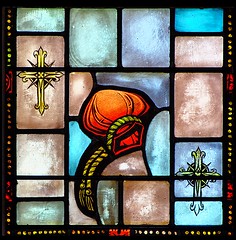
Money bag for helping your neighbor

Jesus said, “If anyone comes to me and does not hate his own father and mother and wife and children and brothers and sisters, yes, and even his own life, he cannot be my disciple. Whoever does not bear his own cross and come after me cannot be my disciple.” (Luke 14:26-27)


If you listen too much to what the world says about Jesus, and don’t know your Bible very well, then you might be surprised to hear Jesus say that you cannot be His disciple unless you hate your father & mother, wife and children, brothers and sisters, and even your own life!

Even those who are ignorant of the Bible, if they know anything at all about Jesus, they know that He said, “Love your neighbor.” Of course, the world (and even some unbelievers in the church) would then go on to define “love” to mean whatever they want it to mean, including some things which the Scriptures and Jesus clearly forbid and condemn, such as any kind of lust and adultery, including pre-marital intimacy, sexual promiscuity, and homosexual activity.
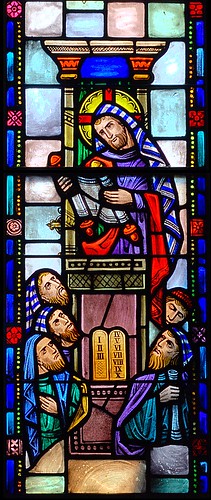
Jesus taught the Scriptures
in a Nazareth Synagogue

Although the world doesn’t have a clue how to properly read the Bible, Christians should be aware that any interpretation which contradicts the Holy Scriptures is false. You can’t play one Scripture passage against another, so as to say, “Well, there Jesus says to love, and here he says to hate, so I guess I get to choose which one I will follow today. Tomorrow I may choose the other, but it’s my choice.” That is false, and you are always going to fall into sin if you do that.

It is also a sin to view this as a contradiction, and without trying to resolve the apparent contradiction, say, “Since the Bible seems to contradict itself, then it is not the infallible word of God and cannot be trusted, so I can go do what I want and you can’t say anything against me.” Now, if the Bible really did contradict itself, then it could not be trusted, but the Holy Scriptures truly are the Word of God and they do not contradict one another at all! What seems like contradictions in the Bible are only apparent contradictions, and they can easily be resolved and you can still maintain both sides as being true in every case.

In this case, the proper question must be, “How can you hate your neighbor (in a godly way), and still love him at the same time?” This isn’t that hard, really. Remember that the Scriptures say that all people are sinners from the time we are conceived (Psalm 51:5) so we can hate the sinfulness both in our neighbor, and in ourselves, and we can still love them as those for whom Christ died to redeem (even if they don’t acknowledge Christ’s saving work.) We can also acknowledge that Jesus is using hyperbole (or exaggeration) to make the point that you should love Him so much that it seems like you hate everyone else. This is not to say that we should hate as if we would wish our neighbor were dead, but that we should love God above all else and despise sin in ourselves and our neighbor.
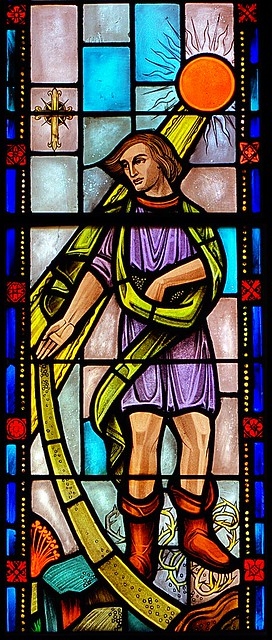
The Sower sowing his seed

This is how it works in practice: I have heard of situations where an elderly person comes to the faith, but then has doubts in regard to a loved one. It could be a beloved husband or wife, a child or a parent, or a sibling. But some people actually lose their faith and say, “If my beloved is not in heaven then I don’t want to go there.” This kind of person is what Jesus was talking about in the Parable of the Sower. He is like the seed which falls on the unfit soil. This person quickly loses the faith that could have saved them. It is tragic arrogance to think that you are more righteous than God Himself. Do people really think that they are a better judge than the all-knowing God? Jesus is the Good Shepherd who knows His sheep, and will never let even one go astray without going out and bringing him or her back into the flock. Also, don’t think that anyone will find any friends in hell. There is no love in hell, and those who may have loved you earth will only hate you and torment you in hell. While our loved ones are still alive we may try to lead them to find their salvation in Jesus, but once they have died we must leave their fate to the mercy of God and trust that Christ’s Judgment is always just and merciful. This is what Jesus is warning us about in Luke 14. Count the cost.

There is a cost to being a Christian. Don’t be fooled by the false teachers of our age who promise that being a Christian is all about unfailing success and prosperity. That doesn’t get you too far when a Jihadist puts a knife to your throat and asks you if you are a Christian. Martyrdom is not part of the prosperity gospel, but it can be part of the Christian life. Martyrdom is an extreme cost, and not all Christians are murdered because of their confession of Christ, but there is a cost to being a Christian.
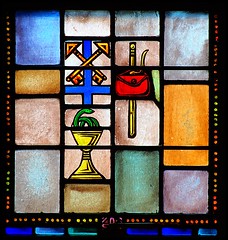
Symbols representing Saints Peter, James & John

Revelation 7:14 calls the Christian life a “great tribulation” which recognizes the Christian life as a battle or a war. The Christian life is a battle because we must fight against sin and temptation. The pagan life is not a battle in the same way because the unbeliever sees no need to resist temptation. In some ways it is easier to be an unbeliever because they don’t have to fight against their own sinful flesh. They may indulge any sinful desire and not worry about any consequences. There are consequences and costs to the pagan life, too, but I will get to that shortly. Proverbs 8:13 says, “The fear of the Lord is hatred of evil.” So Christians also hate evil and fight against temptation, even when our own flesh says, “I want to do wrong. I need to do that sin. I will die if I don’t do that sin.” Yes, the sinful flesh is a drama queen, but temptation can be compelling to our weak flesh. That is why we must fight against temptation. It hurts to deny the flesh its sinful desires, but that is one of the costs of being a Christian.

Think of the Beatitudes. Jesus doesn’t say, “Blessed are the rich and powerful who always get their way and are happy all the time.” It is only the heretics who say that! Jesus says: 

  • Blessed are the poor in Spirit
  • Blessed are those who mourn
  • Blessed are the meek
  • Blessed are those who hunger and thirst for righteousness
  • Blessed are the merciful
  • Blessed are the pure in heart
  • Blessed are the peacemakers
  • Blessed are those who are persecuted for righteousness’ sake
  • Blessed are you when others revile you and persecute you and falsely say all kinds of evil against you because of (Jesus).

Christians aren’t blessed because they mourn or are meek, or do any of the other things. They are blessed because Christ gives them good gifts which rescue them and make up for their sorrow and pain in this sinful life.
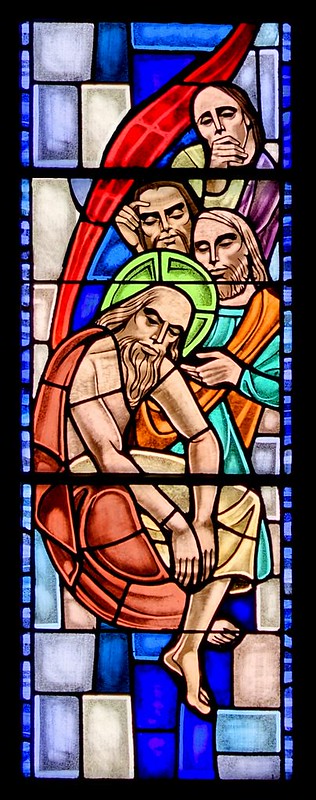
Job's suffering
(window from Holy Cross Lutheran Church, Detroit)

So Jesus says, “Whoever does not bear his own cross and come after me cannot be my disciple.” Remember that when Jesus said this, the cross was not a gold or silver-plated piece of jewelry that you proudly wear around your neck to proclaim your forgiveness and salvation in Christ. When Jesus said this the cross was the most shameful method of torture and death used to shame and humiliate the most despised criminals. So to take up your cross and follow Jesus is to recognize that you are a sinner and only deserve death, so you count your life and possessions as forfeited for Christ’s sake and look to Him to save you from sin and death, as He has promised to do.

That leads us to the other part of counting the cost – the benefits! You should also add the benefits when you count the cost. The benefits of being a Christian include: 1) complete forgiveness of all your sins – through the redemption that came by Christ Jesus; 2) reconciliation with God, the Father, and with that – adoption as His beloved child; 3) Sanctification by God the Holy Spirit; 4) resurrection to everlasting life; and 5) an eternity of joy with all the countless brothers and sisters in Christ who are likewise redeemed. These benefits are worth more than the whole world. That is why St. Paul could say in Philippians 3:7-9, “Whatever was to my profit I now consider loss for the sake of Christ. What is more, I consider everything a loss compared to the surpassing greatness of knowing Christ Jesus my Lord, for whose sake I have lost all things. I consider them rubbish, that I may gain Christ and be found in him, not having a righteousness of my own that comes from the law, but that which is through faith in Christ – the righteousness that comes from God and is by faith.”
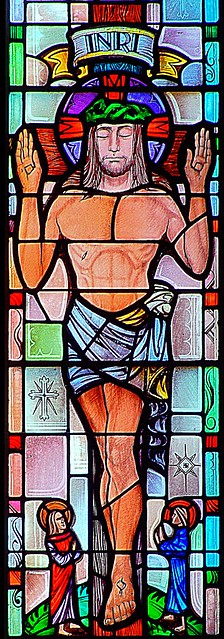
Jesus paid the price for your sin

You should also know that although your forgiveness and salvation is free to you as a gift from God, it was not won without its own cost. In fact, your salvation was only won at a very high cost: which was the entire life and the innocent suffering and death of Jesus. When God was planning your salvation in eternity before the creation, the Son of God also had to consider the cost. Although God created the first people perfect, and without sin; yet, Adam and Eve soon rebelled against God and brought His condemnation upon themselves and their children. Yet despite their rebelliousness and lack of gratitude for all that God had given them, the Son of God loved them enough to take their punishment on Himself and was willing to endure the indignity and pain of crucifixion and also to endure the Father’s wrath of a world full of sinners.

Yes, there is a cost to being a Christian, but the cost is very small in relation to the benefits. What would you do? Would you rather indulge the pleasures of the sinful flesh for a short time (and suffer all the temporal consequences of that wickedness), and then suffer an eternity of torment with no hope of relief? Or would you rather deny yourself the guilty pleasures of sin and live in the hope and confidence of God’s love for you in Christ Jesus, and then enjoy an eternity of pleasures of God’s gracious gift of life and salvation? St. Paul wrote, “I consider that our present sufferings are not worth comparing with the glory that will be revealed in us.” (Romans 8:18) No one likes to suffer. Even Jesus wasn’t all too thrilled with the prospect of suffering and death (see Matthew 26:36-46), but out of love for God and for you, He willingly suffered and died to save you.

There is a cost to being a Christian, but God did not ask you to pay the price for your sin. Instead, God sent His own Son to pay the terrible price for your sin to redeem you and adopt you as His child to give you an eternity of life with Him in Paradise. It is only because of Jesus that we can live in this wicked world with hope of life and salvation. So we also join with St. Paul and all the saints and say, “For I am convinced that neither death nor life, neither angels nor demons, neither the present nor the future, nor any powers, neither height nor depth, nor anything else in all creation, will be able to separate us from the love of God that is in Christ Jesus our Lord.” (Romans 8:38-39)

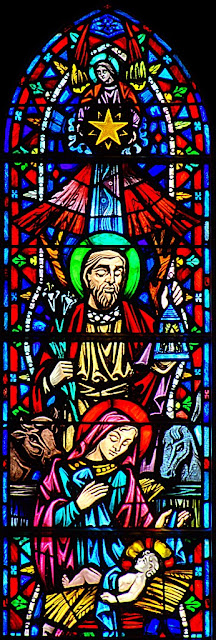
Friday, December 25, 2015

God is With Us

by Pastor Paul Wolff

Emmanuel means “God is with us.”


God is with us in Jesus

God has always been with His people since He created Adam and Eve. Even when they rebelled against Him and became His enemy, He never abandoned them, but has kept all of us in His grace and providing for all our needs, especially the need for a savior from our sin. But, ever since God became incarnate in the person of Jesus Christ God has lived with us in a closer, and more wonderful way. In Jesus, God lives with us as a Man – sharing our flesh and blood, sharing our sorrows and joys, and sharing our pain and pleasures (except when we take pleasure in sin).

The one thing that Jesus does not share with us is the ultimate guilt of our sin. Jesus has taken the guilt of the whole world’s sin into Himself and carried it to the cross where He endured the punishment for all sin of all time and He took our guilt to the grave where it belongs. Then when Jesus arose to life from the dead we were freed from the guilt of our sins and heaven was opened to all who trust in Jesus as our Savior and God.

Jesus said, “God did not send His Son into the world to condemn the world, but in order that the world might be saved through Him.” (John 3:17) Jesus is with us to save us, not to condemn us – even though because of our sin we all only deserve condemnation. Even though Jesus ascended into heaven forty days after His resurrection from the dead, He is still with us. Immediately before He ascended into Heaven, Jesus said, “I am with you always, to the end of the age.” (Matthew 28:20) Heaven is not so far away from you as you may imagine. Jesus is nearby, closer than you may think.

Only one thing is needful.
Mary hath chosen that good part,
which shall not be taken away from her.

Emmanuel: God is with us in His word. When Jesus sent His apostles out on a short mission trip He told them, “The one who hears you hears me, and the one who rejects you rejects me, and the one who rejects me rejects him who sent me.” (Luke 10:16) When we hear faithful pastors preaching and teaching God’s Word we are hearing Jesus because He is there working through His Word to lead us to trust in Him and rely on Him to save us. God’s Word is powerful to work our salvation because God is here working in His Word. God spoke through the prophet Isaiah saying, “For as the rain and the snow come down from heaven, and do not return there but water the earth, making it bring forth and sprout, giving seed to the sower and bread to the eater, so shall my word be that goes forth from my mouth; it shall not return to me empty, but it shall accomplish that which I purpose, and prosper in the thing for which I sent it.” (Isaiah 55:10-11)

Jesus was baptized to take on the
guilt of our sins and wash us clean

Emmanuel: God is with us in Holy Baptism. Jesus commanded His followers to baptize and teach in order to make disciples and spread His kingdom throughout the world. Baptism is not just a symbol of washing, but it is true washing and rebirth by God, the Holy Spirit. St. Peter wrote, “Baptism … now saves you, not as a removal of dirt from the body but as an appeal to God for a clear conscience, through the resurrection of Jesus Christ.” Martin Luther showed that the power of Baptism is God working through His Word which is combined with the water to give us a new birth as children of God. (see John 3:5)

Jesus gives us His body and blood
so he will be with us always.

Emmanuel: God is with us in the Lord’s Supper. Here again, Jesus combines the Word of His promise with the physical elements of bread and wine to bring forgiveness, life, and salvation to those who believe in Him. Regarding the bread and wine, Jesus said, “This is my body. … This is my blood
… for the forgiveness of sins.” (see Matthew 26:26-29) Jesus is the God who is with us and who comes to us in the elements of the Lord’s Supper. This again is not just a symbol or representative of God’s presence. Jesus is truly present in His Body and Blood in the bread and wine of the Sacrament. This is for the benefit of believers – who receive what is graciously given, but because Jesus is bodily present in the Lord’s Supper it is also a curse for unbelievers who receive Christ’s body and blood, but do not believe it and so reject Jesus. This is why St. Paul taught, “Whoever eats the bread or drinks the cup of the Lord in an unworthy manner will be guilty concerning the body and blood of the Lord. Let a person examine himself, then, and so eat of the bread and drink of the cup. For anyone who eats and drinks without discerning the body eats and drinks judgment on himself. That is why many of you are weak and ill, and some have died.” (1 Corinthians 11:27-30)

Jesus was there for Zacchaeus
to absolve him of his sins.

Emmanuel: God is with us through Holy Absolution. When Christians confess their sins to the pastor and the pastor forgives them we trust that forgiveness is the same as if Jesus Himself were standing there proclaiming our forgiveness. Jesus told His Apostles, “Peace be with you. As the Father has sent me, even so I am sending you. … Receive the Holy Spirit. If you forgive the sins of any, they are forgiven them; if you withhold forgiveness from any, it is withheld.’” (John 20:21-23) Once again, Jesus is there working through His Word (and the pastors who properly speak it) to assure us that He has paid the price for our sins and rescued us from punishment.

Emmanuel: God is with us in times of persecution. The Christian life isn’t always wine and roses. Jesus told His disciples that they should expect persecution. He said, “If the world hates you, know that it has hated me before it hated you. If you were of the world, the world would love you as its own; but because you are not of the world, but I chose you out of the world, therefore the world hates you. Remember the word that I said to you: ‘A servant is not greater than his master.’ If they persecuted me, they will also persecute you. If they kept my word, they will also keep yours.” (John 15:18-20)

Jesus is with us in death
to give us everlasting life.

Those who say that the Christian should expect only success and prosperity are false teachers and heretics. Yet because Jesus is with us in so many ways the faithful Christians are given strength to remain in Christ even in the midst of the worst persecution. There are Christian martyrs suffering and dying for the faith even today in several parts of the world. In some ways it is easy to remain faithful in the face of persecution. Though no one wants to suffer and die, why would the Christian abandon their God who is with them and suffered and died for them, and turn to a false god who calls for his followers to become cruel murderers or terrorized slaves? This is how the terrorists will ultimately be defeated. It won’t happen through military strength and tactics – that’s their game. They eventually will see that they are following a false god and will repent and turn to Christ and be saved. Pray for the martyrs this Christmas and throughout the coming generation, that Jesus will strengthen them and protect them, and will work through their witness to convert their enemies that they may know Christ and His salvation and be saved.

Christ be with you this Christmas, and always!

Sunday, July 19, 2015

The Sovereignty of God

by Pastor Paul Wolff

The Crown of Life
from Zion Lutheran Church, Columbus, Ohio
The Sovereignty of God is the Biblical teaching that God rules as King and there is no one above Him that He must answer to. This is one of the key attributes of God as the Holy Scriptures clearly show in many passages. One example of this is Deuteronomy 10:17 which says, “For the Lord your God is God of gods and Lord of lords, the great God, mighty and awesome, who shows no partiality and accepts no bribes.” However, though God is Sovereign, that is NOT His primary attribute. God’s primary attribute is His mercy, for which all Christians are eternally grateful.

The teachings of Calvinism hold that God is sovereign above all else, and His sovereignty never gives way to any of His other attributes. This leads Calvinists into false teachings such as double predestination, which wrongly says that God predestines some people to salvation and others to damnation. They rationalize that if God is sovereign above all else, then He determines all things that happen, both good and bad. As a result of this false teaching, Calvinists end up with a god who is essentially evil, because he is responsible for evil. This is one reason why many Calvinists end up as atheists. This teaching of Calvinism overlooks one glaringly obvious teaching of Scripture, and is refuted on nearly every page of the Bible, which I will do below.

Opposite to many of the teachings of Calvinism are the teachings of Arminianism, which holds that man has free will. In practice this means that they essentially believe man is sovereign. This is so obviously false that it would be laughable if it didn’t lead so many people to their destruction. If sinful man has free will then he can do as he wills, and therefore has this power over God. This is so easy to prove wrong that I have already refuted this in the first paragraph above in the Deuteronomy passage where God rules over all other gods and lords (including the willful Christian). Arminianism leads people to atheism (or the worship of one’s self as god) even more quickly than Calvinism. (If you wonder how both Calvinism and its opposite can both be wrong see my article, “Heresies and Half-Truths”).

Although God’s sovereignty is one of the main attributes ascribed to Him in Holy Scripture, it isn’t His primary attribute. This is to say that although God is sovereign, He doesn’t exert His sovereignty to the exclusion of all His other attributes. It is easy to show this, and I can do it with just one word: Jesus.

God humbled Himself to be born of the Virgin Mary
The life of Jesus shows us that God’s sovereignty is not His primary attribute. From the moment of His incarnation at His conception, Jesus humbled Himself to live as one of the people He created. This is so beautifully described by Saint Paul in Philippians 2:5-8, “Your attitude should be the same as that of Christ Jesus: Who, being in very nature God, did not consider equality with God something to be grasped, but made himself nothing, taking the very nature of a servant, being made in human likeness. And being found in appearance as a man, he humbled himself and became obedient to death – even death on a cross!” Though Jesus was (and is) the sovereign God, He did not exert His sovereignty during His earthly ministry. If He had, He wouldn’t have been born in Bethlehem, and He certainly wouldn’t have been caught dead (so to speak) lying in a manger. And speaking of being caught dead, if Jesus had been sovereign above all else, He certainly wouldn’t have been caught dead (literally) nailed to a cross. But then He would have had to exert His sovereignty to condemn us all for our rebellion against Him, and there would be no forgiveness or salvation for anyone.

Jesus humbled Himself and did not succumb
to the temptation to rule on earth as king.
(See Luke 4:1-13)
Both in His life, and in His death, Jesus shows that His primary attribute is His mercy. Though Jesus is, and was, the almighty sovereign God, He set aside His mighty power and authority in order to win forgiveness and salvation for us poor helpless sinners. Jesus said, “my kingdom is not of this world” (John 18:36) and He lived that out from His conception to His death. Jesus did this on account of His mercy, so that He could save us from our sin. Christ’s death on the cross is not a sign of His weakness, but of His humbleness and love for the people He created. (See my article: “The Humble God”)

Saint Paul describes Christ’s humility when he writes that “(Christ) is the image of the invisible God.” (Colossians 1:15) This means that because Jesus is God incarnate as a man, He does exactly what God the Father or the Holy Spirit would do because He is One God with the Father and the Spirit. So God is not ashamed to humble Himself because Jesus is not ashamed to humble Himself and show mercy. Jesus Himself taught, “The Son of Man came not to be served, but to serve and to give His life as a ransom for many.” (Matthew 20:28) Not only is Jesus merciful, but He delights in being a servant for the sake of His beloved people in order to save us from the consequences of our sin.

What this means for Christians is that since the Son of God humbled Himself, we, too, ought to live humble lives. There is much admonition in the Scriptures for Christians to be humble. This is, in part, because we are God’s creation, and all people should humbly recognize Gods rule as our King and creator. But Christians especially ought to be humble in recognition of the humbleness of the almighty, sovereign God as we see how He acts through Jesus. God does not force anyone to believe in Him, so He does not exercise His sovereignty in that way also, but to all who believe in Him He rescues from sin and gives eternal life.

Jesus humbled Himself
to save you from your sins
(Window from Holy Cross Lutheran Church
Detroit, Michigan)
If God always acted in a sovereign way then He would never let adulterers and other sexual sinners harass Christians as they now boldly do here in New Sodom (formerly, the United States of America). Don’t get me wrong, I do not mind so much being called a bigot and hateful, especially since I know it isn’t even close to being true, and I certainly do not equate that with persecution. Though I know that such rhetoric is only a small step away from full-blown hate and the kind of persecution that ends in murder. I am aware that although we are likely to head in that direction (and sooner rather than later), we aren’t quite there yet.

Likewise, if Christ always acted according to His sovereignty, he would not let His children be tortured by Muslim Jihadhists (for example) nor crucified, nor beheaded. Muslims take this as weakness on Christ’s part, but even there it is mercy. Jesus died for the sins of the most murderous Jihadhist, and will forgive any and all who repent of their sins and look to Him for Salvation.

Not only is Christ a God who does not ask His followers to become murderers to gain a spot in Paradise, but He Himself paid the price to redeem the worst murderer and idolater. Jesus offers salvation as a free gift to all who trust in Him as their savior from sin. Jesus uses His sovereign power to rescue us from death and to give us eternal life. He doesn’t use His power to prevent the temporal death which must come to all sinners. This is why Christian martyrs are willing to forgive their murderers. Christians know that not only did Jesus pay the price to redeem us from sin and death, but He also has the power to restore us to life everlasting without sin, and He has promised to give eternal life to all who believe in Him.