Showing posts with label suffering. Show all posts

Sunday, September 4, 2016

The Economics of Christ’s Salvation

by Pastor Paul Wolff

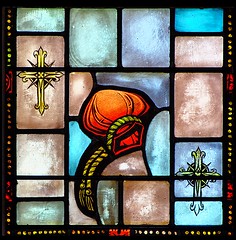
Money bag for helping your neighbor

Jesus said, “If anyone comes to me and does not hate his own father and mother and wife and children and brothers and sisters, yes, and even his own life, he cannot be my disciple. Whoever does not bear his own cross and come after me cannot be my disciple.” (Luke 14:26-27)


If you listen too much to what the world says about Jesus, and don’t know your Bible very well, then you might be surprised to hear Jesus say that you cannot be His disciple unless you hate your father & mother, wife and children, brothers and sisters, and even your own life!

Even those who are ignorant of the Bible, if they know anything at all about Jesus, they know that He said, “Love your neighbor.” Of course, the world (and even some unbelievers in the church) would then go on to define “love” to mean whatever they want it to mean, including some things which the Scriptures and Jesus clearly forbid and condemn, such as any kind of lust and adultery, including pre-marital intimacy, sexual promiscuity, and homosexual activity.
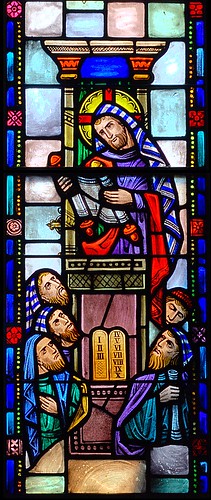
Jesus taught the Scriptures
in a Nazareth Synagogue

Although the world doesn’t have a clue how to properly read the Bible, Christians should be aware that any interpretation which contradicts the Holy Scriptures is false. You can’t play one Scripture passage against another, so as to say, “Well, there Jesus says to love, and here he says to hate, so I guess I get to choose which one I will follow today. Tomorrow I may choose the other, but it’s my choice.” That is false, and you are always going to fall into sin if you do that.

It is also a sin to view this as a contradiction, and without trying to resolve the apparent contradiction, say, “Since the Bible seems to contradict itself, then it is not the infallible word of God and cannot be trusted, so I can go do what I want and you can’t say anything against me.” Now, if the Bible really did contradict itself, then it could not be trusted, but the Holy Scriptures truly are the Word of God and they do not contradict one another at all! What seems like contradictions in the Bible are only apparent contradictions, and they can easily be resolved and you can still maintain both sides as being true in every case.

In this case, the proper question must be, “How can you hate your neighbor (in a godly way), and still love him at the same time?” This isn’t that hard, really. Remember that the Scriptures say that all people are sinners from the time we are conceived (Psalm 51:5) so we can hate the sinfulness both in our neighbor, and in ourselves, and we can still love them as those for whom Christ died to redeem (even if they don’t acknowledge Christ’s saving work.) We can also acknowledge that Jesus is using hyperbole (or exaggeration) to make the point that you should love Him so much that it seems like you hate everyone else. This is not to say that we should hate as if we would wish our neighbor were dead, but that we should love God above all else and despise sin in ourselves and our neighbor.
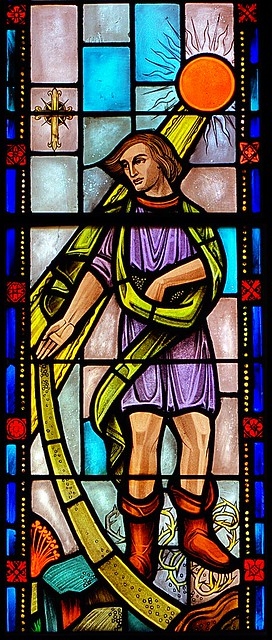
The Sower sowing his seed

This is how it works in practice: I have heard of situations where an elderly person comes to the faith, but then has doubts in regard to a loved one. It could be a beloved husband or wife, a child or a parent, or a sibling. But some people actually lose their faith and say, “If my beloved is not in heaven then I don’t want to go there.” This kind of person is what Jesus was talking about in the Parable of the Sower. He is like the seed which falls on the unfit soil. This person quickly loses the faith that could have saved them. It is tragic arrogance to think that you are more righteous than God Himself. Do people really think that they are a better judge than the all-knowing God? Jesus is the Good Shepherd who knows His sheep, and will never let even one go astray without going out and bringing him or her back into the flock. Also, don’t think that anyone will find any friends in hell. There is no love in hell, and those who may have loved you earth will only hate you and torment you in hell. While our loved ones are still alive we may try to lead them to find their salvation in Jesus, but once they have died we must leave their fate to the mercy of God and trust that Christ’s Judgment is always just and merciful. This is what Jesus is warning us about in Luke 14. Count the cost.

There is a cost to being a Christian. Don’t be fooled by the false teachers of our age who promise that being a Christian is all about unfailing success and prosperity. That doesn’t get you too far when a Jihadist puts a knife to your throat and asks you if you are a Christian. Martyrdom is not part of the prosperity gospel, but it can be part of the Christian life. Martyrdom is an extreme cost, and not all Christians are murdered because of their confession of Christ, but there is a cost to being a Christian.
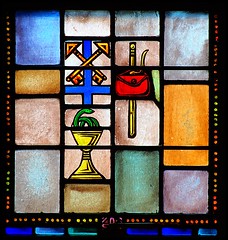
Symbols representing Saints Peter, James & John

Revelation 7:14 calls the Christian life a “great tribulation” which recognizes the Christian life as a battle or a war. The Christian life is a battle because we must fight against sin and temptation. The pagan life is not a battle in the same way because the unbeliever sees no need to resist temptation. In some ways it is easier to be an unbeliever because they don’t have to fight against their own sinful flesh. They may indulge any sinful desire and not worry about any consequences. There are consequences and costs to the pagan life, too, but I will get to that shortly. Proverbs 8:13 says, “The fear of the Lord is hatred of evil.” So Christians also hate evil and fight against temptation, even when our own flesh says, “I want to do wrong. I need to do that sin. I will die if I don’t do that sin.” Yes, the sinful flesh is a drama queen, but temptation can be compelling to our weak flesh. That is why we must fight against temptation. It hurts to deny the flesh its sinful desires, but that is one of the costs of being a Christian.

Think of the Beatitudes. Jesus doesn’t say, “Blessed are the rich and powerful who always get their way and are happy all the time.” It is only the heretics who say that! Jesus says: 

  • Blessed are the poor in Spirit
  • Blessed are those who mourn
  • Blessed are the meek
  • Blessed are those who hunger and thirst for righteousness
  • Blessed are the merciful
  • Blessed are the pure in heart
  • Blessed are the peacemakers
  • Blessed are those who are persecuted for righteousness’ sake
  • Blessed are you when others revile you and persecute you and falsely say all kinds of evil against you because of (Jesus).

Christians aren’t blessed because they mourn or are meek, or do any of the other things. They are blessed because Christ gives them good gifts which rescue them and make up for their sorrow and pain in this sinful life.
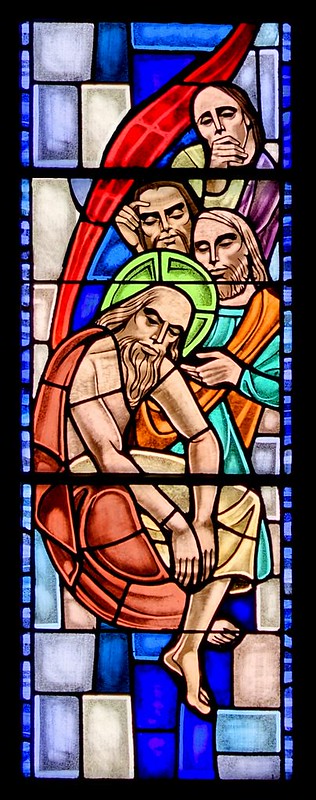
Job's suffering
(window from Holy Cross Lutheran Church, Detroit)

So Jesus says, “Whoever does not bear his own cross and come after me cannot be my disciple.” Remember that when Jesus said this, the cross was not a gold or silver-plated piece of jewelry that you proudly wear around your neck to proclaim your forgiveness and salvation in Christ. When Jesus said this the cross was the most shameful method of torture and death used to shame and humiliate the most despised criminals. So to take up your cross and follow Jesus is to recognize that you are a sinner and only deserve death, so you count your life and possessions as forfeited for Christ’s sake and look to Him to save you from sin and death, as He has promised to do.

That leads us to the other part of counting the cost – the benefits! You should also add the benefits when you count the cost. The benefits of being a Christian include: 1) complete forgiveness of all your sins – through the redemption that came by Christ Jesus; 2) reconciliation with God, the Father, and with that – adoption as His beloved child; 3) Sanctification by God the Holy Spirit; 4) resurrection to everlasting life; and 5) an eternity of joy with all the countless brothers and sisters in Christ who are likewise redeemed. These benefits are worth more than the whole world. That is why St. Paul could say in Philippians 3:7-9, “Whatever was to my profit I now consider loss for the sake of Christ. What is more, I consider everything a loss compared to the surpassing greatness of knowing Christ Jesus my Lord, for whose sake I have lost all things. I consider them rubbish, that I may gain Christ and be found in him, not having a righteousness of my own that comes from the law, but that which is through faith in Christ – the righteousness that comes from God and is by faith.”
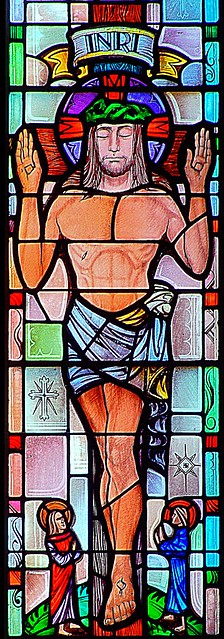
Jesus paid the price for your sin

You should also know that although your forgiveness and salvation is free to you as a gift from God, it was not won without its own cost. In fact, your salvation was only won at a very high cost: which was the entire life and the innocent suffering and death of Jesus. When God was planning your salvation in eternity before the creation, the Son of God also had to consider the cost. Although God created the first people perfect, and without sin; yet, Adam and Eve soon rebelled against God and brought His condemnation upon themselves and their children. Yet despite their rebelliousness and lack of gratitude for all that God had given them, the Son of God loved them enough to take their punishment on Himself and was willing to endure the indignity and pain of crucifixion and also to endure the Father’s wrath of a world full of sinners.

Yes, there is a cost to being a Christian, but the cost is very small in relation to the benefits. What would you do? Would you rather indulge the pleasures of the sinful flesh for a short time (and suffer all the temporal consequences of that wickedness), and then suffer an eternity of torment with no hope of relief? Or would you rather deny yourself the guilty pleasures of sin and live in the hope and confidence of God’s love for you in Christ Jesus, and then enjoy an eternity of pleasures of God’s gracious gift of life and salvation? St. Paul wrote, “I consider that our present sufferings are not worth comparing with the glory that will be revealed in us.” (Romans 8:18) No one likes to suffer. Even Jesus wasn’t all too thrilled with the prospect of suffering and death (see Matthew 26:36-46), but out of love for God and for you, He willingly suffered and died to save you.

There is a cost to being a Christian, but God did not ask you to pay the price for your sin. Instead, God sent His own Son to pay the terrible price for your sin to redeem you and adopt you as His child to give you an eternity of life with Him in Paradise. It is only because of Jesus that we can live in this wicked world with hope of life and salvation. So we also join with St. Paul and all the saints and say, “For I am convinced that neither death nor life, neither angels nor demons, neither the present nor the future, nor any powers, neither height nor depth, nor anything else in all creation, will be able to separate us from the love of God that is in Christ Jesus our Lord.” (Romans 8:38-39)

Tuesday, June 10, 2014

Perfect Love Drives Out All Fear

by Pastor Paul Wolff

Jesus and the Little Children
from Emmanuel Lutheran Church
Dearborn, Michigan
1 John 4:16b-18
God is love. Whoever lives in love lives in God, and God in him. In this way, love is made complete among us so that we will have confidence on the day of judgment, because in this world we are like him. There is no fear in love. But perfect love drives out fear, because fear has to do with punishment. The one who fears is not made perfect in love.”

You may have heard people say, “Fear is a great motivator.” Few, however, are honest enough to complete that thought. If someone ever tells you that “Fear is a great motivator” you can be sure that they are trying (or will try) to manipulate you to do something which will benefit them, but will not necessarily benefit you.

Fear paralyzes people. Fear makes people want to act to save their own lives, or avoid getting hurt, but they cannot act out of fear that they will be harmed in the process. It’s a vicious circle. This is why tyrants employ terrorist tactics to cower people into submission. Fearful people will not effectively resist forceful oppression and therefore can be manipulated and easily subjugated by evil people.

Creation and the Fall into Sin
from Holy Cross Lutheran Church
Detroit, Michigan
Fear of Punishment
As St. John notes in the Scripture quote above: fear has to do with punishment, or a desire to avoid pain and suffering. When Adam and Eve first disobeyed God they should have run to Him and confessed their sins and asked Him to rescue them from the doom which they had brought upon themselves. They should have known God would have mercy on them (as He ultimately did), but instead they feared the righteous punishment for their sins and ran away from their savior instead of running toward Him for help and salvation. At that time Adam and Eve were naïve about sin, and they were not used to living as sinners as we are, but we act in exactly the same way.

As I was preparing this article I found this interesting news story: Police detectives in California recently solved a 30 year old murder case. Evidence pointed to a 48 year old man who, after police questioned him about the details of the case, took his own life rather than face the consequences of his actions from three decades ago. For thirty years he must have lived in fear that his crime would be discovered. Then, when it was discovered, he feared the punishment so much that he carried out a capital sentence on himself. Now, I’m not saying that the self-imposed punishment did not fit the crime, but until the murderer’s life ended there was forgiveness available for him in Christ. The state’s punishment may not have been as bad as what the man feared, and he could have received true forgiveness in Christ long ago. I don’t know why he didn’t seek Christ’s forgiveness earlier, but had he repented he could have given the family of his victim some sense of justice by confessing to the crime and taking the civil punishment for the crime. Instead, his fear gave him torment throughout his life, and no doubt added to the sorrow and suffering of the victim’s family, also.

What Can Stand Against Fear?
After the Japanese attacked the U.S. fleet at Pearl Harbor in 1941, President Roosevelt told the American people, “We have nothing to fear but fear itself.” It was a fearful time, but Roosevelt wisely called for courage in the face of fear. Courage is the antidote to fear. But where does courage come from? Courage is not a natural response to fear. Panic is the natural response to fear, but courage comes from somewhere else.

Samson
Window from Holy Cross Lutheran Church
Detroit, Michigan
Courageous people act out of love. Love is simply when one cares more for someone else than for oneself. Courageous people are more concerned for others than for themselves. So when courageous people see someone in danger they only think of how to help someone in need, they don’t stop to consider their own safety. Courageous people may have fear for themselves, but they do not take time to think about their own needs as they act bravely to save others. Courageous people (i.e. Loving people) cannot be terrorized. They cannot be manipulated. They cannot be forced to submit to tyrants.

Perfect Love Drives out Fear
Saint John writes in his first Epistle, “Perfect love drives out fear.” This sounds like a good thing. I would like to find some perfect love. The only trouble is that we all are sinners in a sinful world, and you will never find “perfect love” in a sinner. However, even the imperfect love of sinners can accomplish wonderful things. Love can heal wounded or broken hearts. Love can drive out wicked tyrants. Love can give comfort and hope to those in despair. But where there is only imperfect love – fear remains.

So where can we find the perfect love which drives out all fear? Since we can’t find it in ourselves or in other sinful people we must look for it outside of ourselves. The only place to find perfect love is in Jesus Christ. There are many descriptions of this in the Scriptures, but one of my favorites is in Philippians 2:5-11. Saint Paul tells us, Your attitude should be the same as that of Christ Jesus: Who, being in very nature God, did not consider equality with God something to be grasped, but made himself nothing, taking the very nature of a servant, being made in human likeness. And being found in appearance as a man, he humbled himself and became obedient to death – even death on a cross!

Jesus paid the price for your sins
Holy Cross Lutheran Church
Detroit, Michigan
Jesus is the only person who ever lived His whole life in perfect love. Jesus loved God, the Father, with all His heart, all His soul, and all His strength; and Jesus loved His neighbors as Himself. Even when Jesus learned that it was God’s Will to punish Him for the sins of the world in order to save sinners from that punishment, Jesus loved God, the Father, (and us wretched sinners) enough to do all that needed to be done. Jesus is the only one who could save us from the punishment for our sin because Jesus is fully God and fully man in one person. His death paid the full price for the sins of the whole world. That is why the only place you will ever find perfect love is in Jesus Christ.

The perfect love of Jesus drives out all fear because fear has to do with punishment. There is no greater fear than the fear that God will send us to eternal punishment for our disobedience. He would be completely within His rights to do so, but He would rather take the punishment Himself and save us from that torment – and that is exactly what Jesus did for us. We need have no fear because Jesus endured the punishment for all our sins. Because of Jesus, God no longer has anything more to punish us for. So if we do not need to be afraid of God, then there is nothing in all of creation which ought to cause us fear.

How do we receive the perfect love of Jesus? We can only receive it as a gift through faith in Jesus by believing that Jesus died to save us from our sins. God, the Father, counts us righteous through faith and gives us salvation and eternal life. The courage and love that comes from being forgiven is just one of the many bonuses granted by God’s Holy Spirit.

This is not to say that love has any particular power on its own. It does not. Strictly speaking, love, itself, does not save us. Only the perfect life and innocent death of Jesus can save us. It is true that it was the love of Jesus that caused Him to endure God’s punishment for our sins, but until Jesus was physically hanging dead on the cross our salvation was not complete. It is like a parabolical argument I like to use against decision theology: Three frogs are sitting on a log in a pond. One decides to jump in the pond. How many frogs are left sitting on the log? The answer is three, because until the frog actually jumps into the pond he is still sitting on the log no matter what he has decided to do. Likewise with Jesus, He can love us as much as He wants, but all people were still subject to condemnation for our sin until Jesus lived the perfectly obedient life in our place, and then died to pay for our sin.

Christ has taken away all need for our concern about ourselves. Baptized Christians are God’s children through faith in Christ and God will provide for all our needs of body and soul. His perfect love has removed all threat of God’s punishment, and where there is no threat of punishment there is no fear. In Christ we are freed to think about our neighbor without fear that we might come up short. Jesus has overcome all our shortcomings.

The Crown of Life
from Zion Lutheran Church
Columbus, Ohio
Who shall separate us from the love of Christ? Shall tribulation, or distress, or persecution, or famine, or nakedness, or danger, or sword? As it is written, ‘For your sake we are being killed all the day long; we are regarded as sheep to be slaughtered.’ No, in all these things we are more than conquerors through him who loved us. For I am sure that neither death nor life, nor angels nor rulers, nor things present nor things to come, nor powers, nor height nor depth, nor anything else in all creation, will be able to separate us from the love of God in Christ Jesus our Lord.” (Romans 8:35-39)

Tuesday, January 5, 2010

Carrying Your Cross

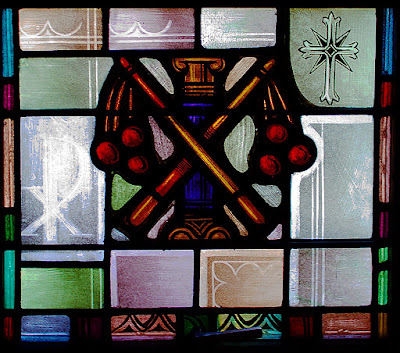
The scourges with which Jesus was beaten

Then Jesus told his disciples, “If anyone would come after me, let him deny himself and take up his cross and follow me. For whoever would save his life will lose it, but whoever loses his life for my sake will find it.”


Matthew 16:24-25


Remember that when Jesus said, “If anyone would come after me, let him deny himself and take up his cross and follow me,” the “cross” was not some sanitized, gold-plated piece of fashionable jewelry. The cross was a horrifying symbol of a tortuous, shameful death. So, what Jesus was saying was that to be a Christian is to embrace that which brings you shame and death in this world.

This is a far cry from the idea that to be one of God’s people means peace and prosperity in this world. The Pharisees taught that worldly prosperity was a sign of God’s favor and poverty and disease was a sign of God’s disfavor or even wrath. The present day descendants of the Pharisees still teach these lies, and I’m not only referring to the Jewish descendants of the Pharisees, but also those “christians” who teach the same thing. This teaching* is one of the main reasons why the Pharisees rejected God and conspired to kill Jesus – they were afraid to take up their cross and follow Jesus.

Jesus prayed, 'My Father, if this [suffering] cannot pass unless I drink it, your will be done.' Matthew 26:42

Christians are not afraid to take up their cross because we do not fear death nor shame. We do not seek shame and death, but neither do we seek to save our own lives or seek our own comfort in the face of persecution (except in our sin.) Because of Jesus neither death nor shame has any power over us.


The death and resurrection of Jesus has destroyed the power that death has over those who trust in Him for forgiveness and salvation. Death cannot harm us because even if we die Jesus will raise us up and give us a perfect life which has no end. Likewise, the shame of putting our trust in a savior who was crucified, died, and was buried is completely overwhelmed by Christ’s promise that in the last judgment He will stand upon the earth in all His divine glory and proclaim that all who belong to Him through faith are completely forgiven and blessed forever. When God calls you forgiven and blessed, then all the shame of sin is gone forever, and no one can say anything against you.


* See first comment below.

Saint Paul wrote, 'For I resolved to know nothing while I was with you except Jesus Christ and him crucified.' 1 Corinthians 2:2