Showing posts with label gift. Show all posts

Saturday, December 31, 2022

Blessed are the Poor in Spirit

(Part 1 of a series of 9 articles on the Beatitudes)

by Pastor Paul Wolff


“Seeing the crowds, (Jesus) went up on the mountain, and when he sat down, his disciples came to him. And he opened his mouth and taught them, saying: ‘Blessed are the poor in spirit, for theirs is the kingdom of heaven.’” (Matthew 5:1-3)


Blessed are the poor in Spirit
(Matthew 5:3)
Image from a Mosaic in the
Saint Louis Cathedral, St. Louis, Missouri
The beginning of Christ’s Sermon on the Mount in Matthew 5:1-12 is called the Beatitudes. We don’t hear that word much in everyday conversation, but beatitudes are blessings, and blessings are gifts. These gifts are special because they come from God. Jesus gives a list of blessings that God gives His beloved children, but if you read what type of things that Jesus says is blessed in His Sermon on the Mount, you will see that these are gifts that no one really asks for, and wouldn’t want – except for the fact that they are blessed by God. Because of this, Christians are happy to receive them as true gifts of God.

The first beatitude is: “Blessed are the poor in spirit, for theirs is the kingdom of heaven.” (Matthew 5:3) No one wants to be poor, but this isn’t talking about worldly wealth and riches. Jesus says, “Blessed are the poor in spirit.” These are Spiritual blessings, and those who are blessed here are people who recognize that they are poor in the Spiritual realm. They have nothing to give God Spiritually, because they are sinners who deserve only God’s wrath and punishment. This is true for all of us, but not all people recognize their Spiritual poverty. The people who are blessed by this Beatitude would certainly receive God’s condemnation unless another arrangement were made. Fortunately for us, Jesus has made another arrangement so that instead of punishment, we receive the blessings of God
s kingdom. Another way to say this is that these are repentant sinners who recognize their poverty of Spirit and know that they must rely on God to rescue them through Jesus Christ.

Jesus once taught people from a boat on the lake.
(see Matthew 13, Mark 4, and Luke 5)
In Luke’s Gospel he records Jesus teaching on the plain, where He gives similar blessings as He did in the Sermon on the Mount. In Luke 6:20 Jesus says, “Blessed are you who are poor, for yours is the kingdom of God.” Though on the surface it may seem as if Jesus is commanding His people to be poor, but that interpretation really has it backwards. Because of our sin, we are all poor already. Those who are rich are just fooling themselves, thinking they are something when they are not. Saint Paul writes to Timothy, “Godliness with contentment is great gain. For we brought nothing into the world, and we can take nothing out of it. But if we have food and clothing, we will be content with that. People who want to get rich fall into temptation and a trap and into many foolish and harmful desires that plunge men into ruin and destruction. For the love of money is a root of all kinds of evil. Some people, eager for money, have wandered from the faith and pierced themselves with many griefs.” (1 Timothy 6:6-10) It is because of our sin that we have nothing to offer God. All the money in the world cannot save you because it all belongs to God. It is also because of our sin that we are subject to death. All that we have is a gift from God, and there comes a time in all our lives when we must give it all back. “You can’t take it with you,” is a saying which paraphrases Saint Paul’s words to Saint Timothy. Yet, we can be content with what we have because Christians trust that God gives us the “daily bread” which we ask for in the Lord’s Prayer, as Jesus taught us to pray (Matthew 6:9-13). Because Jesus told us to ask for this, we trust that God provides for our needs every day.

James 2:5 says, “Listen, my beloved brothers, has not God chosen those who are poor in the world to be rich in faith and heirs of the kingdom, which he has promised to those who love him?” Christians are “rich in faith” because Christ has promised us the inheritance of God’s Kingdom. Though this is not a worldly gift, we trust that this heavenly gift is ours because God has promised to give us this inheritance through faith in Jesus. Jesus said, “Fear not, little flock, for it is your Father’s good pleasure to give you the kingdom.” (Luke 12:32) We may not be rich in this world, but God still provides us all with good things, and He has promised to share with us all the riches of His Kingdom, which is eternal. So we live by faith, and trust that God’s promises are more sure than anything that we may hold in our hands. God’s heavenly Kingdom is already ours by faith, but we must wait to see its fulfillment.

A good example in Holy Scripture of someone who is “poor in spirit” is the character of the tax collector in Christ’s Parable of the Pharisee and the Tax Collector (See Luke 18:9-14). The tax collector was in God’s house looking for God’s blessings, but he was so ashamed of his sin that he wouldn’t even raise up his head, and he simply prayed, “God be merciful to me, a sinner.” Jesus said he was the one who went home justified (forgiven), because he repentantly recognized his poverty of Spirit, and looked to God to save Him.

The opposite of “Poor in Spirit” would be something like “proud in spirit” or “self-righteous.” A good example of this is the Pharisee in Christ’s parable. He was boastful before God because he thought that he was so good that he had something to offer God. He was wrong, of course, but he thought he was so good that God had to be pleased with him. He didn’t recognize the guilt of his sin and how much he deserved God’s condemnation, so he did not repent, nor did he look to God to save him. This is why both John the Baptist and Jesus were so harsh in dealing with unrepentant Pharisees. The Pharisees weren’t bad people in the civil sense, but they were (generally speaking) unrepentant unbelievers. They needed to hear God’s Law to recognize their sin, and the true poverty of their spirit, and their need for God to save them. 

 Jesus said to the Pharisees, who did not believe in Him, “Therefore I tell you, the kingdom of God will be taken away from you and given to a people producing its fruits.” (Matthew 21:43) The Pharisees admitted among themselves that they didn’t believe in Jesus (Matthew 21:25). This is why Jesus told the Parable of the Wicked Tenants against them. They didn’t want to be God’s people, and follow Him. They wanted to be in charge themselves. They were not producing the fruits of faith, because they did not have faith themselves. The fruits of faith are love, which is the good works done in obedience to God’s commandments. The Pharisees were too busy trying to save themselves that they did not do good to others. It is a paradox that those who are “poor in Spirit” are rich in good works, and those who think themselves “rich in Spirit” are poor in good works. Hebrews 11:6 tells us, “Without faith it is impossible to please God, because anyone who comes to him must believe that he exists and that he rewards those who earnestly seek him.” Repent of your sins and seek God in the Holy Scriptures because that is where God has revealed Himself, and there is where God’s Holy Spirit comes to you to bring you salvation, and God’s Kingdom.

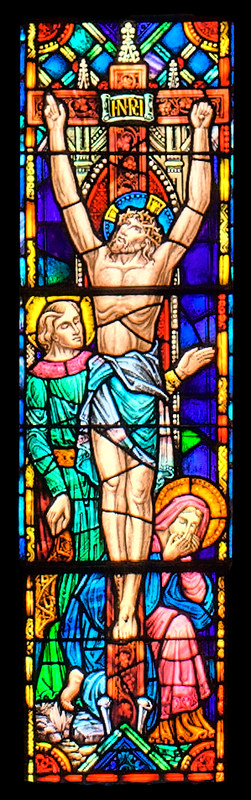
Jesus was not so proud of Spirit
that He wasn’t willing to
suffer and die on the cross to save sinners,
and give us the blessings of His Kingdom.
Jesus was poor in Spirit, but not quite in the same way that we are. We are humble because we are sinners who rightly are subject to God’s condemnation, and desperately need God to save us. Jesus had no sin, so He could rightly claim innocence before God, but He was certainly not “proud in spirit” so God the Father was pleased with Him in all things. Jesus knew He was innocent, and He never admitted to any sin which He did not commit, but He also never boasted that He was better than anyone else because of His holiness. Martin Luther explained that one who is “poor in spirit” “must not set his confidence, comfort, and trust on temporal goods, nor hang his heart upon them and make Mammon his idol.” * Jesus was not proud, and never made an idol of any created thing, but loved God with His whole heart, soul, mind, and strength in all that He did – and, in putting that into action in His life, Jesus also served us sinners in everything He did.

Saint Paul describes Christ’s humility this way in Philippians 2:5-8: “Your attitude should be the same as that of Christ Jesus: Who, being in very nature God, did not consider equality with God something to be grasped, but made himself nothing, taking the very nature of a servant, being made in human likeness … and became obedient to death, even death on a cross.” Jesus was equal to the Father in all things including power, glory, and all His being. However, He humbled Himself as a man to win our forgiveness and salvation. During His life and ministry, Jesus gave up all the honor, glory and riches which rightly belonged to Him as the Son of God, so that He could offer His life as the atoning sacrifice which would provide forgiveness and salvation to all who trust in Him to save them. The result of Christ’s humbling Himself like this is described by Saint Paul in this way: “Therefore God exalted him to the highest place and gave him the name that is above every name, that at the name of Jesus every knee should bow, in heaven and on earth and under the earth, and every tongue confess that Jesus Christ is Lord, to the glory of God the Father.” (Philippians 2:9-11) Jesus did not exalt Himself as a man, but God, the Father, exalted Him (as a man) for His faithful obedience and for winning our salvation.

The blessings that repentant sinners receive is that the Kingdom of heaven is given to them. What this means is that they are welcomed into God’s heavenly kingdom as beloved children who have been washed clean of their sins through the blood of Jesus. The blood of Jesus cleanses us from all our sin (1 John 1:7) because death is the punishment for sin, and Jesus died in our place as our substitute. Through holy Baptism and faith we are adopted back into God’s family as His beloved children, and, having been washed clean of all sin, we will get to enjoy the full blessings of the kingdom of heaven. There we will live in eternal blessedness and peace with God, and all our needs of body and soul will be provided for us by God.


Other articles in this series:

Blessed are Those who Mourn, For They Will be Comforted 

Blessed are the Meek, for They Shall Inherit the Earth 

Blessed are Those Who Hunger and Thirst for Righteousness, for They Shall be Satisfied

Blessed are the Merciful, for They Shall Receive Mercy 

Blessed are the Pure in Heart, for They Shall See God 

Blessed are the Peacemakers, for They Shall be Called Sons of God 

Coming soon:

Blessed are those who are persecuted for righteousness’ sake, for theirs is the kingdom of heaven.


* Martin Luther quote from Luther’s works, vol. 21: The Sermon on the Mount and the Magnificat (J. J. Pelikan, H. C. Oswald & H. T. Lehmann, Ed.). Luther’s Works (Mt 5:4). Saint Louis: Concordia Publishing House. (©1956)

Wednesday, November 7, 2018

Today is my 20,000th Birthday!

by Pastor Paul Wolff

Psalm 90:12 “Teach us to number our days that we may get a heart of wisdom.”


Isaiah was by no means the oldest man,
but his image is the oldest looking at Emmanuel,
plus he looks a little like me.

As I write this, today is my 20,000th birthday. Now, I am nowhere near the oldest person who ever lived. My Mom is still alive, and she has lived 25 years more than I have. I have not lived even 100 years, let alone 20,000 years, but I have lived 20,000 days! The oldest person who ever lived was Methuselah (see Genesis 5:27) who lived 969 years, which is at least 353,927 days, plus all the days he may have lived after his last annual birthday.

I have gotten into the habit of celebrating every day as a gift from God. Life is a precious gift, and it is too short to celebrate it only once a year, so I give thanks to God that because of His grace in Christ, He protects my life and provides for all my needs every day. When Jesus taught His disciples the Lord’s Prayer, He taught us to ask, “Give us this day our daily bread.” He didn’t tell us to ask for all we need for the coming year, but only enough for today, and we trust that God provides what we need every day.

In His grace, God often generously gives us more than we need to just survive the day, as St. Paul tells the Ephesians (in chapter four verse twenty eight), “Let the thief no longer steal, but rather let him labor, doing honest work with his own hands, so that he may have something to share with anyone in need.” Any extra that God gives to us is not for our benefit or luxury, but so that we can share with those in need.

Moses wrote in Psalm 90:12, “Teach us to number our days that we may get a heart of wisdom.” Wisdom doesn’t necessarily come with many days, unless you are paying attention, but it is something to strive for. Solomon wrote, “For the Lord gives wisdom; from his mouth come knowledge and understanding.” Wisdom and understanding are a gift from God, as is a long life, and these gifts come from the mouth of the Lord. That is why I have devoted my life to studying God’s Word and sharing that with my congregation, friends, co-workers, and all who read my articles such as this one.

Jesus also taught, “You also must be ready, for the Son of Man is coming at an hour you do not expect.” (Luke 12:40) Even if we are not still alive when Jesus returns for Judgment Day, He may still come to take us to our heavenly home. We ought to always trust that Jesus will not abandon us or forget about us, since He has promised, “I will never leave you, nor forsake you.” (Hebrews 13:5, quoting Deuteronomy 31:6) Jesus has also promised, “I am with you always, to the end of the age.” (Matthew 28:20) Even in our hour of death, Jesus will not abandon His people, but will come to take us to be with Him.

Christ bless you, and have a Happy Birthday! You may have more or less than 20,000 days, but you can celebrate the life that God has given you, too.

Monday, September 4, 2017

The Good Samaritan

by Pastor Paul Wolff

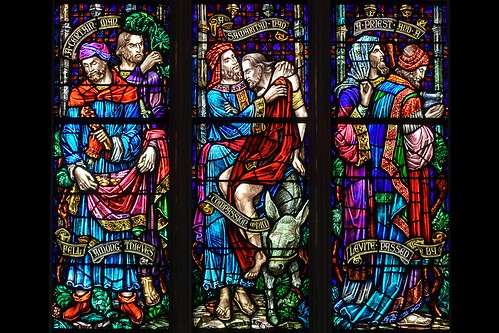
A certain man fell among thieves
A Samaritan had compassion on him
A Priest and a Levite passed by

 
Luke 10:33-35

Jesus said, “A Samaritan, as he journeyed, came to where (the injured man) was, and when he saw him, he had compassion. He went to him and bound up his wounds, pouring on oil and wine. Then he set him on his own animal and brought him to an inn and took care of him. And the next day he took out two denarii and gave them to the innkeeper, saying, ‘Take care of him, and whatever more you spend, I will repay you when I come back.’”


People are afraid of the Law, and think the Law is evil because the Law condemns us as sinners. However, the Law of God is not the problem. God’s Law is good, as God is good, and the Law shows us what is good for us to do to love God and love our neighbor. Sinners think the Law’s condemnation of sinners is bad because we don’t want to be condemned. Sin blinds us to the reality of just how wicked we really are, and how much we really deserve to be condemned.

Remember what happened in the Garden of Eden with Adam and Eve. God made the whole world good and gave it to Adam and Eve for their benefit and enjoyment. The only thing forbidden to them was the fruit of one tree – one tree in the whole world. In effect, God was saying, “This tree belongs to me. Don’t eat its fruit. If you eat the fruit of this tree you will die. But look, here is another tree. This is the tree of Life. You are free to eat from this tree and anything else in the world that you wish to eat. I am your Father and I love you, and I want you to live and enjoy all the good things that I can give to you forever.” God gives us good things, and forbids us from doing things that will hurt us.

The problem isn’t God’s Law. The problem is that people rebelled against God’s good Law and chose sin and death instead of righteousness and life. Sinners despise what is good, and we twist and distort God’s Word to make the Law seem to say what we want it to say, instead of receiving it as God has given it to us for our good.

It is no coincidence that the man who tested Jesus was a teacher in the law. He knew the law, but he asks the wrong questions. If you ask the wrong questions you will get the wrong answers. However, in telling the Parable of the Good Samaritan, Jesus gives us both the right question and the right answer.

Inheritance is a matter of Law,
but you can only receive it as a gift.

The first question the lawyer asks Jesus is, “What must I do to inherit eternal life?” The question isn’t all wrong: It recognizes that eternal life is a matter of inheritance. It is a gift, not a right. However, the question is ridiculous. Can you imagine someone going up to Donald Trump (for example) and saying, “What must I do to inherit the wealth of your estate?” Most of the time the inheritance of an estate is given to the children. If you are not born or adopted into the family then it is unlikely you will inherit anything.

Since inheritance is a matter of law, and the man asking about it was a teacher of the law, Jesus asks him what the law says about inheriting eternal life. The man answered by quoting from Deuteronomy where God summarized the two tables of the Commandments. “You shall love the Lord your God with all your heart and with all your soul and with all your strength and with all your mind, and your neighbor as yourself.” This was a good summary of the Law, as Jesus points out, but the man forgot that the Law cannot save sinners. The law condemns sinners. Since Adam and Eve’s fall into sin, all people (except Jesus) have inherited the corruption of sin. This is our inheritance – according to the law.

Luke writes that the teacher of the law wanted to justify himself. To justify yourself is to make up excuses for your sin which will make you feel like you are doing right when you are doing wrong. It is a wicked thing to try to justify your sin, but sinners are always looking to justify themselves. I do it. You do it. Everyone does it, but that doesn’t make it right. It just means that everyone sins in justifying themselves.

So the teacher of the law asks, “Who is my neighbor?” This doesn’t seem like a bad question, but why would you ask it? Your neighbor is everyone you come in contact with in your various vocations, including those whom you try to avoid, like an injured man lying on the side of the road when you have somewhere else to go. If you have to ask, “Who is my neighbor?” then you may be really asking, “Who isn’t my neighbor?” or “Who can I ignore because they are not my neighbor.” So Jesus tells the Parable of the Good Samaritan.

Jesus is the Good Samaritan

Jesus told a story about a man going from Jerusalem to Jericho who fell among robbers. The robbers should have been neighbors to the traveler, and protected his life and property, but instead they beat him and stole his belongings, and left him for dead on the road.

Then a priest was going down the road and saw the injured man. The priest represents the first table of the Law where we love God with all our heart, soul, strength, and mind. The priest served God in his vocation, but he was under the law. The ceremonial law said much about blood and how to deal with it. It would not do for the priest to show up for work with bloody hands from helping an injured man. He would likely be considered unclean. Now, uncleanliness wasn’t too big of a deal. All people would do things in the normal activities of life which would make them unclean. I think that was the point of the cleanliness laws. They reminded people that our sin makes us unclean and that we need to be cleansed of our sin.

The priest could have helped the man, but then in order to be fit for his priestly service he would have had to wash and make a sacrifice and wait until sundown to be considered clean again. It was an inconvenience, and somewhat costly, but he could have helped the injured man, and should have. The people who would benefit from his priestly service would have understood, but the priest justified his inaction by telling himself that if he helped the injured man he couldn’t carry out his service to God. This was a misuse of the law, but this is what sinners do to justify themselves. So the priest walks by the injured man on the other side of the road.

Likewise, a Levite came and saw the injured man lying in the road. He represents the second table of the Law where we must love our neighbor as ourselves. The Levites were those members of the tribe of Levi who were not priests, but who served as laymen in the church. Levites were the elders, ushers, acolytes, trustees, groundskeepers, altar guild, board members, and similar laymen who serve the church. He could have helped the injured man, but he was under the law also. He could have helped the injured man, but would then be unfit to serve in the congregation for a time, and so he justified his actions in the same way as the priest. He also misused the law to justify his unmerciful actions. So he, too walked by on the other side of the road.

Then a Samaritan came down the road and saw the injured man. The Samaritan was not under the law in the same way that the priest and Levite were. He was not above the Law, certainly, instead he was outside the Law. He was not bound by the Law in the same way that the priest and Levite were, nor could he hide under the Law to justify unmerciful inaction. In a way, the Samaritan was free of the Law’s demands, but because he was free of the Law’s demands, he was also free to help his neighbor without having to worry that the Law might condemn him in some other way (unless he also ignored the injured man and left him to die). So he had compassion on the injured man and treated his wounds and took care of him.

Jesus is the Good Samaritan
who paid the costly price
to give you His inheritance.

You should note that what the Samaritan did was also costly. Besides the time and effort of cleaning and treating the wounds, he also paid the entire burden of the injured man’s health care. It was a sacrifice, but because he was free from the law’s burdens, he willingly paid what was necessary to help his neighbor.

Jesus ends His parable by asking the teacher of the Law, “Which of these was neighbor to the man injured by the robbers?” He answered, “The one who showed him mercy.” Jesus said, “You go, and do likewise.”

Now, if you have a wrong view of the law, you might think that Jesus was just giving the man another law to live by. But that would be a wrong understanding. Jesus was, in fact, doing the exact opposite. Jesus was not even giving a new law that supersedes the old law, as if you could use that to justify breaking any of the Ten Commandments. Instead, Jesus was declaring the man free from the law, just like the Samaritan was free from the law, and used his freedom to have mercy on his neighbor.

Jesus is the Good Samaritan. As the Son of God, Jesus was free from the Law’s demands. Jesus was not just free from the Law, He was above the Law because He created the Law. Though, in a way, Jesus was also bound by the Law in ways that we are not. God created the Law to reflect His very nature, so when Jesus obeyed the Law, He was only acting according to His nature, not against it (as we are when we obey the law). Yet, in His mercy, Jesus submitted Himself to the Law for our sake to redeem us and free us from the Law’s demands and its condemnation.

Jesus was, of course, a Jew, and not a Samaritan, but it is interesting in John 8 some of the Jews said to Jesus, “Are we not right in saying that you are a Samaritan and have a demon?” Jesus answered, “I do not have a demon, but I honor my Father, and you dishonor me.” It is interesting that Jesus confessed that He did not have a demon, but He did not deny the charge of being a Samaritan. Although the Jews thought they were insulting Jesus by calling him a Samaritan, Jesus was not ashamed to be called a Samaritan. Jesus came to save Samaritans and other Gentiles as well as Jews. The Samaritans were His neighbors as much as His own people.

When Jesus says, “Go and do likewise” He is not putting us under the law, as if he were saying, ‘you can’t be saved unless you make up for your sin by doing good and showing mercy.’ Instead, Jesus is setting us free from the law’s curses. You are free to serve your neighbor because you no longer have to worry about fulfilling the law’s demands yourself. Jesus fulfilled the law for you. You are free. Not free to sin (for that would put you under the law’s curse), but free to serve your neighbor instead of trying to serve yourself.

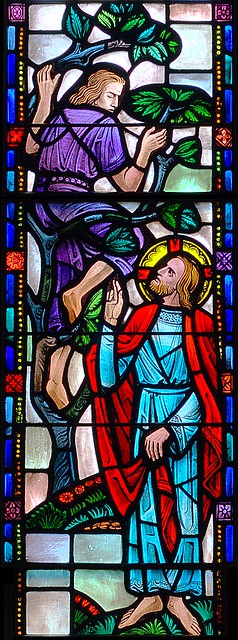
Jesus set Zacchaeus free
because he trusted in Jesus
for the forgiveness of his sins.

Scripture says in Romans 6:22-23 “You have been set free from sin and have become slaves of God, the fruit you get leads to sanctification and its end, eternal life. For the wages of sin is death, but the free gift of God is eternal life in Christ Jesus our Lord.” Jesus fulfilled God’s Law completely in our place so that through Jesus we are freed from the Law’s demands and can serve our neighbor in freedom as the Samaritan had mercy on his injured neighbor. This freedom we have in Christ is given to us as a gift by His mercy.

This gift is our inheritance as Children of God through Baptism and faith. Scripture says in Galatians 4:4-7, “But when the time had fully come, God sent his Son, born of a woman, born under law, to redeem those under law, that we might receive the full rights of sons. Because you are sons, God sent the Spirit of his Son into our hearts, the Spirit who calls out, ‘Abba, Father.’ So you are no longer a slave, but a son; and since you are a son, God has made you also an heir.”

What must you do to inherit eternal life? Of course you can’t do anything, but Christ has already done it all for you. He has redeemed you from your sin, and adopted you as His children, and He gives you the inheritance of His eternal Kingdom as a gift – as all inheritance is given. Like the Samaritan in the parable, Jesus paid the great price to make you His child and heir. St. Peter writes, “It was not with perishable things such as silver or gold that you were redeemed from the empty way of life handed down to you from your forefathers, but with the precious blood of Christ, a (sacrificial) lamb without blemish or defect.” (1 Peter 1:18-19)

Praise be to Christ, who is your Good Samaritan who sacrificed His life to rescue and heal you from the wounds of sin and death, and who gives you life everlasting.

Sunday, December 25, 2016

Christ is For You

by Pastor Paul Wolff


"Given for you
for the forgiveness of your sins”

In Dr. Martin Luther’s Small Catechism, in explaining who receives the Lord’s Supper worthily, Luther explains that when Jesus instituted the Lord’s Supper, the words “for you” (Luke 22:19-20; 1 Corinthians 11:24) require all hearts to believe. Contrary to what unbelievers fear, Jesus isn’t asking us to believe anything that isn’t true, or that may be impossible to believe. It is, of course, true that one cannot believe that Jesus is your savior from sin when you refuse to believe that you are guilty of sin, or if you do not believe that your sin deserves God’s wrath and condemnation. But the problem there among unbelievers isn’t that they haven’t sinned against God, nor that their sin isn’t worthy of eternal condemnation, nor that the salvation won by Jesus on the cross is insufficient to rescue them from all their sin and its condemnation. No, the problem among unbelievers is that although the salvation won by Jesus more than makes up for their sins, and completely satisfies the wrath of God, the Father, so that there is no threat of punishment for anyone who believes in Jesus as their savior, and although that salvation comes to everyone who believes as a gift; the unbeliever rejects the gift, and also rejects the forgiveness and salvation that come along with it.


The unbeliever has access to forgiveness and salvation, just as believers do, but because they refuse to believe, they do not receive the benefits of that forgiveness and salvation. It is as if your Father said, “I have deposited a million dollars into a bank account in your name. It is for you to live on and invest for your needs for the rest of your life.” If you believe that your Father is telling the truth, you will access the money in that account when you have need, and you will receive the benefits of that gift. On the other hand, if you do not believe that he is telling the truth (even though He is), or you don’t want the gift, or you want to earn your own way through life – though for reasons you do not understand, you are unable to do so – then you will not receive the benefits of your Father’s gift, even though it is always there and waiting for you to use it.


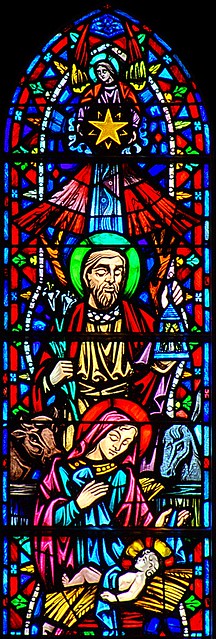
A savior is born to you

This is also what the angel told the shepherds in Bethlehem on the night that Jesus was born. The angel said, “Fear not, for behold, I bring you good news of great joy that will be for all the people. For unto you is born this day in the city of David a Savior, who is Christ the Lord. And this will be a sign for you: you will find a baby wrapped in swaddling cloths and lying in a manger.” (Luke 2:10-12) This sounds like a funny thing to say that this baby (who was unknown to them at the time) was born “unto you”, but the blessings of Jesus would come to them because they believed the Word of God that the angel gave them. So because they believed, they received the blessings of God’s gift in Christ.


It was also kind of strange that the angel said to the Bethlehem shepherds that Jesus was born for them, but he didn’t say this to Mary when he visited her nine months earlier. We would assume that a child was born for his father and mother, but the angel didn’t say that, lest Mary would think that the child was born for her alone. Mary certainly did believe, and she did receive the blessings of forgiveness, life, and salvation that Jesus won for the world, but she knew that her firstborn son did not come to benefit her alone, but His salvation would be for the whole world. That is why Mary called her son, “my savior” (Luke 1:47) in the Magnificat which she sang when she visited Elizabeth, her relative, and mother of John the Baptizer.


Mary recognized that she was blessed, but other than that, she realized that she was nothing special. Later on, during Christ’s ministry (Luke 11:27-28), a woman tried to give the blessed virgin mother more credit than what was due to her when she said to Jesus, “Blessed is the womb that bore you, and the breasts at which you nursed!” Jesus responded, “Blessed rather are those who hear the word of God and keep it!” Jesus was neither insulting His mother, nor was he trying to say that she was not blessed. Jesus was saying that Mary was not blessed because she was the one woman in all of history who gave birth to the savior of the world, instead, she was blessed because she believed that her firstborn son, conceived in her by God, the Holy Spirit, would save her from her sins. In this way, Mary is like all believers. Everyone who believes in Jesus as their savior has the blessings of forgiveness, life, and salvation that Jesus won for us all when He died on the cross. The Holy Scriptures say this many times:


“To him (Jesus) all the prophets bear witness that everyone who believes in him receives forgiveness of sins through his name.” (Acts 10:43)


God's Christmas gift to the world
His own Son to save us

“For I am not ashamed of the gospel, for it is the power of God for salvation to everyone who believes, to the Jew first and also to the Greek.” (Rom 1:16)


“For Christ is the end of the law for righteousness to everyone who believes.” (Rom 10:4)


“For the Scripture says, ‘Everyone who believes in him will not be put to shame.’” (Rom 10:11)


“Everyone who believes that Jesus is the Christ has been born of God, and everyone who loves the Father loves whoever has been born of him.” (1 John 5:1)


Because the Salvation of Jesus comes as a gift (see Ephesians 2:8-9; Romans 3:24; Romans 5:15-17 for example) it is available for free to all who believe in Jesus as their savior from sins. You are just as blessed as Mary if you believe in Jesus as your savior, as Mary also did. Because salvation is a precious gift from God to you, this is why Christians celebrate the birth of our savior by praising God on Christmas, and giving one another gifts in recognition of the priceless gift that God gave us in sending His own Son to be our savior.


Christ bless you this Christmas, and always. Merry Christmas!