Monday, September 10, 2018

The False Religion of Science

by Pastor Paul Wolff


Is Science a Religion?

The false religion of science
feels greatly threatened by the
Biblical account of the creation.


Science is not a religion. Science is merely a systematized method of learning about the world around us. However, much of what is popularly believed to be science isn’t real science, but is actually a religion which uses the language of science and has rituals which make a pretense of scientists at work, but is not really scientific inquiry. You see this most often when true scientists are ridiculed and dismissed as “unorthodox” or “heretical” when they question popularly held beliefs despite the fact that the scientific method actually requires scientists to question and test theories and try to disprove them. You should note that when you are talking about “belief” you are talking “faith language” which signifies religion, not science.

The Scientific Method


True science is based solely on the Scientific Method, not on consensus, not on political ideology, not on popularity, and certainly not on wishful thinking. The scientific method has built into it a means of questioning and rethinking its findings when new evidence is found which contradicts what is believed to be a solid hypothesis. The Scientific Method says that the original hypothesis may have to be revised. This is why scientific findings are often a fluid, moving target. As we learn more about the world, we find that it isn’t exactly what we thought it was, but is considerably more complex. Here is one way the Scientific Method is described:


Question – How does the world work? 
Research – Learn what information has been observed about the particular phenomenon which interests you. 
Hypothesis – Make an educated guess concerning the issue at hand. 
Experiment – Test your hypothesis to see if it accurately describes the phenomenon. 
Analyze – Does the data you collected in your experiments support or contradict your hypothesis? You may find that your experimental results do not give enough information, and either need to revise your experimental procedure or revise your hypothesis. 
Conclusion – Review the data and check to see if your hypothesis accurately described the phenomenon you observed. You may need to reformulate your hypothesis and experiment and analyze more to describe the world in the most accurate way.


Science is Based on Objective Observation


Movies are a kind of optical illusion
where a series of still photos
shown in rapid succession
simulate motion.

I remember visiting the Toledo (Ohio) Art Museum back in 1991 for a special exhibit of Impressionist art. As a friend and I were walking around the museum we saw a painting on a wall which looked like it was a three dimensional multimedia sculpture with part of it projecting out into the exhibit hall. As we got closer we saw that it was just a clever painting which was made to look like part of it was projecting out of the wall into the room. We had a good laugh that we had been fooled, and we appreciated the skill of the artist to create this visual effect in something which was otherwise fairly abstract. This work of art was not what it appeared to be at first glance. Only an objective observation (from a different perspective) showed what it really was.


We all have seen optical illusions, which are images which fool the eye in one way or another. There are many kinds, and I am sure that a quick Internet search can find many optical illusions. These illusions work because through experience we have preconceived notions about what it is that we are seeing. This has to do with how we recognize what we see. Optical illusions play with how our eyes see, and how our mind recognizes what we are looking at. In other contexts we might call this prejudice. That is to say that our minds pre-judge what we are seeing so as to make recognition easier in most circumstances.


This is drawing has been around for many years.
The duck is facing left, and
the rabbit is facing right.

Science, however, is all about accurate, objective observation, or it isn’t science at all. When science is working well the scientist must look beyond his prejudices and preconceived ideas about how he thinks his experiments ought to work out and he must carefully observe how things really are in the world. The problem is that scientists are sinners just like everyone else, and they bring with them prejudices which obscure their observations of the true way the world works in favor of how they expect the world to work.

The history of science is filled with stories of how scientists had observed a particular phenomenon repeatedly, and they either ignored it – because they didn’t understand it – or were unable to accurately describe it because their preconceived ideas got in the way. Only when someone was able to recognize the prejudice and view the phenomenon from a different perspective were the great scientific discoveries made. Those people who were able to do this are the ones we often describe as the great scientists and discoverers. They often didn’t really discover the phenomenon first, but they were the ones who were able to objectively describe what it was they were observing.


Science is Not the Source of All Knowledge.


Science can reveal some truth, as far as it goes, but it is not, and never will be, the source of all that is known. It is quite a myopic view that says that science is the source of all knowledge. Science does not tell us about the lives and accomplishments of people such as Alexander the Great, Plato, Aristotle, and Martin Luther, to name a few examples. History provides us with that information. Even the great scientific achievements of the twentieth century cannot wholly be explained by science alone. For example, science can tell us how to send a rocket with astronauts to the moon and bring them back safely, but it cannot tell us why we would want to do such a thing, or why we might prefer to refrain from attempting such a journey. Why did we send men to visit the moon? Was it curiosity? There was curiosity, but no, curiosity wasn’t enough. Nor was it enough to desire scientific knowledge about the moon or about other planets in our solar system. The scientific investigations that went with the moon landings were pretty much afterthoughts. The men who rode the rockets to the moon weren’t primarily scientists, they were military pilots.


Why did we send men to the moon?

Why did the U.S.A. send men to the moon? The reasons were political. We wanted to show the world that our free, democratic, Christian society was better than the totalitarian, socialist/communist, atheist society of the Soviet Union, which it was in nearly every way. Could science have predicted that politics would be more instrumental in advancing science than any pure scientific curiosity or societal need? I don’t think so. Is politics the only motivation that can succeed in sending people to the moon? I don’t think science can answer that question. There are some businesses that have expressed desires to send people to the moon, but it is likely that after the first mishap where paying customers are killed that will quickly end the attempts. Religious concerns might possibly motivate people strongly enough to attempt such things, but most religions have no need or desire to send people to the moon. The religion of “science” is a possible exception, but most (if not all) religions that want to send people to the moon have such serious issues with the truth that they would never be able to gather enough sane people or resources to accomplish the task.


What is Religion?


Theology is the study of God. Religion is theology which is put into practice in a person’s life. This is true for all religions, both the true religion and the false religions. Whatever someone thinks of God affects his life in many ways. Religion is a way to serve God and it encourages the person to try to be like his God (or god). Even atheists practice religion. Every atheist or agnostic has a god (see below), though usually their god is themselves, and they try to live according to how they think a god ought to live. If atheists think a god should be benevolent, then they might have a civil righteousness and live as fairly decent people. If atheists think that god is cruel and capricious, and they have a propensity for psychopathy then they can become mass murderers. These are extremes, though most atheists and agnostics fall somewhere in the middle.


All people want to be like their God. If they view God as a vicious warrior then they will try to be like him and will live short, but cruel, violent lives. If they view God as merciful and forgiving, then they will be kind and easy to get along with. This is the essence of all religions. If your God is the true God, then your religion will be true. If your god is false, then your religion will be mostly false, though it may contain some fragments of truth mixed in with the false teachings. This doesn’t mean that anyone always practices true religion. All people are sinners and no one obeys God perfectly. Some people point to Christian sinfulness and say that we are all hypocrites, but that is not true. Christians are susceptible to hypocrisy just as much as pagans and atheists, but Christians aren’t hypocrites just because we are sinners. Christians ought not claim perfection for ourselves, though some false teachers do. Christ is perfect, and He lived perfectly for us, but He did that to redeem us from our sin. Christians repent of our sins and trust in Jesus to forgive us, but we should not claim perfection for ourselves. “If we claim to be without sin, we deceive ourselves and the truth is not in us. If we confess our sins, (Jesus Christ) is faithful and just and will forgive us our sins and purify us from all unrighteousness.” (1 John 1:8-9)


How to Distinguish Religion from Science
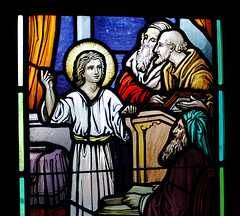

In Luke 2, Jesus went to the teachers
to learn, not to teach.
His questions impressed them by
showing His understanding.
This depiction, and those like it, are wrong.

In Martin Luther’s Large Catechism (1529) he wrote: “A god means that from which we are to expect all good and to which we are to take refuge in all distress, so that to have a God is nothing else than to trust and believe Him from the [whole] heart.” If you trust in the true God to provide for all your needs then you have a true religion and you have faith in the true God. However if you trust in a false god or some worldly thing other than God to provide you with all good and for comfort in your distress, then that is your god and your religion.

Many people these days put their trust in science to answer all life’s problems and to provide comfort and rescue in times of trouble. When people do this they have made science their religion and their god. Understand me correctly that I am not saying that science is not a useful tool to learn about how the world works. However, those who make science their religion lose their objectivity and ascribe to science certain attributes which are only applicable to God, such as: infallibility, omniscience, holiness (in one way or another), and others. It is clear to see when people have turned science into a religion when they reject legitimate scientific inquiry into a hypothesis and say, “You can’t question that. It is proven science.” We also see people who have turned science into a religion when they state as fact unprovable assertions which are based on many assumptions, each of which can be questioned by science and other means of inquiry, such as, “The universe is (insert your favorite number here) billion years old,” and “science proves god doesn’t exist.”


Science and the Christian Worldview
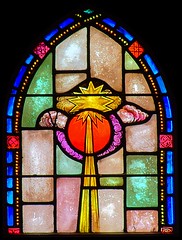

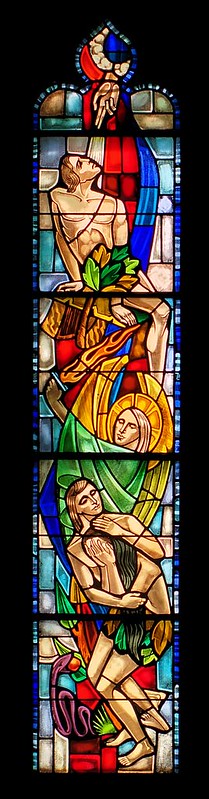
In Genesis 1 God created light
three days before creating the sun and moon.
This shows God created the universe,
not natural forces.

We should note here that the Scientific Method not only does NOT contradict Christianity, it also CANNOT do so. Science is limited in what its sphere of observation may be. Only those things which can be repeatedly observed and experimentally tested may fall under the purview of science. Non-repeatable events, and acts of God (such as creation and miracles), or even what God said to the prophets and apostles which they wrote down, cannot be tested by science, and cannot be proved or disproved because of it.

We should also note that science, and the scientific method, assumes the Christian worldview (or one exactly like it). It was Christians who developed the scientific method as we know it because they trusted that God is a rational God, and that He created the world rationally, and so that it normally obeys orderly laws (which are often called the laws of nature). One doesn’t have to be a Christian to be a good scientist (though it always helps), but one must hold to a worldview which is compatible with the Christian worldview, which holds that God set the world to function according to certain laws.


You don’t get the scientific method from some theory like the latest revision of Darwinism, in which the primary agent of change is “accidents” which by their nature, are not repeatable, and rarely observable. If your worldview is based on non-repeatable “accidents” then it is, by definition, non-scientific. Remember that science is only able to describe those things which are testable according to the scientific method. Those things which are not testable are not provable by science, but fall under some other category. To be perfectly honest, this doesn’t mean that they didn’t happen, but you must use some proof other than science. It could be history, it could be a myth, it could be a lie, but if it can’t be tested and proven by the scientific method then you can’t call it “science” nor say it is verified by science.


Do You Believe in Science?


It is a very strange question when people ask if you believe in science. If you answer the question (either “yes” or “no”), then you are speaking the language of belief, not science. If science is something you believe in (or not) then that is your religion. On the other hand, if you define “science” by the scientific method, then science has little to do with belief. Proper science only speaks about physical laws which can be proven by experimentation, and it shouldn’t have anything to say about what cannot be proven experimentally.


Science cannot have all the answers to everything, It only provides insight into those things which can be shown experimentally. Not everything can be shown experimentally. For example, what is the meaning of life? Science has no answer, or if you think science does have an answer, you are missing out on a whole lot of data that science has no way of dealing with. As every scientist knows, if you don’t have all the data, or if you ignore important relevant information, then you will not find the correct answer to the question.


Scientific inquiry is important to our society, but there is more to life than science. However, some people have taken science too far, and have turned it into their religion and their god. People turn science into their religion when they put their trust in science above all things. What is worse is when people think that science says things that aren’t proven by science, and think that it has been proven. Such things include the existence and identity of God. Science also does not prove a materialistic worldview which believes that there is nothing in the universe besides physical things which are governed only by physical laws. Science is limited to observing physical things in the world, but that doesn’t mean that those are the only kinds of things that exist.


Charles Darwin: Scientist, or Religious Zealot?


One main reason for the shift from science to religion-masquerading-as-science was the popularizing of Charles Darwin in the 19th and 20th centuries. You don’t have to look too far to find people who consider themselves scientists who say that Darwin proved that God does not exist. This is completely false. Darwin neither proved the non-existence of God, nor did he prove that evolution accurately describes how life came to be as it is now. In fact, Darwin assumed the non-existence of God, and then he wrote a book which described this fictional world where God did not create everything.


Remember that in science, whatever is assumed is not proven. You cannot say, “Let’s assume there is no god. Therefore God does not exist.” That is neither logical, nor scientific. It’s just a joke. What if your initial assumption is wrong? Since, by definition, God is above the “natural laws” (because He created them in the first place), science cannot prove, nor disprove the existence of God. For that you need to examine other evidence. When people make statements like, “science proves there is no god” then they have departed from science, and have moved into the realm of theology (at best) or wild speculation (at worst).


Contrary to the wild pronouncements of activist atheist scientists, there is evidence to support the existence of God. Leaving aside (for now) the evidence in the natural world, the best evidence for the existence of God is the historical documentary evidence. Though I can hear now the objections forming in the minds of unbelievers, let’s be scientific for a moment and keep an open mind. Though one might be tempted to think that since most writings about the gods are false mythologies, that they are all false, but that does not follow logically. Just because one claim (or even many claims) about God is false, doesn’t mean that there doesn’t exist a true claim about God. In the same way one could look at science: just because all of the claims about the origins of man cannot be proven scientifically, it doesn’t mean that man does not exist.


Here I will add that it is a silly argument which I have heard that because man exists, therefore evolution is true. The mere existence of something does not prove a particular hypothesis about how it came to be. Evolution is one hypothesis, but there are others, and one or more of these may better explain the available evidence. Prove it if you can. This is yet another example of why people don’t “believe” in science. When scientists make such silly unscientific claims, they destroy their credibility. In doing this the “scientists” show themselves to be religious zealots who really don’t have a clue. Those who claim to be scientists must use good logic or they just show themselves to be untrustworthy. This also goes for religion. People must use good theology, or they also show themselves to be untrustworthy.


The Documentary Evidence for God
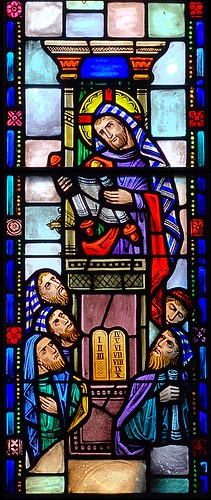

Jesus made the teachers angry
by showing them that He is the
fulfillment of God's promises in the Bible.

In the Holy Scriptures, God has told us who He is, and what He has done for us. The Scriptures tell us how God created all that exists in the physical and spiritual realms. He did it by the power of His Word. The Scriptures also tell us how God acted in specific points in history to bring about our salvation from sin, which we inherited from the first people, Adam and Eve. The Scriptures are not a scientific text book, but the Bible does not contradict any true scientific findings. The Scriptures also are history and theology.

If you compare the Christian Scriptures to any other religion’s holy book, or any book of myths, and you will see that there is a clear difference. The Christian Scriptures are not mythical, but when they speak of historical events, it is detailed, and factual. The Christian Scriptures do not idealize the saints, but show them as flawed sinners. Archaeology also supports the Biblical history 100%. Though some archaeologists don’t want to believe the evidence confirms the truth of the Bible, a fair and complete reading of the archaeological evidence has always (yes, that is 100%) confirmed the Biblical account against the skeptics – and that is using the same evidence.


Evidence in Nature that God Exists


Many people would be surprised to learn that there is evidence in nature that strongly suggests (though does not prove) that God exists. The order in the world, and what we call the “scientific laws”, are reflections of God’s rationality and power. God, as He has revealed Himself in the Holy Scriptures, is a rational being. There would be no orderly universe if God hadn’t ordered it by His command. Science itself, is a reflection of the Christian worldview that God is a rational being who set in place natural laws to govern how things work in the world. Remember that those who created science as we know it in the Enlightenment period were Christians. They assumed that God is rational (as He describes Himself in the Holy Scriptures), and that He created an orderly universe which ran according to natural laws which could be discovered by investigation. You cannot get rational science from a Darwinistic or naturalistic worldview where things happen by accident. Where is the repeatability and orderliness of accidents? It is not there, and therefore it is not scientific.


The existence of life on earth provides many features which support God as creator of the world. The complexity of life is so great that it cannot have arisen by accident. Just look at the complexity of the DNA molecule which determines the physical structure and functioning of every living thing. The DNA molecule is a marvel of complexity which encodes many hundreds of thousands of base pairs which describe the unique person. The molecular structure of DNA forms a coded program which absolutely cannot have arisen by accident. The replication of the DNA in cell division also includes sophisticated error correcting mechanisms which are extraordinarily resistant to mutations. Though mutations can happen occasionally, they result in tragic consequences (i.e. death), not evolutionary consequences.


The Problem with the Religion of Science


One problem with turning science into a religion is that it becomes your god, and when you trust in science as you ought to trust in God, then when someone questions your scientific understanding (as is proper and necessary according to the Scientific Method) then those questions not only challenge your view of the world, but also your view of your god. We see this by the fanatically zealous way that so-called “scientists” reject any investigation into the validity of the prevailing theories of macro-evolution and the big-bang. Those who question the orthodoxy of the prevailing views on these topics are branded “heretics” (essentially) and their credibility is called into question, and all this without even examining the scientific value of their experiments. This kind of zealotry is usually reserved for religious beliefs, but because science has become a religion to many “scientists” we see it among those who otherwise would like to claim to be scientists.


To “believe” in science is to put your trust in the creation, rather than in the creator. However, you should remember why there is science in the first place. Science was developed in order to understand how the world works. We don’t fully understand how everything works. It is also true that we don’t (and can’t) fully understand God, either, but if we can admit that we don’t understand the world, then we ought to be able to (at least) leave room in our world for God, who created the world. If atheists were honest they would admit that their non-belief in God is just wishful thinking. Atheism is not natural among people. We all know that there is a god, even if some don’t know who the true God is.


The End of the World


Whether you believe in God, or believe in the currently favored natural explanation of how the universe came into being, you know that creation came into being in one day, and it will end in a similar way.
The current explanation of the naturalistic creation is a “Big Bang” as a creative event. I can’t really take scientists seriously when they say things like that. Surely they can do better than that! Explosions are destructive events, not creative ones. Every explosion ever has proved this again and again. The fact that every computer model of the “Big Bang” has failed demonstrates that the universe was not created by an explosion. Do not take comfort in the idea that the computer model programmers have claimed to have gotten to within a fraction of a second of the beginning of the “Big Bang”. All that means is that their model has failed to show the creative nature of the explosive event, which is what we always observe. If the first few milliseconds of the “Big Bang” goes wrong, then everything afterwards goes wrong, too.

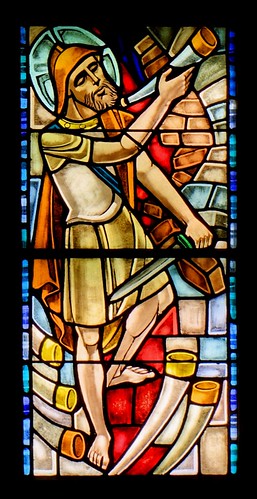
However, the atheist should not take comfort that he won’t be around to see the end because he will have long since passed into non-existence by that time. God has told us how things will end, and because Jesus Christ has destroyed the power of death for all people, and has promised to raise us all on the last day for judgment, we all would be wise to, at least, take some time to consider the claims of Christianity. Scripture describes the last day as a day of resurrection like this, “We will not all sleep, but we will all be changed in a flash, in the twinkling of an eye, at the last trumpet. For the trumpet will sound, the dead will be raised imperishable, and we will be changed. For the perishable must clothe itself with the imperishable, and the mortal with immortality.” (1 Corinthians 15:52-53) Then will proceed the judgment. It is not a judgment based on works. It is a judgment based on trust in Jesus as your savior from sin. Salvation is not based on merit, but salvation is the gift of God in Christ Jesus (see Ephesians 2:8-9). It couldn’t be any easier. Accept the gift and enjoy the blessings of salvation, or reject the gift and live in eternal regret and torment. (For more on this, see my article answering the presumptuous question: Why Does God Condemn Unbelievers to Hell?)

On the last day there is no option of non-existence. Christ has destroyed death for all, and gives salvation freely. All who reject Christ’s salvation choose to live in torment with the devil, whether they understand the choice or not. On the last day when we see Christ come in His full divine glory there will be no one who will fail to acknowledge Him as Lord and God. Those who belong to Christ through faith will rejoice that Christ has come to save us. Those who belong to themselves and to the devil through unbelief and rejection will mourn that they ought to have trusted in Jesus to save them, but did not. Either way, on the last day, there will be no denying that Jesus is God, and that His judgments are righteous and true, whether He judges to save you or to damn you.
 

A Sampling of Scripture Passages affirming God’s Creation of Everything


Genesis 1:1 
“In the beginning, God created the heavens and the earth.”
 

Job 38:4-13 
The Lord said, “Where were you when I laid the earth’s foundation? Tell me, if you understand. Who marked off its dimensions? Surely you know! Who stretched a measuring line across it? On what were its footings set, or who laid its cornerstone while the morning stars sang together and all the angels shouted for joy? Who shut up the sea behind doors when it burst forth from the womb, when I made the clouds its garment and wrapped it in thick darkness, when I fixed limits for it and set its doors and bars in place, when I said, ‘This far you may come and no farther; here is where your proud waves halt’? Have you ever given orders to the morning, or shown the dawn its place, that it might take the earth by the edges and shake the wicked out of it?”
 

Psalm 19:1 
“The heavens declare the glory of God; the skies proclaim the work of his hands.”
 

Psalm 95:6-7a
“Oh come, let us worship and bow down; let us kneel before the Lord, our Maker! For he is our God, and we are the people of his pasture, and the sheep of his hand.”
 

Proverbs 14:31 
“Whoever oppresses a poor man insults his Maker, but he who is generous to the needy honors him.”
 

Proverbs 17:5 
“Whoever mocks the poor insults his Maker; he who is glad at calamity will not go unpunished.”
 

Proverbs 22:2 
“The rich and the poor meet together; the Lord is the maker of them all.”
 

Isaiah 40:28 
“Have you not known? Have you not heard? The Lord is the everlasting God, the Creator of the ends of the earth. He does not faint or grow weary; his understanding is unsearchable.”
 

Isaiah 51:12-15 
The Lord said, “I, I am he who comforts you; who are you that you are afraid of man who dies, of the son of man who is made like grass, and have forgotten the Lord, your Maker, who stretched out the heavens and laid the foundations of the earth, and you fear continually all the day because of the wrath of the oppressor, when he sets himself to destroy? And where is the wrath of the oppressor? He who is bowed down shall speedily be released; he shall not die and go down to the pit, neither shall his bread be lacking. I am the Lord your God, who stirs up the sea so that its waves roar – the Lord of hosts is his name.”


Marching for Science as a Religious Rally


It is interesting that as I was working on writing this article, on April 22, 2017 there was a series of protest marches in several cities in the United States, and across the world that billed itself as a “March for Science”. In reality it was a religious (and political) rally for atheists, which was actually against real science. Marches are done to affect political change through educating voters about the value (or lack thereof) of their cause. This is not how science is done. Science is not done by political means, but by experimentation and showing the evidence. One of the stated reasons for the protest was to combat skepticism about “global warming”. This is anti-science also, because according to the scientific method, scientists are supposed to be skeptical about scientific hypotheses (like the claims of the global warming fear mongers), and must try to disprove the hypothesis in order to confirm or deny its validity.


One of the prominent speakers at the Washington D.C. march was the popular children’s TV celebrity, Bill Nye. Bill Nye is one of the most prominent high priests of the new atheist religion. Nye is infamous for saying that religion (specifically the Christian teaching of God’s account of the creation in Genesis) should not be taught to children because he thought it held children back in learning science. That was not a scientific statement either, but a religious statement. Nye is in favor of indoctrinating children in atheistic materialistic evolution (even though that is far short of being on solid ground scientifically), but he is completely against indoctrinating children in Christian doctrine which does not contradict true science. Nye has no problem with the teaching of science as long as it promotes atheistic evolution, but he doesn’t want the teaching of science if it shows that creation more likely happened as is described in the Book of Genesis which Moses wrote down 3500 years ago.


Can Monkeys produce Shakespeare?


The works of William Shakespeare
are the product of a brilliant mind, not monkeys.

There is a funny hypothesis that an infinite number of monkeys with infinite keyboards (and time) will produce the complete works of William Shakespeare. This has been proven false experimentally. Mathematically it is theoretically possible, but experiments have shown that in reality the true probability is exactly zero. Monkeys may peck at the keys of a typewriter or computer keyboard for a while, but sooner or later they will destroy it. That is what monkeys do. Monkeys, or chimpanzees, or great apes are not made to write poetry. You will never get Shakespeare from a monkey.

Scientists and mathematicians are really not concerned about the writings of William Shakespeare. Shakespeare’s plays and sonnets are no threat to science. What they are really saying when they say that monkeys can produce Shakespeare is that the Bible is a book of fiction, or man-made myths (or worse), and that it cannot be trusted. Here again we can see that many atheist scientists are blinded by their religion. The historical truth of the Bible has been proven time after time by archaeology and other sources, even by skeptics who try and fail to prove the Bible wrong and become convinced that it is true. Since the Bible is historically true, then at least some thought should be given to the idea that it is also theologically and Spiritually true.


Since it is true that you cannot get Shakespeare from monkeys, then it is even more true that you cannot get the human genome from monkeys (or any other simple or complex organism). The ordering of the base pairs in the DNA molecule shows extreme complexity. Using only four “letters”, the DNA sequencing of even the simplest organism is at least as complex as a Shakespeare play, and more precise, because Shakespeare might have misspelled a word here and there and his meaning would still have come through, but a misspelling in the DNA sequence could mean the death of the organism. Wikipedia references a 1996 speech by Robert Wilensky, who stated, “We’ve heard that a million monkeys at a million keyboards could produce the complete works of Shakespeare; now, thanks to the Internet, we know that is not true.”


The idiocy of uneducated (or ill-educated) people on the internet may not actually disprove the religious zealots who fashion themselves as “scientists”, but it does confirm what the Holy Bible says about original sin. The Bible says that we are all alike conceived and born as sinners and are in need of forgiveness and redemption. However, God, has humbled Himself and entered our world as a man, Jesus Christ. He did this to redeem us from the guilt of our sin by fulfilling God’s Law on our behalf with His life, and also by offering His life in payment for ours. All who trust in Him to save them belong to Him and will receive His salvation. This is not a scientific fact, but a historical fact. God has had it written down and preserved for our benefit so that we may hear and believe. This doesn’t prevent Christians from learning and marveling at the mysteries of God’s creation, but it gives us great hope when this sinful world causes us sorrow, suffering and death. That is something that no amount of science can do.


The Temptation of the Religion of Science
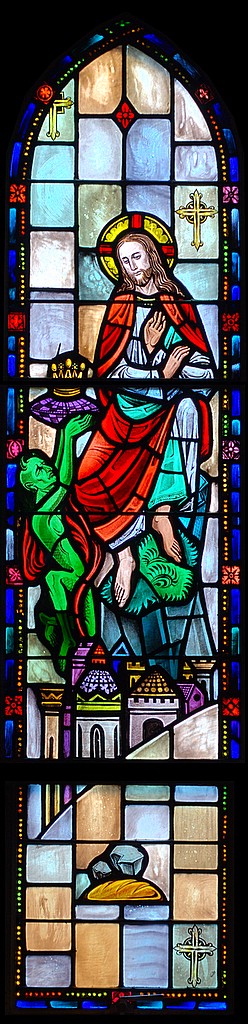

The devil's temptations often
seem very rational

The temptation to turn science into a religion plays on the pride of intellect. People who are interested in science like to find out how things work and they often take great pleasure in learning and discovering new things. That is, things which are new to them. There really isn’t anything new, but if I am learning them for the first time, then it seems new to me and I feel a sense of discovery. If I do this often enough I can take great pleasure in this and place more importance on this than is deserved. In doing this I will take pride in my intellect and think that I am really something. This pride leads to idolatry. First I begin to think that I am smarter than other people because I enjoy learning new things and maybe I know something that they do not. Then I will think that I am better than others because I am smarter than them. Then I will think that I am more valuable then others, and they are worth less. Then I will think others are worthless, and eventually I will appoint myself as my own god. This is what leads people to Gnosticism.

Gnosticism is a worship of knowledge, usually a secret kind of knowledge like what scientists claim for their discoveries. The religion of science is a modern form of Gnosticism. You will often hear scientists talking about discovering the “secrets of the universe.” When you view science like this, then it easily becomes your religion. If you think you know the “secrets of the universe” then you believe you know things that only God knows, and if only you and God have this knowledge, then you feel like you are equal to God and can judge God and you probably think that you are smarter than God. You can see how this can be very tempting. Who wouldn’t want to be smarter than God so that you can tell Him that He is wrong. This was, in essence, the temptation which brought down Adam and Eve when they were still holy and perfect, and so the sinful children of Adam and Eve have little chance to resist such a strong temptation.

“Humble yourselves, therefore, under the mighty hand of God so that at the proper time he may exalt you.” (1 Peter 5:6)


The Problem of Rationalism


Some people may think that if an argument is rational then it must be true. This is false. Every false teaching in history has begun by people trying to rationalize the Scriptures, but instead of finding the truth, they only come up with heresy. For example, even though the Triune nature of God can be found in both the Old Testament and the New Testament, it doesn’t make rational sense because it concerns God’s nature. Throughout history people have tried to rationalize the doctrine of the Triune nature of God and have come up with the false teachings of Arianism, docetism, modalism, and more.
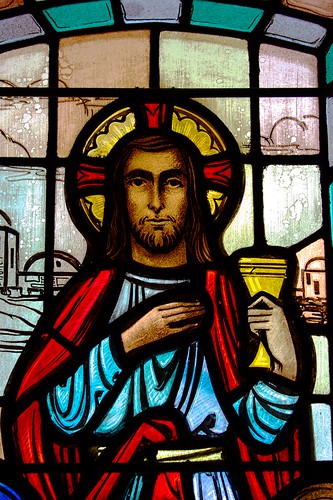
Jesus gives His body and blood
with the bread and wine of the Sacrament.
This can only be true if Jesus is God.

Another example is when Reformed Christians make the argument that because the resurrected and ascended Jesus sits at the right hand of God, the Father (Acts 2:33), then He cannot give His body and blood in the Sacrament of the Lord’s Supper to communicants. This contradicts the words of Jesus in Matthew 26, Mark 14, Luke 22, and 1 Corinthians 11, and the explanation of St. Paul in 1 Corinthians 10:16 which explains that the body and blood of Jesus are truly present in the Sacrament wherever and whenever it is observed. The Reformed argument also ignores Christ’s promise of Matthew 28:20, “I am with you always, to the end of the age.” The problem with this argument is that it makes a rationalized assumption about what it means that Jesus “sits at the right hand of God, the Father” and then their false rationalization causes them to ignore other clear passages in Scripture.

Another example is when people try to rationalize why some people are saved, but not others. The Scriptures teach that Jesus gave up His life to pay for the sins of all people and all who believe in Him will be saved, and all who reject Him will be condemned (John 3:16-17 and others). In this way Jesus is the cause of all who are saved, and the people themselves are the cause of all who are condemned. This doesn’t sit well with rationalists who don’t like the idea that there are two different causes for these opposite outcomes. Some rationalize it by saying that God is the singular cause, and He chooses some to be saved and some to be damned. This makes God to be evil because they are saying that He intends for some people to be condemned. This contradicts 1 Timothy 2:3-4 (and many others), “God our Savior … desires all people to be saved and to come to the knowledge of the truth.” Other people rationalize that God can’t be the cause of both salvation and damnation, but that we ourselves are the cause. They say we must make the choice, and our choice determines if we are saved or if we are damned. This is nowhere taught in Scripture, and it contradicts John 1:12-13, “Yet to all who received him, to those who believed in his name, he gave the right to become children of God – children born not of natural descent, nor of human decision or a husband’s will, but born of God.” Salvation is not a matter of our will, but of God’s will. Damnation, however, is a matter of our will, should we choose to reject God’s gift of forgiveness and salvation in Jesus. It is a paradox, and it can’t be resolved. Those who try may be rational, but they are false teachers.

There are many more examples. You could go through all heresies taught in history and find a rational basis. No heretic ever starts out trying to teach something false. He first tries to make sense of paradoxes, or mysteries beyond our comprehension, and in making the rational argument he must ignore and contradict some other clear teaching of Holy Scripture so that his rational argument teaches something false.

True science is relentlessly rational. That is its strength when it is used properly. One must keep in mind the limits of scientific inquiry before venturing into speculative theory and other areas where science cannot find answers or has nothing to say. Theoretical science is not – strictly speaking – science. Theories are only one part of the scientific method, and theories (or hypotheses) come early in the search for truth. Hypotheses are often proven wrong by experimentation. It is a great temptation to think that science or knowledge or rationalism will answer all our questions and solve all our problems. However science cannot solve the problem of sin and death. Only Jesus can rescue us from sin and death.

The Holy Scriptures were not written as a scientific textbook, but were written to bring us salvation through faith in Jesus Christ. The Holy Bible does not contradict true science, but rather encourages us to learn about the world that God created for us. We can never have all our questions answered because we are limited, and we can’t know everything. God does know everything, and he has given us the Scriptures so that we would put our trust in Jesus for our forgiveness and salvation. Science is only one of many gifts that God has given to us to make our lives better in this world, even though some use God’s gifts for evil. Don’t be led astray by those who make science into some godless religion. That is not what science is for. Don’t be led astray by those who say that the Bible isn’t true because it is not scientific. That is not what the Bible is for. The Holy Bible is to tell you what God, in Jesus Christ, has done to save you from your sins.

Tuesday, August 14, 2018

How to Avoid Going Your Own Way to Hell

by Pastor Paul Wolff


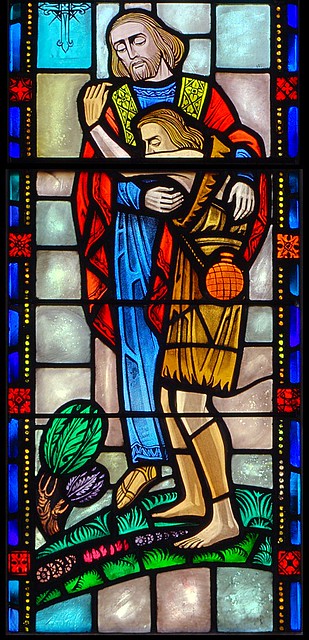
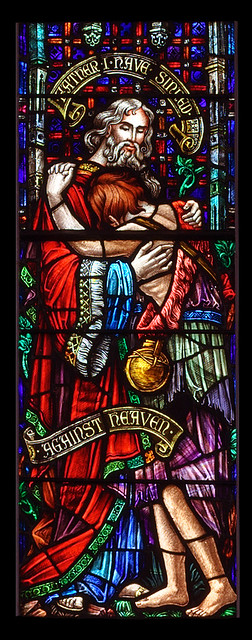
The prodigal son left his family
to go his own way.
He soon repented of his sin.

Lord, to You I make confession:  
I have sinned and gone astray,  
I have multiplied transgression,  
chosen for myself my way.  
Led by You to see my errors,  
Lord, I tremble at Your terrors.

Yet though conscience’ voice appall me,  
Father, I will seek Your face;  
Though Your child I dare not call me,  
Yet receive me in Your grace.  
Do not for my sins forsake me;  
let Your wrath not overtake me.

For Your Son has suffered for me, 
giv’n Himself to rescue me,  
died to save me and restore me,  
reconciled and set me free.  
Jesus’ cross alone can vanquish
these dark fears and soothe this anguish.

Lord, on You I cast my burden –  
sink it in the deepest sea!  
Let me know Your gracious pardon,
cleanse me from iniquity.  
Let Your Spirit leave me never;  
Make me only Yours forever.

(Hymn verses from “Lord, to You I make Confession”, Lutheran Service Book #608, or The Lutheran Hymnal #326, Public Domain)

This past Sunday we sang the above hymn in church, and as often happens, I found myself singing this hymn in my head throughout the week. This is why it is so important to sing good hymns in church so that even throughout the week our thoughts are properly focused on confessing our sins to God and trusting in Jesus to forgive us. What a great tragedy it would have been if we had sung some catchy little ditty which whitewashed my guilt and praised me for some supposed good in me rather than praising Christ for His work to redeem me and save me from my sins. I don’t want such nonsense being repeated in my mind because none of that can save me. It might make me feel good to sing about how good I am, but it is a lie and can only lead me to be content in my sin on my way to hell. Hymns like the one above are good to focus my attention where it belongs: on Jesus as my savior from sin. This is what gives true comfort and peace, and keeps my feet on the right path.

As I repeated this hymn in my mind this week I was struck by the line in the first verse which says, “I have … chosen for myself my way.” In this hymn this is my confession of sin. “Lord, forgive me for choosing to go my way instead of Yours.” This is completely opposite to the way of the world. The world’s ideal is similar to what Frank Sinatra used to sing, “I did it my way” (and countless other similarly themed songs from Sinatra and others). The world thinks it is a virtue to “go your own way” and to do what you want when you want. That seems to us like “freedom,” but it is actually much closer to hell than to heaven.


God condemned the Israelites saying,
“In those days there was no king in Israel.
Everyone did what was right in his own eyes.”
God sent judges such as Samson to rescue them.

In the Biblical book of Judges the wickedness of the Israelites is summed up by the last verse of the book, “In those days there was no king in Israel. Everyone did what was right in his own eyes.” The problem wasn’t a lack of a king. God was the King of Israel, but the people didn’t recognize God as their king and did what was right in their own eyes, but they did wrong in the eyes of God, their king. The pattern in Judges was that the people would turn away from God, then God would send an enemy such as the Philistines, or the Midianites, or others, to come and steal their wealth and their food and generally make life difficult for them, until they repented and turned back to God asking Him to rescue them. God would send a judge to defeat the enemy, and as long as the judge lived the people remembered God and prospered. When the judge died the people quickly forgot God and turned to idols and the cycle began again. It was a strong condemnation of God’s people that “everyone did what was right in his own eyes.”  

There is some evidence in popular culture that choosing your own way is a bad thing. In 1976 Lindsay Buckingham wrote a song for Fleetwood Mac titled, “Go your own way.” It was a breakup song and he was essentially saying to his lover, “If you will not go with me on our way together, then you can go your own way, but I am going a different way.” This is a beautiful but sad song highlighting the painful effects of sin and betrayal and regret from broken relationships in this wicked world. To those who listen carefully, this song clearly communicates the heartbreak Mr. Buckingham feels over his lover’s betrayal. The problem is that the heartbreak is wrapped in such a beautiful song with the chorus repeating, “You can go your own way” that I can easily imagine people listening to it casually, but not thinking about it, might say, “Hey, I can go my own way! That is exactly what I want to do.” It may seem fun at first, but before long they find themselves sad and alone living a hellish life on earth and wondering why things aren’t as great as they had thought they would be.

There is also an early 21st century movement known as MGTOW – “Men Going Their Own Way” which is a reaction against feminism. Feminism is, at its heart, essentially fascism for women. Feminists want to exercise power and control over men, but because that goes against the natural, God-created, order of things, no man will ever be content to let feminists have their way. There is a sense in which MGTOW is a move toward rationality, because an extreme male fascism is just as bad as a female fascism, and going your own way seems like a way out of the political power struggles of male-female relationships. However, men and women going their separate ways is sad and lonely. God made the woman for the man, and the man for the woman, and He blessed this marriage with children. If all men and women went their separate ways the entire population would be essentially dead in less than 50 years, and completely dead in no more than 120 years. This is just one example of how going your own way leads to death. There are many more ways.


The loving father forgave his
wayward son and rejoiced
at his return.

In Christ’s Parable of the Prodigal Son (Luke 15:11-32) the younger son seeks to go his own way and do what he wants. The loving father mourns for his son as if he were dead, but he lets him do what he wants, but prays that he will come back. We see this because once the wayward son realizes that he has sinned and is worse off than a pig, the father is out on his porch looking for his son and sees him coming when he is still a long way off. The father then runs to meet him and rejoices that not only is the one who was lost now found, but he who was “dead” is now alive! In the parable, the loving father represents God, who lets us go our own way if we want, but warns us that our self chosen way does not end well. Proverbs 16:25 says, “There is a way which seems right to a man, but its end is the way to death.”

Sin always leads so sorrow, suffering, and death. Since all people are sinners, we all, by nature, seek to gratify our sinful desires rather than seeking to do good for our neighbor. Even when we think we are seeking to do good for our neighbor, we are more likely doing evil than good. Scripture says, “The wages of sin is death.” (Romans 6:23) This is why we must repent of our sins and confess to God, “I have … chosen for myself my way.” The hymn verses above then look to Christ for forgiveness, healing, and restoration from all that has been broken by sin in our lives. We seek God’s face (v. 2) because He is the one who made us, and can restore us through His healing power, and through Jesus, He is the one who gave Himself to suffer and die to save me and restore me to set me free from the deadly consequences of sin (v. 3). It is Christ also who has sent the Holy Spirit to give me comfort in the midst of the loneliness and sorrow of this sinful world (v. 4).

Psalm 32:5
“I acknowledged my sin to you, and I did not cover my iniquity; I said, ‘I will confess my transgressions to the Lord,’ and you forgave the iniquity of my sin.”

2 Corinthians 5:17-21  
“Therefore, if anyone is in Christ, he is a new creation. The old has passed away; behold, the new has come. All this is from God, who through Christ reconciled us to himself and gave us the ministry of reconciliation; that is, in Christ God was reconciling the world to himself, not counting their trespasses against them, and entrusting to us the message of reconciliation. Therefore, we are ambassadors for Christ, God making his appeal through us. We implore you on behalf of Christ, be reconciled to God. For our sake he made him to be sin who knew no sin, so that in him we might become the righteousness of God.”

Psalm 51:3-11  
“For I know my transgressions,
and my sin is ever before me.  
Against you, you only, have I sinned  
and done what is evil in your sight,  
so that you may be justified in your words  
and blameless in your judgment.  
Behold, I was brought forth in iniquity,  
and in sin did my mother conceive me. 
Behold, you delight in truth in the inward being,
and you teach me wisdom in the secret heart.  
Purge me with hyssop, and I shall be clean;  
wash me, and I shall be whiter than snow. 
Let me hear joy and gladness;
let the bones that you have broken rejoice.  
Hide your face from my sins,
and blot out all my iniquities.  
Create in me a clean heart, O God,  
and renew a right spirit within me.  
Cast me not away from your presence,  
and take not your Holy Spirit from me.”


Friday, December 29, 2017

Anger

by Pastor Paul Wolff


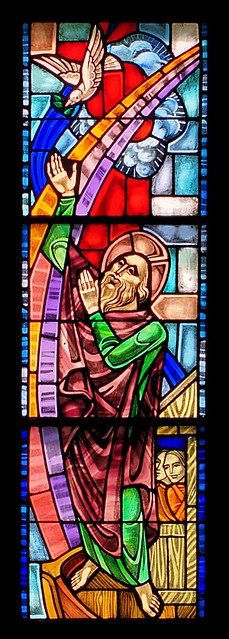
God destroyed the world with a flood
in anger over their sin and violence,
but He spared Noah’s family.

I remember a comic strip from when I was young which for many years I had pinned to a bulletin board in my room. The comic depicted a child in school taking a test with the question: “What was the cause of the U.S. Civil War?” The answer that the child wrote was only one word: “Anger.”

After a murderous gunman killed 26 people in a Texas church in 2017, and wounded all of the survivors in attempting to kill them, he was described as having “a lot of hatred inside him.” Such is the result of holding on to anger so that it is no surprise that the ancient Church listed anger or wrath as one of the seven deadly sins. The consequences of untamed anger are violence, murder, and war. There are clearly terrible things which result from anger, yet if we look at what Holy Scripture says about anger we might be surprised to find that anger is not always sinful.

Saint Paul writes in Ephesians 4:26-27, “In your anger do not sin: Do not let the sun go down while you are still angry, and do not give the devil a foothold.” Because the Apostle encourages Christians not to sin in their anger, it follows that there can be anger without sin. We call that righteous anger. Righteous anger is anger over things that are wrong or evil. We should be angry when people sin against our neighbors and treat others in an unrighteous manner. God, Himself gets angry over sin because He didn’t create us to sin, but to be holy. We, however, have corrupted what God made holy, and have turned to sin. In the New International Version of the Bible a quick word search finds 256 occurrences of the word “anger” and 190 occurrences of the word “wrath”. Many of these are describing the anger and wrath of God. Yet God does not sin in His anger and wrath, even when He takes it out on those who sin against Him, or other people. God is righteous in His anger because He is holy, and because He loves us and doesn’t want us to do evil. He may let us see that there are wicked consequences to sin, but He does this to show us that we need His forgiveness and redemption through Jesus Christ.


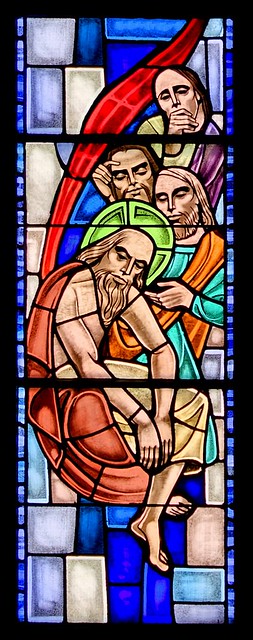
Contrary to what Job’s friends thought
God was not punishing Job
but testing His faith to strengthen it.

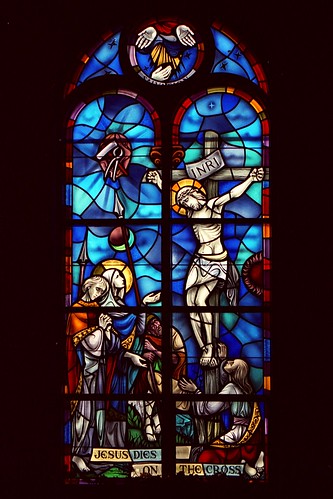
When Jesus drove the money changers out of the temple (Matthew 21:12-13; Mark 11:15-17; John 2:13-16) He acted in anger. He even acted violently by overturning tables and driving the thieves out of the holy place. Yet, Jesus did not sin in His anger, and he certainly didn’t hurt anyone. God’s temple was to be a place where God’s people would go to find forgiveness and peace from God, not a place they dreaded to go because they knew they would be cheated by dishonest merchants. Jesus was always in control of His anger, and never hurt people in His righteous anger. Even when wicked people falsely accused Him of wrongdoing and beat Him and nailed Him to the cross to kill Him, He did not respond in anger, but forgave His murderers and let them kill Him so that He could pay for their sins so that they could be saved through faith in Him.

Yet, even though there is such a thing as righteous anger, it doesn’t mean there is no such thing as unrighteous anger. Jesus Himself teaches in Matthew 5:21-22, “You have heard that it was said to the people long ago, ‘Do not murder, and anyone who murders will be subject to judgment.’ But I tell you that anyone who is angry with his brother will be subject to judgment. Again, anyone who says to his brother, ‘Raca,’ is answerable to the Sanhedrin. But anyone who says, ‘You fool!’ will be in danger of the fire of hell.” We sinners are much more likely to sin in our anger than Jesus or His heavenly Father. So we ought to be careful in how we act according to our anger.


God gives authority to governments
to punish wrongdoers
as Joshua did in Jericho.

Solomon writes in Proverbs 29:11, “A fool gives full vent to his anger, but a wise man quietly holds it back.” Since sinners are more likely to sin in expressing our anger, we need to keep it under control unless we are sure that we are acting properly to work for what is right. In that church massacre in Texas in 2017, the murderer acted out in great evil by shooting all those innocent people, but while that was going on, a neighbor to the church heard what was going on and grabbed his gun and went in and shot the murderer, wounding him, and drove him away before he could kill any more people. In a way, this man was doing the same thing as the murderer, shooting a gun at a person in a church, but he acted righteously to punish a murderer and protect those innocent people who were being attacked, and he saved the lives of many people.

Now, just because there is righteous anger, and even a righteous use of violence to punish wrongdoers, this doesn’t give us the excuse to exercise our anger in all cases, even when we can be justified in acting out in anger. Saint Paul counsels in Romans 12:17-21 “Do not repay anyone evil for evil. Be careful to do what is right in the eyes of everybody. If it is possible, as far as it depends on you, live at peace with everyone. Do not take revenge, my friends, but leave room for God’s wrath, for it is written: ‘It is mine to avenge; I will repay,’ says the Lord. On the contrary: ‘If your enemy is hungry, feed him; if he is thirsty, give him something to drink. In doing this, you will heap burning coals on his head.’ Do not be overcome by evil, but overcome evil with good.” This is what Jesus did at all times, and in doing so He won our salvation. Because God is righteous and holy, He is always right when He acts according to His anger and wrath.


Jesus did not act in anger
when he was wrongly accused and
forgave his murderers on the cross.

If punishment is called for, God will punish. However, if He can resolve the situation without violence, He is right in withholding His punishment in favor of forgiveness. This is why in most circumstances we should not act out in violence. If punishment is called for, God has established worldly authorities to carry out justice. In a just society the guilty are punished and the innocent are rewarded. In most cases citizens ought to let the authorities punish the wrongdoers. The church shooting described above is an exception. The situation was desperate, and there wasn’t time for the police to respond, so the neighbor had to act quickly to save lives, but he was able to stop the massacre without killing the murderer. After he fled from the church, some more neighbors followed him and were on the phone with the police so that they could come and bring the murderer to justice. This was proper also. Though the murderer did not let this happen and murdered himself last of all.

Because Jesus has overcome sin and death through His sinless life, and His innocent suffering and death in payment for our sins, all those who were wrongly murdered will live again, and those who murder will also live again. Jesus has destroyed the power of death. All who trust in Jesus for the forgiveness of their sins have been forgiven and will live in paradise as God’s beloved children. This includes some people who were guilty of murder in life, but who repented of those sins and trusted in Jesus to forgive them. On the other hand, those who reject Christ’s forgiveness will suffer God’s wrath for eternity because although Jesus paid for their sins and gives them life and salvation as a free gift, they reject the gift and place themselves under God’s righteous wrath. This may include both unbelieving murderers, and the otherwise innocent people they kill. In such a case the tragedy is compounded.


When Jesus returns in glory
He will bring salvation to all believers
and judgment for all who hate Him.

This is why we should leave vengeance to God. He knows who is forgiven and who should be damned. One who is a murderer today may repent tomorrow and be saved. Such a person we will greet in heaven as a beloved brother in Christ and will rejoice in his repentance and salvation, even those Christians whom he killed will rejoice in his receiving Christ’s forgiveness. Some people may complain that this is unfair, but do we really want what is fair? If God were simply fair and just, and not merciful, then we all would be condemned to death with no chance of salvation because we are all guilty of sins against God and against His people. What is fair is that we all ought to suffer hell for our sins. However, God is merciful and He took the punishment for our sins in our place when He became incarnate as a man, Jesus Christ. It wasn’t fair that Jesus had to suffer for the sins that you and I are guilty of, but Jesus acted in love to save us. Jesus wasn’t so much concerned with fairness as He was with doing what was necessary to save us from our sins. Although Jesus was innocent of all sins, He suffered death to rescue us all from death, and to win our forgiveness and eternal life with Him in His heavenly paradise. In the end, all praise goes to Jesus, who rescues us all from our sins.


Here is a small selection of Bible verses about anger.


Psalm 6:1  
O Lord, rebuke me not in your anger, nor discipline me in your wrath.

Psalm 7:6  
Arise, O Lord, in your anger; lift yourself up against the fury of my enemies; awake for me; you have appointed a judgment.

Proverbs 29:8
Scoffers set a city aflame, but the wise turn away wrath.

James 1:19-20
Know this, my beloved brothers: let every person be quick to hear, slow to speak, slow to anger; for the anger of man does not produce the righteousness of God.

Colossians 3:5-10  
Put to death, therefore, whatever belongs to your earthly nature: sexual immorality, impurity, lust, evil desires and greed, which is idolatry. Because of these, the wrath of God is coming. You used to walk in these ways, in the life you once lived. But now you must rid yourselves of all such things as these: anger, rage, malice, slander, and filthy language from your lips. Do not lie to each other, since you have taken off your old self with its practices and have put on the new self, which is being renewed in knowledge in the image of its Creator.


Wednesday, December 27, 2017

Is Christmas Offensive?

by Pastor Paul Wolff


Christmas is the celebration of
God’s gift of a savior
to redeem us all from our sins

In a Pennsylvania town near Gettysburg, a family was asked to remove a Christmas decoration from in front of their house which prominently displayed the name, Jesus, because one of their neighbors described it as “offensive.” Is Christmas offensive?

I suppose there are many ways to answer this, but the truth is that yes, Christmas can be offensive to some, but the reality of Christmas celebrates the least offensive event in all of history.

First, there are people who misuse the name of Jesus only as a vulgar exclamation. If they see the name of Jesus as vulgar, then they would certainly see His birth as offensive. However, those who only use Christ’s name as a curse word are misusing it, and any offense they give or receive at the name of Jesus is their own fault, and not something that Jesus Himself is responsible for.

Likewise, there are people who would never use Jesus’ name as a vulgar exclamation, or as a curse, and in fact see themselves as good people, and who still might be offended by Christmas. Jesus is God who became incarnate as a person because that was the only way He could redeem us from our sins. Those “good” people who don’t admit to being sinners are offended that the birth of Jesus shows that they aren’t nearly as good as they think they are. They think they don’t need a savior, much less do they think that God Himself had to die to save them from their sins. They think that if God had to die for sinners, it must have been for “other people” who are worse than them. The birth of Jesus offends them because it puts them in the same category as people they despise nearly as much as Jesus.

The temptation to idolatry is the most common temptation that we face. We usually think of idol worship as bowing down to a man-made statue or some kind of false god. However, the most common form of idolatry is to think of one’s self as god. This, in effect, was the temptation which seduced Adam and Eve when they were still in the Garden of Eden. If this temptation corrupted Adam and Eve when they were still innocent, we, who are already corrupted by sin, are much more likely to fall for this temptation and see ourselves as our own god. Wherever this is true, we see the true God as a rival and we take offense at Him in His person, and in His word and works.


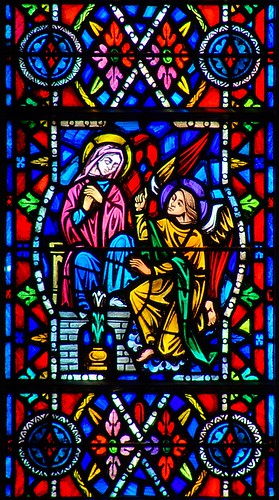
Mary heard the word of God
and she believed.

In reality, the coming of God into our world as Jesus Christ was the least offensive thing ever to happen in the entire history of everything. At first it was known only to Mary when she heard and believed the words of the angel, Gabriel. Then Mary went to visit her elderly cousin, Elizabeth, who was the recipient of a slightly lesser miracle, but one which was just like the gift of Isaac to Abraham and Sarah in Genesis 21. Elizabeth (and her unborn child) rejoiced the moment she heard Mary greet her (see Luke 1:44).

After three months, when Mary went back to Nazareth and told Joseph the news, he did not rejoice. He was rather offended. He had been faithful and chaste and knew that he had not fathered any child, so when Mary shows up pregnant, he assumed that she had been unfaithful. This was a logical (though wrong) assumption. Ever since the creation of Adam and Eve, all people have been conceived the same way. No virgin, before or since, had ever become a mother. Matthew 1:19 tells us that Joseph had made up his mind to divorce Mary quietly, so as not to put her to shame, but I am sure that in their conversations that day there was more than a few tears shed by both Mary and Joseph. Such was the supposed offense.

That evening and angel of the Lord appeared to Joseph in a dream and told him, “Joseph, son of David, do not fear to take Mary as your wife, for that which is conceived in her is from the Holy Spirit.” To Joseph’s credit he believed the word of God from the angel, even though it was essentially the same thing that Mary had told him earlier which he did not believe. The offense that he had presumed from Mary was so great that he couldn’t bring himself to believe her, at first, because she had every reason to lie if she was, in fact, unfaithful. Yet, when Joseph heard God’s word from the angel, he repented of his disbelief and kept Mary as his wife and continued to refrain from intimate relations with her until an appropriate time after Jesus was born.

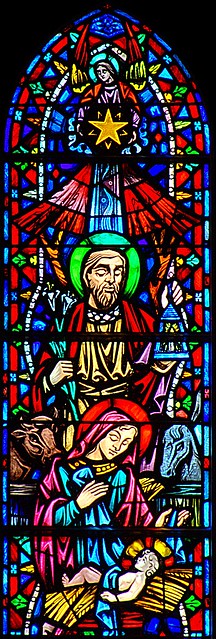
The actual birth of Jesus was also most inoffensive. Joseph and Mary had to travel South to Bethlehem to comply with a decree from Caesar Augustus about registering in a census. Even though the Davidic dynasty of kings had ended several hundred years before the days of Joseph and Mary, there were likely many, many Jews of that day who could trace their ancestry back to King David. Remember that David’s youngest son and heir, Solomon, alone had 300 wives and 700 concubines, and surely also fathered more than his fair share of children, though the Scriptures don’t tell us how many children came from these arrangements. Even acknowledging that over the years some of David’s descendants may have lost track of their ancestral line, there surely was quite a crowd that was coming to Bethlehem to register for Caesar’s census. Yet, the birth of the Son of God didn’t put anyone out the night He was born. Instead, Mary and Joseph apparently stayed in a barn (or its equivalent), and placed the newborn baby Jesus in a manger as his first crib. This humble birth was the very opposite of offensive.


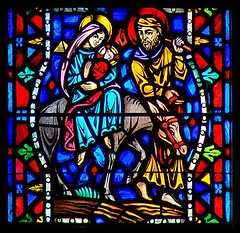
Joseph protected his family
by taking them to Egypt
until the death of Herod

That same night after Jesus was born, angels from God appeared to shepherds near Bethlehem and told them the good news about the birth of God’s Son, and they weren’t offended at all and came and worshiped Him. Likewise, when the Magi saw the star, and interpreted it to mean that a king was born to the Jews, they came to worship Him. However, they logically assumed that the new king was born in Jerusalem and first went there to find the royal baby. King Herod was not a descendant of David, nor a Jew, nor a Levite, nor even a descendant of Israel. When Herod heard about the birth of the King of the Jews, he took offense. Herod didn’t want a Jewish king. He wanted one of his sons (one whom he hadn’t yet killed) to succeed him as king, not a descendant of Judah born in Bethlehem. After the Magi left town without even saying goodbye and identifying the newborn King of the Jews, Herod sent soldiers to Bethlehem to kill all the baby boys younger than two years.


The murderous insanity of Herod shows the tragic foolishness of taking offense at the birth of Jesus. Yet it also reminds us that we shouldn’t be surprised when people take offense at this wonderful event.


The birth of Christ is such an important event in human history that when the Roman empire became a Christian empire after Constantine legalized Christianity, they eventually made an effort to count the years from the birth of Jesus. They likely weren’t perfect in this, and we now believe Jesus was born around 3-4 B.C. as we count the years. The description of the years as B.C. (before Christ) and A.D. (Anno Domini – year of our Lord) also offends people who don’t recognize Christ as Lord and they would rather describe the years as B.C.E. (before the Christian era, or before the “common” era) and C.E.


Jesus was rejected in Nazareth

Besides the birth of Jesus, people took offense at Jesus many times during His ministry. Luke 4:16-30 records the first time Jesus stood up in the synagogue in Nazareth after He was baptized by John and had endured 40 days of fasting and temptation in the wilderness, He read an appointed reading from Isaiah and then said, “Today this Scripture has been fulfilled in your hearing.” The men who heard this took offense at His words and took him out and intended to throw Him off a cliff, but this was not His time to die, yet, so He somehow miraculously and gently didn’t let them do Him harm and “passing through their midst, he went away.”


John 5 tells of a time when Jesus healed a crippled man on a Sabbath day, and the Pharisees took offense at this. They ought to have rejoiced that Jesus had mercy on this poor man who had been crippled for 38 years. Instead, they were offended that Jesus broke their man-made laws about Sabbath work. They were also offended that such a great miracle would draw the people’s respect and admiration to Him instead of them. Jesus was not breaking God’s laws about the Sabbath because as He told those who were offended, “My Father is working until now, and I am working.” They also took offense at this because He was calling God His Father, and showing Himself equal with God. Though they ought to have recognized the evidence that Jesus is God, they instead sought to kill Him.


The idolatrous Jewish priests
took offense at Jesus raising
Lazarus from the dead.

Some hard-hearted people even took offense at the raising of Lazarus from the dead (John 11). John 12:9-11 tells us that the chief Priests intended not only to kill Jesus, but to kill Lazarus as well because on account of this wonderful miracle many Jews were going away from their false teaching and following Jesus. They saw Jesus as a threat to their authority among the people and so they were offended.

The bottom line of Christmas is that “Christ Jesus came into the world to save sinners.” (1 Timothy 1:15) Sinners who resent being reminded of the truth are offended by this. On the other hand, sinners who recognize their desperate situation and see the hope and comfort in God coming to save us from our sin rejoice in the birth of Jesus along with His life and death and resurrection from the dead.

This past year (2017) was one of the most painful years that I have ever experienced. You know it is bad when a broken leg (and subsequent recovery and rehabilitation) was not the worst thing that happened. Yet, the blessings of Christ and His forgiveness and salvation were a comfort to me in sickness and in health, in pain and in pleasure, in sorrow and in joy.

May the forgiveness and salvation that Jesus won for you give you joy and peace and all blessings this Christmas season. May you never take offense at Christ or any of God’s work to redeem you and make you His beloved child. Merry Christmas.