Wednesday, December 27, 2017

Is Christmas Offensive?

by Pastor Paul Wolff


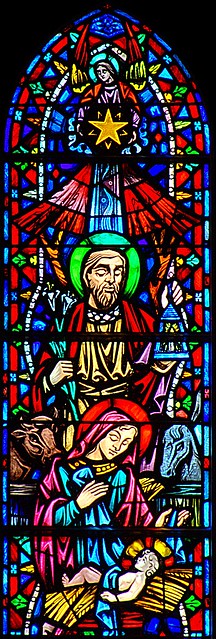
Christmas is the celebration of
God’s gift of a savior
to redeem us all from our sins

In a Pennsylvania town near Gettysburg, a family was asked to remove a Christmas decoration from in front of their house which prominently displayed the name, Jesus, because one of their neighbors described it as “offensive.” Is Christmas offensive?

I suppose there are many ways to answer this, but the truth is that yes, Christmas can be offensive to some, but the reality of Christmas celebrates the least offensive event in all of history.

First, there are people who misuse the name of Jesus only as a vulgar exclamation. If they see the name of Jesus as vulgar, then they would certainly see His birth as offensive. However, those who only use Christ’s name as a curse word are misusing it, and any offense they give or receive at the name of Jesus is their own fault, and not something that Jesus Himself is responsible for.

Likewise, there are people who would never use Jesus’ name as a vulgar exclamation, or as a curse, and in fact see themselves as good people, and who still might be offended by Christmas. Jesus is God who became incarnate as a person because that was the only way He could redeem us from our sins. Those “good” people who don’t admit to being sinners are offended that the birth of Jesus shows that they aren’t nearly as good as they think they are. They think they don’t need a savior, much less do they think that God Himself had to die to save them from their sins. They think that if God had to die for sinners, it must have been for “other people” who are worse than them. The birth of Jesus offends them because it puts them in the same category as people they despise nearly as much as Jesus.

The temptation to idolatry is the most common temptation that we face. We usually think of idol worship as bowing down to a man-made statue or some kind of false god. However, the most common form of idolatry is to think of one’s self as god. This, in effect, was the temptation which seduced Adam and Eve when they were still in the Garden of Eden. If this temptation corrupted Adam and Eve when they were still innocent, we, who are already corrupted by sin, are much more likely to fall for this temptation and see ourselves as our own god. Wherever this is true, we see the true God as a rival and we take offense at Him in His person, and in His word and works.
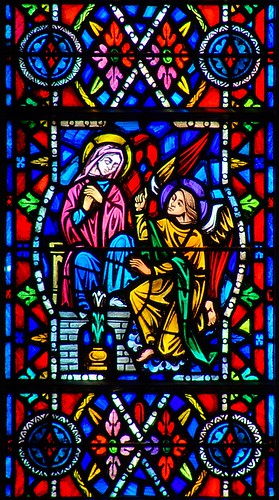

Mary heard the word of God
and she believed.

In reality, the coming of God into our world as Jesus Christ was the least offensive thing ever to happen in the entire history of everything. At first it was known only to Mary when she heard and believed the words of the angel, Gabriel. Then Mary went to visit her elderly cousin, Elizabeth, who was the recipient of a slightly lesser miracle, but one which was just like the gift of Isaac to Abraham and Sarah in Genesis 21. Elizabeth (and her unborn child) rejoiced the moment she heard Mary greet her (see Luke 1:44).

After three months, when Mary went back to Nazareth and told Joseph the news, he did not rejoice. He was rather offended. He had been faithful and chaste and knew that he had not fathered any child, so when Mary shows up pregnant, he assumed that she had been unfaithful. This was a logical (though wrong) assumption. Ever since the creation of Adam and Eve, all people have been conceived the same way. No virgin, before or since, had ever become a mother. Matthew 1:19 tells us that Joseph had made up his mind to divorce Mary quietly, so as not to put her to shame, but I am sure that in their conversations that day there was more than a few tears shed by both Mary and Joseph. Such was the supposed offense.

That evening and angel of the Lord appeared to Joseph in a dream and told him, “Joseph, son of David, do not fear to take Mary as your wife, for that which is conceived in her is from the Holy Spirit.” To Joseph’s credit he believed the word of God from the angel, even though it was essentially the same thing that Mary had told him earlier which he did not believe. The offense that he had presumed from Mary was so great that he couldn’t bring himself to believe her, at first, because she had every reason to lie if she was, in fact, unfaithful. Yet, when Joseph heard God’s word from the angel, he repented of his disbelief and kept Mary as his wife and continued to refrain from intimate relations with her until an appropriate time after Jesus was born.

The actual birth of Jesus was also most inoffensive. Joseph and Mary had to travel South to Bethlehem to comply with a decree from Caesar Augustus about registering in a census. Even though the Davidic dynasty of kings had ended several hundred years before the days of Joseph and Mary, there were likely many, many Jews of that day who could trace their ancestry back to King David. Remember that David’s youngest son and heir, Solomon, alone had 300 wives and 700 concubines, and surely also fathered more than his fair share of children, though the Scriptures don’t tell us how many children came from these arrangements. Even acknowledging that over the years some of David’s descendants may have lost track of their ancestral line, there surely was quite a crowd that was coming to Bethlehem to register for Caesar’s census. Yet, the birth of the Son of God didn’t put anyone out the night He was born. Instead, Mary and Joseph apparently stayed in a barn (or its equivalent), and placed the newborn baby Jesus in a manger as his first crib. This humble birth was the very opposite of offensive.
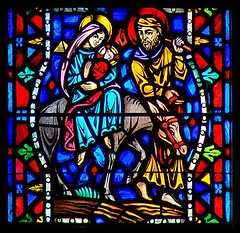

Joseph protected his family
by taking them to Egypt
until the death of Herod

That same night after Jesus was born, angels from God appeared to shepherds near Bethlehem and told them the good news about the birth of God’s Son, and they weren’t offended at all and came and worshiped Him. Likewise, when the Magi saw the star, and interpreted it to mean that a king was born to the Jews, they came to worship Him. However, they logically assumed that the new king was born in Jerusalem and first went there to find the royal baby. King Herod was not a descendant of David, nor a Jew, nor a Levite, nor even a descendant of Israel. When Herod heard about the birth of the King of the Jews, he took offense. Herod didn’t want a Jewish king. He wanted one of his sons (one whom he hadn’t yet killed) to succeed him as king, not a descendant of Judah born in Bethlehem. After the Magi left town without even saying goodbye and identifying the newborn King of the Jews, Herod sent soldiers to Bethlehem to kill all the baby boys younger than two years.


The murderous insanity of Herod shows the tragic foolishness of taking offense at the birth of Jesus. Yet it also reminds us that we shouldn’t be surprised when people take offense at this wonderful event.


The birth of Christ is such an important event in human history that when the Roman empire became a Christian empire after Constantine legalized Christianity, they eventually made an effort to count the years from the birth of Jesus. They likely weren’t perfect in this, and we now believe Jesus was born around 3-4 B.C. as we count the years. The description of the years as B.C. (before Christ) and A.D. (Anno Domini – year of our Lord) also offends people who don’t recognize Christ as Lord and they would rather describe the years as B.C.E. (before the Christian era, or before the “common” era) and C.E.
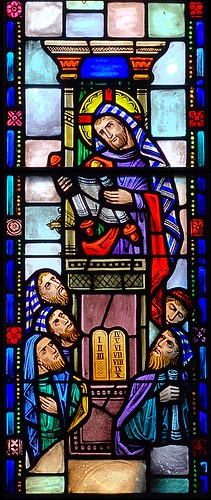

Jesus was rejected in Nazareth

Besides the birth of Jesus, people took offense at Jesus many times during His ministry. Luke 4:16-30 records the first time Jesus stood up in the synagogue in Nazareth after He was baptized by John and had endured 40 days of fasting and temptation in the wilderness, He read an appointed reading from Isaiah and then said, “Today this Scripture has been fulfilled in your hearing.” The men who heard this took offense at His words and took him out and intended to throw Him off a cliff, but this was not His time to die, yet, so He somehow miraculously and gently didn’t let them do Him harm and “passing through their midst, he went away.”


John 5 tells of a time when Jesus healed a crippled man on a Sabbath day, and the Pharisees took offense at this. They ought to have rejoiced that Jesus had mercy on this poor man who had been crippled for 38 years. Instead, they were offended that Jesus broke their man-made laws about Sabbath work. They were also offended that such a great miracle would draw the people’s respect and admiration to Him instead of them. Jesus was not breaking God’s laws about the Sabbath because as He told those who were offended, “My Father is working until now, and I am working.” They also took offense at this because He was calling God His Father, and showing Himself equal with God. Though they ought to have recognized the evidence that Jesus is God, they instead sought to kill Him.
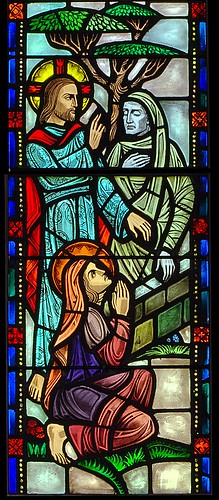

The idolatrous Jewish priests
took offense at Jesus raising
Lazarus from the dead.

Some hard-hearted people even took offense at the raising of Lazarus from the dead (John 11). John 12:9-11 tells us that the chief Priests intended not only to kill Jesus, but to kill Lazarus as well because on account of this wonderful miracle many Jews were going away from their false teaching and following Jesus. They saw Jesus as a threat to their authority among the people and so they were offended.

The bottom line of Christmas is that “Christ Jesus came into the world to save sinners.” (1 Timothy 1:15) Sinners who resent being reminded of the truth are offended by this. On the other hand, sinners who recognize their desperate situation and see the hope and comfort in God coming to save us from our sin rejoice in the birth of Jesus along with His life and death and resurrection from the dead.

This past year (2017) was one of the most painful years that I have ever experienced. You know it is bad when a broken leg (and subsequent recovery and rehabilitation) was not the worst thing that happened. Yet, the blessings of Christ and His forgiveness and salvation were a comfort to me in sickness and in health, in pain and in pleasure, in sorrow and in joy.

May the forgiveness and salvation that Jesus won for you give you joy and peace and all blessings this Christmas season. May you never take offense at Christ or any of God’s work to redeem you and make you His beloved child. Merry Christmas.

Sunday, December 10, 2017

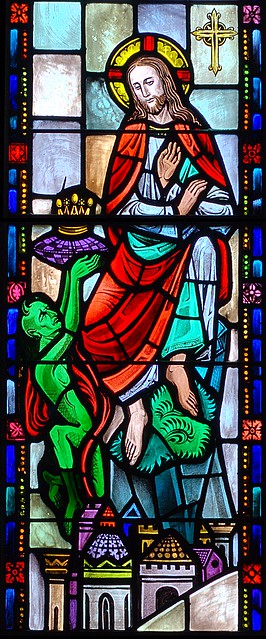
Lead Us Not Into Temptation

by Pastor Paul Wolff

Jesus resisted the temptations of the devil
out of love for us.


I recently (December 2017) read an article about how the Roman Catholic Pope, Francis, wants to change the wording of the sixth petition of the Lord’s Prayer, “lead us not into temptation” to something more like, “do not let us fall into temptation.” At first this sounds a little wacky, and the news companies telling the story make it seem more so. The Lord’s Prayer was given to us by Jesus nearly 2,000 years ago and has served the church well throughout that time but Pope Francis may have a valid point. Yet, while he may have a valid point regarding the Lord’s Prayer, his solution is still a bit of an an overreaction.

It was reported that Pope Francis thinks that the Sixth Petition sounds like God leads people into temptation, which he is correct in saying would be contrary to Scripture. James 1:13-15 says, “Let no one say when he is tempted, ‘I am being tempted by God,’ for God cannot be tempted with evil, and he himself tempts no one. But each person is tempted when he is lured and enticed by his own desire. Then desire when it has conceived gives birth to sin, and sin when it is fully grown brings forth death.” No Christian who loves God and His word wants to give the impression that God is the source of temptation or sin. We are the source of our sin. Even the devil cannot make us sin against our will, but can only tempt us to do what is harmful to ourselves and others. Unfortunately, according to our sinful nature, we desire to sin and take pleasure in doing evil.

However, Pope Francis should have read Martin Luther’s explanation to the Sixth Petition in the Small Catechism. Luther writes, “God indeed tempts no one. But we pray in this petition that God would guard and keep us, so that the devil, the world, and our flesh may not deceive us nor seduce us into false belief, despair, and other great shame and vice. Though we are attacked by these things, we pray that still we may finally overcome them and gain the victory.” It has been nearly 500 years ago that Martin Luther acknowledged that the wording of the Sixth Petition may lead people to wonder if God tempts people to sin, yet he gave a proper explanation of the petition, and did not change the wording.


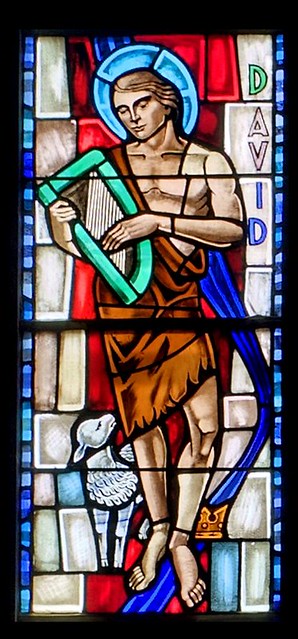
David prayed something like,
“Lead me not into shame”

Lutherans have known about this “problem” for about 500 years, but because of Lutheran Doctrine which properly explains the Scriptures, we trust that God does not lead us into temptation, but leads us to find forgiveness and salvation in Jesus Christ. Yet we still pray the prayer as all other Christians have done since Jesus taught the prayer to His disciples.


There are similar statements in the Psalms. In Psalm 25 David writes, “To you, O Lord, I lift up my soul; in you I trust, O my God. Do not let me be put to shame, nor let my enemies triumph over me. No one whose hope is in you will ever be put to shame, but they will be put to shame who are treacherous without excuse.” David trusts that God will not let him be shamed or defeated by his enemies, yet he specifically prays that God would not let these things happen.

Likewise in Psalm 27:9, David writes, “Do not hide your face from me, do not turn your servant away in anger; you have been my helper. Do not reject me or forsake me, O God my Savior.” Again, David is trusting that God will not hide his face from him or turn away in anger and reject him, but he prays that God will not do each of these things.

David does not pray these things because he fears that God would turn against him, but because his worldly enemies want him to be shamed, forsaken and destroyed. Likewise, when Jesus teaches us to pray, “Lead us not into temptation” He doesn’t want us to think there is any chance that God might tempt us to sin, but rather because our enemy, the devil, wants us to fall into sin and follow that broad path that leads to our own destruction, we pray that our Father in heaven would rescue us from sin and temptation.


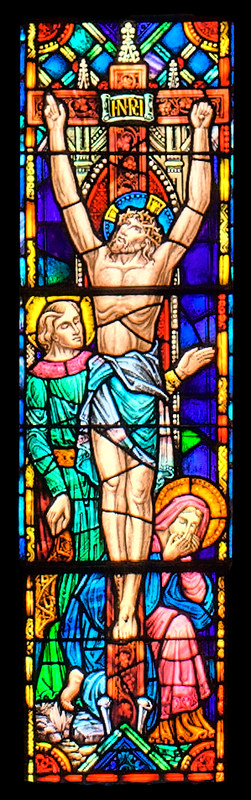
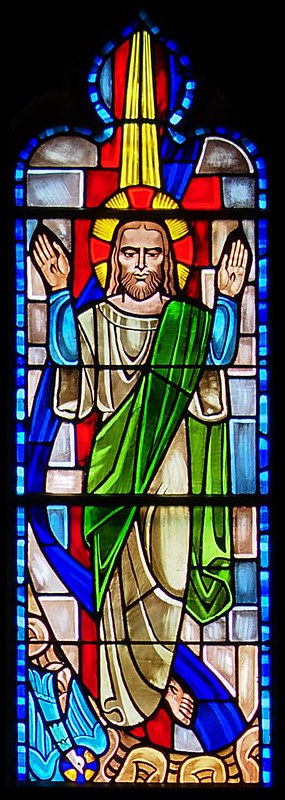
Jesus endured torment, shame, and death
to rescue you from the punishment for your sin.

The Lutheran reformation which began 500 years ago in 1517, was a conservative reformation. Luther worked very hard to conserve every good Scriptural teaching that remained in the Catholic church of his day, so he wouldn’t needlessly burden the people with unnecessary change or turn them against the truth of Christ so that they would reject their salvation. There is nothing wrong with the words of Jesus in Matthew 6 and Luke 11. Jesus was using a figure of speech similar to what David used in the Psalms. 

Christians have been praying this prayer for nearly 2,000 years without thinking that God tempts us to sin, and we can continue to do so for another 2,000 years (or more) if Jesus decides to wait that long before He returns to bring our salvation to its complete fulfillment.

Jesus let Himself be put to shame, and scorned and rejected, even by God the Father, so that He could rescue us from the results of our falling into temptation and sin. Jesus died and was put in a grave so that He would be able to rescue us all from our graves, where we will all find ourselves because of our sin. Because of what Jesus endured for our sake, we trust that God will forgive all our sins and rescue us from all the evil consequences of sin and evil.

Tuesday, November 14, 2017

Prayer for the Church in Times of Persecution

by Pastor Paul Wolff

Background story: On November 5, 2017 a heavily armed man walked into the First Baptist Church in Sutherland Springs, Texas, and killed 26 people and injured 20 more until a neighbor got his gun and came to the defense of the people of the church and drove away the murderer. Other neighbors pursued the gunman, who ultimately murdered himself last. This is by no means the first or last or worst persecution of Christians even in recent times, but it is the inspiration for this prayer. The prayer below can be used by and for all Christians in any place in times of persecution.


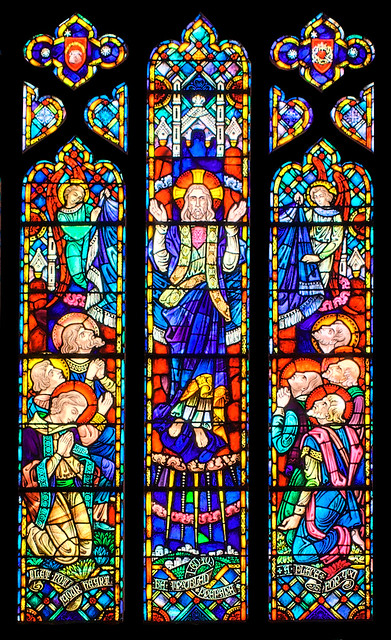
Let not your hearts be troubled
Jesus goes to prepare a place for you.

Dear Lord Jesus, You have told us “Blessed are those who are persecuted because of righteousness, for theirs is the kingdom of heaven,” and “Blessed are those who mourn, for they will be comforted.” (Matthew 5:10 and 5:4) We pray that you would bless all Your people throughout the world who are persecuted, and give your comfort to those who mourn the suffering and death of Christians because they bear Your name. Lord, we know that it is the will of Your Father that You will lose none of us whom the Father has given to You, and will raise us up at the last day (John 6:39), but many are lost to us, and we are grieved by our loss. 


Lord Jesus, send us Your Holy Spirit to teach us Your Word, and remind us of all that You have done to save us (John 14:26). Comfort Your people with Your peace. Strengthen Your people in faith that we may love our enemies (Matthew 5:44), bless and not curse them (Romans 12:14), that we may not be overcome by evil, but that we may overcome evil with good (Romans 12:21). Open the eyes and the ears and the hearts of this wicked generation to hear and believe Your Word that they may repent and be healed (Isaiah 6:10)


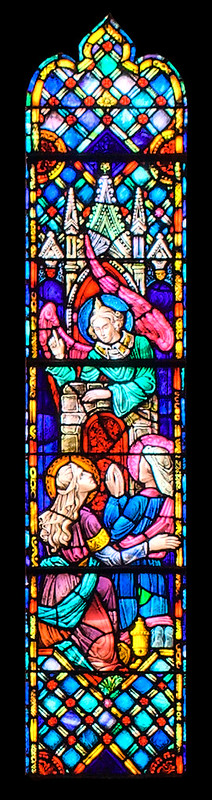
The angel said to the women, "Do not be afraid,
for I know that you are looking for
Jesus, who was crucified.
He is not here; he has risen, just as he said.

Lord Jesus, You have told us that as they persecuted You, they will also persecute us (John 15:20). Let this be a comfort to us that just as Your Father raised You from death and the grave, You will also come back and restore us to life and raise us to glory (1 Corinthians 15:42-43). Forgive us our sins where we have contributed to the evil in this world (Luke 11:4), but, as we also forgive our enemies, enable Your people to be a light to the world showing them Your love and forgiveness (Matthew 5:14). You, Jesus, are the light of the world (John 8:12) who forgives all our sins and gives us everlasting life (Psalm 103:2-5).


Blessed Lord Jesus, You have called us to gather together to hear Your Word and to receive Your gifts of forgiveness and salvation (Exodus 20:8-11). Strengthen Your people that even in places of great persecution we may not give up meeting together, but that we may be encouraged to trust in You even more as the Day of judgment approaches (Hebrews 10:25). Send Your angels to protect all Your people(John 17:11), that even in persecution, we may remain strong in faith, trusting in Your love and forgiveness and salvation. Amen.


Bible Verses


Jesus said, “Blessed are those who are persecuted because of righteousness, for theirs is the kingdom of heaven.”
(Back)


“Blessed are those who mourn, for they will be comforted.”
(Back)


Jesus said, “And this is the will of him who sent me, that I shall lose none of all that he has given me, but raise them up at the last day. For my Father’s will is that everyone who looks to the Son and believes in him shall have eternal life, and I will raise him up at the last day.”
(Back)


Jesus said, “All this I have spoken while still with you. But the Counselor, the Holy Spirit, whom the Father will send in my name, will teach you all things and will remind you of everything I have said to you. Peace I leave with you; my peace I give you. I do not give to you as the world gives. Do not let your hearts be troubled and do not be afraid.”
(Back)


Jesus said, “You have heard that it was said, ‘Love your neighbor and hate your enemy.’ But I tell you: Love your enemies and pray for those who persecute you, that you may be sons of your Father in heaven.”
(Back)


“Bless those who persecute you; bless and do not curse.”
(Back)


“Do not be overcome by evil, but overcome evil with good.”
(Back)


(The Lord) said, “Go and tell this people: ‘Be ever hearing, but never understanding; be ever seeing, but never perceiving.’ Make the heart of this people calloused; make their ears dull and close their eyes. Otherwise they might see with their eyes, hear with their ears, understand with their hearts, and turn and be healed.”
(Back)


Jesus said, “Remember the words I spoke to you: ‘No servant is greater than his master.’ If they persecuted me, they will persecute you also. If they obeyed my teaching, they will obey yours also.”
(Back)


“So will it be with the resurrection of the dead. The body that is sown is perishable, it is raised imperishable; it is sown in dishonor, it is raised in glory; it is sown in weakness, it is raised in power.”
(Back)


Jesus said, “Forgive us our sins, for we also forgive everyone who sins against us. And lead us not into temptation.”
(Back)


Jesus said, “You are the light of the world. A city on a hill cannot be hidden. Neither do people light a lamp and put it under a bowl. Instead they put it on its stand, and it gives light to everyone in the house. In the same way, let your light shine before men, that they may see your good deeds and praise your Father in heaven.”
(Back)


Jesus said, “I am the light of the world. Whoever follows me will never walk in darkness, but will have the light of life.”
(Back)


“Praise the Lord, O my soul, and forget not all his benefits – who forgives all your sins and heals all your diseases, who redeems your life from the pit and crowns you with love and compassion, who satisfies your desires with good things so that your youth is renewed like the eagle’s.”
(Back)


“Remember the Sabbath day by keeping it holy. Six days you shall labor and do all your work, but the seventh day is a Sabbath to the Lord your God. On it you shall not do any work, neither you, nor your son or daughter, nor your manservant or maidservant, nor your animals, nor the alien within your gates. For in six days the Lord made the heavens and the earth, the sea, and all that is in them, but he rested on the seventh day. Therefore the Lord blessed the Sabbath day and made it holy.”
(Back)


“Let us not give up meeting together, as some are in the habit of doing, but let us encourage one another – and all the more as you see the Day approaching.”
(Back)


Jesus prayed, “Holy Father, protect them by the power of your name”
(Back)


Psalms 35, 69, and 109 are good prayers in times of persecution, but remember that Jesus endured the curses of our sin so that there is redemption in Christ even for the murderers who persecute Christ’s beloved people. You may pray that Christ’s enemies will be cursed temporally here on earth, but also pray that they may be led to repentance and trust in Jesus as their savior from sin, that they may become our brothers and sisters in Christ and receive the salvation that Jesus won for them, too, on the cross.


Please share your thoughts and prayers by adding a comment below. I would love to hear from Christians throughout the world, so that I may pray with you and for you.

Tuesday, October 31, 2017

How to Properly Celebrate the Reformation

by Pastor Paul Wolff

When the Church forgets about Christ
then it is in need of a Reformation.

The Reformation which began October 31, 1517 was all about Jesus Christ as the savior of the world, by God’s grace through faith. It wasn’t about an Augustinian Friar who exposed false teachings in the church (though he played a part in it). It wasn’t about political upheaval and revolution or even political reformation. It wasn’t about who holds the power in the church (though the Roman church had it wrong, and still has it wrong 500 years later). It certainly wasn’t about individual freedom, nor German nationalism, nor any of these kinds of things. If you want to get the Reformation right, get Jesus right.

“For by grace you have been saved through faith. And this is not your own doing; it is the gift of God, not a result of works, so that no one may boast.” (Ephesians 2:8-9)


“Now we know that whatever the law says it speaks to those who are under the law, so that every mouth may be stopped, and the whole world may be held accountable to God. For by works of the law no human being will be justified in his sight, since through the law comes knowledge of sin. But now the righteousness of God has been manifested apart from the law, although the Law and the Prophets bear witness to it – the righteousness of God through faith in Jesus Christ for all who believe. For there is no distinction: for all have sinned and fall short of the glory of God, and are justified by his grace as a gift, through the redemption that is in Christ Jesus, whom God put forward as a propitiation by his blood, to be received by faith. This was to show God’s righteousness.” (Romans 3:19-25)


The saying is sure and worthy of full acceptance, that Christ Jesus came into the world to save sinners.(1 Timothy 1:15)

For God so loved the world that He gave His only begotten Son, that whoever believes in Him should not perish but have everlasting life. For God did not send His Son into the world to condemn the world, but that the world through Him might be saved.” (John 3:16-17)


Therefore, just as sin came into the world through one man, and death through sin, and so death spread to all men because all sinned - for sin indeed was in the world before the law was given, but sin is not counted where there is no law. Yet death reigned from Adam to Moses, even over those whose sinning was not like the transgression of Adam, who was a type of the one who was to come. But the free gift is not like the trespass. For if many died through one mans trespass, much more have the grace of God and the free gift by the grace of that one man Jesus Christ abounded for many. And the free gift is not like the result of that one mans sin. For the judgment following one trespass brought condemnation, but the free gift following many trespasses brought justification. For if, because of one mans trespass, death reigned through that one man, much more will those who receive the abundance of grace and the free gift of righteousness reign in life through the one man Jesus Christ. Therefore, as one trespass led to condemnation for all men, so one act of righteousness leads to justification and life for all men. For as by the one mans disobedience the many were made sinners, so by the one mans obedience the many will be made righteous. (Romans 5:12-19)

500th Anniversary of the Reformation


by Pastor Paul Wolff


Martin Luther posting the 95 Theses on indulgences
Sculpture from the Creation Museum

October 31, 2017 is the 500th anniversary of Martin Luther posting the 95 theses on Indulgences in Wittenberg, Germany. This event sparked the Lutheran Reformation. Luther did not intend to break away from the catholic church. In fact, Luther never broke away from the church, but instead, the Roman Catholic church broke away from its Scriptural foundations and wrongly declared Luther a heretic and excommunicated him.

The Augsburg Confession, and all the confessions in the Book of Concord (Concordia), are clear that the Lutheran doctrine is not only pure Biblical doctrine, but is also consistent with the true orthodox teachings of Christians throughout history. Just as in Biblical times, when the majority of the church decides to take a path away from God, the true believers must break away to keep the truth going. Or, as in the case of the Babylonian Captivity, God protects His faithful people, and takes the rest away, and destroys them.


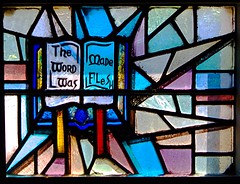
The Word of God is life and salvation
for all who believe.

On October 31, 1517, Martin Luther was intending to have a discussion of the anti-Scriptural abuses in the practice of selling and offering indulgences. The Pope took this as an attack on the financial aspect of the church, and condemned Luther for reasons other than his doctrine. Pope Leo X was more interested in power and wealth than doctrine. The main problem with this is that neither power nor wealth saves people. The church ought to be about how Jesus saves us from our sins, by God’s grace through faith, not how rich and powerful the Church can be. Unfortunately, the Roman Catholic church didn’t learn the right lesson, and nearly all the abuses that Martin Luther wrote against are still part of Catholic practice, including veneration of the saints (including the near deification of the blessed virgin mother of our Lord), false teachings on purgatory and good works, and indulgences. In the past 500 years the price of indulgences has been reduced, but the practice of offering indulgences is still practiced in the Roman Catholic church.

Those Lutherans who are still faithful to the Holy Scriptures and to the Lutheran Confessions (Concordia) maintain the same faith as Adam and Eve, Abraham, Moses, King David, Isaiah and all the prophets, the Twelve Apostles, Saint Paul, and all faithful believers of all time (including those who remain faithful believers in the Roman Catholic Church). We believe that Christ’s Church will continue to the end wherever there are believers, as Scripture promises.

“Now to him (God, the Father) who is able to do far more abundantly than all that we ask or think, according to the power at work within us, to him be glory in the church and in Christ Jesus throughout all generations, forever and ever. Amen.” (Ephesians 3:20-21)

Monday, September 4, 2017

The Good Samaritan

by Pastor Paul Wolff

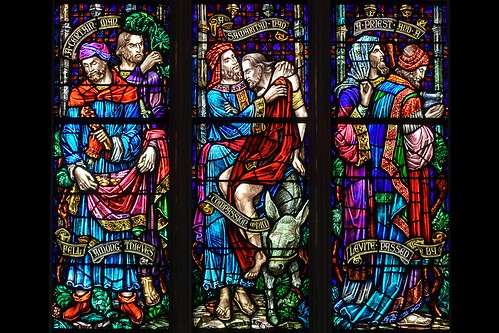
A certain man fell among thieves
A Samaritan had compassion on him
A Priest and a Levite passed by

 
Luke 10:33-35

Jesus said, “A Samaritan, as he journeyed, came to where (the injured man) was, and when he saw him, he had compassion. He went to him and bound up his wounds, pouring on oil and wine. Then he set him on his own animal and brought him to an inn and took care of him. And the next day he took out two denarii and gave them to the innkeeper, saying, ‘Take care of him, and whatever more you spend, I will repay you when I come back.’”


People are afraid of the Law, and think the Law is evil because the Law condemns us as sinners. However, the Law of God is not the problem. God’s Law is good, as God is good, and the Law shows us what is good for us to do to love God and love our neighbor. Sinners think the Law’s condemnation of sinners is bad because we don’t want to be condemned. Sin blinds us to the reality of just how wicked we really are, and how much we really deserve to be condemned.

Remember what happened in the Garden of Eden with Adam and Eve. God made the whole world good and gave it to Adam and Eve for their benefit and enjoyment. The only thing forbidden to them was the fruit of one tree – one tree in the whole world. In effect, God was saying, “This tree belongs to me. Don’t eat its fruit. If you eat the fruit of this tree you will die. But look, here is another tree. This is the tree of Life. You are free to eat from this tree and anything else in the world that you wish to eat. I am your Father and I love you, and I want you to live and enjoy all the good things that I can give to you forever.” God gives us good things, and forbids us from doing things that will hurt us.

The problem isn’t God’s Law. The problem is that people rebelled against God’s good Law and chose sin and death instead of righteousness and life. Sinners despise what is good, and we twist and distort God’s Word to make the Law seem to say what we want it to say, instead of receiving it as God has given it to us for our good.

It is no coincidence that the man who tested Jesus was a teacher in the law. He knew the law, but he asks the wrong questions. If you ask the wrong questions you will get the wrong answers. However, in telling the Parable of the Good Samaritan, Jesus gives us both the right question and the right answer.

Inheritance is a matter of Law,
but you can only receive it as a gift.

The first question the lawyer asks Jesus is, “What must I do to inherit eternal life?” The question isn’t all wrong: It recognizes that eternal life is a matter of inheritance. It is a gift, not a right. However, the question is ridiculous. Can you imagine someone going up to Donald Trump (for example) and saying, “What must I do to inherit the wealth of your estate?” Most of the time the inheritance of an estate is given to the children. If you are not born or adopted into the family then it is unlikely you will inherit anything.

Since inheritance is a matter of law, and the man asking about it was a teacher of the law, Jesus asks him what the law says about inheriting eternal life. The man answered by quoting from Deuteronomy where God summarized the two tables of the Commandments. “You shall love the Lord your God with all your heart and with all your soul and with all your strength and with all your mind, and your neighbor as yourself.” This was a good summary of the Law, as Jesus points out, but the man forgot that the Law cannot save sinners. The law condemns sinners. Since Adam and Eve’s fall into sin, all people (except Jesus) have inherited the corruption of sin. This is our inheritance – according to the law.

Luke writes that the teacher of the law wanted to justify himself. To justify yourself is to make up excuses for your sin which will make you feel like you are doing right when you are doing wrong. It is a wicked thing to try to justify your sin, but sinners are always looking to justify themselves. I do it. You do it. Everyone does it, but that doesn’t make it right. It just means that everyone sins in justifying themselves.

So the teacher of the law asks, “Who is my neighbor?” This doesn’t seem like a bad question, but why would you ask it? Your neighbor is everyone you come in contact with in your various vocations, including those whom you try to avoid, like an injured man lying on the side of the road when you have somewhere else to go. If you have to ask, “Who is my neighbor?” then you may be really asking, “Who isn’t my neighbor?” or “Who can I ignore because they are not my neighbor.” So Jesus tells the Parable of the Good Samaritan.

Jesus is the Good Samaritan

Jesus told a story about a man going from Jerusalem to Jericho who fell among robbers. The robbers should have been neighbors to the traveler, and protected his life and property, but instead they beat him and stole his belongings, and left him for dead on the road.

Then a priest was going down the road and saw the injured man. The priest represents the first table of the Law where we love God with all our heart, soul, strength, and mind. The priest served God in his vocation, but he was under the law. The ceremonial law said much about blood and how to deal with it. It would not do for the priest to show up for work with bloody hands from helping an injured man. He would likely be considered unclean. Now, uncleanliness wasn’t too big of a deal. All people would do things in the normal activities of life which would make them unclean. I think that was the point of the cleanliness laws. They reminded people that our sin makes us unclean and that we need to be cleansed of our sin.

The priest could have helped the man, but then in order to be fit for his priestly service he would have had to wash and make a sacrifice and wait until sundown to be considered clean again. It was an inconvenience, and somewhat costly, but he could have helped the injured man, and should have. The people who would benefit from his priestly service would have understood, but the priest justified his inaction by telling himself that if he helped the injured man he couldn’t carry out his service to God. This was a misuse of the law, but this is what sinners do to justify themselves. So the priest walks by the injured man on the other side of the road.

Likewise, a Levite came and saw the injured man lying in the road. He represents the second table of the Law where we must love our neighbor as ourselves. The Levites were those members of the tribe of Levi who were not priests, but who served as laymen in the church. Levites were the elders, ushers, acolytes, trustees, groundskeepers, altar guild, board members, and similar laymen who serve the church. He could have helped the injured man, but he was under the law also. He could have helped the injured man, but would then be unfit to serve in the congregation for a time, and so he justified his actions in the same way as the priest. He also misused the law to justify his unmerciful actions. So he, too walked by on the other side of the road.

Then a Samaritan came down the road and saw the injured man. The Samaritan was not under the law in the same way that the priest and Levite were. He was not above the Law, certainly, instead he was outside the Law. He was not bound by the Law in the same way that the priest and Levite were, nor could he hide under the Law to justify unmerciful inaction. In a way, the Samaritan was free of the Law’s demands, but because he was free of the Law’s demands, he was also free to help his neighbor without having to worry that the Law might condemn him in some other way (unless he also ignored the injured man and left him to die). So he had compassion on the injured man and treated his wounds and took care of him.

Jesus is the Good Samaritan
who paid the costly price
to give you His inheritance.

You should note that what the Samaritan did was also costly. Besides the time and effort of cleaning and treating the wounds, he also paid the entire burden of the injured man’s health care. It was a sacrifice, but because he was free from the law’s burdens, he willingly paid what was necessary to help his neighbor.

Jesus ends His parable by asking the teacher of the Law, “Which of these was neighbor to the man injured by the robbers?” He answered, “The one who showed him mercy.” Jesus said, “You go, and do likewise.”

Now, if you have a wrong view of the law, you might think that Jesus was just giving the man another law to live by. But that would be a wrong understanding. Jesus was, in fact, doing the exact opposite. Jesus was not even giving a new law that supersedes the old law, as if you could use that to justify breaking any of the Ten Commandments. Instead, Jesus was declaring the man free from the law, just like the Samaritan was free from the law, and used his freedom to have mercy on his neighbor.

Jesus is the Good Samaritan. As the Son of God, Jesus was free from the Law’s demands. Jesus was not just free from the Law, He was above the Law because He created the Law. Though, in a way, Jesus was also bound by the Law in ways that we are not. God created the Law to reflect His very nature, so when Jesus obeyed the Law, He was only acting according to His nature, not against it (as we are when we obey the law). Yet, in His mercy, Jesus submitted Himself to the Law for our sake to redeem us and free us from the Law’s demands and its condemnation.

Jesus was, of course, a Jew, and not a Samaritan, but it is interesting in John 8 some of the Jews said to Jesus, “Are we not right in saying that you are a Samaritan and have a demon?” Jesus answered, “I do not have a demon, but I honor my Father, and you dishonor me.” It is interesting that Jesus confessed that He did not have a demon, but He did not deny the charge of being a Samaritan. Although the Jews thought they were insulting Jesus by calling him a Samaritan, Jesus was not ashamed to be called a Samaritan. Jesus came to save Samaritans and other Gentiles as well as Jews. The Samaritans were His neighbors as much as His own people.

When Jesus says, “Go and do likewise” He is not putting us under the law, as if he were saying, ‘you can’t be saved unless you make up for your sin by doing good and showing mercy.’ Instead, Jesus is setting us free from the law’s curses. You are free to serve your neighbor because you no longer have to worry about fulfilling the law’s demands yourself. Jesus fulfilled the law for you. You are free. Not free to sin (for that would put you under the law’s curse), but free to serve your neighbor instead of trying to serve yourself.

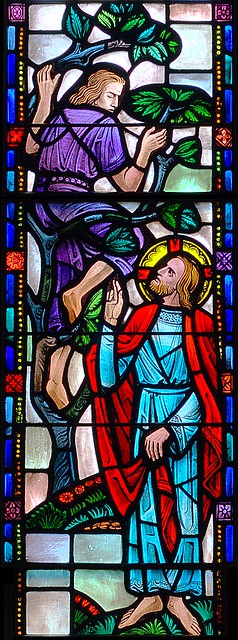
Jesus set Zacchaeus free
because he trusted in Jesus
for the forgiveness of his sins.

Scripture says in Romans 6:22-23 “You have been set free from sin and have become slaves of God, the fruit you get leads to sanctification and its end, eternal life. For the wages of sin is death, but the free gift of God is eternal life in Christ Jesus our Lord.” Jesus fulfilled God’s Law completely in our place so that through Jesus we are freed from the Law’s demands and can serve our neighbor in freedom as the Samaritan had mercy on his injured neighbor. This freedom we have in Christ is given to us as a gift by His mercy.

This gift is our inheritance as Children of God through Baptism and faith. Scripture says in Galatians 4:4-7, “But when the time had fully come, God sent his Son, born of a woman, born under law, to redeem those under law, that we might receive the full rights of sons. Because you are sons, God sent the Spirit of his Son into our hearts, the Spirit who calls out, ‘Abba, Father.’ So you are no longer a slave, but a son; and since you are a son, God has made you also an heir.”

What must you do to inherit eternal life? Of course you can’t do anything, but Christ has already done it all for you. He has redeemed you from your sin, and adopted you as His children, and He gives you the inheritance of His eternal Kingdom as a gift – as all inheritance is given. Like the Samaritan in the parable, Jesus paid the great price to make you His child and heir. St. Peter writes, “It was not with perishable things such as silver or gold that you were redeemed from the empty way of life handed down to you from your forefathers, but with the precious blood of Christ, a (sacrificial) lamb without blemish or defect.” (1 Peter 1:18-19)

Praise be to Christ, who is your Good Samaritan who sacrificed His life to rescue and heal you from the wounds of sin and death, and who gives you life everlasting.