Monday, October 27, 2014

Heresies and Half-Truths

by Pastor Paul Wolff

Jesus taught the truth at Nazareth
There is an understanding among faithful Christian scholars that there are two ways to fall into heresy (i.e. false teaching or false belief). The first is the chosen heresy, and the second is the exact opposite teaching. This is counter-intuitive, but it has been shown in history to be true time and again. But why is this so? What is going on? How can the opposite of a false teaching also be false, and not true?

The post-modern cynics would say this is just another example that shows that there is no such thing as truth, or at least that all truth is subjective and relative. However, if that were true it would contradict the very idea that the cynics are trying to sell to gullible people who think they are a lot smarter than they really are. There is in reality such things as truth and lies, and the exact opposite of the truth is still false, and vice-versa.

However, there is a simple explanation for why the exact opposite of a heresy is also false, and it explains why so many Christian teachers throughout history who have wanted to oppose false teachings have also fallen into heresy. The reason is that most heresies are not completely false, but are merely half-truths or contain some sliver of truth. This happens because false teachers try to rationalize teachings that they don’t understand or refuse to believe, and they try to come up with something that sounds believable (even though it contradicts the teachings of Holy Scripture). If false teachers want to convince others of the truthfulness of their heresy they can’t push something completely false or no one would fall for it. Then, if a Christian tries to counter the half-truth with its opposite, then that is also false because it is still half wrong – it is just the opposite half. A half-truth is still a lie, so its opposite is also a lie because it is still only half-true.

The devil tried to lure Jesus into heresy
To illustrate this let’s consider the Biblical doctrine of the person of Christ. The Holy Scriptures paradoxically describe Jesus as God and Man in one person. Faithful Christian teachers maintain the paradox and confess Jesus as 100% God and 100% Man even though we admit that we don’t (and can not) understand how this could be, yet we trust that God is faithful in the Scriptures in describing who He is.

Now, the complete opposite of the true doctrine that Jesus is fully God and Man in one person is to say that Jesus is neither God, nor Man, and never existed at all. This is not likely a teaching that you will find among anyone who calls themselves a “Christian” because no Christian (and few others) will be persuaded by something so completely false. You may find some militant atheists who would try to pass this along, but even among them this is more wishful thinking than anything else. Heretics use half-truths because they make the lie easier to swallow, first for themselves, then for anyone else who may wish to follow them.

But with this example there are many variations among those who either want to resolve the paradox or want to lead Christians astray through false logic. Like many heresies, these are quite rational, which only adds to both their appeal and their danger. This is especially true in this example because this doctrine is a paradox. In many ways God is the opposite of man, yet Jesus is somehow both fully God and fully man. Paradoxes seem irrational so any attempt to rationalize the paradox will end up with only partial truth which will be false in some way.
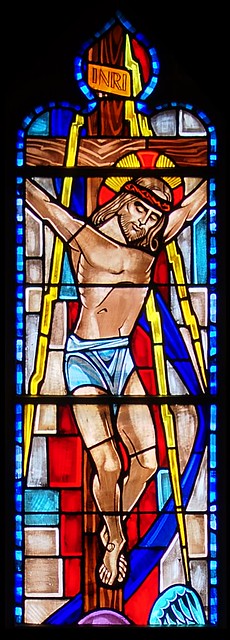
“Behold the Man” (John 19:5)
“Jesus Christ ... is God over all” (Romans 9:5)  
One false teaching from history says that Jesus is fully God, but he only seemed to be a man. This is called “docetism” and it is false because it denies the full humanity of Jesus. Docetism contains partial truth because it tries to maintain the deity of Jesus.

An opposite teaching from docetism is Arianism, which says that Jesus is a man or some kind of being less than God, but is not God. The false part of this teaching is that it denies that Jesus is fully God.

Another possible variation of this could maintain that Jesus is part man and/or part god. This is found in the Apollinarian heresy and perhaps others, though in practice both Docetists and Arians hold to this in a greater or lesser degree.

The doctrine of Christology is just one example of how blindly reacting to heretical half-truths can lead to other false teachings. There are many more such examples in history. We can see a stark example of this in the Lutheran Reformation. The brilliance of Martin Luther is that he steadfastly worked toward a conservative reformation. He only wanted to get rid of the false teaching in the Church, but he worked hard to conserve those true teachings which either were Biblical or otherwise promoted good Christian teaching. Not all of Rome’s teachings were wrong. Even today the Roman Catholic church still has many correct teachings mixed in with the false teachings. Luther’s reformation was the harder way to go, not only because it took much more work to sift out the wheat from the chaff, but also because it put Luther at odds with the Roman Catholics, and with the more radical reformers. However, it was the right way to go.
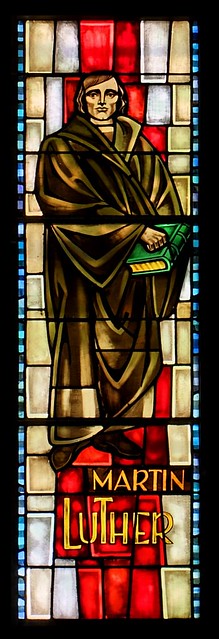
Martin Luther conserved the truth
while removing the false teachings
On the other hand, the radical reformers wanted to throw out every teaching that ever reminded them of what was done in the Roman Catholic Church. This is where they went wrong. In teaching the exact opposite of what the Roman Catholic Church taught, the radical reformers threw out many true Christian teachings and fell into the opposite false teachings.

This is why the descendants of the radical reformers have come full circle to teach the same Semi-Pelagian errors of the Roman Catholic church. The radical reformers simply said, “We are going to do the opposite of what Rome does. Since Rome is wrong, we will be right.” But they only exchanged one lie for another. As their descendants recognized the wrongness of their teachings, they reacted similarly by holding to the exact opposite teaching, then they eventually came full circle to embrace the same false doctrines which their ancestors first reacted against.

An example of this is Rick Warren’s comments at the Pew Forum on Religion, Life, and Politics in 2005 where he said,
“You know, 500 years ago, the first Reformation with Luther and then Calvin, was about beliefs. I think a new reformation is going to be about behavior. The first Reformation was about creeds; I think this one will be about deeds. I think the first one was about what the church believes; I think this one will be about what the church does.”

To my Lutheran ears this seems to take Warren back to the days of Pope Leo X, though it may be worse because many of Martin Luther’s Roman opponents would not have separated faith and works so thoroughly. The 16th century Roman church was Semi-Pelagian, and not completely Pelagian. Warren seems to be exalting works over faith.

It is good to want to correct false teaching. However we must be careful not to react too quickly. It often takes discernment and study of the Holy Scriptures to learn the whole truth. Saint Paul gives a valuable instruction when he wrote, “Brothers, if anyone is caught in any transgression, you who are spiritual should restore him in a spirit of gentleness. Keep watch on yourself, lest you too be tempted.” (Galatians 6:1) This clearly warns against falling into the same temptation as the transgressor, but it could also easily warn against falling into the opposite error, or falling into self-righteousness. Either way, we ought to take care when dealing with error in the church.

The word of God is a lamp to my feet and a light for my path.
Psalm 119:105
The best way to avoid false teaching is to stick with the truth. God’s Word is the truth (John 17:17) because Jesus is the Truth (John 14:6). If we try to explain away parts of Scripture, then we lose Jesus and are in danger of losing our salvation. If we hold to God’s Word we hold on to Jesus because Jesus is the Word made flesh (John 1). Jesus said, 
“If you abide in my word, you truly are my disciples, and you will know the truth, and the truth will set you free.” (John 8:31-32)

See also The Seductive Danger of Lies

See also What Do You Choose to Believe?

Monday, July 14, 2014

The Real Homophobia

by Pastor Paul Wolff

The Flight to Egypt
Homophobia is often portrayed as being one of the greatest ills in our society. At least, that is what the homosexual lobby and their sympathizing friends in the media would like you to believe. The fiction of homophobia is that all who are opposed to homosexual practice are somehow fearful of homosexuality.

Our neighbors who promote the idea of homophobia would also like you to to ignore the fact that those whom they call “fearful” are the people who are not afraid to speak out publicly about the inherent immorality of all kinds of sexual perversions. Outspoken opponents of homosexual practice are the some of the least fearful people around, but they are the ones who are called homophobic. What is going on?

It would seem that homophobia is, in fact, something that is greatly desired by those promoting acceptance of homosexual lifestyles and practice. If you oppose the homosexual lobby in even the smallest way you are bullied into submission by being called “homophobic” or “bigoted” or other such things until you are afraid to speak out against these people. This is what the homosexual lobby wants. The more that people are fearful of speaking out against the normalization of homosexuality, then the more the homosexuals are free to do whatever they want without having to answer for their actions.

What is the homosexual lobby most afraid of? Jesus gives us the answer in John 3:19-20, “This is the verdict: Light has come into the world, but men loved darkness instead of light because their deeds were evil. Everyone who does evil hates the light, and will not come into the light for fear that his deeds will be exposed.” This is the real homophobia: homosexuals are afraid their actions will be exposed as evil.

Day Six of Creation
This should come as no surprise to anyone. We all have fear that our favorite sins will be exposed. Adam and Eve also had this same fear which they dealt with by first covering themselves with fig leaves, then running away from God in the Garden of Eden. Adam and Eve were naïve about how to deal with the guilt of their sin, because it was all new to them. But we deal with sin every day of our lives from our conception, and we can become quite accomplished at hiding our guilt, especially if we are not frequent with repentance.

Homosexuals fear that if they were forced to admit that homosexuality was wrong, then they would have to give up the one thing which gives them great pleasure. Don’t misunderstand me, they all know it is wrong, everyone knows homosexuality is wrong, but those who promote homosexuality have a great aversion to admitting that it is sinful. Sexual sins are specially difficult to overcome because sexuality is so closely tied to our self-image that when we get caught up in these sins we easily come to believe that our sin is synonymous with who we are, and we fear that we would cease to exist without it. Saint Paul acknowledges this in 1 Corinthians 6:18, “Flee from sexual immorality. All other sins a man commits are outside his body, but he who sins sexually sins against his own body.” Note that this applies to all sexual sins, not just same-sex desires.

Those of us who are not particularly burdened with great sinful desires for intimacy with people of our same gender find it hard to understand the attraction to this sin, but sinful desires are common to us all. It helps to understand how temptation works. The devil cannot force us to sin, but can only tempt us to sin. He does this by making sin seem desirable to us. Once we desire to sin we do it on our own without any further “help” from anyone else. It would seem that this would be an impossible task – to make the thing which would destroy us an object of our desire, but the devil is quite accomplished at this. What makes the devil’s job easier is our sinful nature, which takes great pleasure in all kinds of sin. By our nature we all want to sin. We enjoy sinning, and we cooperate with those who seek to destroy us. It really is disgusting when you think about how much pleasure we get from sin, but that is the reality of our sinful nature. It doesn’t matter what the sin is, it could be coveting persons, coveting possessions, lying, stealing, adultery, murder, dishonoring father and mother, desecrating the Sabbath day, blasphemy, or even idolatry; our sinful flesh takes pleasure in all these wicked things. (Exodus 20:1-17 and Matthew 15:19)

Though other sinners may not want us to call them to repentance over their sin, and we, too, may not want to confront other sinners with their sin, we cannot keep silent. Just as you would not keep silent if your beloved child was about to do something foolish which would bring great physical harm to himself, so we must speak out to warn our neighbors about the great harm they are bringing upon themselves, in body and soul, through sexual sins.

Christians need to remember that we are no better than anyone else, even unbelieving homosexuals. If we are honest we must say with Saint Paul, “What a wretched man I am! Who will rescue me from this body of death? Thanks be to God – through Jesus Christ our Lord!” (Romans 7:24-25) We can be kind and compassionate (Ephesians 4:32) about the problem of sin and guilt because we deal with it every day, too.

Creation and the Fall of Man
Window from Holy Cross Lutheran Church
Detroit, Michigan
It is a terrible thing to have your life defined by your sin. Sin always leads to death (Romans 6:23). But Christ’s redemption sets us free from sin and gives us life. “We died to sin; how can we live in it any longer? Or don’t you know that all of us who were baptized into Christ Jesus were baptized into his death? We were therefore buried with him through baptism into death in order that, just as Christ was raised from the dead through the glory of the Father, we too may live a new life.” (Romans 6:2-4)

Because Christ has set us free from the guilt and punishment for our sin we are truly free from the fear that if we struggle against our sin that we will have no pleasure in life. It is true that Christians still struggle against sin and temptation. It is not easy for anyone to say “no” to the pleasures of our sinful flesh. However, because Christ Jesus has given us eternal life and has freed us from the slavery to our sinful desires we know that whatever we may suffer temporally in our struggles against sin will be more than made up by the blessings of Christ, both now and eternally. Yes, we may suffer for fighting against temptation, but that suffering is only temporary, and we can find joy in Christ, even in the midst of our struggles because the God who rules the universe has redeemed us from our sin and has adopted us as His beloved children through Jesus Christ. (Romans 8:22-27)

The world may hate you for telling them the truth. They may say you are homophobic, hateful, hypocritical, bigoted, prudish, and maybe much worse things. Yet, you should feel free to speak the truth of God’s Word in love to your neighbors. If they don’t hear that what they are doing is deadly then they may never know because they are enjoying their wickedness too much. Then if they don’t hear that there is forgiveness in Christ for even the worst sinner then they may prefer to risk the consequences of their sinful pleasures rather than endure the pains of self-denial for some unknown benefit. Yet, we must speak the truth in love (Ephesians 4:15). For those who receive Christ’s forgiveness are freed from the bondage and terrors of sin and death. Also, in Christ, even the agonies of repentance are trivial compared to the eternal pleasure of life in paradise with our Savior, Jesus Christ. (Romans 8:18-21)

Tuesday, June 10, 2014

Perfect Love Drives Out All Fear

by Pastor Paul Wolff

Jesus and the Little Children
from Emmanuel Lutheran Church
Dearborn, Michigan
1 John 4:16b-18
“God is love. Whoever lives in love lives in God, and God in him. In this way, love is made complete among us so that we will have confidence on the day of judgment, because in this world we are like him. There is no fear in love. But perfect love drives out fear, because fear has to do with punishment. The one who fears is not made perfect in love.”

You may have heard people say, “Fear is a great motivator.” Few, however, are honest enough to complete that thought. If someone ever tells you that “Fear is a great motivator” you can be sure that they are trying (or will try) to manipulate you to do something which will benefit them, but will not necessarily benefit you.

Fear paralyzes people. Fear makes people want to act to save their own lives, or avoid getting hurt, but they cannot act out of fear that they will be harmed in the process. It’s a vicious circle. This is why tyrants employ terrorist tactics to cower people into submission. Fearful people will not effectively resist forceful oppression and therefore can be manipulated and easily subjugated by evil people.

Creation and the Fall into Sin
from Holy Cross Lutheran Church
Detroit, Michigan
Fear of Punishment
As St. John notes in the Scripture quote above: fear has to do with punishment, or a desire to avoid pain and suffering. When Adam and Eve first disobeyed God they should have run to Him and confessed their sins and asked Him to rescue them from the doom which they had brought upon themselves. They should have known God would have mercy on them (as He ultimately did), but instead they feared the righteous punishment for their sins and ran away from their savior instead of running toward Him for help and salvation. At that time Adam and Eve were naïve about sin, and they were not used to living as sinners as we are, but we act in exactly the same way.

As I was preparing this article I found this interesting news story: Police detectives in California recently solved a 30 year old murder case. Evidence pointed to a 48 year old man who, after police questioned him about the details of the case, took his own life rather than face the consequences of his actions from three decades ago. For thirty years he must have lived in fear that his crime would be discovered. Then, when it was discovered, he feared the punishment so much that he carried out a capital sentence on himself. Now, I’m not saying that the self-imposed punishment did not fit the crime, but until the murderer’s life ended there was forgiveness available for him in Christ. The state’s punishment may not have been as bad as what the man feared, and he could have received true forgiveness in Christ long ago. I don’t know why he didn’t seek Christ’s forgiveness earlier, but had he repented he could have given the family of his victim some sense of justice by confessing to the crime and taking the civil punishment for the crime. Instead, his fear gave him torment throughout his life, and no doubt added to the sorrow and suffering of the victim’s family, also.

What Can Stand Against Fear?
After the Japanese attacked the U.S. fleet at Pearl Harbor in 1941, President Roosevelt told the American people, “We have nothing to fear but fear itself.” It was a fearful time, but Roosevelt wisely called for courage in the face of fear. Courage is the antidote to fear. But where does courage come from? Courage is not a natural response to fear. Panic is the natural response to fear, but courage comes from somewhere else.

Samson
Window from Holy Cross Lutheran Church
Detroit, Michigan
Courageous people act out of love. Love is simply when one cares more for someone else than for oneself. Courageous people are more concerned for others than for themselves. So when courageous people see someone in danger they only think of how to help someone in need, they don’t stop to consider their own safety. Courageous people may have fear for themselves, but they do not take time to think about their own needs as they act bravely to save others. Courageous people (i.e. Loving people) cannot be terrorized. They cannot be manipulated. They cannot be forced to submit to tyrants.

Perfect Love Drives out Fear
Saint John writes in his first Epistle, “Perfect love drives out fear.” This sounds like a good thing. I would like to find some perfect love. The only trouble is that we all are sinners in a sinful world, and you will never find “perfect love” in a sinner. However, even the imperfect love of sinners can accomplish wonderful things. Love can heal wounded or broken hearts. Love can drive out wicked tyrants. Love can give comfort and hope to those in despair. But where there is only imperfect love – fear remains.

So where can we find the perfect love which drives out all fear? Since we can’t find it in ourselves or in other sinful people we must look for it outside of ourselves. The only place to find perfect love is in Jesus Christ. There are many descriptions of this in the Scriptures, but one of my favorites is in Philippians 2:5-11. Saint Paul tells us, “Your attitude should be the same as that of Christ Jesus: Who, being in very nature God, did not consider equality with God something to be grasped, but made himself nothing, taking the very nature of a servant, being made in human likeness. And being found in appearance as a man, he humbled himself and became obedient to death – even death on a cross!”

Jesus paid the price for your sins
Holy Cross Lutheran Church
Detroit, Michigan
Jesus is the only person who ever lived His whole life in perfect love. Jesus loved God, the Father, with all His heart, all His soul, and all His strength; and Jesus loved His neighbors as Himself. Even when Jesus learned that it was God’s Will to punish Him for the sins of the world in order to save sinners from that punishment, Jesus loved God, the Father, (and us wretched sinners) enough to do all that needed to be done. Jesus is the only one who could save us from the punishment for our sin because Jesus is fully God and fully man in one person. His death paid the full price for the sins of the whole world. That is why the only place you will ever find perfect love is in Jesus Christ.

The perfect love of Jesus drives out all fear because fear has to do with punishment. There is no greater fear than the fear that God will send us to eternal punishment for our disobedience. He would be completely within His rights to do so, but He would rather take the punishment Himself and save us from that torment – and that is exactly what Jesus did for us. We need have no fear because Jesus endured the punishment for all our sins. Because of Jesus, God no longer has anything more to punish us for. So if we do not need to be afraid of God, then there is nothing in all of creation which ought to cause us fear.

How do we receive the perfect love of Jesus? We can only receive it as a gift through faith in Jesus by believing that Jesus died to save us from our sins. God, the Father, counts us righteous through faith and gives us salvation and eternal life. The courage and love that comes from being forgiven is just one of the many bonuses granted by God’s Holy Spirit.

This is not to say that love has any particular power on its own. It does not. Strictly speaking, love, itself, does not save us. Only the perfect life and innocent death of Jesus can save us. It is true that it was the love of Jesus that caused Him to endure God’s punishment for our sins, but until Jesus was physically hanging dead on the cross our salvation was not complete. It is like a parabolical argument I like to use against decision theology: Three frogs are sitting on a log in a pond. One decides to jump in the pond. How many frogs are left sitting on the log? The answer is three, because until the frog actually jumps into the pond he is still sitting on the log no matter what he has decided to do. Likewise with Jesus, He can love us as much as He wants, but all people were still subject to condemnation for our sin until Jesus lived the perfectly obedient life in our place, and then died to pay for our sin.

Christ has taken away all need for our concern about ourselves. Baptized Christians are God’s children through faith in Christ and God will provide for all our needs of body and soul. His perfect love has removed all threat of God’s punishment, and where there is no threat of punishment there is no fear. In Christ we are freed to think about our neighbor without fear that we might come up short. Jesus has overcome all our shortcomings.

The Crown of Life
from Zion Lutheran Church
Columbus, Ohio
“Who shall separate us from the love of Christ? Shall tribulation, or distress, or persecution, or famine, or nakedness, or danger, or sword? As it is written, ‘For your sake we are being killed all the day long; we are regarded as sheep to be slaughtered.’ No, in all these things we are more than conquerors through him who loved us. For I am sure that neither death nor life, nor angels nor rulers, nor things present nor things to come, nor powers, nor height nor depth, nor anything else in all creation, will be able to separate us from the love of God in Christ Jesus our Lord.” (Romans 8:35-39)

Friday, May 30, 2014

Number Symbolism in the Bible

by Pastor Paul Wolff


There seems to be different ways that people interpret symbolic numbers in the Holy Scriptures. I have studied the symbolic use of numbers in the Bible and I have found some very consistent interpretations for the numbers which make more sense than many interpretations I have heard. This is not to say that these interpretations are original to me, but that these are the best interpretations of how the Scriptures use numbers as symbols.

Not all the numbers in the Scriptures are used symbolically. A good part of the Scriptures are simple historical accounts and the numbers are simply counting things accurately without symbolism. A good example is the 153 fish (John 21:11) caught by the disciples after Christ’s Resurrection. There is no deep significance about this number except that it was a large number and the disciples must have felt the need to count them because they were impressed by this miracle that Jesus did for them. Another example is the seven days of creation. Although seven is used elsewhere symbolically, the creation account in Genesis 1 clearly describes each day as “evening and morning the (nth) day” so this is not symbolic, but descriptive.

The proper interpretation of symbolic numbers is not difficult when you use a little common sense. When numbers are used symbolically they always refer to something concrete – something in history or everyday life that is easily recognizable as having something to do with a particular number. The numbers aren’t chosen at random, nor is there some great secret as to how the symbolic numbers get their meaning.

1 – The number “one” is not usually used symbolically. It is mostly used to describe a single solitary thing or person. When “one” is used symbolically it is used in much the same way as its descriptive use, which is to describe something or someone unique or particular. It is also used to describe unity of essence or purpose. I love it when the Old Testament describes God’s people acting under God’s direction “as one man,” which is to say that the whole people of God are acting to fulfill God’s Word as if they were all one person, or they are all together doing God’s work as he would do it.

God is described as “one,” which is descriptive, and not symbolic, even though God’s Triune nature (Father, Son and Holy Spirit – see “three” below) is shown even in the Old Testament. Right from Genesis 1:1 when the generic word for God is used to refer to the one true God it takes the plural form (“Elohim” usually means “gods”) but it takes masculine singular verbs. Also there is the triple “Holy” of Isaiah 6:3 “Holy, holy, holy is the Lord of Hosts; the whole earth is full of His glory.” These are some ways the Old Testament testifies to the Triune character of God, yet there is still only one God – God is singular (“is” not “are”; & “His” not “their”).

from Holy Cross Lutheran Church,
Detroit, Michigan
3 – The number “three” refers to God, or things having to do with God, when used symbolically in the Scriptures. For example, the three days Jonah was in the belly of the fish is descriptive, and not symbolic, but it is also used prophetically to point to the three days (also literal, and not symbolic) Jesus was in the tomb. However, even these examples can be viewed symbolically as the work of God to bring salvation. First, Jonah, himself, is saved from God’s wrath and drowning by the fish, then Jonah is sent to bring salvation to Nineveh, which all points forward to the work of Jesus to pay for the sins of the world by his death and burial. The three days being important so that Jesus fulfills the Sabbath day rest by being in the tomb for the whole Sabbath day (see “seven” below).

4 – The number “four” refers to the world, or creation, or mankind when used symbolically in the Bible. We can think of the four points of the compass (north, south, east, west) to describe the world.

6 – The number “six” is very interesting when used symbolically in the Scriptures. “Six” doesn’t seem to have a particular meaning on its own, but only in its relation to “seven” (see below). The symbolic use of “six” describes something incomplete – as if it were trying to reach “seven,” but missed the mark or fell short. The most famous symbolic use of “six” actually triples the digits to “666” in Revelation 13:18. The tripling of the digits suggests that this has something to do with God (see “3” above), but it falls short in every way. This makes sense in Rev. 13 because this number is the number of the blasphemous beast which was allowed to make war on God’s saints for a time. The number of the beast is “666” because he tries to portray himself as if he were God, but he misses the mark in every way. The world may follow the beast, thinking he is a god, but God’s people are not fooled (see Matthew 24:24).

7 – The number “seven” refers to Christ when used symbolically. “Seven” represents Christ because he is both God (“3”) and Man (“4”) in one person (3+4=7). John addresses his revelation letter to the seven churches not just because they are seven particular churches, but the Revelation of Jesus is to go to all Christians because the Christian church is Christ’s church. The comfort of the Revelation is for all who belong to Christ in the church, wherever they are.

Even in the creation we can see it pointing to Christ. Although the seven days of the creation are literal seven days (see the introduction above), the creation culminates in a day of rest from work to the glory and worship of God. God didn’t need to rest from His work of creation, but He knew we needed both a day to rest from our work, and a day to worship Him and study His Word. The Sabbath day’s rest was fulfilled when Jesus rested in His tomb the whole Sabbath day after He died, and before He rose from the dead on the first day of the week.

The number “seven” is very often misinterpreted as a symbolic number in the Scriptures (according to my understanding). Interpreters often say that “seven” is a number of completeness, but I don’t find that in the Scriptures. The only way this would be a number of completeness is if it referred to a week (or a number of weeks), but I don’t really find it used that way symbolically. There is a better number which is used for completeness much more clearly (see “ten” below), and “seven” makes much more sense when we see it as symbolically referring to Christ and His work. Though you may see above that I mentioned above that “six” was incomplete in relation to “seven” that doesn’t necessarily point to “seven” as the number of completeness. I still see “seven” as symbolic of Christ and His work, which certainly is complete in all that He set out to do, but the symbolism refers to Jesus, and not to completeness as “ten” does.

10 – The number “10” (and multiples) signifies completion, or perfection, or fulfillment. Just as ten fingers or ten toes are a complete set for a normal person, so the number “ten” signifies the full number of something when used symbolically in the Scriptures. Many times this number is intensified to 1,000 (103) which symbolizes the fullness of what God intended, as in Revelation 20 where the 1,000 years are not literally 1,000 years, but the fulfillment of the whole time which God has ordained for these events to unfold.

The Last Supper window
from Holy Cross Lutheran Church,
Detroit, Michigan
12 – The number “twelve” represents God’s people, the church. In Old Testament times the church was the 12 tribes of Israel (after the days of Jacob’s 12 sons, of course). In the New Testament Jesus chose 12 disciples, and after His ascension Matthias was chosen to take the place of Judas, who killed himself, so there would be 12 Apostles to proclaim the Gospel beginning at Pentecost to make disciples of all nations – which continues to this day.

40 – The number “forty” is used quite frequently in the Scriptures, and it usually is not symbolic, but descriptive. However, it does show up many times in Scripture, and may have symbolic meaning behind it. If we apply my above descriptions to “forty” we might see it as 4×10 which is a completion of something having to do with the world. In Exodus the Israelites were made to wander in the wilderness for 40 years, which was a time of testing and learning to rely on God for their sustenance, protection, and salvation. Many of Israel’s faithful kings were given reigns lasting 40 years, which seemed to show God’s favor for their faithfulness by their being given a “full” reign. Jonah’s message to Nineveh was that God’s judgment would come in 40 days, which was a time of testing that they used to good effect by repenting of their sins. In the Gospels, Jesus fasted in the wilderness 40 days, and had to rely on God, the Father, for survival, and He was also tested and tempted by the devil.

144,000 – The number “one hundred forty four thousand” in Revelation 7 and 14 is symbolic of all the people who receive the salvation won by Christ. We know this number is symbolic because in Rev. 7:9 John describes the 144,000 as “a great multitude that no one could count.” Since they can’t be counted then they must be more than 144,000 that he just described and so that number is symbolic. “One hundred forty four” is 12×12, which symbolically represents the Old Testament saints and the New Testament saints, and this is multiplied by 1,000 which is 103, which is the number of completeness raised to the third power. This symbolizes the complete number of God’s people in both the Old and New Testament times, which is the whole Christian Church.


Much more could be said about symbols in the Scriptures, but this is just a brief explanation of the way I view how numbers are used symbolically in the Holy Bible. Just because numbers are sometimes used symbolically in the Scriptures does not mean there is some mysterious “secret code” which must be discovered for understanding. The Holy Scriptures were written for our understanding, not our confusion.  The main thing to keep in mind when trying to understand the Bible is that the whole of the Scriptures point to Christ as our salvation from Sin (see John 5:39) so that we might believe in Jesus and receive God’s gift of forgiveness and eternal life (see John 20:30-31 and John 3:16-17).

Saturday, January 25, 2014

Can You Forgive Yourself?

by Pastor Paul Wolff

Would you? Could you? Should you? Can you forgive yourself ? These are the questions that everyone should be asking when someone says that you have to forgive yourself. Few people, however, ask these important questions. Forgiving yourself sounds like a good idea, so people take it for granted that it actually is a good thing.

It is not uncommon to hear people say that you have to forgive yourself. Christians will even sometimes say this. This kind of sounds like a Christian thing to do, but where in the Bible does it say that we should or could forgive ourselves? The answer is that the Holy Scriptures nowhere tell us that this is something that we ought to do. In fact, it says quite the opposite.

What does the Bible say about Forgiveness?

Jesus and Zacchaeus - Luke 19
There is much that the Holy Scriptures say about forgiveness, but none of it is about the benefits of forgiving oneself. In summary: God forgives me so I ought to forgive others (see 1 John 4:7-12). This is the proper order. In researching this article I found a web site which claimed to show Biblical rationale for forgiving oneself. Instead, what they did was quote several Bible passages which talked about God’s forgiveness of our sins through Christ, and exhortations to us to forgive others, and for each example the article just said, “This also can be applied to forgiving ourselves.” No Biblical reason or example was given for forgiving yourself, it was just asserted as if God’s forgiving you and your forgiving others is the same as you forgiving yourself. But let’s look at some of the Biblical teachings on forgiveness.

In the Gospel accounts of Jesus healing the paralyzed man, before Jesus heals the man He says to him, “Your sins are forgiven.” The people in the house who knew the Scriptures asked, “Who can forgive sins, but God alone?” (Mark 2:7; Luke 5:21) Although these people mistakenly thought that Jesus did not have the authority to forgive sins, they were right to believe that only God can forgive sins.

When King David wrote Psalm 51 after he repented of his many sins in the Bathsheba affair he wrote, “O God … Against you, you only, have I sinned and done what is evil in your sight.” (Psalm 51:1, 4) Though David had sinned greatly against Uriah and Bathsheba and others, he confesses that he has only sinned against God. How can that be right? It is right because it is God who makes the laws, and He determines what is right and what is wrong. The Ten Commandments are God’s commands to us. God commands us to do what is right and forbids us from doing wrong. God declares that the punishment for sin is death, and only God can rightly punish or forgive those who break His laws.

God has also saved you from the punishment for your sin through Jesus Christ. It was Jesus who fulfilled God’s commands in your place, and then went to the cross to also take the punishment that you deserved for your sins. Since Jesus paid the price for your forgiveness, He is the one who has forgiven all your sins. Then, since Christ has won full forgiveness for all your sins, why would you ever need to forgive yourself?

In the Lord’s Prayer Jesus instructs His disciples how to pray for forgiveness. Jesus says, “When you pray, say, ‘Father … forgive us our trespasses as we forgive those who trespass against us.’” Note who is to forgive whom in this prayer. We ask God first to forgive our sins, and then to enable us to forgive others who sin against us. Christ does command us all to forgive the sins that others commit against us, but there is no suggestion that we are to forgive ourselves. Our personal sins are committed to God for His mercy and forgiveness, where we can be sure they are forgiven in Christ.

Are You Qualified to Forgive Yourself?

The Father forgives the Prodigal Son
The trouble with forgiving yourself is that, contrary to what we all believe about ourselves, each one of us is the least qualified to judge our own sin. Here it helps to remember how the devil tempts us to sin. The devil makes sin seem attractive to us by making us believe that sin is more profitable, pleasurable, and beneficial to us than righteousness. These are all lies, but because of this, we find ways to justify our wickedness and evil so that we often are unaware that we are sinning at all. So if we were in charge of our own forgiveness we might overlook some sin we particularly enjoy, and would then be condemned of that sin by God, our final judge.

A good Biblical example of this is the Parable of the Unmerciful Servant (Matthew 18:22-35). The servant owed his lord more debt than he could ever repay, but the lord is merciful and forgives him the whole debt. Then the servant turned around and had a fellow servant thrown into prison for owing him a much smaller debt. When the lord hears about this he has the unmerciful servant imprisoned until he repays every last cent that he owed him. The problem with the unmerciful servant was not that he didn’t forgive himself, but that he did not appreciate the great forgiveness given to him by his lord.

Self-forgiveness is the wrong solution to the problem

Jesus died on the cross to win your forgiveness
Now, someone might say that I might need to forgive myself if I hold on to guilt for some sin after I have already been forgiven by God (and my neighbor – where applicable). This could certainly be a problem, but forgiving myself is the wrong solution to continuing feelings of guilt. There is no doubt that I ought to feel guilty for the sins I commit against God and against others. Some guilty feelings may linger after I have been absolved, but the problem isn’t with God or others who forgive me. The problem is with me.

Even true forgiveness may not necessarily get rid of feelings of guilt. If your conscience is working properly you will feel guilty for doing wrong even after you have been forgiven and the issue has been resolved. This is not necessarily a bad thing, and will help you to resist committing such sin the next time you are tempted.

Christ’s forgiveness is sure, but if you don’t believe it then you are going to worry that you could still face punishment over that sin. (Now, you may still have to face temporal punishment by the civil authorities for a sin that God has already forgiven, but that is different than not trusting in God’s forgiveness.) I think this shows where the idea of forgiving oneself comes from. It comes from unbelievers.

Forgiveness and “feelings”

Jesus rose from the dead
A non-Christian (or an unbelieving “christian”) does not have the assurance of forgiveness in Christ, nor does he have the comfort of knowing that God does not hold his guilt against him. In order for such a person to relieve his feelings of guilt over his sins he may find himself trying to forgive himself or otherwise trying to win God’s favor. This is dangerous for his soul because although he may “feel forgiven” he is still condemned before God for the sins he is trying to deal with himself. The only possible good in this is that the unbeliever can get on with his life and do some temporal good without despairing of life, and he may be able to find true forgiveness in Christ later.

In studying this topic I found much discussion about the role of one’s feelings in self-forgiveness. One source I found said that forgiving oneself is all about feeling forgiven. Do you need to feel forgiven? There may be feelings associated with forgiveness, but they aren’t an integral part of the act of forgiveness. For example, one who is forgiven may feel relieved that he isn’t going to die for his sins. Also one may still feel guilty for the wrong done against God or the neighbor. If forgiveness results in feelings of guilt and relief, then how would you even know that you feel forgiven?

The Dangers of Forgiving Yourself

The quest for feeling forgiven is very dangerous. The danger is that I could do something that could make me feel forgiven, when I am not. A great (though extremely sad) example of this is found in Mitch Albom’s book, Tuesdays with Morrie. Morris Schwartz was a man who felt a great need to deal with his guilt as his death seemed to draw near, but he did not trust in God to forgive him. This lack of trust in God is shown by the fact that “God” is only mentioned three times in the book, and never as a solution to his guilt or impending death. (What kind of a dying man is not concerned about God?) Schwartz’ solution was to hold a mock funeral before his death so he could hear people say all kinds of good things about his life so he wouldn’t feel so guilty for his sins as he approached death. (Note: This is not how Albom interpreted the events, but this is my interpretation of what was going on with the bizarre behavior of his former teacher & friend – but if you read the book you will see that this is what happened.) Although Morris Schwartz died a happy man thinking that he surely must surely have pleased his god enough to be rewarded, he was very likely disappointed after his death because he rejected the true forgiveness that is only found in Jesus Christ’s atonement for his sins on the cross. This is just one tragic example why we cannot trust our feelings where forgiveness is concerned.

Forgiving yourself doesn’t seem to be a dangerous exercise, but that only makes it similar to most of the sins that we all commit every day. The devil would never tell you that the thing that you are enjoying so much will kill you. The danger of forgiving yourself is that when you make yourself feel forgiven without ever needing to repent and then receive that forgiveness from Christ, then you will eventually feel that you don’t need Christ at all and will lose your faith and your salvation. This doesn’t happen all at once, but slowly and without you even noticing what is happening. By the time you might notice that you no longer trust in Christ for forgiveness it will be too late and you will be lost and condemned in your sin, and/or you just won’t care any more.

True Assurance

Jesus raised Lazarus from the dead
Would you? Could you? Should you? Can you forgive yourself? Forgiveness is at the heart of what it means to be saved. You might as well ask, “Can I save myself?” The answer in the Scriptures is clearly: No. Jesus said, “It is easier for a camel to go through the eye of a needle than for a rich man to enter the kingdom of God.” Those who heard it said, “Then who can be saved?” But he said, “What is impossible with men is possible with God.” (Luke 18:25-27) In this passage the problem isn’t wealth, but the rich who put their trust in their wealth to save them. You cannot save yourself. Only God can forgive you and save you because of what Jesus has done to pay for your sins.

Every false religion in the world teaches that it is up to you to save yourself and earn forgiveness. Every false teaching among the Christian denominations introduces the false idea that you have to do something to achieve forgiveness and salvation. If forgiveness is not the free gift of God through Jesus Christ, then it is false, and will not save you.

True forgiveness comes only from God through Christ Jesus. Your sin is such a big problem that only God could save you from the guilt of your sin. Fortunately, Jesus loved you so that He gave His life on the cross to pay the terrible price to free you from your sin. If you want to be forgiven (and you do – whether you acknowledge it or not) then you must trust in Jesus to forgive you and save you from your sins. To rescue you from your sins it took God Himself to become incarnate as one of His created people and live the perfectly obedient life that none of us sinners could accomplish. Then He had to suffer the punishment on the cross to pay the price for your sins. It is amazing that God loved us all so that He did all that was necessary to save us from our sins. Yet, there He was – hanging dead on the cross. That is how you can be sure you are forgiven.

If you want assurance that your sins are forgiven you don’t have to forgive yourself. In fact, you can’t find true assurance by forgiving yourself – there will always be doubt if your forgiveness depends on anything you do. The only sure and certain way to know you are forgiven is to trust that God, Himself, has done everything needed to rescue you from your sins. Look to the cross. There you will see that God has forgiven all your sins and has rescued you from death and all the consequences of sin.


“Praise the Lord, O my soul; all my inmost being, praise his holy name. Praise the Lord, O my soul, and forget not all his benefits – He forgives all your sins and heals all your diseases.” (Psalm 103:1-3)

Saturday, January 11, 2014

What Do You Choose to Believe?

By Pastor Paul Wolff

Proverbs 23:23
Buy the truth, and do not sell it.

John 20:26-29
A week later (Jesus’) disciples were in the house again, and Thomas was with them. Though the doors were locked, Jesus came and stood among them and said, “Peace be with you!” Then he said to Thomas, “Put your finger here; see my hands. Reach out your hand and put it into my side. Stop doubting and believe.”

Thomas said to him, “My Lord and my God!”

Then Jesus told him, “Because you have seen me, you have believed; blessed are those who have not seen and yet have believed.”

Jesus Walks on the Sea
Issues Etc. frequently plays a sound clip of President Obama describing a person’s faith as “What one chooses to believe.” This is a politician’s way of describing religion, but it is a strange way of describing one’s faith.

What is it that you believe? There are only two categories of things that you can believe: Truth or Lies. Which do you believe?

Let’s first assume that you believe the truth. I trust that is a good assumption, but do you have to decide to believe the truth?: “Hmmmm, Am I going to believe the truth... or a lie?” If you have to decide to believe the truth then you are doing it wrong, and it is most likely an accident that you chose the truth. If you have to decide to believe the truth then sooner or later you will be seduced by the lie. It will happen. The devil works hard to make the lies seem more attractive than the truth, so if you have to decide to believe the truth, then eventually you will find the lie much more appealing and lose the truth for a lie.

Now, if you decide to believe a lie, then you are just a fool. Little more needs to be said about that except to note that this is different than people who mistakenly believe a lie. Sometimes people who don’t know the difference between the truth and a lie will believe the truth once they learn the truth, but people who choose to believe a lie will find it difficult to choose the truth.

It is hard to get through to people who choose to believe a lie because one can’t easily reason with them. They have rationalized and justified their choice, and they feel they must embrace the lies out of fear that the truth is somehow worse (though it never is). One can try to help people like this, but they don’t want to be helped and they resent the effort.

The Risen Christ appears to two men on the road 
to Emmaeus.
Window from Zion Lutheran Church, Columbus, Ohio

Christ’s apostle, Thomas, knew the truth. At the time of Christ’s resurrection he had been a Disciple of Jesus for about three years. Thomas had heard Jesus teaching. He had seen many miracles such as: Jesus walking on the water; Jesus feeding 5,000 people with five loaves of bread and two small fish; and Jesus raising Lazarus from the dead.

Thomas had heard Jesus say plainly, “We are going up to Jerusalem … and the Son of Man will be betrayed to the chief priests and teachers of the law. They will condemn him to death and will hand him over to the Gentiles, who will mock him and spit on him, flog him and kill him. Three days later he will rise.” (Mk. 10:33-34)

When all this came to pass, the other ten apostles came to Thomas and told him, “We have seen the Lord!” Yet, Thomas did not believe.

It wasn’t that Thomas doubted. He willfully refused to believe. He said, “Unless I see the nail marks in his hands and put my finger where the nails were, and put my hand into his side, I will not believe it.” This was not doubt. This was stubborn unbelief.

Thomas thought he knew what life was and what death was, and this didn’t fit. He thought: You live – you die – then … No, that is all. That is what experience taught him. You have surely had the same experience. You may have heard some people claim to have come back from the dead in the hospital, but those people weren’t really dead. They were nearly dead. There is a big difference between nearly dead and dead. Nearly dead – you might be revived. Dead – and you cannot be revived.

Jesus was dead. Pontius Pilate’s soldiers made sure of that. After Jesus died they stuck a spear in His side to make sure that He really was dead. If Jesus had shown signs of life, then they would have broken His legs as they did to the other two. The spear pierced His lungs and water poured out, then it pierced His heart and blood poured out. He was dead. He was mutilated. He wasn’t coming back. At least, that is what Thomas thought. He was wrong.

When Jesus is involved – Life and Death don’t work as we expect them to, and honestly, when is Jesus NOT involved? Jesus is the Lord of Life and the Conqueror of death. Jesus didn’t have to appear to Thomas. He had appeared to the ten Apostles, and others. But Jesus had important work for Thomas to do and He didn’t want Him to have any doubts, nor to be a stubborn unbeliever.

Jesus knew that others would have the same concerns as Thomas: “How can I believe Jesus is raised from the dead when I haven’t seen Him?” Jesus would send Thomas into the world to preach the Gospel with authority, and ultimately, Jesus would ask Thomas to give his life in witness to the truth of the Gospel. So Jesus appeared to Thomas as He had with the other Apostles.

Jesus turns water into wine.
Window from Zion Lutheran Church, Columbus, Ohio
You should note that Jesus didn’t appear to Thomas right away. Remember that in His glorified state, Jesus – even in His physical body – is omnipresent (present everywhere). When Thomas was telling the Ten, “... unless I see the nail marks in his hands and put my finger where the nails were …” Jesus could have tapped him on the shoulder then and said, “Thomas, see my hands and side. Stop doubting and believe.” But Jesus made Thomas wait one whole week. This gave the other Apostles time to try to convince him that they had seen Jesus alive. Though the Scriptures do not tell us all the conversations that went on between the Apostles, I don’t doubt that the phrase, “Doubting Thomas” was first used by the other apostles to tease Thomas about his stubborn unbelief.

Jesus didn’t tease Thomas. He just appeared in the locked room, as before, and said to Thomas, “Put your finger here; see my hands. Reach out your hand and put it into my side. Stop doubting and believe.” Then Thomas believed and said to Jesus, “My Lord and my God!”

Then Jesus told him, “Because you have seen me, you have believed; blessed are those who have not seen and yet have believed.”

Why did Jesus appear to Doubting Thomas? First it was out of love for Thomas. Jesus wanted Thomas to be certain that he trusted in a living savior – a flesh and blood savior who is also God! Second, Jesus appeared to the Apostles so that you also may believe through the eyewitness testimony of many people.

Jesus sent the Apostles to testify to the truth of Jesus’ resurrection and the forgiveness which He won for us on the cross. The Apostles, and many others, got to see Jesus alive, but we have to wait a little while before we see Him as they did. We have their eyewitness testimony written in the Holy Scriptures to know that Jesus is alive, and Jesus calls us blessed for believing before we have seen Him with our own eyes.

We also have pastors and teachers to teach us the Truth of God’s Word that we might receive the blessings of Christ’s forgiveness and salvation through faith. Jesus said, “As the Father has sent me, I am sending you.” In his letter to the Romans (10:13-15) St. Paul tells us how and why Jesus has sent us men like these Apostles: “‘Everyone who calls on the name of the Lord will be saved.’ How, then, can they call on the one they have not believed in? And how can they believe in the one of whom they have not heard? And how can they hear without someone preaching to them? And how can they preach unless they are sent? As it is written, ‘How beautiful are the feet of those who bring good news!’”

What is the message the Apostles were sent to give? Jesus tells us in John 20:23, “If you forgive anyone his sins, they are forgiven; if you do not forgive them, they are not forgiven.” We call this the Office of the Keys. It is not that the church (or the pastor) forgives anyone they want to, but that they forgive according to Christ’s command. Faithful pastors forgive the sins of penitent sinners, and withhold forgiveness from sinners who do not repent.

Like Thomas, not everyone believes the message. Unlike Thomas, some wish to hold on to their sins, but we must not forgive them until they repent, lest they remain in their sins and perish through them. But to all who trust in Jesus for the forgiveness of their sins they are completely forgiven, and shall receive eternal life — even as Jesus has risen from the dead to everlasting life.

Window from Zion Lutheran Church, Columbus, Ohio
The Apostle, Thomas, did not choose to be one of Christ’s disciples. Jesus chose him to be a disciple. It is possible that you believe that you chose to be a Christian, but that is not correct. Jesus chose you, too. Jesus said, “You did not choose me, but I chose you and appointed you that you should go and bear fruit and that your fruit should abide, so that whatever you ask the Father in my name, he may give it to you.” (John 15:16)

There is great comfort in not having to choose what to believe, but in simply believing the truth. If we had to choose, then we could choose the lie;  or we could choose the truth, but do it in the wrong way; or we could choose the truth and later change our mind and choose something else. The comfort of Christ doing it all for you is that there is no doubt. Christ has done all that is needed for your salvation, and simply asks you to believe the truth. “(Jesus) is the way and the truth and the life.” (John 14:6)

There are times when we all may doubt, or even be an unbeliever like Thomas was. Take comfort. The Christian faith is not a blind faith. Thomas saw Jesus alive after His death and touched Him, as did John and many more people. We have their eyewitness testimony. More than that, we have the testimony of the Holy Spirit in the Scriptures. We also have the testimony of Jesus Himself who gives His body and blood to us in the Sacrament of The Lord’s Supper. As Martin Luther taught, “(Jesus’) words, ‘Given and shed for you’ require all hearts to believe.” Blessed are you who have not seen, and yet believe.


Wednesday, December 25, 2013

The Incarnation of God

by Pastor Paul Wolff

The Incarnation of God in Jesus is one of the greatest mysteries in all of history. Yet, we ought to remember that whenever the Holy Scriptures speak of a mystery it is something that has been revealed to us in Jesus. It is not that all our questions are answered, but the great mysteries are no longer hidden, but are revealed in Jesus.

“In the past God spoke to our forefathers through the prophets at many times and in various ways, but in these last days he has spoken to us by his Son, whom he appointed heir of all things, and through whom he made the universe. The Son is the radiance of God’s glory and the exact representation of his being, sustaining all things by his powerful word.” (Hebrews 1:1-3)

When the Angel Gabriel said to the virgin, Mary, “You will be with child and give birth to a son, and you are to give him the name Jesus…” God was then incarnate in a microscopic single celled person, Jesus. He was still God, but He humbled Himself and from the moment of His conception He lived a life just like the rest of us, except without sin.

It should be little wonder that “the world did not recognize Him” (John 1:10) because in His humility Jesus did not use His Divine power until his ministry began. Jesus had to learn who He was, and why He came to earth to live as one of His beloved creatures. And yet, even though Jesus had to learn and grow like any other child, He still lived the sinless life according to His nature. Even though Mary and Joseph surely sinned against Him (how could they not?), and even though His siblings: James, Joseph, Judas, Simon, and his sisters (Mark 6:3); surely sinned against Him, yet Jesus never sinned against them, nor against God, the Father.

Window from Trinity Lutheran Church, Herscher, Illinois
It is a good exercise to consider all that Jesus sacrificed in order to save us. Though we cannot know all that Jesus sacrificed, the better idea we have of what He sacrificed, the better we can appreciate what He did to save us from our sin and death.

Pastor Jared Melius of Mt. Zion Lutheran Church, Denver, Colorado, has some great insight into Luke 2:41-52 (Issues Etc. audio link) which shows just how much Jesus gave up to win our salvation. This story is not about Christ’s Nativity, but it happened when He was 12 years old. Sometimes this event is described as the boy Jesus teaching in the temple, but that is not the way Luke records the event. Pastor Melius’ brilliant insight is that although Mary and Joseph regularly went to Jerusalem for the Passover this may have been Jesus’ first time there since He was 40 days old (Luke 2:22-ff). Jesus did not come to teach, but to learn, as Luke makes a point of saying how Jesus grew as a child.

Since it was the Passover celebration, Jesus likely asked questions about the sacrifice of the passover lamb, and how it saved God’s people from the plague of death, and how the death of the lamb related to the promised messiah. He learned from the Scriptures that God’s messiah would sacrifice His life like a passover lamb to save all people from their sins. In His state of humility, Jesus had to learn that it was the will of God, the Father, that He would give up His life to save sinners from the consequences of their sins. And yet, Jesus did not once turn away from the path that God, the Father, had placed before Him.

The Holy Scriptures were not written only for us sinners, that we may believe in Christ as our savior, but they were also written for Jesus, so that He might also know what He had to do in obedience to God to win our salvation. Jesus, too, had to trust in God’s Word, and obey God as a man, even though it meant great suffering and torment for Him. Out of His love for God and for us sinners, Jesus obeyed His Father and was obedient unto death, even death on a cross (Philippians 2:5-11)!

May Christ bless you and your family through the Christmas Season and throughout the whole year as you contemplate God’s incarnation, and all that Jesus did to save you from sin and death!