Showing posts with label temptation. Show all posts

Sunday, January 3, 2021

Be Strong and Courageous in the Lord

by Pastor Paul Wolff

“Be strong and courageous. Do not be terrified; do not be discouraged, for the Lord your God will be with you wherever you go.” (Joshua 1:9)


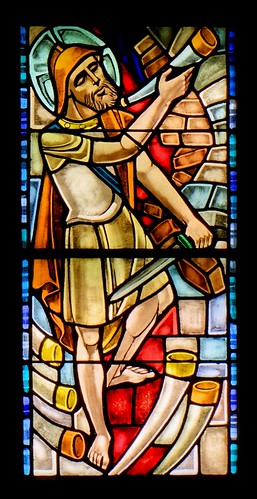
God told Joshua, “Be strong and courageous
for I am with you wherever you go.”
The context of Joshua 1 is that the prophet Moses has just died and God was giving directions to his successor, Joshua. Four times in Joshua chapter one God tells Joshua to “be strong and courageous,” and a few chapters earlier in the book of Deuteronomy (chapter 31) Moses tells Joshua twice to “be strong and courageous” and God tells Joshua the same thing once. One gets the idea that Joshua was neither strong nor courageous that he needed such encouragement.

One might think this despite the fact that 40 years earlier Joshua and Caleb were the only Israelite scouts of the 12 who scouted out the land of Canaan who were not intimidated by the Canaanites and their fortified cities and who courageously told the Israelites, “The land we passed through and explored is exceedingly good. If the Lord is pleased with us, he will lead us into that land, a land flowing with milk and honey, and will give it to us. Only do not rebel against the Lord. And do not be afraid of the people of the land, because we will swallow them up. Their protection is gone, but the Lord is with us. Do not be afraid of them.” (Numbers 14:7-9)

In an article from 2014 (Perfect Love Drives Out All Fear) I showed how courage comes from love, especially from the love of God above all things. Whether Joshua needed such encouragement or not, I do not know. Perhaps God was only reminding Joshua of His love for the Israelites to strengthen Joshua’s courage to do what needed to be done to take the land that God was giving to His people to prepare for the day when all His promises will be fulfilled and the Messiah would be born in that land who would save the world from their sins.

Jesus shows how God loves us
like a loving father loves his children.
The courage that God gives to Joshua and the Israelites is not a generic courage to not be afraid in any circumstance. It is a very specific courage. It is a courage to remain faithful to the One True God in the face of all doubt and temptation that the world may use to try to turn you against God, or to fear something above God, which is idolatry. There are so many temptations in the world to doubt God, and to fear what the world could do to us. When Christ’s followers were turning away from him because they found His teaching hard (John 6), Jesus did not beg His disciples to stay. He gave them the opportunity to leave, too, saying “You do not want to leave too, do you?” Peter answered for the disciples, “Lord, to whom shall we go? You have the words of eternal life.” Likewise Saint Paul had a similar courage from the love of Christ when He wrote to the Romans, “Who shall separate us from the love of Christ? Shall trouble or hardship or persecution or famine or nakedness or danger or sword? As it is written: ‘For your sake we face death all day long; we are considered as sheep to be slaughtered.’ No, in all these things we are more than conquerors through him who loved us. For I am convinced that neither death nor life, neither angels nor demons, neither the present nor the future, nor any powers, neither height nor depth, nor anything else in all creation, will be able to separate us from the love of God that is in Christ Jesus our Lord.” (Romans 8:35-39)

If God is with us, as He has promised (See Matthew 28:20 where Jesus said, “Surely I am with you always, to the very end of the age.”), then what can the world do to us? The most the world can do to us is to make our lives a little more painful for a little while, and take away our lives, but as sinners we already suffer and we will all die at some point, but all who love Christ belong to God as His children and will live forever with Christ who saves us. Why should we fear the world? Why would we ever turn our backs on Christ who lived and died to save us from the wickedness of this sinful world?

Do not be tempted by the world’s sinful pleasures. Do not be afraid of their empty threats. Do not be discouraged. God has come down to earth to be with you and to save you from sin and death. Jesus lived and died to pay for your sin so that you will live forever with Christ in His heavenly paradise. Be strong and courageous through faith in Christ, for He is the Lord God who will be with you wherever you go.


Sunday, December 10, 2017

Lead Us Not Into Temptation

by Pastor Paul Wolff

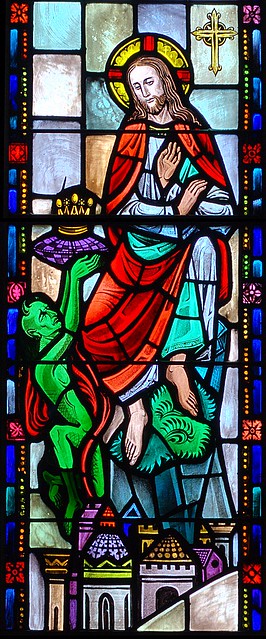
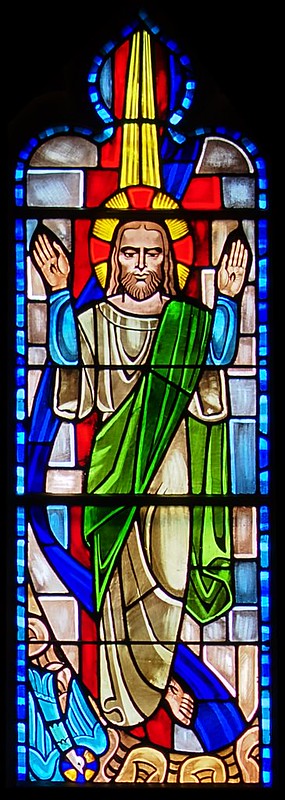
Jesus resisted the temptations of the devil
out of love for us.


I recently (December 2017) read an article about how the Roman Catholic Pope, Francis, wants to change the wording of the sixth petition of the Lord’s Prayer, “lead us not into temptation” to something more like, “do not let us fall into temptation.” At first this sounds a little wacky, and the news companies telling the story make it seem more so. The Lord’s Prayer was given to us by Jesus nearly 2,000 years ago and has served the church well throughout that time but Pope Francis may have a valid point. Yet, while he may have a valid point regarding the Lord’s Prayer, his solution is still a bit of an an overreaction.

It was reported that Pope Francis thinks that the Sixth Petition sounds like God leads people into temptation, which he is correct in saying would be contrary to Scripture. James 1:13-15 says, “Let no one say when he is tempted, ‘I am being tempted by God,’ for God cannot be tempted with evil, and he himself tempts no one. But each person is tempted when he is lured and enticed by his own desire. Then desire when it has conceived gives birth to sin, and sin when it is fully grown brings forth death.” No Christian who loves God and His word wants to give the impression that God is the source of temptation or sin. We are the source of our sin. Even the devil cannot make us sin against our will, but can only tempt us to do what is harmful to ourselves and others. Unfortunately, according to our sinful nature, we desire to sin and take pleasure in doing evil.

However, Pope Francis should have read Martin Luther’s explanation to the Sixth Petition in the Small Catechism. Luther writes, “God indeed tempts no one. But we pray in this petition that God would guard and keep us, so that the devil, the world, and our flesh may not deceive us nor seduce us into false belief, despair, and other great shame and vice. Though we are attacked by these things, we pray that still we may finally overcome them and gain the victory.” It has been nearly 500 years ago that Martin Luther acknowledged that the wording of the Sixth Petition may lead people to wonder if God tempts people to sin, yet he gave a proper explanation of the petition, and did not change the wording.


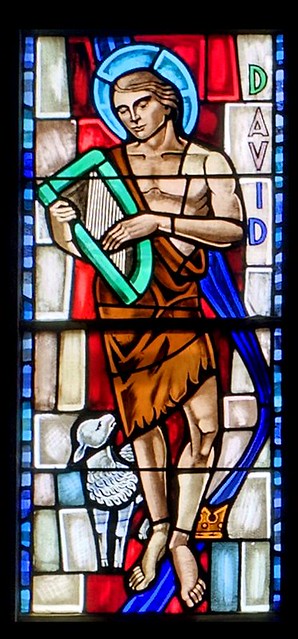
David prayed something like,
“Lead me not into shame”

Lutherans have known about this “problem” for about 500 years, but because of Lutheran Doctrine which properly explains the Scriptures, we trust that God does not lead us into temptation, but leads us to find forgiveness and salvation in Jesus Christ. Yet we still pray the prayer as all other Christians have done since Jesus taught the prayer to His disciples.


There are similar statements in the Psalms. In Psalm 25 David writes, “To you, O Lord, I lift up my soul; in you I trust, O my God. Do not let me be put to shame, nor let my enemies triumph over me. No one whose hope is in you will ever be put to shame, but they will be put to shame who are treacherous without excuse.” David trusts that God will not let him be shamed or defeated by his enemies, yet he specifically prays that God would not let these things happen.

Likewise in Psalm 27:9, David writes, “Do not hide your face from me, do not turn your servant away in anger; you have been my helper. Do not reject me or forsake me, O God my Savior.” Again, David is trusting that God will not hide his face from him or turn away in anger and reject him, but he prays that God will not do each of these things.

David does not pray these things because he fears that God would turn against him, but because his worldly enemies want him to be shamed, forsaken and destroyed. Likewise, when Jesus teaches us to pray, “Lead us not into temptation” He doesn’t want us to think there is any chance that God might tempt us to sin, but rather because our enemy, the devil, wants us to fall into sin and follow that broad path that leads to our own destruction, we pray that our Father in heaven would rescue us from sin and temptation.


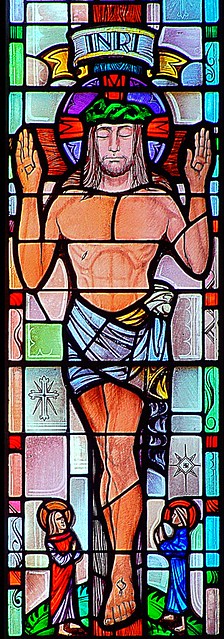
Jesus endured torment, shame, and death
to rescue you from the punishment for your sin.

The Lutheran reformation which began 500 years ago in 1517, was a conservative reformation. Luther worked very hard to conserve every good Scriptural teaching that remained in the Catholic church of his day, so he wouldn’t needlessly burden the people with unnecessary change or turn them against the truth of Christ so that they would reject their salvation. There is nothing wrong with the words of Jesus in Matthew 6 and Luke 11. Jesus was using a figure of speech similar to what David used in the Psalms. 

Christians have been praying this prayer for nearly 2,000 years without thinking that God tempts us to sin, and we can continue to do so for another 2,000 years (or more) if Jesus decides to wait that long before He returns to bring our salvation to its complete fulfillment.

Jesus let Himself be put to shame, and scorned and rejected, even by God the Father, so that He could rescue us from the results of our falling into temptation and sin. Jesus died and was put in a grave so that He would be able to rescue us all from our graves, where we will all find ourselves because of our sin. Because of what Jesus endured for our sake, we trust that God will forgive all our sins and rescue us from all the evil consequences of sin and evil.

Sunday, September 4, 2016

The Economics of Christ’s Salvation

by Pastor Paul Wolff

Money bag for helping your neighbor

Jesus said, “If anyone comes to me and does not hate his own father and mother and wife and children and brothers and sisters, yes, and even his own life, he cannot be my disciple. Whoever does not bear his own cross and come after me cannot be my disciple.” (Luke 14:26-27)


If you listen too much to what the world says about Jesus, and don’t know your Bible very well, then you might be surprised to hear Jesus say that you cannot be His disciple unless you hate your father & mother, wife and children, brothers and sisters, and even your own life!

Even those who are ignorant of the Bible, if they know anything at all about Jesus, they know that He said, “Love your neighbor.” Of course, the world (and even some unbelievers in the church) would then go on to define “love” to mean whatever they want it to mean, including some things which the Scriptures and Jesus clearly forbid and condemn, such as any kind of lust and adultery, including pre-marital intimacy, sexual promiscuity, and homosexual activity.

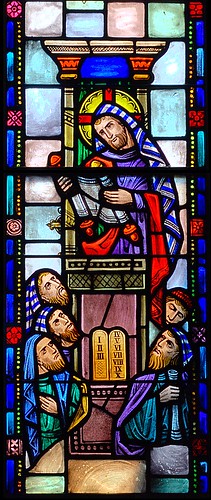
Jesus taught the Scriptures
in a Nazareth Synagogue

Although the world doesn’t have a clue how to properly read the Bible, Christians should be aware that any interpretation which contradicts the Holy Scriptures is false. You can’t play one Scripture passage against another, so as to say, “Well, there Jesus says to love, and here he says to hate, so I guess I get to choose which one I will follow today. Tomorrow I may choose the other, but it’s my choice.” That is false, and you are always going to fall into sin if you do that.

It is also a sin to view this as a contradiction, and without trying to resolve the apparent contradiction, say, “Since the Bible seems to contradict itself, then it is not the infallible word of God and cannot be trusted, so I can go do what I want and you can’t say anything against me.” Now, if the Bible really did contradict itself, then it could not be trusted, but the Holy Scriptures truly are the Word of God and they do not contradict one another at all! What seems like contradictions in the Bible are only apparent contradictions, and they can easily be resolved and you can still maintain both sides as being true in every case.

In this case, the proper question must be, “How can you hate your neighbor (in a godly way), and still love him at the same time?” This isn’t that hard, really. Remember that the Scriptures say that all people are sinners from the time we are conceived (Psalm 51:5) so we can hate the sinfulness both in our neighbor, and in ourselves, and we can still love them as those for whom Christ died to redeem (even if they don’t acknowledge Christ’s saving work.) We can also acknowledge that Jesus is using hyperbole (or exaggeration) to make the point that you should love Him so much that it seems like you hate everyone else. This is not to say that we should hate as if we would wish our neighbor were dead, but that we should love God above all else and despise sin in ourselves and our neighbor.

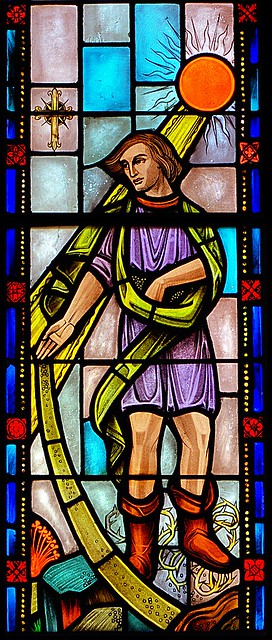
The Sower sowing his seed

This is how it works in practice: I have heard of situations where an elderly person comes to the faith, but then has doubts in regard to a loved one. It could be a beloved husband or wife, a child or a parent, or a sibling. But some people actually lose their faith and say, “If my beloved is not in heaven then I don’t want to go there.” This kind of person is what Jesus was talking about in the Parable of the Sower. He is like the seed which falls on the unfit soil. This person quickly loses the faith that could have saved them. It is tragic arrogance to think that you are more righteous than God Himself. Do people really think that they are a better judge than the all-knowing God? Jesus is the Good Shepherd who knows His sheep, and will never let even one go astray without going out and bringing him or her back into the flock. Also, don’t think that anyone will find any friends in hell. There is no love in hell, and those who may have loved you earth will only hate you and torment you in hell. While our loved ones are still alive we may try to lead them to find their salvation in Jesus, but once they have died we must leave their fate to the mercy of God and trust that Christ’s Judgment is always just and merciful. This is what Jesus is warning us about in Luke 14. Count the cost.

There is a cost to being a Christian. Don’t be fooled by the false teachers of our age who promise that being a Christian is all about unfailing success and prosperity. That doesn’t get you too far when a Jihadist puts a knife to your throat and asks you if you are a Christian. Martyrdom is not part of the prosperity gospel, but it can be part of the Christian life. Martyrdom is an extreme cost, and not all Christians are murdered because of their confession of Christ, but there is a cost to being a Christian.

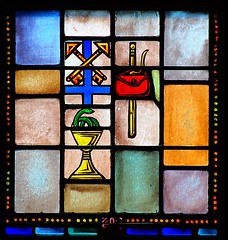
Symbols representing Saints Peter, James & John

Revelation 7:14 calls the Christian life a “great tribulation” which recognizes the Christian life as a battle or a war. The Christian life is a battle because we must fight against sin and temptation. The pagan life is not a battle in the same way because the unbeliever sees no need to resist temptation. In some ways it is easier to be an unbeliever because they don’t have to fight against their own sinful flesh. They may indulge any sinful desire and not worry about any consequences. There are consequences and costs to the pagan life, too, but I will get to that shortly. Proverbs 8:13 says, “The fear of the Lord is hatred of evil.” So Christians also hate evil and fight against temptation, even when our own flesh says, “I want to do wrong. I need to do that sin. I will die if I don’t do that sin.” Yes, the sinful flesh is a drama queen, but temptation can be compelling to our weak flesh. That is why we must fight against temptation. It hurts to deny the flesh its sinful desires, but that is one of the costs of being a Christian.

Think of the Beatitudes. Jesus doesn’t say, “Blessed are the rich and powerful who always get their way and are happy all the time.” It is only the heretics who say that! Jesus says: 

  • Blessed are the poor in Spirit
  • Blessed are those who mourn
  • Blessed are the meek
  • Blessed are those who hunger and thirst for righteousness
  • Blessed are the merciful
  • Blessed are the pure in heart
  • Blessed are the peacemakers
  • Blessed are those who are persecuted for righteousness’ sake
  • Blessed are you when others revile you and persecute you and falsely say all kinds of evil against you because of (Jesus).

Christians aren’t blessed because they mourn or are meek, or do any of the other things. They are blessed because Christ gives them good gifts which rescue them and make up for their sorrow and pain in this sinful life.

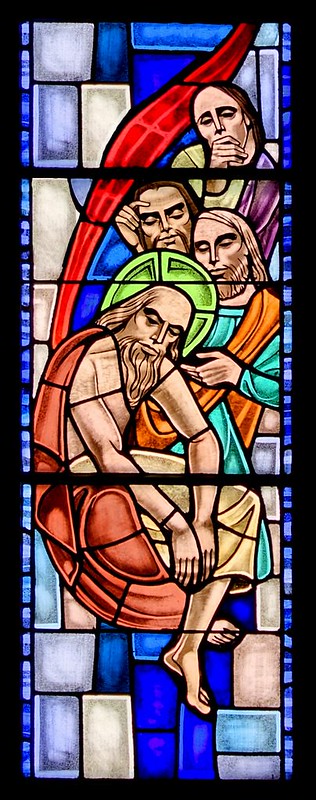
Job's suffering
(window from Holy Cross Lutheran Church, Detroit)

So Jesus says, “Whoever does not bear his own cross and come after me cannot be my disciple.” Remember that when Jesus said this, the cross was not a gold or silver-plated piece of jewelry that you proudly wear around your neck to proclaim your forgiveness and salvation in Christ. When Jesus said this the cross was the most shameful method of torture and death used to shame and humiliate the most despised criminals. So to take up your cross and follow Jesus is to recognize that you are a sinner and only deserve death, so you count your life and possessions as forfeited for Christ’s sake and look to Him to save you from sin and death, as He has promised to do.

That leads us to the other part of counting the cost – the benefits! You should also add the benefits when you count the cost. The benefits of being a Christian include: 1) complete forgiveness of all your sins – through the redemption that came by Christ Jesus; 2) reconciliation with God, the Father, and with that – adoption as His beloved child; 3) Sanctification by God the Holy Spirit; 4) resurrection to everlasting life; and 5) an eternity of joy with all the countless brothers and sisters in Christ who are likewise redeemed. These benefits are worth more than the whole world. That is why St. Paul could say in Philippians 3:7-9, “Whatever was to my profit I now consider loss for the sake of Christ. What is more, I consider everything a loss compared to the surpassing greatness of knowing Christ Jesus my Lord, for whose sake I have lost all things. I consider them rubbish, that I may gain Christ and be found in him, not having a righteousness of my own that comes from the law, but that which is through faith in Christ – the righteousness that comes from God and is by faith.”

Jesus paid the price for your sin

You should also know that although your forgiveness and salvation is free to you as a gift from God, it was not won without its own cost. In fact, your salvation was only won at a very high cost: which was the entire life and the innocent suffering and death of Jesus. When God was planning your salvation in eternity before the creation, the Son of God also had to consider the cost. Although God created the first people perfect, and without sin; yet, Adam and Eve soon rebelled against God and brought His condemnation upon themselves and their children. Yet despite their rebelliousness and lack of gratitude for all that God had given them, the Son of God loved them enough to take their punishment on Himself and was willing to endure the indignity and pain of crucifixion and also to endure the Father’s wrath of a world full of sinners.

Yes, there is a cost to being a Christian, but the cost is very small in relation to the benefits. What would you do? Would you rather indulge the pleasures of the sinful flesh for a short time (and suffer all the temporal consequences of that wickedness), and then suffer an eternity of torment with no hope of relief? Or would you rather deny yourself the guilty pleasures of sin and live in the hope and confidence of God’s love for you in Christ Jesus, and then enjoy an eternity of pleasures of God’s gracious gift of life and salvation? St. Paul wrote, “I consider that our present sufferings are not worth comparing with the glory that will be revealed in us.” (Romans 8:18) No one likes to suffer. Even Jesus wasn’t all too thrilled with the prospect of suffering and death (see Matthew 26:36-46), but out of love for God and for you, He willingly suffered and died to save you.

There is a cost to being a Christian, but God did not ask you to pay the price for your sin. Instead, God sent His own Son to pay the terrible price for your sin to redeem you and adopt you as His child to give you an eternity of life with Him in Paradise. It is only because of Jesus that we can live in this wicked world with hope of life and salvation. So we also join with St. Paul and all the saints and say, “For I am convinced that neither death nor life, neither angels nor demons, neither the present nor the future, nor any powers, neither height nor depth, nor anything else in all creation, will be able to separate us from the love of God that is in Christ Jesus our Lord.” (Romans 8:38-39)

Friday, February 13, 2009

Temptation

The Temptation of Jesus

Luke 4:1-13

Jesus, full of the Holy Spirit, returned from the Jordan and was led by the Spirit in the desert, where for forty days he was tempted by the devil. He ate nothing during those days, and at the end of them he was hungry.

The devil said to him, “If you are the Son of God, tell this stone to become bread.”

Jesus answered, “It is written: ‘Man does not live on bread alone.’”

The devil led him up to a high place and showed him in an instant all the kingdoms of the world. And he said to him, “I will give you all their authority and splendor, for it has been given to me, and I can give it to anyone I want to. So if you worship me, it will all be yours.”

Jesus answered, “It is written: ‘Worship the Lord your God and serve him only.’”

The devil led him to Jerusalem and had him stand on the highest point of the temple. “If you are the Son of God,” he said, “throw yourself down from here.

For it is written: ‘He will command his angels concerning you to guard you carefully; they will lift you up in their hands, so that you will not strike your foot against a stone.’”

Jesus answered, “It says: ‘Do not put the Lord your God to the test.’”

When the devil had finished all this tempting, he left him until an opportune time.


In our culture we all are very familiar with temptation. Unfortunately, instead of teaching our children to resist temptation, they are taught quite early to give in to nearly every temptation. Nearly all marketing and advertising uses temptation to get us to desire the product or service being sold. A great portion of our economy is driven by temptation, much of it sinful.
It is important for Christians to understand how temptation works. Temptation is the ONLY weapon the devil can use to destroy us, but he wields this weapon skillfully and it is why he is so dangerous. The devil is a big problem, but he is not our biggest problem. Our biggest problem is that we are by nature sinful and we naturally desire only the things which will destroy us. Obviously this makes the devil’s job much easier. All he has to do is to get us to do what we want to do anyway.

I think that the danger of temptation is one of the reasons why God limited man’s life span to a maximum of 120 years after the great flood of Noah's day (see Genesis 6:3). Before the great flood people lived hundreds of years. Noah himself lived 950 years (see Genesis 9:29), but he was the last one to live anywhere near that long. When people lived that long it gave the devil more opportunities to tempt them to sin and to find their weaknesses so he could lure them away from the faith. This is one of the reasons why the world was so evil in the days of Noah, which prompted God to send the flood.

Many of the most popular preachers in America are fond of telling you how “great” it is to be a Christian, but you don't often hear them teaching about how difficult it is to fight temptation. This is completely backwards. It is much more difficult and troublesome to be a Christian than to be an unbeliever because the Christian must struggle and fight against temptation, while the unbeliever generally doesn’t care and freely gives in to temptation whenever he desires.

The way temptation works is that the devil tries to get us to want or desire that which will kill us. That is how it has worked all the way back to the garden of Eden. There Satan got Eve to desire the forbidden fruit by getting her to believe the lie that eating the fruit would make her more like God.

Satan didn't (and couldn't) force Adam and Eve to kill themselves, and he couldn’t make God condemn the people He loved, but by getting Adam and Eve to desire to eat the forbidden fruit the resulting effect was the same. Once they desired evil it didn’t matter to them that God had decreed death to all who disobeyed Him.

“Man does not live on bread alone but on every word that comes from
the mouth of the Lord" Deuteronomy 8:3

The temptations of Jesus worked in the exact same way. In each case the devil tried to get Jesus to desire something sinful so that He would act on it and in so doing make himself unworthy to save us from our sin. The trick was to get Jesus to act on self interest rather than love. The first temptation was to satisfy His own hunger after 40 days of fasting. Other temptations tried to get Jesus to take the easy way out instead of having to suffer and die or to test God the Father to make Him prove that His Word was true.

We should also take notice of how Jesus resisted the temptations of the devil. Jesus did not do anything miraculous in resisting the devil. All Jesus did was to quote the Holy Scriptures and put His trust in God and His Word over and against the lies and innuendo of the devil. This also should give us comfort and confidence in our task to resist temptation. Jesus did nothing that we cannot do. It is true that we have our sinful nature working against us which really does want to sin, but we, too, can learn and quote Bible verses to resist temptation. As sinners, we are not going to be able to resist all temptation, but when we fail we can trust that Jesus will forgive us, even as we ask for strength to resist the next time we face a similar temptation. We also have to be careful to use Scripture properly because you may have noticed above that the devil quoted the Bible, too, in trying to get Jesus to sin. The verses he quoted were accurate, but out of context. God' s Word should never be used to justify disobedience against God, but the devil has been doing that since he asked Eve, “Did God really say, ‘You shall not eat...?’”

Fortunately for us, Jesus loved us more than He cared about His own comfort. Jesus also trusted that God the Father’s will is always best, even if it cost Him tremendous suffering and death. That is what love does - it cares more about someone else than one’s self. Because Jesus wished to obey God the Father and save us from our sins He always resisted temptation, and though it cost Him greatly, He won for us full forgiveness and everlasting life.