Showing posts with label government. Show all posts

Sunday, October 12, 2025

Of Mice and Sin

by Pastor Paul Wolff


Daniel was thrown in the den of lions to be killed,
but God prevented the wild animals from harming him.

I saw a documentary recently which told of the mouse infestation and eradication in 2016 on the remote Antipodes Island near New Zealand. Antipodes Island is uninhabited by people, but it has a large variety of birds and plants and animals, many of which are not found anywhere else. Mice are not native to the island, but some time near the turn of the 20th century a ship was wrecked near the island and some mice on the ship survived and took refuge on the Island. Over the next century they multiplied and, having no natural predators, they overran the Island and many of the rare birds and animals began to disappear from the Island.

The problem was not just that the mice population was so large, though there were hundreds of thousands to a million or more mice on the island. The problem was that although the mice were just house mice, over the century they had become extremely aggressive. Their teeth had grown larger than their ancestors, and they were not content with the normal house mice diet of seeds, grains and insects (though their depletion of these food sources diminished the food that migrating birds relied on for survival). Yet, the real problem was that the aggressive mice would gang up and attack larger animals directly, such as birds, and kill them.

The New Zealand government rationally determined that it was better to have a naturally diverse population of animals and birds on the island rather than an island populated solely by vicious aggressive mice who would eventually kill one another after they had killed off all the other life on the island. So they decided to exterminate the mice. It was a tricky proposition to kill the mice without killing off all the other wildlife on the island also. Arsenic, for example, is an effective mouse poison, but since arsenic is an element, it does not degrade, and it also is poisonous to everything else. They also knew that if they left even one pregnant mouse alive on the island, then the island would eventually be overrun with mice again in the future.

They used poisoned mouse bait with a poison that degraded after time into something non-toxic. They planned to distribute the poisoned bait in the winter when the migrating birds and animals were not on the island, and when other food was scarce and the mice would be looking for something to eat. They used helicopters to drop the poisoned bait over the whole island, and a crew of people on the ground would target known places where the mice lived. Though, winter in the far south Pacific often brings fierce storms which delayed the helicopters and made it dangerous even on days when they dared to venture out to distribute the poison. The cost of the project was several million dollars, and it had to be planned and executed very much like a military operation. 

The project was determined to be a success when researchers went back to the island a couple years later, and with the help of trained dogs they could not find any traces of living mice on the island. They also observed flourishing populations of birds and wildlife, and even some areas of the island which had been barren of plant life, were now supporting lush growth of plants and flowers. What had been a hellish landscape filled with aggressive mice had quickly recovered to be something more like paradise.

This story got me thinking about the state of the world today, and the nature of sin. It has become obvious recently that many nations of the world have let liberals and libertarians run amok for far too long implementing laissez faire policies which allowed criminals to get away with all kinds of corruption, thievery, and violence. This could not go on forever. Good people have a great capacity to endure oppression and hardship for quite some time, themselves. However, when they see their neighbors suffering they must act out of love to rescue those who are being victimized. 

When this push-back started, the perpetrators of the evil reacted as if the enforcement of good laws were unjust. They thought it unfair that they were receiving the just punishment for their crimes. They had gotten away with much evil for so long that they felt as if they had the right to do whatever they wanted without suffering any consequences. This had gone on for so long that many government officials and politicians and judges were among those promoting lawlessness, and encouraging riots, and even organizing small armies of anarchists to fight against those who sought to reestablish law and order and peace. 

Before people brought sin into the world
the animals were tame and served Adam and Eve happily.

This shows us the nature of sin in the world. Mice are not the source nor the cause of sin. Mankind (i.e. men and women) is the source of sin, but our corruption also affects animals. At the creation there were no wild or dangerous animals. Only as the effects of sin multiplied in the world did animals grow wild and turn against people. The evil multitudes of mice on Antipodes Island show us the nature of sin in several ways. Like the mice, sin starts off small and seemingly harmless, but as sin multiplies its harmfulness becomes more apparent. If it is not kept in check, sin becomes more aggressive and violent, and will continue until it completely destroys everything. This is the nature of sin both in small scale and in large. It has the same effect within one person alone, or in a whole nation of people if they are consumed by sin. 

The fight against evil is an ongoing process. It is never done. It must always be an unending fight because we can’t get rid of evil sinful people by extermination as if they were mice. All people are sinful, and to eliminate all sin one would have to eliminate all people. One might be tempted to do this – to cleanse the world of evil people and leave just a few and start over – but we see in the Holy Scriptures that was essentially what God did in Genesis 6-8. God sent a great catastrophe which ended up flooding the whole world and killing all people except Noah and his three sons and each man’s wife (eight people in all). Yet we see that this solution did not get rid of evil in the world, though that was not God’s intention. Before the flood, Moses recounts, “The Lord saw how great man’s wickedness on the earth had become, and that every inclination of the thoughts of his heart was only evil all the time.” (Genesis 6:5) Yet, after the flood which killed all the wicked, violent people, God promised Noah, “Never again will I curse the ground because of man, even though every inclination of his heart is evil from childhood.” (Genesis 8:21) Nothing had changed after the great flood in regard to the sinful nature of mankind, but God still had mercy, and promised never to destroy the earth as He had done, and despite killing most of the people on earth, God still kept His promise to Adam and Eve to send a savior from among their descendants.
God did not send the great flood to kill all sinners,
but He saved Noah and his family so he could
keep His promise of a savior who would
rescue us from sin and death.

There are possibly some people who might argue that although mice are not native to Antipodes Island, their migration was natural, and that people should not interfere with nature, but should let nature run its course. This is not the Christian view. When God created Adam and Eve He blessed them and said to them, “Be fruitful and increase in number; fill the earth and subdue it. Rule over the fish of the sea and the birds of the air and over every living creature that moves on the ground.” (Genesis 1:28) Although this blessing was given before the fall into sin, it still applies. Though, before sin came into the world the animals were not wild, nor would they have become wild had no one ever sinned, yet, this blessing still applies. After the great flood, the Holy Scripture tells us, “Then God blessed Noah and his sons, saying to them, ‘Be fruitful and increase in number and fill the earth. The fear and dread of you will fall upon all the beasts of the earth and all the birds of the air, upon every creature that moves along the ground, and upon all the fish of the sea; they are given into your hands. Everything that lives and moves will be food for you. Just as I gave you the green plants, I now give you everything.’” (Genesis 9:1-3) So even after the fall into sin, and after the great flood, God gave mankind the authority to manage the earth as stewards, including eliminating pests such as mice, and using some animals as food, and others to serve us in other ways for our benefit. As I said above, it was a rational decision to remove the pests so that migrating birds and sea creatures could come there in the summer to raise their young unmolested instead of multitudes of hyper-violent mice wiping the island clean of all animals and plants before they devoured themselves. 

The Holy Bible does not tell of a mouse infestation like on Antipodes Island, but one of the ten plagues on Egypt was an infestation of locusts. Moses describes it by saying, “Never before had there been such a plague of locusts, nor will there ever be again. They covered all the ground until it was black. They devoured all that was left after the hail – everything growing in the fields and the fruit on the trees. Nothing green remained on tree or plant in all the land of Egypt.” (Exodus 10:14-15) The previous plague was a great hailstorm which destroyed crops and stripped trees of leaves and fruit, but whatever was left after the hail was devoured by the locusts. These plagues, and the eight others, were to turn the Pharaoh’s heart so that he would let the Israelites go free. The ultimate purpose of this was so that the Israelite people would eventually make their way to the land that God had promised to give to Abraham and his descendants, so that the messiah, the savior of the world, would be born there from among Abraham’s descendants.

Solomon wrote of something similar to the locust plague in Egypt when he observed in Proverbs 30:27, “Locusts have no king, yet they advance together in ranks.” Even though Solomon did not see a plague such as the one God sent against the Egyptians several hundreds of years before he was born, yet, he still had seen locust swarms, and noticed that they moved like a well-trained army, even without a king to lead them. This is in a list of things that amazed King Solomon, but which he could not understand. Even in the 21st century swarms of locusts can cause an amazing amount of destruction, especially when you consider that each individual locust is such a small creature. 

In giving his farewell address to the people of Israel, Moses gives the Israelites a warning from God against apostasy. God says that if they turn against Him, “I will send wasting famine against them, consuming pestilence and deadly plague; I will send against them the fangs of wild beasts, the venom of vipers that glide in the dust.” (Deuteronomy 32:24) God foretold Israel’s apostasy, and promised to send pestilence and plague as a punishment, or as a disciplinary action to bring them to repentance through hardship. It is doubtful that the infestation of mice on Antipodes Island was punishment for any particular sins. There were no people who lived permanently on the island. It was just that the New Zealand government did not want to be seen as the protector and overseer of an island filled with multitudes of vicious mice, but of an island filled with migratory birds and animals living in a summer garden paradise. 

Rulers have the God-given obligation to punish wrongdoers
for the benefit of law-abiding citizens.


St. Paul describes the proper function of the government in Romans 13. He wrote, “For rulers hold no terror for those who do right, but for those who do wrong. Do you want to be free from fear of the one in authority? Then do what is right and he will commend you. For he is God’s servant to do you good. But if you do wrong, be afraid, for he does not bear the sword for nothing. He is God’s servant, an agent of wrath to bring punishment on the wrongdoer.” (Romans 13:3-4) It is clear that God established government for the protection and benefit of the people – not the benefit of the rulers. Though many rulers through the ages have abused their power, still we should see government as something that God has established for our benefit. Government ought to punish wrongdoers, and let law-abiding citizens free to live as they choose, and to prosper and make a living as best suits them. We should also remember that even during St. Paul’s day, the Roman government was opposed to Christianity, and as a Roman citizen, St. Paul was arrested and summoned to Rome to answer for his teachings against the Roman gods, and where (tradition tells us) he was beheaded for his testimony of Jesus Christ as the only true God, yet he still encourages Christians to submit to the governing authorities (where they do not force us to disobey God). A good government cannot let sin and violence continue unabated like mice overrunning an island. They must punish wrongdoers in whatever way is most expedient to discourage such activities. If they can catch wrongdoers early, then the punishments can be less severe with the intention of rehabilitation and restoration to become productive, law-abiding citizens. Otherwise, more drastic measures become a necessity. This authority comes from God for the benefit of all. The only people who complain about such things are those who profit from sin and corruption and violence.

Jesus took the punishment for the sins of the world
so that He could forgive you and save you from death.
God’s way of dealing with sin does not involve extermination (though it may seem like it), but it does involve death. Holy Scripture says “The wages of sin is death, but the gift of God is eternal life in Christ Jesus our Lord.” (Romans 6:23) Since all people on earth who were born since the creation until 1912 have died (and many more who have been born since then), it can seem like an extermination. And this is true, to an extent. Death comes to all because all have sinned. God does not want sinners to live forever in sin and has condemned us all to die. However, God also has provided rescue and salvation from death through Jesus Christ. Jesus is God incarnate – meaning God has become a man to be our savior. He did this to take the punishment for our sins so that God’s justice would be satisfied, and sin punished, but all who believe in Jesus for the forgiveness of their sins will be rescued from death and will be sanctified (made holy) and will live forever with God in a recreated Paradise. God gives this salvation as a gift (as Scripture tells us in the verse quoted above) to all who believe. This is the best solution to sin. Though we suffer for a while here in this sinful world, it is no more than God was willing to endure as a man. We deserve to suffer and die, but Jesus did not – yet, He willingly endured all the sorrows and suffering of sinners so that He could win our forgiveness and give us eternal life as His beloved, sinless people.

Epilogue: 
You may believe it or not, but there is still some God-given fear and respect of mankind left in the animal kingdom, even among wild animals. There is an amazing story from a National Geographic photographer, Paul Nicklen, who had an encounter in the Antarctic sea with a leopard seal he was photographing. He was in the water photographing a large female leopard seal and she kept bringing live penguins to him, and not eating them herself – as she would normally do, but was letting them go in front of Nicklen. Then she would tire out the penguins and bring them to him. Then the leopard seal would drown the penguins and bring them to Nicklen. He had to conclude that the leopard seal was trying to feed him with the penguins. The leopard seal normally fed on penguins and thought that the man also would like to eat them also, though he was wearing scuba gear, and could not eat the penguins even if he had wanted to, and she seemed disappointed (possibly even concerned) when he would not take and eat the food that she was bringing to him. 

Now, if you know anything about National Geographic then you will know that few (if anyone) associated with that publication would give God credit for anything which He has told us in Genesis, but I am not burdened by a religious adherence to the ridiculous unscientific idea of Darwinistic evolution, so I can come to my own conclusion. I do appreciate Paul Nicklen’s honesty and his curiosity and his desire to learn about the wonders of God’s creation, and for telling his amazing story. My conclusion is that Nicklen’s leopard seal was acting according to God’s intentions, and was giving us a glimpse of animals’ natural respect for man as God created them. You can watch Paul Nicklen’s description of his encounter and make your own conclusions here: (Face-to-Face with a Leopard Seal)

Dragons are often described in the Bible and in ancient writings as dangerous.
In the Revelation the dragon is a symbol of the devil.
Yet Christ has defeated him and protects us from the worst of his evil.

At the risk of sounding like I am endorsing National Geographic, there is another story that they published in March 2011 that shows us a glimpse of God’s intentions of man’s relations with animals. I do not endorse the editorial views of the National Geographic Society, but on the rare occasions when they do actual scientific inquiry (and not pushing some Darwinistic, materialistic, evolutionary propaganda) they can bring real insight into God’s wonderful creation. The problem with NGS is that you often have to read between the lines to find the scientific truths in the midst of the propaganda. Having to dig through so much dung to find the pearls is discouraging and tiring, and although I have an interest in such things, I long ago found that my time is better spent elsewhere, and I canceled my membership many years ago.

The story is that in Siberia in the 1960’s during the reign of the Soviet Union, some workers who were raising foxes for fur products decided to do a little experimentation. They would do some selective breeding of the foxes who showed more tendencies toward friendliness with people. I suspect this was (at least in part) a practical decision, because wild foxes can be aggressive and violent, and if they could make a population of less aggressive animals, then it would be easier to care for them, and make their job less dangerous, and much more pleasant. They found that they could raise foxes which were much friendlier to people, but that is not all that they found. Although they were only using behavioral characteristics to select animals for this breeding experiment, they found that there were other physical changes that expressed themselves in the tamer foxes. Although wild foxes generally have red coats, and similar coloration, the tame foxes that they were breeding sometimes had different colored fur, and some had spotted (piebald) patterns in their coloration. They also observed that as the generations of tamer foxes progressed the foxes would tend to have floppy ears and curly tails very similar to domesticated dogs. The foxes would also exhibit behavior very similar to domestic dogs and not just tolerate interaction with people, but would enjoy friendly interaction with people and wag their tails and do the exact same things that friendly dogs do among people. 

I am not sure if the Siberian fox researchers were Christian, (though they may have been) but they had to be careful about what they wrote in publishing their findings in the USSR at the time because of the official atheist policies of the central committee of the government. National Geographic magazine, likewise (even in 2011, long after the Soviet Union broke apart) did not want to attribute any of these findings to God’s creation. Yet it is clear that even within the population of wild foxes, there exists the “genetic memory” (so to speak) of God’s creation of them as friendly servants of mankind. This shows that the “wild” nature of some kinds of animals seems to be some kind of perversion (the Darwinists might say “adaptation” – and that is fine, as far as it goes) of the way their ancestors originally were.

By way of contrast, the Siberian researchers also conducted the opposite experiment and bred some foxes which were less friendly to people. They found that their anti-social behaviors increased, generation to generation, to the point where the foxes were extremely violent and mean, and vixens would not even nurse or care for their kits. This showed that violent tendencies in wild animals can increase if such populations breed with one another. On the other hand, tame behaviors are reinforced if animals with tamer tendencies reproduce with one another. 

I find this interesting in so many ways. As a Lutheran pastor, I am not so much interested in wildlife as I am in the spiritual problems of people. There is some evidence in the Bible that what I have observed above has some things to teach us about people. In the time after the fall into sin until the great flood of Noah’s day the Bible tells us that many of the patriarchs lived extraordinary long lives, with some people (like Adam and Methuselah) living over 900 years. This is beyond anything in our experience, and even in Biblical days I believe the last person to live longer than about 120 years was Isaac (180 years). After that, Moses lived to be 120 (and was reportedly in good health when God took his life), but since then people’s maximum lifespans seem to be just like what we see today. But in the antediluvian period (before the flood), it seems like nearly all the people turned against God and became increasingly violent – which is why God determined to send the great flood to destroy the people on earth. God saved Noah and his family because they still trusted in God and listened to Him, and because God had made a promise to Adam and Eve that the Messiah would come from among their descendants and He would undo the effects of sin and redeem them and rescue them from death. 

Because of what God tells Noah after the flood, that He will limit man’s life to 120 years at most, I conclude that there is some connection between the extraordinary long life of the antediluvian people and sin, unbelief, and violence. The way this works (as near as I can tell) is that, as the centuries go by, the devil and demons are able to find people’s weaknesses and wear them down with temptations until they fall into sin. Then, having fallen into sin and unbelief, that wickedness grows and expresses itself in violence. There is also some evidence in the Holy Scriptures that at the very end of time there will be some kind of increase in sin and violence, though such things may be hard to measure. There is no lack of sin and violence in the world today, though there are eight billion people in the world, and if only a small percentage of them are violent, then it would still have terrible effects. There really is nothing in the Holy Scriptures which would prevent Jesus from returning today, except God’s own timetable. All of the prophesies Jesus told His disciples, and those in the Revelation to St. John, have already come to pass, except for when history tends to repeat itself, and for the Second Coming of Jesus on the Last Day. This should not necessarily make us fearful, but it should encourage us to fight against evil, and try to turn the hearts of unbelievers to repent and look to Jesus Christ for forgiveness and salvation, and wait patiently for Christ’s salvation.

{Note: The National Geographic article on the domesticated foxes used to be freely available online, but I can’t find the whole thing. The March 2011 issue is available for purchase from National Geographic, and you may be able to find it in your local library, as long as they still have books and magazines available (my local library seems to have more computers than books these days). There is a myth that “the Internet is forever”, but that is often false. Companies go out of business, or are sold, and their archived data is lost or deleted, and it is gone.}

Thursday, January 3, 2019

The Problem with Socialism

by Pastor Paul Wolff

“The desire of the righteous ends only in good, the expectation of the wicked (ends) in wrath. One gives freely, yet grows all the richer; another withholds what he should give, and only suffers want.” (Proverbs 11:23-24) 
 
The best way to keep a prisoner from escaping is to make sure he never knows he’s in prison. -- Fyodor Dostoyevsky


God commands individuals to be charitable,
not governments.

I remember seeing a bumper sticker which read, “I think, therefore I am not a socialist.” There is much truth in that, yet there are many people who think themselves intellectuals who favor socialism. It takes more than a thinking mind to understand that socialism is a wicked system to order society. It also takes a caring heart (not a bleeding heart).

Socialists in the United States (and other Western countries) have been pushing their wicked agenda in schools, TV, movies, newspapers, magazines, and the news media for many decades, but there hasn’t been much serious public discussion about the implications of the socialist worldview and political agenda. Ever since the unexpected success of socialist Democrat Senator Bernie Sanders in the 2016 United States presidential campaign there has been much more public interest in the U.S. in the ideas of socialism. If you recall, Senator Sanders might have won the Democratic nomination for president if it hadn’t been for the Clinton controlled “Democratic” Party rigging the primaries to help Hillary Clinton win the nomination. Since then, in 2018, an openly socialist, naïve young woman from New York was elected to the United States Congress.

Socialism has never been very popular in the United States because we have a history of both Christianity and good education where people are smart enough (and free enough) to learn the weaknesses of socialism, and reject it. Both of those things are changing due to many decades of socialist indoctrination of students by unionized teachers in schools and universities. The result of this is that socialism seems to be gaining in popularity in our country.


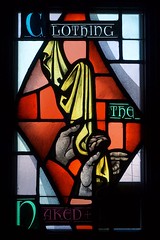
Christians ought to be charitable
as Christ is charitable to us.

It is no surprise that the Democrat Party is the one which is pushing the socialist agenda. Socialism has its roots in liberalism, and can be seen as liberalism pushed to its logical extreme. One definition of the term “liberal” is “generous”. That sounds good at first, but the problem with liberalism is that liberals aren’t particularly generous personally, but they do want to be seen as “generous” when they have control of other people’s money and possessions. Socialism takes that to the extreme so that the late British Prime Minister, Margaret Thatcher, is famously known for saying something to the effect of, “The problem with socialism is that eventually you run out of other people’s money.” The truth of this shows the first problem with socialism, which is that socialism is fundamentally thievery. Socialism is thievery because it takes the wealth and income of those who work to earn it and gives it to those who do not earn it.


Adam and Eve stole what was forbidden
and condemned us all to die.
Jesus gave up everything He had
and redeemed us from death.

In a way, the first sin of Adam and Eve involved thievery. It was primarily idolatry because God had said, “Don’t eat the fruit of this one tree,” and their eating was rebellion against God, but it was also stealing what didn’t belong to them. God had given them all the food in the whole world, but reserved for Himself the fruit of one tree in the Garden of Eden. God did not need the fruit for food, but neither did Adam and Eve – since they had plenty of good food to eat, but as long as Adam and Eve obeyed God’s simple command they showed their trust and obedience to God. When Adam and Eve ate the fruit they combined stealing what didn’t belong to them with idolatry because they listened to the lies of the devil and thought they knew better than God what was good and what was evil. In this way the name of the “Tree of the knowledge of good and evil” worked backwards from what we normally think. As long as Adam and Eve obeyed God and did not eat the forbidden fruit they could properly distinguish between good and evil. However, once they gave themselves to the temptation and stole and ate what was forbidden, then they lost the ability to distinguish between good and evil. After the fall into sin, what people think is good is often evil, and what is truly good for us is often seen as evil, and we have a hard time telling which is which.

The premise of socialism is that it purports to desire to make everyone equal. In practice it accomplishes this by making everyone impoverished, except for the ruling tyrants. There are always ruling tyrants in societies which practice socialism, because the system can’t work without a totalitarian government enforcing this unnatural social structure. There is little or no concept of personal property in socialism, but all things are shared among everyone. I remember a few years after the disintegration of the Soviet Union I spoke with a young man who was from the former Soviet Union (from one of the Baltic nations, as I recall), and he said that during the Soviet days there was no concept or teaching of the Seventh Commandment (“You shall not steal.”) as a command from God. It was a revelation for them to learn this concept once they were free from socialism. The Seventh Commandment assumes that there is such a thing as personal property, and that it transgresses God’s will to obtain someone else’s property in a dishonest way, or, as Martin Luther explained in the Small Catechism, in a way which only seems right – like a governmental Robin Hood-like redistribution of wealth. In this way socialism is fundamentally opposed to Christianity, and God’s created order.


The Good Samaritan used his own money
to help the man injured by robbers.

Because the Seventh Commandment assumes private property, we know that God wants us to work for what we have, and to keep and take care of our possessions. Saint Paul wrote, “If a man will not work, he shall not eat.” (2 Thessalonians 3:10) This shows that whenever possible each person is responsible for providing for his own personal needs, like food, clothing, and shelter. Note that this does not apply to those who cannot work, but only those who will not work. Elsewhere St. Paul (and other prophets and Biblical writers) encourage Christians to charitably support their neighbors who cannot work due to disability. St. Paul writes to the Ephesians (4:28) “He who has been stealing must steal no longer, but must work, doing something useful with his own hands, that he may have something to share with those in need.” This also condemns the ideology of socialism, and also implies that God gives His people more than they need so that they “have something to share with those in need.” This shows why democratic free market economy works in Christian societies (and not so well in non-Christian societies), because Christians are encouraged by Scripture to charitably share their excess with family and neighbors who are unable to care for themselves. They don’t need the Government to take care of the poor because they are cared for by their neighbors directly until they get back on their feet financially.

Here one might object and say that in the Acts of the Apostles the church of the Apostles lived in what seems like a socialist community. “All the believers were together and had everything in common. Selling their possessions and goods, they gave to anyone as he had need.” (Acts 2:44-45) This is true enough, but it is not a small thing to note that they did this voluntarily, and their actions were not coerced by the Apostles or the governing authorities. When Ananias and his wife Sapphira were killed by God (Acts 5), it wasn’t because they withheld their property from the community. They were free to sell their property and do with the proceeds as they saw fit, even keeping all, or part of, the proceeds for themselves. Their crime was that they made a show of selling their property and saying that they had given ALL the proceeds to the church, while they actually kept some of the money for themselves. They died because they were liars, and they pretended to be holy to make people think they were better than they actually were. God showed everyone what they really were like (i.e. dead).


The Magi gave valuable gifts to Jesus.
This helped the holy family in Egypt,
and also foreshadowed Christ’s suffering and death.

Socialism is fundamentally opposed to the natural order of things because it tries to make everyone equal. Although God created everyone equal in His sight (as the U.S. Declaration of Independence stated – referencing common God-given rights), not everyone is equal in all things. Some people are smarter, others are less intellectually capable. Some people are stronger, others are weaker. Some people are older, others are younger. Some people are wiser and others are more foolish. Those who are more capable can rightly command a higher pay because they can do more good in society than those less capable. There is nothing evil or wrong about this. The wickedness of socialism can be seen if you say that everyone should have the same wage when one can do more or better tasks than another.

Wherever socialism enforces equal outcome, rather than equal opportunity, there is no incentive for people to work hard or be innovative or entrepreneurial. If I am going to be paid the same as my neighbor no matter how hard I work, then why should I work harder than my lazy or incompetent neighbor? This shows the unfairness of a system which pretends to be equal for all people. If you have educated workers who can think logically and reason deductively and have a free choice, then they would never choose socialism over a free market.


Socialism dehumanizes people. No matter how talented you are, no matter how hard you work, no matter how good a job you do, under socialism you are no more valued than the least talented, laziest, incompetent hack. You can never get ahead because it is unnaturally forbidden by law, or social norms, or whatever is enforcing the socialist ideal. In this way capitalism is better because it rewards people for a job well done, or for doing a task that is greatly needed, but is not able to be accomplished by many people. In a Capitalist society there is real incentive to do the best that you can do with your talents and effort. This values people much more than a system which says that no matter how much you can do, or if you can do something that no one else can do, you are not worth any more than anyone else.  

Christianity says that you are precious to God. Even though you are a sinner and deserve only God’s wrath and punishment, God loves you and has redeemed you from your sin through the life and death of Jesus Christ. It doesn’t matter if you are a newly conceived one-celled person, or if you are a life-saving doctor, or if you are a brain injured quadriplegic, you are precious to God. God proves His love by becoming the man, Jesus Christ and living a full life from conception to death to resurrection in order to rescue you from the consequences of your sin. Although some may say that this sounds like a socialist ideal, the Bible is clear that God gives different gifts to different people in life. Some are more able to contribute to society than others. What makes Christianity different from socialism is that since you are precious to God then Christians ought to consider others precious also, and as much as we can have a say, should promote a society that treats its citizens the same way. Socialism is not the way to treat humans in a loving way.
 

For you know the grace of our Lord Jesus Christ,
that though he was rich, yet for your sake he became poor,
so that you by his poverty might become rich.
- 2 Corinthians 8:9

Jesus lived a humble life, even though He was God incarnate. St. Paul describes it by writing, “Your attitude should be the same as that of Christ Jesus: Who, being in very nature God, did not consider equality with God something to be grasped, but made himself nothing, taking the very nature of a servant, being made in human likeness. And being found in appearance as a man, he humbled himself and became obedient to death – even death on a cross!” (Philippians 2:5-8) Jesus demonstrated the love of God by becoming a man and forsaking the glory and honor and power and riches of His Heavenly kingdom, and He not only lived a humble life, but He offered His life as an atoning sacrifice to redeem sinners from the curse of our sin. St. Paul also described it this way to the Corinthians, “For you know the grace of our Lord Jesus Christ, that though he was rich, yet for your sakes he became poor, so that you through his poverty might become rich.” (2 Corinthians 8:9) Many Christians throughout history have lived humble lives in imitation of Christ’s humble life. Jesus also warned His followers, “It is easier for a camel to go through the eye of a needle than for a rich man to enter the kingdom of God.” (Mark 10:25) They responded “Who, then, can be saved?” Jesus answered, “With man this is impossible, but not with God; all things are possible with God.” And yet, there are many believers in the Holy Bible who were blessed with great wealth, such as Abraham, King David, Job, and others. Wealth is not itself an evil. St. Paul warns Timothy about putting his trust in wealth when he wrote, “For the love of money is a root of all kinds of evil. Some people, eager for money, have wandered from the faith and pierced themselves with many griefs.” (1 Timothy 6:10) Money is not evil, but people fall into evil when they love money and make it their idol.
 
Those who favor socialism are either the uneducated who are manipulated into thinking that this is a good deal, or the elites who seek to take advantage of the ignorant workers. The elite socialist politicians want to be seen as helping people, but they don’t actually want to help people succeed. We see this in socialist societies where the people are not described as “citizens” but as “workers.” In other words, those who view citizens only as “workers” really view their neighbors as “slaves”. Their only value to the centralized government is in the work that they can provide, not in themselves as unique persons with their unique strengths and weaknesses. If they can not provide labor, then they have no value to those who control the government. In socialist countries the people who form the government are slave masters and the people are slaves. In 20th century Communist China, Mao Tse Tung dressed in peasant-like outfits (custom tailored to fit his fat ass), but he lived in luxury off the labor of his enslaved people.


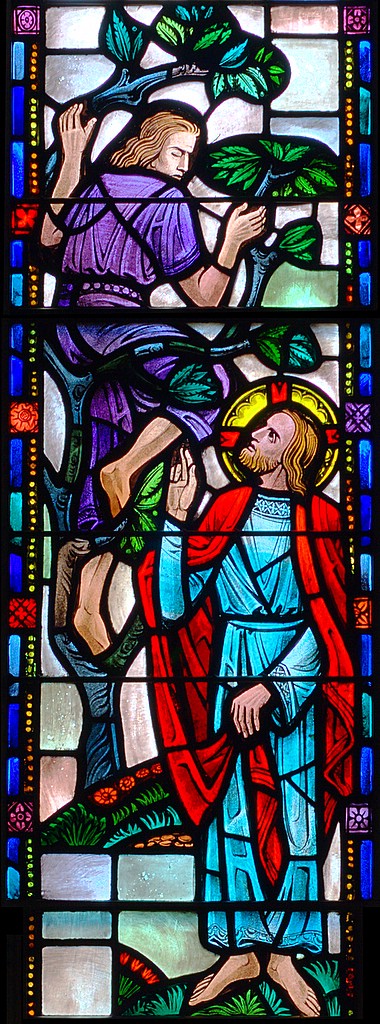
Zacchaeus responded to Christ’s kindness to him
by promising to return what he had stolen
and give generously to the poor.
See Luke 19

There are a couple of key scenes in the 1965 movie Dr. Zhivago which beautifully illustrate the evils of socialism. Early in the movie Dr. Zhivago is seen living in a beautiful mansion which is well appointed and well maintained and looks bright and cheerful. Although I think that house belonged to his wife’s father, a successful doctor ought to live comfortably as a reward for a highly skilled career which provides caring service to the lives and health of his neighbors. Later, after the Bolshevik revolution, he is shown entering the same home, which is now also the home to several other families who didn’t pay to live there, and don’t care to maintain the house, or keep it in good condition. The house is stripped bare of its beautiful furnishings, and is dilapidated, run down, dark and dismal, and filled with ill mannered people who don’t care about Zhivago and his family, or one another.

Another aspect of Dr. Zhivago that shows the evils of socialism is that Yuri leaves his wife to live with his lover. While this is by no means something that only happens in socialist societies, it does show a temptation of what can happen when all things are held in common and there is no personal property. People can view their personal relationships in the same way and want to take someone else’s wife (or husband, respectively) for themselves. This is by no means the norm even in socialist countries. A majority of people will still regard the marriage covenant as sacred, but there will be a strong temptation to view other people’s spouses as common property, since everything else is held in common. This can happen especially among the ruling class, who view the people as slaves anyway. They can abuse their authority to tempt someone else’s wife to be unfaithful with the promise of a more comfortable life, or coerce with the threat of mistreatment of the woman’s husband if she doesn’t comply. Such is the terrible wickedness of the sinful heart.
 
Because socialist societies are, by necessity, run by totalitarian dictators or central committees, the workers are not free to make decisions about how their companies are run, even if it was their company to begin with. The government plans the economy, but a central government cannot foresee or react to customer needs or market trends or changes in a timely manner, which results either in overproduction of unwanted products, or in scarcity. I have several Russian made camera lenses from the Soviet era which I purchased cheaply in the early 2000’s because during the Soviet years they overproduced these products because the factories had government quotas to meet, but since they did not update the pre-WWII German Zeiss designs after they captured the East German factories after the war, there was not as much demand for the lenses as there was supply. These items can still be bought inexpensively because there were so many produced.

Overproduced, underdeveloped camera lenses are a trivial problem, but what wasn’t trivial was the Russian famine which happened in 1921-1922. Because the Bolsheviks took control of the farms and the food produced by the farms, there was widespread famine and millions of people are reported to have died from starvation. Farming is hard work under the best of circumstances, and farmers who can make a profit from their labor work hard to get the highest yield while carefully farming in a sustainable way so that they can make good profits year after year. In a planned socialist economy the farmers have neither the incentive to work hard, nor to take care of the land, and because the output of the farms is controlled centrally, in times of scarcity the elites get fed first, while the worker/slaves are left to starve. The freedom of American farmers to manage their farms and sell their produce as they see fit is why the United States has been long known as the “breadbasket of the world” and continues to be so. The current U.S. regulations which promote industrialized farms, however, may be good for low prices, but I believe it may not be good in the long run for farmers, nor the small rural towns which support agriculture, nor for the country as a whole, but that is a topic for another time.


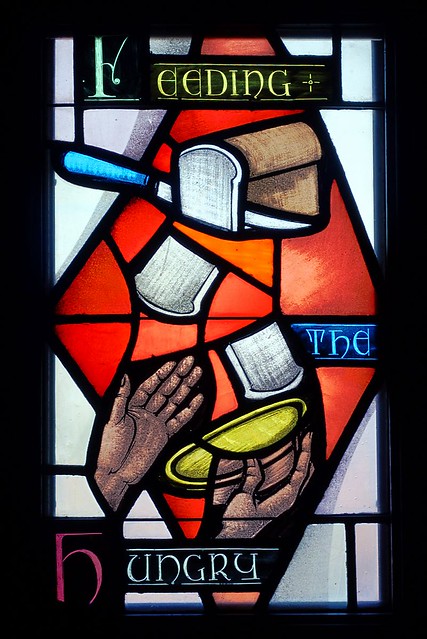
Money bag for giving to the poor.
When God gives us more than we need
we are to give generously to those in need.

In many ways socialism is more materialistic than free market capitalism, and much more oppressive. Socialism only values what people have, not the people themselves, nor their talents and ingenuity and resourcefulness. In doing this, socialists do not recognize the true wealth of any society. The money and things which people possess is a limited resource, and its value is not as constant as the socialists imagine. As is shown in the movie, Dr. Zhivago, when you take the material of the rich and give it to people who didn’t work for it, they despise it and do not maintain it, and its value and usefulness is quickly destroyed. Things which are so valuable in a free society, quickly become worthless in a socialist managed economy. In a free market, people who are more capable, or who have talents and abilities which are in demand, are able to earn more, and thus they work harder, and the society as a whole benefits, and is made richer. Also, when people earn and own their own things, they take better care of them and maintain them and their value and usefulness remains longer.

Because socialists are naturally atheists, and not Christian, they do not trust people to be charitable and generous to those in need, so they say that the government must care for the poor instead of their own family and neighbors. In a predominantly free Christian society, where people are able to earn more than they need, they are generous with their charity and the poor are well cared for until they can get back on their feet and provide for themselves. Sometimes people will say that poverty causes crime. That is false. During the great depression in the United States in the 1930’s after the stock market crash of 1929, unemployment was about 25% of those of working age for quite some time, and people cared for one another. Crime did not rise as much as poverty because most Americans were Christians and they lived honest lives, and the poor were content to live off the charity of others until they got back on their feet financially. The post-war economic boom was a result of people who had lived through the depression and the war and wanted to work hard to make a better life for themselves and their families, and they were willing to work hard to do so as long as they were properly rewarded for it.

Christianity does not necessarily require a certain political or social structure. Christians can, and do, live in all societies, even where it is illegal for them to practice their religion openly. Christian principles do tend to favor good and just practices and rule out certain unjust practices where we have a say in how things are run. The Christian worldview is more honest about human nature than the worldview which leads to socialism. Christianity teaches that all people are naturally sinners whose selfishness needs to be curbed by laws and penalties for expressing that selfishness, through stealing, greed, and other sinful deeds. Not only is Christianity more honest about the sinful, selfish nature of man, it is also more compassionate, forgiving, and encouraging, even to unbelievers. Christianity teaches that all people are sinners and selfish, and that is why the United States Constitution sets checks and balances on each of the three branches of government to curb the power grabbing tendencies of each. We have been historically weak curbing the judicial tyranny, and that is where our government is weakest currently, but we pray that will be set right soon. Many Christians (and others) are working to accomplish true justice and lawfulness in our judicial system, but we are not nearly there, yet.
 
It is no coincidence that Christians were very prominent in the abolitionist movements in Europe and America. It wasn’t only Christians who were against slavery, but Christianity played a prominent role in abolishing slavery in the 19th century in many places.


Jacob favored Joseph,
but Joseph’s brothers envied him
and sold him into slavery.
Joseph forgave them and saved them from famine.

Holy Scripture is somewhat ambivalent about slavery. Nowhere does the Holy Bible endorse slavery, but God recognizes that because man is sinful they will wickedly enslave one another, and God set limits to what His people were allowed to do. In Leviticus 25:42-43 God says, “Because the Israelites are my servants, whom I brought out of Egypt, they must not be sold as slaves. Do not rule over them ruthlessly, but fear your God.” God also says that slaves were to be treated as hired workers, more like indentured servants than property, and after seven years they must be set free. God also gave a provision that if a servant wished to remain as a slave in the household (presumably because he was treated well and paid fairly for his work) there was a public ritual to make that arrangement legal and permanent.

Also the New Testament is likewise ambivalent about slavery, recognizing that it exists in a sinful world, but setting limits on the evil. St. Paul writes, “Slaves, obey your earthly masters with respect and fear, and with sincerity of heart, just as you would obey Christ.” (Ephesians 6:5) But he also sets limits on the masters when he writes, “Masters, provide your slaves with what is right and fair, because you know that you also have a Master in heaven.” (Colossians 4:1) Here both slave and master are called on to be good Christians. St. Paul also writes, “Were you a slave when you were called? Don’t let it trouble you – although if you can gain your freedom, do so. For he who was a slave when he was called by the Lord is the Lord’s freedman; similarly, he who was a free man when he was called is Christ’s slave. You were bought at a price; do not become slaves of men.” (1 Corinthians 7:21-23)  

The operating principle in both the Old Testament and the New Testament is that we are all servants of God and we ought to serve one another in love all the time, but as Christ has humbled Himself for our sake even unto death (see Philippians 2) for our benefit, we are free men in God’s sight, even if we live as slaves here on earth. It was this sort of teaching which in 19th Century United States made the Christian American slaves much more noble than their wicked masters. This is why the character, Uncle Tom, in Harriet Beecher Stowe’s book, Uncle Tom’s Cabin, resonated so much with white northern Christian abolitionists that they supported the Civil War and tens of thousands of free Northerners fought and died to make all Americans free men.
 
St. Peter writes, “Slaves, submit yourselves to your masters with all respect, not only to those who are good and considerate, but also to those who are harsh. For it is commendable if a man bears up under the pain of unjust suffering because he is conscious of God. But how is it to your credit if you receive a beating for doing wrong and endure it? But if you suffer for doing good and you endure it, this is commendable before God. To this you were called, because Christ suffered for you, leaving you an example, that you should follow in his steps.” (1 Peter 2:18-21) Sinful man may be cruel, but Christians are to be kind and forgiving even to the most wicked person. Jesus is our example in this. The first words He spoke after being nailed to the cross and lifted up to be crucified is, “Father, forgive them, for they know not what they do.” (Luke 23:34)


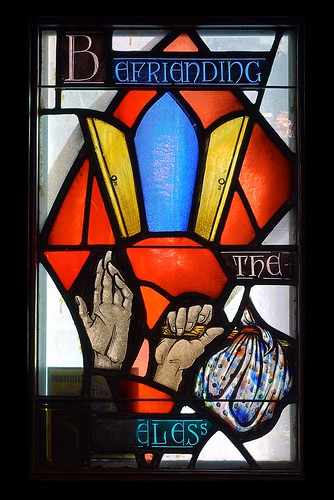
Christians ought to befriend the homeless
to help people to support themselves again,
not to make homelessness a permanent condition.

Socialism is certainly an evil system of ordering society. Christians, however, can and do live peaceably in such societies serving their neighbors in love, while ignoring the atheistic requirements which necessarily are associated with socialism. Jesus says, “Love your neighbor as yourself.” (Matthew 22:39) In following this command, Christians work hard in their jobs and vocations to provide good things for their neighbors, even if they are not well compensated for it, knowing that their true reward awaits in heaven. This is no excuse to mistreat your Christian employees, because they will ask God to curse you for the grief you cause them, but it is one reason why socialist societies function for as long as they do before they see their inevitable collapse. It is hard for Christians to do what is right in a sinful world. That is why St. Paul writes, “If only for this life we have hope in Christ, we are to be pitied more than all men.” (1 Corinthians 15:19) Christians take the long view of life, and know that if Christ endured suffering and death for our sins, we can endure a little unjust treatment at the hands of sinners. Eternity is a long time, and the sufferings of this life are only temporary.

Ultimately, the problem with socialism is that people don’t trust that God will provide us with daily bread, and we are too greedy to share what we have above our needs, so we look for worldly solutions. Such worldly solutions are bound to fail because of all people’s sinful nature. People are selfish and will tend toward solutions which benefit them, personally, but will harm their neighbor. Socialism is just such a worldly solution.  

Jesus also has other teachings against the ideals of socialism. He said, “Do unto others what you would have them do unto you.” (Matthew 7:12) This would prevent us from taking our neighbor’s hard earned possessions for ourselves, or sanctioning the government to do the same. If God has blessed me with great talent and skill, and has rewarded me commensurately for my use of these gifts, then I ought to be able to determine how I use my wealth to also help my neighbor. Christian Americans are generally wealthy people (from a worldwide perspective), but they are also generous to those in need. Governments, and people exercising power within governments, are not always wise in how they use public funds in giving aid to people in need. They often give money to people who don’t need it, or who misuse it, and they often take some of the money to enrich themselves before anyone in need sees a (much smaller) benefit. Government corruption is yet another reason why enforced socialism is a wicked system.
 
There is no perfect form of government because all people are sinful and some will attempt to work any system for their own benefit. However, socialism has many flaws which are inherently wicked and cannot be redeemed. The institutionalizing of thievery and slavery can never end well in any system of society. Socialism makes many good-sounding promises, but because it is inherently evil, it will never fulfill its promises nor even its best intentions.

“You are all sons of God through faith in Christ Jesus, for all of you who were baptized into Christ have clothed yourselves with Christ. There is neither Jew nor Greek, slave nor free, male nor female, for you are all one in Christ Jesus. If you belong to Christ, then you are Abraham’s seed, and heirs according to the promise.” (Galatians 3:26-29)


Other Bible Verses which Speak Against Socialism 

“Whoever despises his neighbor is a sinner, but blessed is he who is generous to the poor.” (Proverbs 14:21) 

“The desire of the righteous ends only in good, the expectation of the wicked in wrath. One gives freely, yet grows all the richer; another withholds what he should give, and only suffers want.” (Proverbs 11:23-24) 

“For you say, ‘I am rich, I have prospered, and I need nothing,’ not realizing that you are wretched, pitiable, poor, blind, and naked.” (Revelation 3:17)  

Jesus said, “Fear not, little flock, for it is your Father's good pleasure to give you the kingdom. Sell your possessions, and give to the needy. Provide yourselves with moneybags that do not grow old, with a treasure in the heavens that does not fail, where no thief approaches and no moth destroys. For where your treasure is, there will your heart be also.” (Luke 12:32-34) 

 “We are treated as impostors, and yet are true; as unknown, and yet well known; as dying, and behold, we live; as punished, and yet not killed; as sorrowful, yet always rejoicing; as poor, yet making many rich; as having nothing, yet possessing everything.” (2 Corinthians 6:8-10) 

 “Whoever mocks the poor insults his Maker; he who is glad at calamity will not go unpunished.” (Proverbs 17:5) 

 “Whoever oppresses the poor to increase his own wealth, or gives to the rich, will only come to poverty.” (Proverbs 22:16) 

“Do not rob the poor, because he is poor, or crush the afflicted at the gate, for the Lord will plead their cause and rob of life those who rob them.” (Proverbs 22:22-23) 

  “Am I still to forget, O wicked house, your ill-gotten treasures and the short ephah (a weight measure), which is accursed? Shall I acquit a man with dishonest scales, with a bag of false weights? Her rich men are violent; her people are liars and their tongues speak deceitfully. Therefore, I have begun to destroy you, to ruin you because of your sins. You will eat but not be satisfied; your stomach will still be empty. You will store up but save nothing, because what you save I will give to the sword. You will plant but not harvest; you will press olives but not use the oil on yourselves, you will crush grapes but not drink the wine.” (Micah 6:10-15)


See also my article on “The Problem with Democracy”  

See also my article on “The Problem with Sexual Politics”